

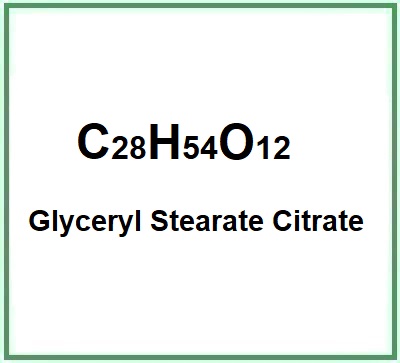
Glyceryl Stearate Citrate
Media gradimento : 7.5
| Valutazione | N. Esperti | Valutazione | N. Esperti |
|---|---|---|---|
| 1 | 6 | ||
| 2 | 7 | ||
| 3 | 8 | ||
| 4 | 9 | ||
| 5 | 10 |
10 pt da Ark90
| Dove si trova? |
| "Glyceryl Stearate Citrate studi" su Glyceryl Stearate Citrate Consenso relazione 10 di Ark90 (12463 pt) | 15-ott-2022 21:10 |
| Leggi il Tiiip completo | (Invia il tuo commento) |
Compendio degli studi più significativi con riferimento a proprietà, assunzione, effetti.
Guo Q, Bellissimo N, Rousseau D. Effect of Emulsifier Concentration and Physical State on the In Vitro Digestion Behavior of Oil-in-Water Emulsions. J Agric Food Chem. 2018 Jul 18;66(28):7496-7503. doi: 10.1021/acs.jafc.8b02231.
Abstract. The influence of emulsifier physical state and concentration on the in vitro digestion of oil-in-water (O/W) emulsions was investigated. Two citrated monoacylglycerols, glyceryl stearate citrate (GSC, bulk mp of 55-65 °C) and glyceryl oleate citrate (GOC, bulk mp of 0-10 °C), were used at 0.5 or 5 wt % of the emulsions to generate 20 wt % soybean oil O/W emulsions. Oil droplet lipolysis was slower in emulsions with 0.5 wt % emulsifier versus in those with 5 wt % emulsifier, resulting from the reduced surface-to-volume ratio in emulsions at 0.5 wt % emulsifier and the increased concentration of hydrolyzable groups at 5 wt % emulsifier. When excluding gastric digestion, all emulsions were similarly digested, confirming that emulsion intestinal digestion was highly dependent on gastric preprocessing. Finally, at a given emulsifier concentration, GSC-based emulsions with an interfacial crystalline shell experienced a decreased rate of intestinal lipid digestion compared with their GOC-based counterparts, confirming that emulsifier physical state played a role in lipid digestion.
Surianarayanan, R., & Bhaskar, J. P. (2020). Herbal cosmeceuticals. In Plant Metabolites: Methods, Applications and Prospects (pp. 217-238). Springer, Singapore.
Abstract. Herbal cosmeceutical is a rapidly growing category in the field of cosmetics and personal care products. The safety perception is the major contributing factor for the growth of this category. Therefore, the design of these products requires introspection from seed to shelf stage of the product. From good agricultural practices, through selection of ingredients for the base formulation, herbal research to eco-friendly packaging are the aspects that need to be considered to design herbal cosmeceutical products that are safe to environment and safer to consumers. This chapter talks about ways of making a cosmeceutical formulation base green, current herbal knowledge and future research perspective, regulatory considerations and industry approach to herbal products in terms of product claims.
Cefali, L. C., Ataide, J. A., Fernandes, A. R., Sousa, I. M. D. O., Gonçalves, F. C. D. S., Eberlin, S., ... & Gava Mazzola, P. (2019). Flavonoid-enriched plant-extract-loaded emulsion: a novel phytocosmetic sunscreen formulation with antioxidant properties. Antioxidants, 8(10), 443.
Abstract. The aim of this study was to develop a phytocosmetic sunscreen emulsion with antioxidant effect, containing a blend of flavonoid-enriched plant extracts. In vitro sun protection factor, antioxidant activity, skin irritation, photostability, cutaneous permeation, and retention of flavonoids were evaluated. Thermodynamically stable emulsions were obtained and tested for sensorial analysis after loading the blend of extracts. The selected emulsion was stable when stored at low temperatures (5 °C), for which after 120 days the concentration of quercetin and rutin were above their limit of quantification, i.e., 2.8 ± 0.39 μg/mL and 30.39 ± 0.39 μg/mL, respectively. Spreadability, low rupture strength and adhesiveness were shown to be similar to a conventional topical product. Higher brittleness, pseudo-plastic, and viscoelastic behaviors were also recorded for the developed phytocosmetic sunscreen. The product presented a critical wavelength of 387.0 nm and ultraviolet rays A and B (UVA/UVB) rate of 0.78, confirming that the developed formulation shows capacity for UVA/UVB protection, protecting skin against damages caused by ultraviolet (UV) radiation. Rutin was shown to permeate the skin barrier and was also quantified in the stratum corneum (3.27 ± 1.92 μg/mL) by tape stripping and retention test (114.68 ± 8.70 μg/mL). The developed flavonoid-enriched phytocosmetic was shown to be non-irritant to skin by an in vitro assay. Our results confirm the antioxidant activity, sun protection, and physical properties of the developed phytocosmetic for topical application.
Amended final report on the safety assessment of glyceryl dilaurate, glyceryl diarachidate, glyceryl dibehenate, glyceryl dierucate, glyceryl dihydroxystearate, glyceryl diisopalmitate, glyceryl diisostearate, glyceryl dilinoleate, glyceryl dimyristate, glyceryl dioleate, glyceryl diricinoleate, glyceryl dipalmitate, glyceryl dipalmitoleate, glyceryl distearate, glyceryl palmitate lactate, glyceryl stearate citrate, glyceryl stearate lactate, and glyceryl stearate succinate. Int J Toxicol. 2007;26 Suppl 3:1-30. doi: 10.1080/10915810701663143.
Abstract. Glyceryl Dilaurate, Glyceryl Diarachidate, Glyceryl Dibehenate, Glyceryl Dierucate, Glyceryl Dihydroxystearate, Glyceryl Diisopalmitate, Glyceryl Diisostearate, Glyceryl Dilinoleate, Glyceryl Dimyristate, Glyceryl Dioleate, Glyceryl Diricinoleate, Glyceryl Dipalmitate, Glyceryl Dipalmitoleate, Glyceryl Distearate, Glyceryl Palmitate Lactate, Glyceryl Stearate Citrate, Glyceryl Stearate Lactate, and Glyceryl Stearate Succinate are diacylglycerols (also known as diglycerides or glyceryl diesters) that function as skin conditioning agents - emollients in cosmetics. Only Glyceryl Dilaurate (up to 5%), Glyceryl Diisostearate (up to 43%), Glyceryl Dioleate (up to 2%), Glyceryl Distearate (up to 7%), and Glyceryl Stearate Lactate (up to 5%) are reported to be in current use. Production proceeds from fully refined vegetable oils, which are further processed using hydrogenation and fractionation techniques, and the end products are produced by reacting selected mixtures of the partly hydrogenated, partly fractionated oils and fats with vegetable-derived glycerine to yield partial glycerides. In the final stage of the production process, the products are purified by deodorization, which effectively removes pesticide residues and lower boiling residues such as residues of halogenated solvents and aromatic solvents. Diglycerides have been approved by the Food and Drug Administration (FDA) for use as indirect food additives. Nominally, these ingredients are 1,3-diglycerides, but are easily isomerized to the 1,2-diglycerides form. The 1,3-diglyceride isomer is not a significant toxicant in acute, short-term, subchronic, or chronic animal tests. Glyceryl Dilaurate was a mild primary irritant in albino rabbits, but not a skin sensitizer in guinea pig maximization tests. Diacylglycerol Oil was not genotoxic in the Ames test, in mammalian Chinese hamster lung cells, or in a rodent bone marrow micronucleus assay. An eye shadow containing 1.5% Glyceryl Dilaurate did not induce skin irritation in a single insult patch test, but mild skin irritation reactions to a foundation containing the same concentration were observed. A trade mixture containing an unspecified concentration of Glyceryl Dibehenate did not induce irritation or significant cutaneous intolerance in a 48-h occlusive patch test. In maximization tests, neither an eye shadow nor a foundation containing 1.5% Glyceryl Dilaurate was a skin sensitizer. Sensitization was not induced in subjects patch tested with 50% w/w Glyceryl Dioleate in a repeated insult, occlusive patch test. Glyceryl Palmitate Lactate (50% w/v) did not induce skin irritation or sensitization in subjects patch tested in a repeat-insult patch test. Phototoxicity or photoallergenicity was not induced in healthy volunteers tested with a lipstick containing 1.0% Glyceryl Rosinate. Two diacylglycerols, 1-oleoyl-2-acetoyl-sn-glycerol and 1,2-dipalmitoyl-sn-glycerol, did not alter cell proliferation (as determined by DNA synthesis) in normal human dermal fibroblasts in vitro at doses up to 10 microg/ml. In the absence of initiation, Glyceryl Distearate induced a moderate hyperplastic response in randomly bred mice of a tumor-resistant strain, and with 9,10-dimethyl-1,2-benzanthracene (DMBA) initiation, an increase in the total cell count was observed. In a glyceryl monoester study, a single application of DMBA to the skin followed by 5% Glyceryl Stearate twice weekly produced no tumors, but slight epidermal hyperplasia at the site of application. Glyceryl Dioleate induced transformation in 3-methylcholanthrene-initiated BALB/3T3 A31-1-1 cloned cells in vitro. A tumor-promoting dosing regimen that consisted of multiple applications of 10 mumol of a 1,2-diacylglycerol (sn-1,2-didecanoylglycerol) to female mice twice daily for 1 week caused more than a 60% decrease in protein kinase C (PKC) activity and marked epidermal hyperplasia. Applications of 10 micromol sn-1,2-didecanoylglycerol twice weekly for 1 week caused a decrease in cytosolic PKC activity, an increase in particulate PKC activity, and no epidermal hyperplasia. In studies of the tumor-promoting activity of 1,2-diacylglycerols, dose and the exposure regimen by which the dose is delivered play a role in tumor promotion. The 1,2-diacylglycerol-induced activation of PKC may also relate to the saturation of the fatty acid in the 1 or 2 position; 1,2-Diacylglycerols with two saturated fatty acids are less effective. Also, the activity of 1,2-diacylglycerols may be reduced when the fatty acid moiety in the structure is a long-chain fatty acid. A histological evaluation was performed on human skin from female volunteers (18 to 56 years old) who had applied a prototype lotion or placebo formulation, both containing 0.5% Glyceryl Dilaurate, consecutively for 16 weeks or 21 weeks. Skin irritation was not observed in any of the subjects tested. Biopsies (2 mm) taken from both legs of five subjects indicated no recognizable abnormalities of the skin; the epidermis was normal in thickness, and there was no evidence of scaling, inflammation, or neoplasms in any of the tissues that were evaluated. The Cosmetic Ingredient Review (CIR) Expert Panel considered that the available safety test data indicate that diglycerides in the 1,3-diester form do not present any significant acute toxicity risk, nor are these ingredients irritating, sensitizing, or photosensitizing. Whereas no data are available regarding reproductive or developmental toxicity, there is no reason to suspect any such toxicity because the dermal absorption of these chemicals is negligible. The Panel noted that these nominally 1,3-diglycerides contain 1,2-diglycerides, raising the concern that 1,2-diglycerides could potentially induce hyperplasia. Data regarding the induction of PKC and the tumor promotion potential of 1,2-diacylglycerols increased the level of concern. Most of the diglycerides considered in this safety assessment, however, have fatty acid chains longer than 14 carbons and none have mixed saturated/unsaturated fatty acid moieties. The Panel considered it particularly important that a 21-week use study of a prototype lotion containing 0.5% Glyceryl Dilaurate (a 14-carbon chain fatty acid) indicated no evidence of scaling, inflammation, or neoplasms in biopsy specimens. Also, DNA synthesis assays on Glyceryl Dilaurate and Glyceryl Distearate indicated that neither chemical altered cell proliferation (as determined by DNA synthesis) in normal human dermal fibroblasts in vitro at doses up to 10 microg/ml. The Panel understands that use testing is a common practice in industry and, if histopathology data are collected, the Panel believes that such an approach can demonstrate an absence of epidermal hyperplasia. Because the concentration of these ingredients can vary (up to 43% for Glyceryl Diisostearate in lipstick), the frequency of application can be several times daily, and the proportion of diglycerides that are inactive 1,3 isomers versus potentially biologically active 1,2 isomers is unknown, the Panel believes that each use should be examined to ensure the absence of epidermal hyperplasia during product development and testing. In the absence of inhalation toxicity data on the Glyceryl Diesters in this safety assessment, the Panel determined that these ingredients can be used safely in aerosolized products because they are not respirable. The Panel recognizes that certain ingredients in this group are reportedly used in a given product category, but the concentration of use is not available. For other ingredients in this group, information regarding use concentration for specific product categories is provided, but the number of such products is not known. In still other cases, an ingredient is not in current use, but may be used in the future. Although there are gaps in knowledge about product use, the overall information available on the types of products in which these ingredients are used and at what concentration indicate a pattern of use. Within this overall pattern of use, the CIR Expert Panel considers all ingredients in this group to be safe.
Zahir-Jouzdani F, Lupo N, Hermann M, Prüfert F, Atyabi F, Bernkop Schnürch A. Glyceryl ester surfactants: Promising excipients to enhance the cell permeating properties of SEDDS. Eur J Pharm Biopharm. 2018 Aug;129:154-161. doi: 10.1016/j.ejpb.2018.05.032.
Abstract. Aim: The aim of the study is the evaluation of the impact of glyceryl ester surfactants on cell permeating properties of SEDDS (self-emulsifying drug delivery systems)....Conclusions: Glyceryl ester surfactants and in particular polyglyceryl-3-stearate might be a promising excipient for the formulation of SEDDS exhibiting enhanced cellular uptake and permeation enhancing properties. Copyright © 2018 Elsevier B.V.
| Chiudi | (0 commenti) |
| "Descrizione" su Glyceryl Stearate Citrate Consenso relazione 10 di Ark90 (12463 pt) | 09-ott-2024 11:54 |
| Leggi il Tiiip completo | (Invia il tuo commento) |
Glyceryl Stearate Citrate è un composto chimico, acido grasso monogliceride, formato da glicerina, acido stearico (generalmente ricavato da oli di soia, colza, canola, mais) e acido citrico, estere di citrato di glicerolo stearato, estere glicerico di acido citrico e acido stearico. E' un monogliceride di acidi grassi di origine vegetale ma esterificato quindi non naturale al 100%. Anionico.
Glyceryl Stearate Citrate è un emulsionante comunemente utilizzato nei cosmetici e nei prodotti per la cura personale. Derivato da fonti vegetali, come oli vegetali, viene impiegato per aiutare a mescolare ingredienti a base d’acqua e olio nelle formulazioni. È noto per la sua capacità di migliorare la texture e la stabilità dei prodotti cosmetici e funziona anche come agente condizionante per la pelle, rendendolo un ingrediente versatile in prodotti per la cura della pelle e dei capelli.
Composizione chimica e struttura
Glyceryl Stearate Citrate si forma dall'esterificazione di glicerina, acido stearico e acido citrico. La combinazione di questi componenti produce un emulsionante delicato e stabilizzante. La glicerina, nota per le sue proprietà idratanti, viene combinata con l'acido stearico (un acido grasso) e l'acido citrico per creare un composto che aiuta a emulsionare e ammorbidire la pelle.
Proprietà fisiche
Si presenta generalmente come un solido ceroso bianco o bianco sporco. È solubile negli oli, ma si disperde bene in acqua quando utilizzato in emulsioni, rendendolo ideale per l'uso in lozioni, creme e altri prodotti emulsionati. La sua capacità di mescolare e stabilizzare emulsioni olio-in-acqua assicura una texture uniforme e liscia nelle formulazioni cosmetiche.
Processo di produzione
Glyceryl Stearate Citrate viene prodotto mediante l'esterificazione della glicerina (derivata da oli vegetali) con acido stearico e acido citrico. Il processo produce un emulsionante stabile che può essere utilizzato in varie formulazioni cosmetiche per aiutare a mescolare componenti a base d'acqua e olio, creando un prodotto omogeneo e uniforme.
Applicazioni
Cura della pelle: Il Glyceryl Stearate Citrate è utilizzato in creme, lozioni e idratanti per creare emulsioni stabili che offrono una texture liscia. Aiuta a ammorbidire e idratare la pelle, formando una barriera protettiva che previene la perdita di umidità.
Cura dei capelli: Nei balsami e nei prodotti per lo styling, agisce come agente condizionante, migliorando la gestibilità e la morbidezza dei capelli.
Cosmetici: Viene utilizzato nei prodotti per il trucco, come fondotinta e primer, per migliorare la texture e garantire un’applicazione uniforme mantenendo la stabilità del prodotto.
Si presenta in forma di polvere bianca adatta per la produzione di emulsioni olio/acqua, insolubile e disperdibile acqua calda, solubile in olio a temperature elevate. Facilmente idrolizzabile In condizioni di forti alcali o forti acidi.

Funzioni INCI:
Utilizzato come emulsionante olio/acqua con viscosità medio/bassa anche per formulazioni prive di PEG e con concentrazione ottimale in fase oleosa del 25-35%. Possiede elevato equilibrio idrofilo-lipofilo (HLB)
Ha varie funzioni: emulsionante idrofilo non etossilato e come co-emulsionante per formulazioni prive di PEG. Tensioattivo anionico, agente ammorbidente per conferire alla pelle più morbidezza, balsamo e fragranza per la pelle (1), anche per pelli sensibili. Ha la funzione di aiutare pelle e capelli a trattenere l'umidità e tende a formare un sistema di gel nella fase acquosa dell'emulsione. Gli emulsionanti hanno la proprietà di ridurre la tensione interfacciale e anche di influenzare direttamente stabilità, proprietà sensoriali e la tensione superficiale dei filtri solari, modulando le loro prestazioni filmometriche.
Dosaggio: Glyceryl Stearate Citrate viene inserito in formulazioni cosmetiche in percentuali tra 0,25%, 2% (migliora la viscosità di prodotti da risciacquo che hanno difficoltà di thickening col cloruro di sodio) e 4%. Quando è aggiunto all'acqua calda non è solubile, ma occorre mescolare per ottenere un liquido torbido pronto per l'emulsione.
Alimentazione
Emulsionante, fragranza.
Altri usi
Le doppie emulsioni sono promettenti veicoli di erogazione per il rilascio protettivo e programmato di composti bioattivi. In fase digestiva Glyceryl Stearate Citrate forma una specie di guscio cristallino, ha dimostrato una diminuzione del tasso di digestione lipidica intestinale nell'emulsione olio/acqua (2).
Considerazioni sulla salute e sicurezza
Sicurezza d'uso
Il Glyceryl Stearate Citrate è considerato sicuro per l'uso nei prodotti cosmetici. È non irritante, non tossico e generalmente ben tollerato dalla pelle, il che lo rende adatto anche per le pelli sensibili. Grazie ai suoi componenti di origine vegetale e alle sue proprietà emulsionanti delicate, è una scelta popolare nelle formulazioni cosmetiche naturali e biologiche.
Reazioni allergiche
Le reazioni allergiche al Glyceryl Stearate Citrate sono rare. È un ingrediente delicato, e le sue origini vegetali lo rendono meno incline a causare irritazioni. Tuttavia, come per qualsiasi ingrediente cosmetico, si consiglia alle persone con pelle sensibile di eseguire un patch test prima di utilizzare prodotti che lo contengono.
Tossicità e cancerogenicità
È stato ampiamente valutato per la sicurezza ed è approvato per l'uso nei cosmetici e nei prodotti per la cura personale alle concentrazioni considerate sicure per i consumatori.
Considerazioni ambientali e di sicurezza
Il Glyceryl Stearate Citrate è biodegradabile e non rappresenta rischi ambientali significativi. Essendo derivato da fonti vegetali rinnovabili, è una scelta ecologica nelle formulazioni cosmetiche.
Stato normativo
Il Glyceryl Stearate Citrate è approvato per l'uso nei cosmetici e nei prodotti per la cura personale da parte di enti regolatori come l'Unione Europea e la Food and Drug Administration (FDA) negli Stati Uniti. È regolamentato per garantire l'uso sicuro in una vasta gamma di formulazioni cosmetiche.
Per approfondimenti:
Glyceryl Stearate Citrate studi
Caratteristiche tipiche del prodotto commerciale Glyceryl Stearate Citrate
| Appearance | White powder |
| pH | 5.5-8.0 |
| Boiling Point | >260°C (500°F) |
| Melting Point | 58-64°C (136.4-147.2°F) |
| Acid value | 0,00-20,00 mg KOH/g |
| HLB value/range | 12 |
| Shelf life | 2 Years |
| Storage | dry place, protected from direct sunlight, heat |
| Chemical safety | ![]() |
![]() | ![]() |
![]() | ![]() |
Prezzo
100g $5
Sinonimi
Bibliografia_____________________________________________________________________
(1) Cefali, L. C., Ataide, J. A., Fernandes, A. R., Sousa, I. M. D. O., Gonçalves, F. C. D. S., Eberlin, S., ... & Gava Mazzola, P. (2019). Flavonoid-enriched plant-extract-loaded emulsion: a novel phytocosmetic sunscreen formulation with antioxidant properties. Antioxidants, 8(10), 443.
Abstract. The aim of this study was to develop a phytocosmetic sunscreen emulsion with antioxidant effect, containing a blend of flavonoid-enriched plant extracts. In vitro sun protection factor, antioxidant activity, skin irritation, photostability, cutaneous permeation, and retention of flavonoids were evaluated. Thermodynamically stable emulsions were obtained and tested for sensorial analysis after loading the blend of extracts. The selected emulsion was stable when stored at low temperatures (5 C), for which after 120 days the concentration of quercetin and rutin were above their limit of quantification, i.e., 2.8 ± 0.39 µg/mL and 30.39 ± 0.39 µg/mL, respectively. Spreadability, low rupture strength and adhesiveness were shown to be similar to a conventional topical product. Higher brittleness, pseudo-plastic, and viscoelastic behaviors were also recorded for the developed phytocosmetic sunscreen. The product presented a critical wavelength of 387.0 nm and ultraviolet rays A and B (UVA/UVB) rate of 0.78, confirming that the developed formulation shows capacity for UVA/UVB protection, protecting skin against damages caused by Ultraviolet (UV) radiation. Rutin was shown to permeate the skin barrier and was also quantified in the stratum corneum (3.27 ± 1.92 µg/mL) by tape stripping and retention test (114.68 ± 8.70 µg/mL). The developed flavonoid-enriched phytocosmetic was shown to be non-irritant to skin by an in vitro assay. Our results confirm the antioxidant activity, sun protection, and physical properties of the developed phytocosmetic for topical application.
(2) Li, W., Wang, W., Yong, C., Lan, Y., Huang, Q., & Xiao, J. (2022). Effects of the Distribution Site of Crystallizable Emulsifiers on the Gastrointestinal Digestion Behavior of Double Emulsions. Journal of Agricultural and Food Chemistry, 70(16), 5115-5125.
Abstract. Double emulsions (DEs) are promising delivery vehicles for the protective and programmed release of bioactive compounds. Herein, DEs with monoglycerides crystallized at the internal- or external interface or oil phase were fabricated. The results suggested that the crystallization site of monoglycerides exerts a significant role in retarding the structural degradation and lipid digestion of DEs by affecting the available contact area of lipase. At the initial stage of intestinal digestion, compared with noncrystalline DEs (82.1%, 3.7 min), the burst release of internal markers in the internal interface crystallized emulsions was decreased by 42.4% and the lag time of free fatty acid (FFA) release was delayed by 5.8 min in the external interface crystallized emulsions. The structural integrity and digestion kinetics of the external interface crystallized DEs were synchronized with the retention time of the interfacial crystals. Therefore, crystallizable emulsifiers exhibit unique and fine regulatory effects on the digestive properties of emulsions.
| Chiudi | (0 commenti) |
Leggi altri Tiiips su questo oggetto in Inglese (2)
Tipologia:   Chemical Principali sostanze contenute:   Ultimo aggiornamento:   2022-10-15 19:27:31 | Rischio chimico:   |

