

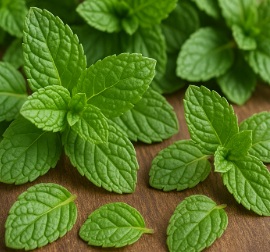
Mentha rotundifolia
Rating : 7.3
| Evaluation | N. Experts | Evaluation | N. Experts |
|---|---|---|---|
| 1 | 6 | ||
| 2 | 7 | ||
| 3 | 8 | ||
| 4 | 9 | ||
| 5 | 10 |
Pros:
Antifungal (1) Anti-inflammatory (1) Antimicrobial (1) Antioxidant (1)10 pts from FCS777
| Sign up to vote this object, vote his reviews and to contribute to Tiiips.Evaluate | Where is this found? |
| "Mentha rotundifolia studies" about Mentha rotundifolia Review Consensus 8 by FCS777 (5544 pt) | 2019-Aug-05 18:12 |
| Read the full Tiiip | (Send your comment) |
Polyphenolic Profiling, Quantitative Assessment and Biological Activities of Tunisian Native Mentha rotundifolia (L.) Huds.
Ben Haj Yahia I, Zaouali Y, Ciavatta ML, Ligresti A, Jaouadi R, Boussaid M, Cutignano A.
Molecules. 2019 Jun 26;24(13). pii: E2351. doi: 10.3390/molecules24132351.
Evaluation of Antioxidant, Anti-Inflammatory and Cytoprotective Properties of Ethanolic Mint Extracts from Algeria on 7-Ketocholesterol-Treated Murine RAW 264.7 Macrophages.
Brahmi F, Nury T, Debbabi M, Hadj-Ahmed S, Zarrouk A, Prost M, Madani K, Boulekbache-Makhlouf L, Lizard G.
Antioxidants (Basel). 2018 Dec 6;7(12). pii: E184. doi: 10.3390/antiox7120184.
A new method for microwave assisted ethanolic extraction of Mentha rotundifolia bioactive terpenoids.
García-Sarrió MJ, Sanz ML, Sanz J, González-Coloma A, Cristina Soria A.
Electrophoresis. 2018 Apr 14. doi: 10.1002/elps.201800115.
Essential oils from Algerian species of Mentha as new bio-control agents against phytopathogen strains.
Benomari FZ, Andreu V, Kotarba J, Dib MEA, Bertrand C, Muselli A, Costa J, Djabou N.
Environ Sci Pollut Res Int. 2018 Oct;25(30):29889-29900. doi: 10.1007/s11356-017-9991-4.
Antioxidant capacity and phenolic content of two Algerian Mentha species M. rotundifolia (L.) Huds, M. pulegium L., extracted with different solvents.
Brahmi F, Dahmoune F, Kadri N, Chibane M, Dairi S, Remini H, Oukmanou-Bensidhoum S, Mouni L, Madani K.
J Complement Integr Med. 2017 Jul 8;14(4). pii: /j/jcim.2017.14.issue-4/jcim-2016-0064/jcim-2016-0064.xml. doi: 10.1515/jcim-2016-0064.
Antiproliferative activity of flower hexane extract obtained from Mentha spicata associated with Mentha rotundifolia against the MCF7, KB, and NIH/3T3 cell lines.
Nedel F, Begnini K, Carvalho PH, Lund RG, Beira FT, Del Pino FA.
J Med Food. 2012 Nov;15(11):955-8. doi: 10.1089/jmf.2011.0340
The heredity of the essential oil composition in artificial hybrids between Mentha rotundifolia and Mentha longifolia.
Hendriks H, van Os FH.
Planta Med. 1972 Jun;21(4):421-5.
| Sign up to vote this object, vote his reviews and to contribute to Tiiips.EvaluateClose | (0 comments) |
| "Descrizione" about Mentha rotundifolia Review Consensus 10 by FCS777 (5544 pt) | 2025-Nov-28 18:28 |
| Read the full Tiiip | (Send your comment) |
Mentha rotundifolia (round-leaved mint, apple mint s.l. in some traditions) is an aromatic herb of the Lamiaceae family.
It is a perennial plant with creeping rhizomes and quadrangular stems, forming dense clumps.
Leaves are round to broadly oval, often softly hairy (tomentose), grey-green in colour with slightly serrated margins.
Inflorescences are dense cylindrical spikes with white to pale lilac flowers.
The aroma is fresh, minty and herbaceous, generally milder, sweeter and less sharply mentholated than peppermint.

Common name: round-leaved mint
Scientific name: Mentha rotundifolia
Family: Lamiaceae
Genus: Mentha
Origin: temperate areas of Europe, the Mediterranean region and the Middle East
Growth habit: aromatic, perennial, rhizomatous herb
Cultivation and growing conditions
Climate
Prefers temperate or warm–temperate climates.
Tolerates winter cold down to about –10 °C, especially if mulched.
Grows vigorously in areas with mild springs and summers that are not excessively hot.
Exposure
Prefers bright partial shade: plenty of light but not harsh, direct sun for many hours.
In cooler regions it can grow in full sun; in hot climates it is better to provide some shade during the hottest hours.
Soil
Adapts to many soil types, but performs best in fresh, fertile, well-drained substrates.
Ideally slightly acidic to neutral pH.
Avoid waterlogging, which promotes root rot.
Soil mixes with sand or perlite are good to improve drainage.
Irrigation
Likes constant soil moisture, without extremes.
In summer, water regularly, especially in containers.
In winter, reduce watering significantly, especially at low temperatures.
Temperature
Optimal growth between 18 and 28 °C.
Below about 8–10 °C growth slows; the aerial part may dry back, but the plant usually sprouts again in spring.
Fertilization
Moderate requirements: it is a vigorous plant and does not need heavy feeding.
In spring, apply a light organic fertilizer (well-matured compost or worm humus).
Avoid excessive nitrogen, which makes the plant too lush and less aromatic.
Cultivation care
Regularly remove very old or woody stems.
Control the spread of the rhizomes, which are quite invasive: containers or root barriers in open ground are recommended.
Cut off flower spikes if the goal is to maximize leaf production.
Monitor for aphids, leafhoppers and possible fungal diseases (powdery mildew).
Harvest
Fresh leaves can be harvested from late spring to autumn.
For the strongest aroma, harvest just before flowering.
Trim shoot tips to stimulate branching and new growth.
Leaves can be used fresh or dried.
Propagation
By division of rhizomes: the simplest and most reliable method; take portions with at least a few active roots.
By stem cuttings: in spring or summer; root the cuttings in water or in a moist substrate.
By seed: possible but less common, and often with high variability.
(In practice, Mentha rotundifolia is used in much smaller amounts; these values are indicative and based on generic fresh mint data.)
Energy: ~40–60 kcal
Water: ~80–85 g
Total carbohydrates: ~8–12 g
sugars: ~4–6 g
Total dietary fibre: ~5–7 g
Protein: ~3–4 g
Total fat: ~0.5–1 g
SFA: very low (excess saturated fats in the overall diet may have unfavourable health effects)
MUFA: traces
PUFA: traces
Vitamins: vitamin C, provitamin A (carotenoids), small amounts of B-group vitamins (e.g. folate).
Minerals: potassium, calcium, iron, magnesium.
Bioactive compounds: essential oil constituents (monoterpenes and oxygenated monoterpenes), phenolic acids and flavonoids.
Essential oil
Composition is highly chemotype-dependent and varies with origin, growth stage and environment.
Reported major components in different chemotypes include:
piperitenone oxide
cis-piperitone oxide
piperitenone
rotundifolone
piperitol
carvacrol and related phenolic monoterpenes
other oxygenated monoterpenes (e.g. 1,8-cineole, menthone/isomenthone, small amounts of pulegone in some populations)
Phenolic compounds
phenolic acids: rosmarinic acid, caffeic acid, quinic acid, salvianolic acid derivatives
additional hydroxycinnamic acid derivatives depending on plant part and origin
Flavonoids
luteolin, apigenin and their glycosides (chemotype- and organ-dependent)
Pigments
chlorophylls and carotenoids (provitamin A).
Other nutrients
vitamin C, minerals (calcium, iron, potassium, magnesium, manganese), and dietary fibre.
Cultivation
Thrives in temperate to Mediterranean climates on moderately fertile, well-drained soils.
Propagated mainly by stolons and rhizomes or by vegetative cuttings, as is typical for many Mentha species.
Harvesting
Aerial parts (leaves and flowering tops) are harvested at or near early flowering, when essential oil content and aromatic intensity are usually highest.
Sorting and cleaning
Removal of soil, foreign matter, damaged or yellowed leaves, and other plant debris.
Drying (for dried herb)
Low-temperature drying (<40 °C) in dark or shaded, well-ventilated conditions to preserve colour and volatile components.
Essential oil extraction
Steam distillation (hydrodistillation) of aerial parts.
Separation of essential oil from hydrolat (aromatic water), drying over appropriate agents if needed, and filtration.
Storage
Dried herb in closed, light-protected containers, in cool and dry storerooms.
Essential oil in well-filled dark glass bottles, at stable cool temperature, protected from light and air.
Packaging
Fresh herb: bunches or trays with breathable films.
Dried herb: sachets, jars, or bulk bags for industrial users.
Essential oil: small bottles with dropper or reducer for accurate dosing.
Plant and herb
Habit: perennial herb with creeping rhizomes forming dense patches.
Fresh leaves: round to broadly oval, soft-hairy, grey-green, with characteristic mint odour.
Dried leaves: olive-green to brownish-green, fragile texture, reduced aroma if poorly stored.
Essential oil
Appearance: clear to pale yellow liquid.
Typical density: around 0.88–0.93 g/mL (varies with chemotype and temperature).
Refractive index and optical rotation depend on the relative proportions of oxygenated monoterpenes (e.g. piperitenone oxide, piperitone oxide, rotundifolone).
Solubility: lipophilic, practically insoluble in water, miscible with many cosmetic oils and with ethanol.
Aroma
Fresh, minty, herbal; often described as softer, more “green” and less sharply mentholated than peppermint or pennyroyal.
Taste
Cooling and pleasant at low doses; can become slightly bitter or pungent at high concentrations.
Flavouring power
Moderate to high: relatively small quantities of leaves or essential oil can impart noticeable flavour to foods and beverages.
Technological behaviour
Essential oil is highly volatile and sensitive to oxidation; requires airtight packaging and protection from light and heat.
In some matrices (e.g. emulsions, fatty foods) it may contribute mildly to antimicrobial and antioxidant effects, depending on formulation and dose.
(Always subject to national and international regulations on flavourings and essential oils.)
Fresh or dried leaves in:
herbal teas and infusions (often in blends with other herbs)
salads, vegetable dishes and grain-based dishes (e.g. couscous, bulgur)
yoghurt-based sauces and dips
Culinary seasoning of:
meat and fish dishes in some regional cuisines
pulses and stews where a gentle mint note is desired
Sweet and beverage applications:
desserts, ice creams, sorbets, mild mint chocolates
syrups, soft drinks and flavoured water formulations (as part of flavour blends)
Fresh Mentha rotundifolia contributes small but potentially useful amounts of vitamin C, carotenoids and minerals when consumed regularly as part of a varied diet.
Phenolic acids (such as rosmarinic acid) and flavonoids may contribute to the overall antioxidant capacity of the diet.
As with other mints, it has a long tradition of use in herbal medicine for digestive comfort, mild spasm relief and as a pleasant carminative; these uses, however, should be viewed as complementary and not as medical treatment.
Essential oil composition (especially the proportion of oxygenated monoterpenes and phenolic monoterpenes like carvacrol or piperitenone oxide) can be biologically active; use of the pure oil should follow safety guidance and regulatory limits.
Fresh leaves in food: typically 2–10 g per serving, depending on recipe and desired intensity.
Dried leaves for infusions: around 1–2 g per cup, often as part of a herbal blend.
Essential oil: not intended for direct household ingestion; only food products specifically designed and authorised for use with mint essential oils, at controlled doses, should be ingested.
Generally well tolerated at culinary doses.
Possible reactions in individuals with sensitivity or allergy to Lamiaceae plants.
Essential oil, especially if oxidised or used undiluted, can cause skin irritation or sensitisation in susceptible individuals.
Mentha rotundifolia is not among the major regulated food allergens in current EU legislation, but cross-contamination with other allergens in industrial processing is always possible.
Fresh herb
3–5 days under refrigeration (around 4 °C) in breathable packaging (e.g. perforated film) to avoid condensation.
Dried herb
Up to ~12 months if stored in opaque, airtight containers, in cool and dry conditions.
Excess humidity, light and heat accelerate colour loss and flavour degradation.
Essential oil
Approximately 2–3 years when stored in full, well-closed dark glass bottles at cool temperature, away from light and air.
Oxidation leads to changes in aroma and may increase irritant properties.
Primary production and processing should comply with good hygiene practices and GMP/HACCP principles (cultivation, harvesting, drying, storage, packaging).
For essential oils used as flavourings or in supplements, specific safety assessments and maximum use levels may apply under food and cosmetic regulations.
Pure essential oil should not be ingested directly; ingestion should be restricted to appropriately formulated and regulated products, following professional advice.
Extra caution is advisable in vulnerable groups (pregnant or breastfeeding women, young children, individuals with liver disease or particular sensitivities).
Fresh or dried herb (food use)
Sales name: “mint” or more specifically “round-leaved mint” / “Mentha rotundifolia”, according to local practice.
Indication of net weight, lot, origin, best-before date and storage conditions, as required by legislation.
Essential oil (cosmetic / aromatherapy use)
Botanical name: Mentha rotundifolia; plant part used (aerial parts), extraction method (steam distillation), country of origin.
Appropriate safety warnings and instructions for dilution and use, according to cosmetic and other applicable regulations.
Processed foods containing Mentha rotundifolia flavour
Declaration in the ingredient list in line with flavouring regulations (e.g. “natural mint flavour” or similar specific wording, depending on jurisdiction).
Loss of aroma in dried herb
Possible causes: drying too slow or too hot, storage in permeable or transparent containers, high humidity.
Corrective actions: optimise drying conditions, use airtight and light-protective packaging, store in cool, dry places.
Browning of dried leaves
Possible causes: enzymatic browning due to delayed or inadequate drying, moisture exposure.
Corrective actions: ensure rapid, gentle drying and good moisture control during storage.
Oxidised or off-odour essential oil
Possible causes: long storage, exposure to air, heat or light.
Corrective actions: reduce headspace, use appropriate bottles, shorten shelf-life, avoid repeated opening and extended warm storage.
Too weak or too strong mint note in finished products
Possible causes: under- or overdosing, variability in essential oil chemotype.
Corrective actions: adjust dosage, standardise raw material sources, consider blending with other mint species to achieve consistent flavour.
Mentha rotundifolia is generally easy to grow, with moderate nutrient and water requirements compared to many intensive crops.
It can be integrated into organic and diversified farming systems, supporting agro-biodiversity and crop rotation schemes.
Essential oil production via distillation generates wastewater and spent plant biomass; responsible management of effluents, including monitoring BOD/COD, helps minimise environmental impact.
Spent herbs after distillation can be used as compost, soil amendment or biomass for energy, supporting circular economy strategies.
Local sourcing and short supply chains reduce transport-related emissions and support regional economic development.
(For extracts and oils derived from Mentha rotundifolia or defined mint complexes containing this species.)
Fragrance / perfuming – provides fresh, herbal, minty notes to skin care, hair care and oral care products.
Skin conditioning – contributes to a pleasant feel on the skin and may support perceived softness and comfort (particularly with hydroalcoholic or glyceric extracts).
Masking – helps to mask or reduce undesirable odours from other cosmetic raw materials.
Refreshing / tonic – associated with a sensation of freshness and “toning” on skin or scalp.
Antioxidant – certain extracts rich in polyphenols can help protect formulations and, to a limited extent, the skin from oxidative processes.
Mentha rotundifolia is a soft, aromatic mint species with a distinctive round-leaf morphology and a comparatively gentle, sweet herbal aroma.
It offers moderate contributions of vitamins, minerals and bioactive phenolics in the diet and plays a primarily sensory and functional role as a culinary herb.
The species is versatile in food, herbal infusions and cosmetic applications, particularly where a milder mint profile is desired.
Proper control of cultivation, drying, storage and essential oil handling, together with adherence to safety requirements, enables safe, effective and sustainable use of Mentha rotundifolia along the food and cosmetic supply chains.
SFA: Saturated fatty acids – fats without double bonds; excessive intake compared with unsaturated fats may be associated with increased cardiovascular risk.
MUFA: Monounsaturated fatty acids – fats with one double bond; generally beneficial when they replace saturated fats in the diet.
PUFA: Polyunsaturated fatty acids – fats with two or more double bonds (including n-6 and n-3); contribute to normal heart function within a balanced diet.
TFA: Trans fatty acids – fatty acids with at least one trans double bond; intake should generally be kept as low as possible (they occur, if at all, only in natural traces in mint).
GMP: Good manufacturing practices – set of procedures ensuring hygiene, quality and consistency in production.
HACCP: Hazard analysis and critical control points – preventive system for identifying and controlling hazards in food production.
BOD: Biological oxygen demand – measure of the amount of oxygen required by microorganisms to decompose organic matter in water; indicator of organic pollution.
COD: Chemical oxygen demand – measure of the oxygen equivalent of chemically oxidisable substances in water; indicator of total oxidisable load.
Studies
Mentha rotundifolia has been utilized by the traditional medicine as antiseptic, analgesic and anti-inflammatory. In particular, it is utilized in the form of essential oil (extracted by steam distillation from the aerial parts), in which its main components, polyphenols and flavonoids, exert an antioxidant, antifungal and anti-inflammatory action.
Extracts of this plant have revealed promising antimicrobial capabilities against bacterial strains of Gram and Gram-7 and based on the results of this study, they present a potential source of natural antioxidants and different bioactive compounds that could be used in green drugs, food preservation, alternative medicine and natural therapies (1).
The antifungal activity of the Mentha rotundifolia has also been established in plant and in vitro experiments (2).
Safety
The use of traditional medicine or DIY presents dangers even with relatively harmless plants and this study shows us the consequences (3).
References_______________________________
(1) Riahi L, Chakroun H, Klay I, Masmoudi AS, Cherif A, Zoghlami N. Metabolomic fingerprint of Mentha rotundifolia L. Leaf tissues promotes this species as a potential candidate for sustainable production of biologically active molecules. J Complement Integr Med. 2018 Oct 17;16(2). pii: /j/jcim.2019.16.issue-2/jcim-2018-0048/jcim-2018-0048.xml. doi: 10.1515/jcim-2018-0048
Abstract. Background The Mentha rotundifolia L. (Lamiaceae family), is a medicinal herb used since the ancient times as an antiseptic, analgesic and anti-inflammatory agent. In the present work, metabolomic profiling of two Mentha rotundifolia L. ecotypes leaf tissues spontaneously growing in the North of Tunisia was achieved. Methods Phenolic contents (TPC, TFC and TTC) were assessed using colorimetric methods. Metabolomic profiling of leaf tissues extracts was assessed based on Gas Chromatography-Mass Spectrometry (GC/MS) analysis. The antioxidant ability of M. rotundifolia extracts was achieved based on two test systems namely DPPH and FRAP assays. Antimicrobial activity against a set of Gram negative and Gram positive bacteria was estimated by measuring ID, MIC and MBC values. Results Fifty metabolites were identified as belonging mainly to phenolics, fatty acids, terpenes, steroids and aldehydes classes with qualitative and quantitative variability. Most of the identified compounds are reputed bioactive with potent antioxidant, antimicrobial and anti-inflammatory among others effects. To confirm these findings common in vitro biological activities were achieved. The investigated extracts showed significant antioxidant abilities based on both 1,1-diphenyl-2-picrylhydrazyl (DPPH) and Ferric reducing antioxidant potential (FRAP) assays. Furthermore, the extracts revealed promising antimicrobial ability against tested Gram+ and Gram- bacterial strains (ID: 12.5-14.5 mm, MIC: 3.125-25 (µg/mL), MBC: 6.25-100 (µg/mL)). Conclusions Based on our findings Mentha rotundifolia L. leaves extracts present a potential source of natural antioxidants and diverse bioactive compounds which could be used in green pharmacy, food preservation, alternative medicine and natural therapies.
(2) Leal F, Coelho AC, Soriano T, Alves C, Matos M. Fungicide activity of Thymus mastichina and Mentha rotundifolia in plants in vitro. J Med Food. 2013 Apr;16(4):273. doi: 10.1089/jmf.2012.0164.
Hubert-Schöler C, Tsiaparas S, Luhmer K, Moll MD, Passon M, Wüst M, Schieber A, Pude R. Essential Oil Composition and Physiology of Three Mentha Genotypes Under Shaded Field Conditions. Plants (Basel). 2024 Nov 9;13(22):3155. doi: 10.3390/plants13223155.
Abstract. Mentha spp. are commonly used for the production of tea and for the extraction of essential oils (EOs). The key factor of mint quality is the content and composition of the EO. Health-promoting compounds such as menthol are desirable, whereas the presence of potentially health-damaging compounds such as menthofuran should be avoided. This study examines the effect of shading on the EO content and composition of three Mentha genotypes (Mentha × piperita 'Multimentha', Mentha × piperita 'Fränkische Blaue' and Mentha rotundifolia 'Apfelminze'). The Mentha genotypes were cultivated in field trials for two years (2022-2023). Each genotype was shaded with a shading net (50% photosynthetic active radiation (PAR) reduction), and a control without shading was prepared. EO content was determined by steam distillation and EO composition was characterized by GC-MS analysis. Furthermore, biomass, vegetation indices (VIs) and the electron transport rate (ETR) were analyzed. While shading led to higher plant heights, higher EO content and a slightly reduced amount of undesired EO compounds, the unshaded control yielded a higher biomass accumulation. Significant genotypic differences were determined. In conclusion, the benefits of shading depend on the intended use and genotype selection.
(3) Benhiba H, Hassam B. Phytophotodermatitis due to Mentha rotundifolia Pan Afr Med J. 2014 Jul 4;18:192. doi: 10.11604/pamj.2014.18.192.4923.
| Sign up to vote this object, vote his reviews and to contribute to Tiiips.EvaluateClose | (0 comments) |
Read other Tiiips about this object in __Italiano (3)
Content:   Last update:   2024-08-12 17:07:05 | Kcal/100g:   28 Family:   Threat factors:   |

