

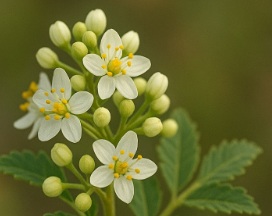
Boswellia serrata
Rating : 7
| Evaluation | N. Experts | Evaluation | N. Experts |
|---|---|---|---|
| 1 | 6 | ||
| 2 | 7 | ||
| 3 | 8 | ||
| 4 | 9 | ||
| 5 | 10 |
Pros:
Anti-inflammatory (1) Gastroprotective (1)19 pts from CarPas
| Sign up to vote this object, vote his reviews and to contribute to Tiiips.Evaluate | Where is this found? |
| "Descrizione" about Boswellia serrata Review Consensus 19 by CarPas (5257 pt) | 2025-Dec-02 10:10 |
| Read the full Tiiip | (Send your comment) |
Boswellia serrata
Boswellia serrata is a tree native to the arid regions of India, belonging to the family Burseraceae, and it is best known for the precious aromatic resin it produces. Its appearance is modest yet resilient: a pale, sometimes flaky trunk, knotty branches, and compound leaves of a soft green, slightly serrated along the edges. During the warm season, the tree bears small, pale flowers, while the sap that seeps out from incisions in the bark slowly solidifies, forming hard, fragrant drops with yellowish to amber tones.
The true identity of Boswellia serrata lies in this resin, appreciated for its balsamic, warm, resinous scent, with gentle woody nuances and a faintly spicy background. Traditionally, it was collected and left to dry in the open air, taking on irregular shapes and a brittle texture. When broken or gently warmed, it releases an intense, penetrating fragrance that evokes sacred spaces, ancient fumigations, and traditional rituals.
Within the resin are characteristic components such as boswellic acids, together with other aromatic and resinous molecules that contribute to its olfactory profile and its dense, slightly sticky consistency. The tree grows in rocky, poor soils, where its roots wedge into dry crevices in search of minimal moisture. It thrives in strong sunlight and high temperatures, developing irregular, robust forms shaped by drought and wind.
The scent of Boswellia serrata resin—deep, enveloping, almost meditative—still calls to mind images of old trade routes, ritual exchanges, and spiritual atmospheres. As a tree of few demands but strong character, it remains a quiet, striking presence in the dry landscapes of India, guardian of a resin that has crossed centuries while preserving its unmistakable identity.
There are 17 genera and about 600 species in tropical regions.
The most important species are:
Resins, essential oils, gums used for a long time in Ayurvedic medicine are obtained from this tree.
![]() | ![]() |
Botanical Classification:
Plant Characteristics: Boswellia serrata is characterized by:
Chemical Composition and Structure: The resin of Boswellia serrata contains a complex mixture of compounds, including:
Uses and Benefits:
Applications:
Skin conditioning agent. It is the mainstay of topical skin treatment as it has the function of restoring, increasing or improving skin tolerance to external factors, including melanocyte tolerance. The most important function of the conditioning agent is to prevent skin dehydration, but the subject is rather complex and involves emollients and humectants that can be added in the formulation.
Fragrance. It plays a very important role in the formulation of cosmetic products as it provides the possibility of enhancing, masking or adding fragrance to the final product, increasing its marketability. It is able to create a perceptible pleasant odour, masking a bad smell. The consumer always expects to find a pleasant or distinctive scent in a cosmetic product.
CAS 97952-72-2
EC number 308-366-6
Environmental and Safety Considerations:
Studies
The main components of these trees are (1):
This study established that the crude methanolic extract and pure compound of Boswellia serrata are capable of natural anti-inflammatory activity at sites of chronic inflammation by switching off cytokines and pro-inflammatory mediators, which initiate the process (2).

The biologically active constituents ofBoswellia serrata, namely 3-acetyl-11-keto-β-boswellic acid and β-boswellic acid, act synergistically to exert anti-inflammatory/anti-arthritic activity showing improvement in physical and functional capacity and reducing pain and stiffness in the management of knee osteoarthritis (3).
Aminosalicylates, corticosteroids, and immunosuppressants are currently the treatment choices in inflammatory bowel disease, however, with limited remission and often serious side effects. Boswellia serrata is a traditional Ayurvedic remedy with anti-inflammatory properties of interest for its utility in inflammatory bowel disease. This study elucidates the pharmacological mechanisms mediated by Boswellia serrata, in protecting the intestinal epithelial barrier from inflammatory damage and supports its use as a safe adjuvant in patients with inflammatory bowel disease (4).
The most relevant studies on this ingredient have been selected with a summary of their contents:
References_________________________________________________________
(1) el-Khadem H, el-Shafei ZM, el-Sekeily MA, Rahman MM. Derivatives of boswellic acids. Planta Med. 1972 Sep;22(2):157-9. doi: 10.1055/s-0028-1099599.
(2) Gayathri B, Manjula N, Vinaykumar KS, Lakshmi BS, Balakrishnan A. Pure compound from Boswellia serrata extract exhibits anti-inflammatory property in human PBMCs and mouse macrophages through inhibition of TNFalpha, IL-1beta, NO and MAP kinases. Int Immunopharmacol. 2007 Apr;7(4):473-82. doi: 10.1016/j.intimp.2006.12.003.
Abstract. The aim of the present study is to probe the anti-inflammatory potential of the plant Boswellia serrata by studying the effect of the crude extract and the pure compound isolated from it on key inflammatory mediators like TNFalpha, IL-1beta, and NO thus enabling the understanding of the key signaling events involved. The crude methanolic extract and the pure compound were analysed for their inhibitory effect on TNFalpha, IL-1beta and IL-6. The results demonstrated that all three cytokines are down regulated when PBMCs are cultured in the presence of crude extract or the pure compound at various time points. Observations on Th1/Th2 cytokines revealed marked down regulation of Th1 cytokines IFNgamma and IL-12 while the Th2 cytokines IL-4 and IL-10 were up regulated upon treatment with crude extract and pure compound. The extract and the pure compound isolated also showed considerable inhibition of NO production in activated RAW 264.7 cells, possibly via suppression of inducible NO synthase mRNA expression. Further to elucidate the underlying mechanism of action the effect of 12-ursene 2-diketone on LPS-induced activation of MAPK has also been examined. Our results demonstrated that 12-ursene 2-diketone inhibits the expression of pro-inflammatory cytokines and mediators via inhibition of phosphorylation of the MAP kinases JNK and p38 while no inhibition was seen in ERK phosphorylation in LPS-stimulated PBMCs. The above study therefore indicates that the crude methanolic extract and the isolated pure compound are capable of carrying out a natural anti-inflammatory activity at sites where chronic inflammation is present by switching off the pro-inflammatory cytokines and mediators, which initiate the process.
(3) Majeed M, Majeed S, Narayanan NK, Nagabhushanam K. A pilot, randomized, double-blind, placebo-controlled trial to assess the safety and efficacy of a novel Boswellia serrata extract in the management of osteoarthritis of the knee. Phytother Res. 2019 May;33(5):1457-1468. doi: 10.1002/ptr.6338.
(4) Catanzaro D, Rancan S, Orso G, Dall'Acqua S, Brun P, Giron MC, Carrara M, Castagliuolo I, Ragazzi E, Caparrotta L, Montopoli M. Boswellia serrata Preserves Intestinal Epithelial Barrier from Oxidative and Inflammatory Damage. PLoS One.
Abstract. Aminosalicylates, corticosteroids and immunosuppressants are currently the therapeutic choices in inflammatory bowel diseases (IBD), however, with limited remission and often serious side effects. Meanwhile complementary and alternative medicine (CAM) use is increasing, particularly herbal medicine. Boswellia serrata is a traditional Ayurvedic remedy with anti-inflammatory properties, of interest for its usefulness in IBDs. The mechanism of this pharmacological potential of Boswellia serrata was investigated in colonic epithelial cell monolayers exposed to H2O2 or INF-γ+TNF-α, chosen as in vitro experimental model of intestinal inflammation. The barrier function was evaluated by the transepithelial electrical resistance (TEER) and paracellular permeability assay, and by the tight junction proteins (zonula occludens-1, ZO-1 and occludin) immunofluorescence. The expression of phosphorylated NF-κB and reactive oxygen species (ROS) generation were determined by immunoblot and cytofluorimetric assay, respectively. Boswellia serrata oleo-gum extract (BSE) and its pure derivative acetyl-11-keto-β-boswellic acid (AKBA), were tested at 0.1-10 μg/ml and 0.027 μg/ml, respectively. BSE and AKBA safety was demonstrated by no alteration of intestinal cell viability and barrier function and integrity biomarkers. H2O2 or INF-γ+TNF-α treatment of Caco-2 cell monolayers significantly reduced TEER, increased paracellular permeability and caused the disassembly of tight junction proteins occludin and ZO-1. BSE and AKBA pretreatment significantly prevented functional and morphological alterations and also the NF-κB phosphorylation induced by the inflammatory stimuli. At the same concentrations BSE and AKBA counteracted the increase of ROS caused by H2O2 exposure. Data showed the positive correlation of the antioxidant activity with the mechanism involved in the physiologic maintenance of the integrity and function of the intestinal epithelium. This study elucidates the pharmacological mechanisms mediated by BSE, in protecting intestinal epithelial barrier from inflammatory damage and supports its use as safe adjuvant in patients affected by IBD.
| Sign up to vote this object, vote his reviews and to contribute to Tiiips.EvaluateClose | (0 comments) |
| " Boswellia serrata studies" about Boswellia serrata Review Consensus 9 by Al222 (23254 pt) | 2021-Sep-05 12:33 |
| Read the full Tiiip | (Send your comment) |
Compendium of the most significant studies with reference to properties, intake, effects.
Kimmatkar N, Thawani V, Hingorani L, Khiyani R. Efficacy and tolerability of Boswellia serrata extract in treatment of osteoarthritis of knee--a randomized double blind placebo controlled trial. Phytomedicine. 2003 Jan;10(1):3-7. doi: 10.1078/094471103321648593.
Abstract
Osteoarthritis is a common, chronic, progressive, skeletal, degenerative disorder, which commonly affects the knee joint. Boswellia serrata tree is commonly found in India. The therapeutic value of its gum (guggulu) has been known. It posses good anti-inflammatory, anti-arthritic and analgesic activity. A randomized double blind placebo controlled crossover study was conducted to assess the efficacy, safety and tolerability of Boswellia serrata Extract (BSE) in 30 patients of osteoarthritis of knee, 15 each receiving active drug or placebo for eight weeks. After the first intervention, washout was given and then the groups were crossed over to receive the opposite intervention for eight weeks. All patients receiving drug treatment reported decrease in knee pain, increased knee flexion and increased walking distance. The frequency of swelling in the knee joint was decreased. Radiologically there was no change. The observed differences between drug treated and placebo being statistically significant, are clinically relevant. BSE was well tolerated by the subjects except for minor gastrointestinal ADRs. BSE is recommended in the patients of osteoarthritis of the knee with possible therapeutic use in other arthritis.
Börner F, Werner M, Ertelt J, Meins J, Abdel-Tawab M, Werz O. Analysis of Boswellic Acid Contents and Related Pharmacological Activities of Frankincense-Based Remedies That Modulate Inflammation. Pharmaceuticals (Basel). 2021 Jul 10;14(7):660. doi: 10.3390/ph14070660.
Abdel-Tawab M, Werz O, Schubert-Zsilavecz M. Boswellia serrata: an overall assessment of in vitro, preclinical, pharmacokinetic and clinical data. Clin Pharmacokinet. 2011 Jun;50(6):349-69. doi: 10.2165/11586800-000000000-00000.
Kirste S, Treier M, Wehrle SJ, Becker G, Abdel-Tawab M, Gerbeth K, Hug MJ, Lubrich B, Grosu AL, Momm F. Boswellia serrata acts on cerebral edema in patients irradiated for brain tumors: a prospective, randomized, placebo-controlled, double-blind pilot trial. Cancer. 2011 Aug 15;117(16):3788-95. doi: 10.1002/cncr.25945.
Hajhashemi V, Safaei S. Effect of a Selection of Skin Penetration Enhancers on Topical Anti-Inflammatory Effect of Boswellic Acids in Carrageenan-Induced Paw Edema in Rats. Adv Biomed Res. 2021 Jul 29;10:18. doi: 10.4103/abr.abr_222_20.
Attallah NGM, Negm WA, Elekhnawy E, Altwaijry N, Elmongy EI, El-Masry TA, Alturki EA, Yousef DA, Y Shoukheba M. Antibacterial Activity of Boswellia sacra Flueck. Oleoresin Extract against Porphyromonas gingivalis Periodontal Pathogen. Antibiotics (Basel). 2021 Jul 15;10(7):859. doi: 10.3390/antibiotics10070859.
Żęgota Z, Goździk J, Głogowska-Szeląg J. Prospective, Multicenter Evaluation of a Polyherbal Supplement alongside Standard-of-Care Treatment for Mild Knee Osteoarthritis. Adv Orthop. 2021 May 7;2021:5589597. doi: 10.1155/2021/5589597.
| Sign up to vote this object, vote his reviews and to contribute to Tiiips.EvaluateClose | (0 comments) |
Read other Tiiips about this object in __Italiano (2)
Content:  
Last update:   2021-09-05 10:46:54 | Kcal/100g:   Family:   Threat factors:   |

