

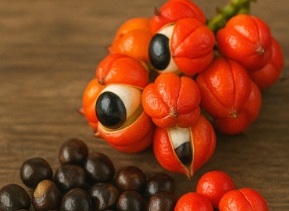
Guarana
Rating : 7.3
| Evaluation | N. Experts | Evaluation | N. Experts |
|---|---|---|---|
| 1 | 6 | ||
| 2 | 7 | ||
| 3 | 8 | ||
| 4 | 9 | ||
| 5 | 10 |
Pros:
Anti-aging (1) Anti-inflammatory (1) Antibacterial (1) Antioxidant (1)Cons:
To be taken in controlled quantity (1)18 pts from Ark90
| Sign up to vote this object, vote his reviews and to contribute to Tiiips.Evaluate | Where is this found? |
| "Guarana studies" about Guarana Review Consensus 17 by Ark90 (12472 pt) | 2020-Oct-25 10:53 |
| Read the full Tiiip | (Send your comment) |

Best studies on guaraná:
Production and characterization of solid lipid microparticles loaded with guaraná (Paullinia cupana) seed extract.
Silva MP, Thomazini M, Holkem AT, Pinho LS, Genovese MI, Fávaro-Trindade CS.
Food Res Int. 2019 Sep;123:144-152. doi: 10.1016/j.foodres.2019.04.055
Guarana improves behavior and inflammatory alterations triggered by methylmercury exposure: an in vivo fruit fly and in vitro neural cells study.
Algarve TD, Assmann CE, Cadoná FC, Machado AK, Manica-Cattani MF, Sato-Miyata Y, Asano T, Duarte MMMF, Ribeiro EE, Aigaki T, da Cruz IBM.
Environ Sci Pollut Res Int. 2019 May;26(15):15069-15083. doi: 10.1007/s11356-019-04881-0.
Chemical analysis of the semipurified extract of Paullinia cupana and evaluation of in vitro inhibitory effects against Helicobacter pylori.
Aguiar BAA, Bueno FG, Panizzon G, Silva DBD, Athaydes BR, Gonçalves RCR, Kitagawa RR, Marques LLM, Paula MN, Antonelli-Ushirobira TM, Medeiros DC, Mello JCP.
Nat Prod Res. 2019 Jan 2:1-4. doi: 10.1080/14786419.2018.1533825.
Guarana (Paullinia cupana Mart.) protects against amyloid-β toxicity in Caenorhabditis elegans through heat shock protein response activation.
Zamberlan DC, Arantes LP, Machado ML, da Silveira TL, da Silva AF, da Cruz IBM, Figueiredo CP, Soares FAA.
Nutr Neurosci. 2018 Sep 9:1-11. doi: 10.1080/1028415X.2018.1517473.
Safety and efficacy of daily Revactin® in men with erectile dysfunction: a 3-month pilot study.
Nguyen S, Rajfer J, Shaheen M.
Transl Androl Urol. 2018 Apr;7(2):266-273. doi: 10.21037/tau.2018.03.22.
Neuroprotective Effects of Guarana (Paullinia cupana Mart.) against Vincristine in Vitro Exposure.
Veloso CF, Machado AK, Cadoná FC, Azzolin VF, Cruz IBM, Silveira AF.
J Prev Alzheimers Dis. 2018;5(1):65-70. doi: 10.14283/jpad.2017.45.
Anti-Aging and Antioxidant Potential of Paullinia cupana var. sorbilis: Findings in Caenorhabditis elegans Indicate a New Utilization for Roasted Seeds of Guarana.
Peixoto H, Roxo M, Röhrig T, Richling E, Wang X, Wink M.
Medicines (Basel). 2017 Aug 15;4(3). pii: E61. doi: 10.3390/medicines4030061.
Modulatory Effects of Guarana (Paullinia cupana) on Adipogenesis.
Lima NDS, Numata EP, Mesquita LMS, Dias PH, Vilegas W, Gambero A, Ribeiro ML.
Nutrients. 2017 Jun 20;9(6). pii: E635. doi: 10.3390/nu9060635.
Evaluation of Antibacterial, Antineoplastic, and Immunomodulatory Activity of Paullinia cupana Seeds Crude Extract and Ethyl-Acetate Fraction.
Carvalho LV, Cordeiro MF, E Lins TU, Sampaio MC, de Mello GS, da Costa VC, Marques LL, Klein T, de Mello JC, Cavalcanti IM, Pitta ID, Galdino da Rocha Pitta M, Rêgo MJ.
Evid Based Complement Alternat Med. 2016;2016:1203274. doi: 10.1155/2016/1203274.
Guaraná (Paullinia cupana) seeds: Selective supercritical extraction of phenolic compounds.
Marques LL, Panizzon GP, Aguiar BA, Simionato AS, Cardozo-Filho L, Andrade G, de Oliveira AG, Guedes TA, Mello JC.
Food Chem. 2016 Dec 1;212:703-11. doi: 10.1016/j.foodchem.2016.06.028.
Bioavailability of catechins from guaraná (Paullinia cupana) and its effect on antioxidant enzymes and other oxidative stress markers in healthy human subjects.
Yonekura L, Martins CA, Sampaio GR, Monteiro MP, César LA, Mioto BM, Mori CS, Mendes TM, Ribeiro ML, Arçari DP, Torres EA.
Food Funct. 2016 Jul 13;7(7):2970-8. doi: 10.1039/c6fo00513f.
Safety
Abuse and Misuse of Selected Dietary Supplements Among Adolescents: a Look at Poison Center Data.
Biggs JM, Morgan JA, Lardieri AB, Kishk OA, Klein-Schwartz W.
J Pediatr Pharmacol Ther. 2017 Nov-Dec;22(6):385-393. doi: 10.5863/1551-6776-22.6.385.
| Sign up to vote this object, vote his reviews and to contribute to Tiiips.EvaluateClose | (0 comments) |
| "Descrizione" about Guarana Review Consensus 18 by Ark90 (12472 pt) | 2025-Dec-04 10:08 |
| Read the full Tiiip | (Send your comment) |
Guarana (Paullinia cupana Kunth)
The term guarana refers to the dried seeds of Paullinia cupana Kunth, a woody climbing species belonging to the Sapindaceae family, native to the Amazon region (northern Brazil and the Amazon River basin) and now widely cultivated especially in certain areas of Brazil. The plant is grown in hot, humid climates with abundant rainfall distributed over much of the year, on well-drained soils with good organic matter content. The fruits are capsules which, at maturity, split open to reveal dark seeds surrounded by a whitish aril, a characteristic feature that makes the fruit easily recognisable.
From a botanical and morphological standpoint, Paullinia cupana is a climbing shrub with twining stems, compound leaves, and panicle-type inflorescences. The seeds are the main part used and are harvested at full maturity, separated from the pericarp, subjected to drying, and then optionally roasted and milled to obtain a concentrated powder. The commercial product may be marketed as dried whole seeds, powder, or extracts used as ingredients in beverages and food preparations.
The composition of guarana is characterised by a high content of methylxanthines, particularly caffeine (sometimes referred to as “guaranine”), along with theophylline and theobromine in smaller proportions. The seeds also contain tannins, other polyphenols, a fraction of fixed oil (lipids), proteins, fibre, and minerals. The caffeine content can be significantly higher, in percentage terms, than in other plant materials containing methylxanthines, which is why guarana is mainly used as a stimulant ingredient in beverages and food products. The compositional profile is influenced by genetic factors, cultivation conditions, degree of ripeness, and the intensity of roasting and drying processes.
From a technological and commercial perspective, guarana is used particularly by the food industry in the formulation of soft drinks, supplements in powder or dry extract form, and, to a lesser extent, as a component of confectionery and other preparations. The quality of the finished product depends on the origin of the raw material, drying methods, storage conditions (to prevent excessive moisture and contamination), and control of caffeine content and any undesirable residues. In all applications, compliance with current regulations and good manufacturing practice is essential to ensure consistent composition and safe use of guarana in different formulations.
![]() | ![]() |
Botanical name: Paullinia cupana Kunth.
Common name: guarana (guaranà)
Family: Sapindaceae
Order: Sapindales
Modern clades (phylogenetic):
Angiosperms
Eudicots
Rosids
Domain: Eukaryota
Kingdom: Plantae
Guaraná requires a humid tropical climate with high average annual temperatures. Optimal growth is generally observed between about 23 and 28 °C, with abundant rainfall distributed through the year. It does not tolerate frost and is sensitive to persistent drops in temperature below the tropical range. High atmospheric humidity, stable warmth, and protection from prolonged drought are essential for correct vegetative and reproductive development.
During early growth stages, the plant benefits from partial shade, which limits radiation stress. As it matures, it may be managed in full sun provided adequate soil moisture is guaranteed. Cultivation sites should be sheltered from strong winds, which can damage shoots, inflorescences, and young fruits.
Guaraná prefers deep, well-drained soils with good porosity and medium to high organic matter. Suitable textures range from loam-sandy to loam-clayey, provided drainage is efficient. Slightly acidic to near-neutral pH (approximately 5.5–6.8) is considered optimal. Waterlogging and soil compaction must be avoided, as both favour root rot and reduce plant longevity.
In its natural habitat, rainfall usually meets most water requirements. Outside the tropical rainforest climate, or during dry periods, supplemental irrigation is useful or necessary. Soil moisture should remain constant, without saturation, especially during seedling establishment, flowering, fruit set, and fruit development.
Ideal daytime temperatures lie in the tropical range, roughly from the mid-20s to low-30s °C. Extended exposure to temperatures below about 12–15 °C inhibits growth and may damage tissues, while frost is lethal. High temperatures combined with low humidity may impair flowering, reduce fruit set, and negatively influence seed quality.
Soil fertility management commonly focuses on:
sustained input of organic matter (compost, mature manure, vegetative mulch), which supports soil structure, microbiological activity, and nutrient availability;
balanced supply of macronutrients (nitrogen, phosphorus, potassium) in accordance with phenological stages;
cover crops and rotational planning to maintain soil health, limit erosion, control weeds, and reduce external inputs.
Excessive nitrogen should be avoided, as it predisposes the plant to disease and generates overly lush but structurally weaker vegetation.
Pruning: Guaraná is often trained as a low tree or productive shrub to simplify management and harvesting. Pruning includes removal of diseased or senescent wood, structural interventions for canopy balance, and rejuvenation pruning to stimulate new productive shoots.
Soil management: Organic mulching, incorporation of residues, and cover vegetation contribute to moisture retention, weed control, and nutrient cycling.
Plant health: Regular monitoring is important to prevent fungal diseases and the spread of phytophagous insects. Good drainage, balanced nutrition, and correct canopy aeration are primary preventive measures.
Harvest occurs when the fruits reach full maturity and the capsules begin to open naturally, exposing the seeds. Timely collection prevents seed fall. After separation, seeds are dried and often toasted before being used in food preparations, herbal products, or industrial processing.
Seed propagation: This is the traditional method. Seeds are short-lived (“recalcitrant”) and must be sown soon after collection to ensure germination. Constant humidity and warm temperatures are required for uniform sprouting.
Vegetative propagation (cuttings/clonal material): Used to maintain genetic traits, productivity, and resistance profiles. Cuttings are rooted under controlled environmental conditions and transplanted to the field at the beginning of the rainy season once the root system is sufficiently developed.
Indicative nutritional values per 100 g (dried seed powder)
Energy: ~330–360 kcal
Protein: ~12–14 g
Total carbohydrates: ~50–55 g
Fibre: ~3–5 g
Fat: ~2–4 g
SFA: main fraction of the lipid component
MUFA
PUFA
Minerals: potassium, magnesium, calcium, phosphorus
Vitamins: small amounts of B group vitamins
Sodium: negligible
(Values may vary according to origin, drying technique and product standardisation.)
Key constituents
Methylxanthines (especially caffeine, plus theophylline and theobromine)
Polyphenols (tannins, catechins and other antioxidant compounds)
Starch-based carbohydrates
Vegetable proteins
Lipids containing SFA, MUFA and PUFA
Minerals and B vitamins
Production process
Harvesting of ripe fruits
Seed extraction from the fruit
Drying of seeds (sun-drying or controlled drying)
Optional light roasting to stabilise and enhance aroma
Grinding into guarana powder
Production of extracts (often hydroalcoholic) standardised in caffeine and polyphenols
Physical properties
Dark brown seeds with lighter internal tissue
Fine brown, hygroscopic powder
Herbal, slightly roasted aroma
Limited water solubility for lipids and polyphenols; caffeine itself is water-soluble
Sensory and technological properties
Markedly bitter and slightly astringent taste
Herbal and mildly spicy aroma
Good incorporation into beverages, dry mixes, capsules, tablets and functional foods
Influence on bitterness and mouthfeel due to caffeine and tannins
Food applications
Traditional tonic beverages made from guarana paste or powder
Energy supplements in powder, capsules or tablets
Functional soft drinks and flavoured beverages
Inclusion in bars, bakery products, confectionery
Small additions to smoothies, yogurt, porridges or protein preparations
Nutrition & health
Predominant stimulant action due to caffeine (alertness, reduced perception of fatigue)
Potential antioxidant effect from polyphenolic compounds
Overall low fat contribution, despite the presence of SFA, MUFA and PUFA
Possible mild astringency and reduced tolerance in sensitive individuals
Excessive intake can lead to tachycardia, nervousness, insomnia, irritability and gastric discomfort
Particular caution advised for children, pregnant or breastfeeding women, people with hypertension or high sensitivity to stimulants
Portion note
Typical use level in foods and drinks: ¼–½ teaspoon (about 1–2 g) per serving.
For food supplements, the key parameter is the caffeine content per dose indicated by the manufacturer, and total daily caffeine from all sources should be taken into account.
Allergens & intolerances
Guarana is not among the main regulated allergens
Specific allergies are rare but possible
Reactions can occur in individuals sensitive to caffeine or tannin-rich products
Check possible excipients or carriers (capsules, tablets, blends) that may contain allergens (e.g. soy, milk, gluten)
Storage & shelf-life
Whole seeds: good stability over time; store in a cool, dry place, protected from light
Powder: more exposed to oxidation and aroma loss; store in well-closed containers, away from heat and humidity
Liquid or dry extracts: stability depends on solvent, concentration and packaging; follow producer guidelines (dark containers, tight closure, controlled temperature)
Safety & regulatory
Plant material must comply with general food safety and hygiene requirements (including HACCP-based systems)
Controls for contaminants, residues and microbiological safety are required
For food supplements, the caffeine content must be declared according to national/EU rules, with warnings for sensitive consumers where applicable
Foods and beverages that exceed certain caffeine thresholds must carry specific label statements about caffeine presence
Labelling
On guarana-based foods or supplements the label should indicate:
The ingredient name (e.g. guarana powder, guarana extract)
Full ingredient list in descending order of weight
Nutrition declaration per 100 g or per serving (when required)
Origin (where mandatory or used as a claim)
Batch code and best-before/use-by date
Storage conditions
The caffeine content per serving, where required by law
Clear highlighting of any allergens coming from other ingredients
Troubleshooting
Excessively bitter taste → combine with sweet, aromatic or creamy ingredients to balance flavour
Difficult dispersion in liquids → premix powder with dry carriers or use liquid extracts
Loss of aroma or reduced effect → ensure airtight storage, avoid heat and moisture, rotate stock regularly
Sustainability & supply chain
Cultivated mainly in the Amazon basin, with strong cultural and socio-economic importance
Can support local communities if sourced under fair and sustainable conditions
A sustainable supply chain should protect biodiversity, limit deforestation and respect workers’ rights
Certifications such as organic and fair trade can increase transparency and consumer confidence
Main INCI functions (cosmetics)
In cosmetics, guarana-derived ingredients usually appear as:
Paullinia Cupana Seed Extract → functional ingredient with toning and antioxidant contribution in skin and hair products
Paullinia Cupana Seed Powder / Paullinia Cupana Seed Oil → conditioning, emollient or texturising role in emulsions and topical formulations
Use in cosmetics requires appropriate evaluation of purity, safety, stability and compliance with cosmetic regulations.
Conclusion
Guarana (Paullinia cupana) is a caffeine-rich botanical ingredient containing polyphenols, micronutrients and a balanced lipid component (SFA, MUFA, PUFA in small absolute amounts). It is valued for its stimulating effect, potential antioxidant properties and versatility in both food and cosmetic applications.
When used at moderate doses and with attention to individual sensitivity and total caffeine intake from all sources, guarana can provide functional benefits while maintaining an appropriate safety profile. Correct sourcing, processing and storage are essential to preserve its functional value, sensory quality and safety.
Mini-glossary
SFA – saturated fatty acids; an excess replacing other fats may be less favourable for blood lipid balance.
MUFA – monounsaturated fatty acids; beneficial when replacing part of SFA in the diet.
PUFA – polyunsaturated fatty acids; include omega-6 and omega-3, important for many physiological functions.
HACCP – Hazard Analysis and Critical Control Points; structured food-safety system based on identifying and controlling critical hazards.
Studies
The anti-inflammatory property has been validated by numerous studies that agree on the ability of guarana, simvastatin and caffeine to control and prevent infiamations. However, compounds found in guarana have been shown to be more effective than caffeine in countering inflammation (1).
The activity of guarana, the stimulant of the central nervous system, has demonstrated some protective effects in models of cognitive decline diseases such as Parkinson, Alzheimer and Huntington. Although the mechanisms of this action are still unknown, a hydro-alcoholic guarana extract, for its positive effects, has revealed some potential in the fight against age-related diseases associated with misfolding and protein accumulation (2).
Guarana is a common food for Amazonian populations that enjoy longevity and a low incidence of cognitive decline diseases. This study contributes to the knowledge of therapies that could be useful in preventing or treating disorders associated with aging, and also suggests purinergic signaling as a plausible therapeutic target for longevity studies. (3).
The antioxidant and antibacterial effects observed in guarana extracts are attributed to secondary metabolites present in its composition. Its seeds contain high amounts of methylxanthine, such as caffeine, theobromine and theophylin. Some saponins, polyphenols, and especially tannins are found in good quantities in the fractions of guarana seed extract (4).
Security
The use of dietary supplements has increased recently and the risk of adverse effects may increase if supplements are used improperly (5).
References________________________________________
(1) Ruchel JB, Bernardes VM, Braun JBS, Manzoni AG, Passos DF, Castilhos LG, Abdalla FH, de Oliveira JS, de Andrade CM, Casali EA, da Cruz IBM, Leal DBR. Lipotoxicity-associated inflammation is prevented by guarana (Paullinia cupana) in a model of hyperlipidemia. Drug Chem Toxicol. 2019 Jun 14:1-9. doi: 10.1080/01480545.2019.1624767.
Abstract. Hyperlipidemia causes lipotoxicity which prompts an inflammatory response linked to the development of cardiovascular diseases. Natural compounds have been receiving special attention for its potential to treat diseases, inexpensiveness, and safety. Guarana (Paullinia cupana) has demonstrated notable anti-inflammatory and antioxidant effects, which may prevent chronic diseases caused by changes in lipid profile. Thus, this study aims to evaluate the effect of guarana powder (Paullinia cupana) in the purine metabolism and inflammatory profile in lymphocytes and serum of rats with Poloxamer-407-induced hyperlipidemia. Pretreatment with guarana 12.5, 25, and 50 mg/kg/day or caffeine (0.2 mg/kg/day) by gavage was applied to adult male Wistar rats for a period of 30 days. As a comparative standard, we used simvastatin (0.04 mg/kg) post-induction. Hyperlipidemia was acutely induced with intraperitoneally injection of Poloxamer-407 (500 mg/kg). Guarana powder and caffeine increased the activity of the E-NTPDase (ecto-apyrase), and all pretreatments decreased the E-ADA (ecto-adenosine deaminase) activity, reducing the inflammatory process caused by lipotoxicity. In hyperlipidemic rats, ATP levels were increased while adenosine levels were decreased, guarana and caffeine reverted these changes. Guarana powder, caffeine, and simvastatin also prevented the increase in INF-γ and potentiated the increase in IL-4 levels, promoting an anti-inflammatory profile. Guarana promoted a more robust effect than caffeine. Our results show that guarana powder and caffeine have an anti-inflammatory as seen by the shift from a proinflammatory to an anti-inflammatory profile. The effects of guarana were more pronounced, suggesting that guarana powder may be used as a complementary therapy to improve the lipotoxicity-associated inflammation.
(2) Boasquívis PF, Silva GMM, Paiva FA, Cavalcanti RM, Nunez CV, de Paula Oliveira R. Guarana (Paullinia cupana) Extract Protects Caenorhabditis elegans Models for Alzheimer Disease and Huntington Disease through Activation of Antioxidant and Protein Degradation Pathways. Oxid Med Cell Longev. 2018 Jul 4;2018:9241308. doi: 10.1155/2018/9241308.
Abstract. Guarana (Paullinia cupana) is largely consumed in Brazil in high energy drinks and dietary supplements because of its stimulant activity on the central nervous system. Although previous studies have indicated that guarana has some protective effects in Parkinson's (PD), Alzheimer's (AD), and Huntington's (HD) disease models, the underlying mechanisms are unknown. Here, we investigated the protective effects of guarana hydroalcoholic extract (GHE) in Caenorhabditis elegans models of HD and AD. GHE reduced polyglutamine (polyQ) protein aggregation in the muscle and also reduced polyQ-mediated neuronal death in ASH sensory neurons and delayed β-amyloid-induced paralysis in a caffeine-independent manner. Moreover, GHE's protective effects were not mediated by caloric restriction, antimicrobial effects, or development and reproduction impairment. Inactivation of the transcription factors SKN-1 and DAF-16 by RNAi partially blocked the protective effects of GHE treatment in the AD model. We show that the protective effect of GHE is associated with antioxidant activity and modulation of proteostasis, since it increased the lifespan and proteasome activity, reduced intracellular ROS and the accumulation of autophagosomes, and increased the expression of SOD-3 and HSP-16.2. Our findings suggest that GHE has therapeutic potential in combating age-related diseases associated with protein misfolding and accumulation.
(3) Arantes LP, Machado ML, Zamberlan DC, da Silveira TL, da Silva TC, da Cruz IBM, Ribeiro EE, Aschner M, Soares FAA. Mechanisms involved in anti-aging effects of guarana (Paullinia cupana) in Caenorhabditis elegans. Braz J Med Biol Res. 2018 Jul 2;51(9):e7552. doi: 10.1590/1414-431X20187552.
Abstract. Guarana (Paullinia cupana) is habitually ingested by people in the Amazon region and is a key ingredient in various energy drinks consumed worldwide. Extension in longevity and low prevalence of chronic age-related diseases have been associated to habitual intake of guarana. Anti-aging potential of guarana was also demonstrated in Caenorhabditis elegans; however, the mechanisms involved in its effects are not clear. Herein, we investigated the putative pathways that regulate the effects of guarana ethanolic extract (GEE) on lifespan using C. elegans. The major known longevity pathways were analyzed through mutant worms and RT-qPCR assay (DAF-2, DAF-16, SKN-1, SIR-2.1, HSF-1). The possible involvement of purinergic signaling was also investigated. This study demonstrated that GEE acts through antioxidant activity, DAF-16, HSF-1, and SKN-1 pathways, and human adenosine receptor ortholog (ADOR-1) to extend lifespan. GEE also downregulated skn-1, daf-16, sir-2.1 and hsp-16.2 in 9-day-old C. elegans, which might reflect less need to activate these protective genes due to direct antioxidant effects. Our results contribute to the comprehension of guarana effects in vivo, which might be helpful to prevent or treat aging-associated disorders, and also suggest purinergic signaling as a plausible therapeutic target for longevity studies.
(4) Carvalho LV, Cordeiro MF, E Lins TU, Sampaio MC, de Mello GS, da Costa VC, Marques LL, Klein T, de Mello JC, Cavalcanti IM, Pitta ID, Galdino da Rocha Pitta M, Rêgo MJ. Evaluation of Antibacterial, Antineoplastic, and Immunomodulatory Activity of Paullinia cupana Seeds Crude Extract and Ethyl-Acetate Fraction. Evid Based Complement Alternat Med. 2016;2016:1203274. doi: 10.1155/2016/1203274
Abstract. Paullinia cupana (Guarana) is a native plant of Amazon region that has very traditional importance. Its seeds are rich in bioactive compounds, including tannins, which exhibit relevant properties. Objective. This study aimed to evaluate antibacterial, antineoplastic, and immunomodulatory activity of P. cupana seeds crude extract (CE) and ethyl-acetate fraction (EAF). Methods. Antibacterial activity was evaluated by determination of minimal inhibitory concentration (MIC) and minimal bactericidal concentration (MBC). Antineoplastic activity was evaluated by MTT assays in hepatocellular carcinoma (HepG2), breast adenocarcinoma (MCF-7), ductal carcinoma (T47-D), non-Hodgkin's B cell lymphoma (Toledo), T cell leukemia (Jukart), and Acute Leukemia (HL-60) cell lines. BALB/c mice splenocytes were treated to assess IFN-γ, IL-6, IL-17, and IL-10 levels by sandwich ELISA. Results. CE and EAF were not toxic to peripheral blood cells and splenocytes. CE and EAF fractions showed a bacteriostatic activity (MIC = 250 μg/mL) and presented IC50 values of 70.25 μg/mL and 61.18 μg/mL in HL-60 leukemia cell line. All cytokines evaluated had their levels reduced after treatment, following dose-response model. Discussion and Conclusion. Different biological activities were observed for both CE and EAF, suggesting P. cupana as a source of bioactive substances, especially tannins that may be used for several diseases treatments.
(5) Biggs JM, Morgan JA, Lardieri AB, Kishk OA, Klein-Schwartz W. Abuse and Misuse of Selected Dietary Supplements Among Adolescents: a Look at Poison Center Data. J Pediatr Pharmacol Ther. 2017 Nov-Dec;22(6):385-393. doi: 10.5863/1551-6776-22.6.385.
Abstract. Objective: The use of dietary supplements has increased and is associated with adverse effects. Indications for use include recreation, body image concerns, mood enhancement, or control of medical conditions. The risk of adverse effects may be enhanced if agents are used improperly. The objective of this study was to determine the frequency of abuse and misuse of 4 dietary substances among adolescents reported nationally to poison centers. Secondary outcomes included an assessment of medical outcomes, clinical effects, location of treatments provided, and treatments administered. Methods: This descriptive retrospective review assessed data concerning the use of garcinia (Garcinia cambogia), guarana (Paullinia cupana), salvia (Salvia divinorum), and St John's wort (Hypericum perforatum) among adolescents reported nationally to poison centers from 2003 to 2014. Adolescents with a singlesubstance exposure to one of the substances of interest coded as intentional abuse or misuse were included. Poison center calls for drug information or those with unrelated clinical effects were excluded. Data were collected from the National Poison Data System. Results: There were 84 cases: 7 cases of Garcinia cambogia, 28 Paullinia cupana, 23 Salvia divinorum, and 26 Hypericum perforatum. Garcinia cambogia was used more frequently by females (100% versus 0%), and Paullinia cupana and Salvia divinorum were used more frequently by males (61% versus 36% and 91% versus 9%, respectively). Abuse, driven by Salvia divinorum, was more common overall than misuse. Abuse was also more common among males than females (p <0.001). Use of these agents fluctuated over time. Overall, use trended down since 2010, except for Garcinia cambogia use. In 62 cases (73.8%), the medical outcome was minor or had no effect or was judged as nontoxic or minimally toxic. Clinical effects were most common with Paullinia cupana and Salvia divinorum. Treatment sites included emergency department (n = 33; 39.3%), non-healthcare facility (n = 24; 28.6%), admission to a health care facility (n = 8; 9.5%), and other/unknown (n = 19; 22.6%). Conclusions: Abuse and misuse of these dietary supplements was uncommon, and outcomes were mild. Further research should be performed to determine use and outcomes of abuse/misuse of other dietary supplements in this population.
| Sign up to vote this object, vote his reviews and to contribute to Tiiips.EvaluateClose | (0 comments) |
Read other Tiiips about this object in __Italiano (2)
Content:   Last update:   2025-12-04 09:56:52 | Kcal/100g:   360 Family:   Threat factors:   |

