

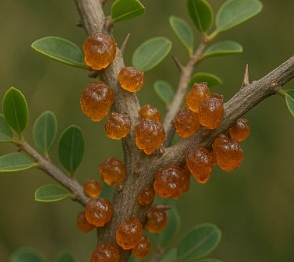
Commiphora myrrha
Rating : 7
| Evaluation | N. Experts | Evaluation | N. Experts |
|---|---|---|---|
| 1 | 6 | ||
| 2 | 7 | ||
| 3 | 8 | ||
| 4 | 9 | ||
| 5 | 10 |
Pros:
Anti-inflammatory (1) Antibacterial (1)7 pts from Al222
| Sign up to vote this object, vote his reviews and to contribute to Tiiips.Evaluate | Where is this found? |
| "Commiphora myrrha studies" about Commiphora myrrha Review Consensus 8 by Ottika12 (1952 pt) | 2020-Oct-23 16:51 |
| Read the full Tiiip | (Send your comment) |
Best studies on Myrrha:
Ecological studies of Commiphora genus (myrrha) in Makkah region, Saudi Arabia.
Alsherif EA.
Heliyon. 2019 May 7;5(5):e01615. doi: 10.1016/j.heliyon.2019.e01615.
Secondary metabolites from the resins of Aloe vera and Commiphora mukul mitigate lipid peroxidation.
Rehman NU, Al-Riyami SA, Hussain H, Ali A, Khan AL, Al-Harrasi A.
Acta Pharm. 2019 Sep 1;69(3):433-441. doi: 10.2478/acph-2019-0027.
Computational insight to putative anti-acetylcholinesterase activity of Commiphora myrrha (Nees), Engler, Burseraceae: a lessen of archaeopharmacology from Mesopotamian Medicine I.
Hussein BA, Karimi I, Yousofvand N.
In Silico Pharmacol. 2019 May 20;7(1):3. doi: 10.1007/s40203-019-0052-1.
Hibiscus extract, vegetable proteases and Commiphora myrrha are useful to prevent symptomatic UTI episode in patients affected by recurrent uncomplicated urinary tract infections.
Cai T, Tiscione D, Cocci A, Puglisi M, Cito G, Malossini G, Palmieri A.
Arch Ital Urol Androl. 2018 Sep 30;90(3):203-207. doi: 10.4081/aiua.2018.3.203.

Bioactive sesquiterpenoids and steroids from the resinous exudates of Commiphora myrrha.
Ge CY, Zhang JL.
Nat Prod Res. 2019 Feb;33(3):309-315. doi: 10.1080/14786419.2018.1448811.
A Pilot Study on Bioactive Constituents and Analgesic Effects of MyrLiq®, a Commiphora myrrha Extract with a High Furanodiene Content.
Germano A, Occhipinti A, Barbero F, Maffei ME.
Biomed Res Int. 2017;2017:3804356. doi: 10.1155/2017/3804356.
Evaluation of the Antibacterial Efficacy of Azadirachta Indica, Commiphora Myrrha, Glycyrrhiza Glabra Against Enterococcus Faecalis using Real Time PCR.
Anand S, Rajan M, Venkateshbabu N, Kandaswamy D, Shravya Y, Rajeswari K.
Open Dent J. 2016 May 11;10:160-5. doi: 10.2174/1874210601610010160
| Sign up to vote this object, vote his reviews and to contribute to Tiiips.EvaluateClose | (0 comments) |
| "Descrizione" about Commiphora myrrha Review Consensus 7 by Al222 (23249 pt) | 2025-Nov-30 11:17 |
| Read the full Tiiip | (Send your comment) |
Myrrh (Commiphora myrrha)
Description
Myrrh is an aromatic gum resin obtained mainly from the trunk and branches of various species of the genus Commiphora (especially Commiphora myrrha), belonging to the botanical family Burseraceae. These shrubs or small trees are typical of the arid regions of the Horn of Africa and the Arabian Peninsula. When the bark is incised, an exudate oozes out and, once exposed to air, solidifies into granules or “tears” of amber-brown color, with an intense, balsamic and slightly smoky scent, and a bitter, aromatic taste.
As a food ingredient, myrrh is used in very small amounts mainly as a flavoring in certain liqueurs, spirits, specialty confectionery and traditional preparations. It can also be included in spice blends and, historically and ritually, has been used to flavor wines or honey-based preparations. Because of its strong, bitterish flavor, it is dosed very carefully, often in the form of an extract or tincture, to impart balsamic, resinous and slightly smoky notes to recipes. Beyond food use, myrrh is well known as an ingredient in incense, perfumes and herbal products.
![]() | ![]() |
Botanical classification
Common name: myrrh, myrrh tree
Botanical name: Commiphora myrrha
Family: Burseraceae
Origin: Horn of Africa (Somalia, arid regions of Ethiopia and Kenya, Djibouti, Eritrea) and Arabian Peninsula (Yemen, Oman)
General features: Deciduous, very spiny shrub or small tree, usually up to about 4–5 m tall, with twisted trunk, flaking bark and small compound leaves that are shed in the dry season. The trunk and branches exude an aromatic gum-resin (myrrh) when incised; once dried, it forms granules or “tears”.
Cultivation and growing conditions
Climate
Typical species of arid and semi-arid environments.
Adapted to hot regions with very low annual rainfall, often concentrated in short rainy periods.
Tolerates intense heat and prolonged drought thanks to its deep root system and reduced leaf area.
Sensitive to prolonged frost; can withstand only brief, light, dry cold spells.
Exposure
Requires full sun throughout the day.
Shaded positions slow growth and resin production.
Ideal on open, stony, hilly or rocky slopes with good exposure.
Soil
Grows naturally on shallow, stony or rocky soils, often with calcareous parent material.
Needs excellent drainage and does not tolerate waterlogging.
Adapts to sandy, gravelly or sandy-loam soils, even with very low organic matter.
For ornamental pot culture, a very mineral substrate is recommended (e.g. coarse sand, pumice, lava rock) with a modest proportion of soil or compost.
Irrigation
In its natural habitat it survives with very little rainfall; it is therefore a strongly xerophilous species.
Under cultivation, watering must be moderate and infrequent, allowing the substrate to dry thoroughly between waterings.
Excess water easily causes root rot and decline.
In the first years after planting, a minimal water supply helps establishment, then should be gradually reduced.
Temperature
Grows best in hot climates, with temperatures roughly between 20 and 35 °C.
Withstands high temperature peaks if soil is well drained and air is dry.
Temperatures near 0 °C can damage young shoots and branch tips, especially in humid conditions.
In areas at risk of frost, it is preferable to grow it in containers and overwinter plants in a bright, frost-free place.
Fertilization
In nature it develops on very poor soils, so nutrient requirements are low.
In cultivation, modest applications of well-matured organic fertilizer or slow-release products are sufficient; excessive nitrogen should be avoided, as it promotes soft, drought-sensitive growth.
A light spring application of macroelements (nitrogen, phosphorus, potassium) can support vegetative regrowth and the formation of new tissues from which resin will be produced.
Crop care
Requires limited intervention, being a rustic species:
light pruning to remove dead or damaged wood and to control canopy size,
limited weed control around young plants in the establishment phase,
protection from excess moisture and from occasional frosts.
In container culture, excellent drainage is essential (large drainage holes, coarse inert material at the bottom) and repotting should be infrequent, moving to only slightly larger pots.
Possible pests (e.g. scale insects on plants grown indoors or in shelters) can be managed with targeted treatments and good air circulation.
Harvest
Myrrh resin is obtained by making small, controlled incisions in the bark of the trunk and main branches.
The exuding sap solidifies in contact with air, forming small drops that are collected once dried.
Incisions must be moderate and spaced out in time so as not to compromise tree vitality.
A single tree can be tapped for many years if tapping cycles and rest periods are well managed and overexploitation is avoided.
Propagation
Can be propagated from seed:
seeds require high, stable temperatures for germination,
germination is often slow and uneven.
In cultivation, hardwood or semi-hardwood cuttings are often used:
mature branches are taken in warm season,
cut surfaces are allowed to callus before planting in a very well-drained substrate,
watering remains minimal to avoid rotting.
Where conditions are favourable, layering or grafting onto related Commiphora species can also be used for specific cultivation needs.
Indicative nutritional values per 100 g
(Myrrh is not consumed as a food in meaningful amounts; these values are theoretical and have no practical dietary relevance.)
Energy (theoretical estimate): 250–350 kcal
Water: very low (dried resin)
Carbohydrates: mainly complex polysaccharides in the gum fraction
Protein: traces
Total fat: low, but with resinous and minor fatty-acid components
First occurrence of acronyms: SFA (saturated fatty acids, which should be moderated when overall fat intake is high), MUFA (monounsaturated fatty acids, generally more favourable when they replace sfa), PUFA (polyunsaturated fatty acids, involved in inflammation modulation and cardiovascular health).
sfa: mainly palmitic and other saturated fatty acids in trace amounts
mufa and pufa: present at low levels within the overall lipid fraction
Minerals: small amounts of calcium, magnesium, iron and trace elements
Not a meaningful source of vitamins for normal dietary use
Key constituents
Overall resin structure (approximate ranges)
2–8% essential oil (volatile fraction)
~23–40% resin (lipophilic fraction)
~40–60% gum (hydrophilic polysaccharides, mainly arabinogalactans and other complex sugars)
Essential oil fraction
Sesquiterpenes and sesquiterpenoids (e.g. curzerene, furanoeudesma-1,3-diene, β-elemene, germacrene derivatives).
Monoterpenes and oxygenated monoterpenes in some chemotypes (e.g. α-pinene, limonene).
Other aromatic compounds: alcohols, ketones, lactones, organic acids.
Resin fraction
Triterpenes and triterpenoids (e.g. lupeone, various amyrins).
Specific myrrh resin acids (myrrholic-type acids and related structures).
Small amounts of fatty acids (including sfa) and waxes.
Gum (polysaccharide) fraction
Arabinogalactans and other polysaccharides based on galactose, arabinose, xylose, mannose and related sugars.
These components have been studied experimentally for potential prebiotic or immunomodulatory effects, though evidence is still evolving and not directly translatable to routine dietary recommendations.
Production process
Tapping and collection
Controlled incisions in the bark of Commiphora myrrha trunks and branches after the rainy season.
Oleo-gum-resin exudes, drips and slowly solidifies into tears or irregular lumps.
Manual harvesting of the hardened pieces after sufficient drying on the tree.
Cleaning and grading
Removal of coarse impurities (sand, bark fragments).
Grading by colour, size, purity and homogeneity.
Further processing
Grinding to obtain powders or smaller granules.
Extraction with suitable solvents (hydroalcoholic, aqueous, lipophilic) to produce standardized extracts.
Steam distillation of the resin or resin fractions to obtain myrrh essential oil (Commiphora Myrrha Oil).
Commercial forms
Whole tears or granules of myrrh.
Dry or fluid extracts for herbal or pharmaceutical preparations where permitted.
Essential oil for perfumery, cosmetics, oral-care products and some technical uses.
Physical properties
Physical state: amorphous solid (tears, granules, chunks) at room temperature.
Colour: yellow-amber to reddish-brown, sometimes with dull or opaque surfaces.
Odour: characteristic warm, balsamic, resinous, slightly smoky.
Taste: bitter and aromatic.
Solubility:
Partially dispersible in water as a suspension or emulsion thanks to the gum fraction.
Soluble in alcohols and organic solvents for the resin and essential-oil fractions.
Sensory and technological properties
Aromatic profile
Warm, balsamic, resinous base note, long-lasting on skin and in products.
Sensory accords reminiscent of incense, woods and sweet spices, with subtle smoky nuances.
Technological role
In perfumery: acts as a base/fixative note, prolonging spicy, oriental, woody accords.
In foods (where permitted): used at extremely low levels as a flavouring in certain traditional confectionery or beverages.
In oral-care products (mouthwashes, toothpastes): contributes to balsamic aroma and, in combination with other actives, a sensation of cleanliness and freshness.
Behaviour in formulations
Can form suspensions/emulsions in aqueous systems through the hydrophilic gum fraction.
Essential oil is lipophilic and requires solubilisers/emulsifiers for use in water-based formulations.
Food applications
(Limited and regulated; myrrh is not a common food ingredient.)
Traditional flavouring in certain beverages, liqueurs or confectionery in specific cultural contexts, always at very low dosage.
Occasional use as a bitter-aromatic note in niche food products where authorised by local flavour regulations.
Overall, use in food is sporadic, specialised and not intended for everyday consumption.
Nutrition and health
Nutritional role
Myrrh has no meaningful nutritional role in normal diets because actual intake is extremely low.
Traditional and herbal use
Historically used in preparations for the oral cavity (gargles, mouthwashes, lozenges) for perceived benefits to mouth and throat comfort.
Used in ointments, balms and topical preparations in various traditional medical systems.
Bioactive compounds
Sesquiterpenes and triterpenes have been studied for potential antioxidant, antimicrobial and anti-inflammatory activities in experimental settings.
These data remain under investigation and do not replace the need for cautious, regulated use, especially for concentrated extracts and essential oil.
Fats
The lipid fraction is minor and irrelevant from a dietary point of view; discussion of SFA, MUFA and PUFA is primarily of chemical/analytical interest in this context.
Allergens and intolerances
Risk of skin sensitisation or irritation on direct contact with resin or essential oil in predisposed individuals.
Possible contact dermatitis or irritation from inappropriate topical use, especially on sensitive skin or at high concentrations.
Oral ingestion of resin or essential oil outside controlled, authorised use may cause gastrointestinal irritation and is not recommended without professional supervision.
Caution is advised in individuals with known allergies to other resins or essential oils, or with a history of multiple sensitivities.
Storage and shelf-life
Resin (tears, granules, powder)
Store in well-closed containers, protected from light, heat and moisture.
Under good conditions, the resin can maintain its properties for extended periods (months to years), though some loss of volatile top notes over time is expected.
Myrrh essential oil
Store in tightly closed, dark-glass bottles at cool, stable temperature.
Avoid prolonged exposure to light, air and heat to limit oxidation and degradation of terpenoids.
Shelf-life: typically a few years as indicated by the producer, assuming correct storage.
Safety and regulatory aspects
Resin and essential oil of myrrh are subject to specific regulations depending on their intended use (food flavourings, supplements, pharmaceuticals, cosmetics, technical products).
In food use (where authorised), myrrh may be included among flavouring substances considered acceptable at low levels, according to safety assessments by competent authorities.
In cosmetics, myrrh essential oil and extracts are regulated under general fragrance and cosmetic-ingredient safety rules, including limits related to irritation/sensitisation and the need for appropriate safety assessment and good manufacturing practice.
Myrrh and its essential oil can be classified as irritant and potential sensitisers at higher concentrations; adherence to recommended concentrations and risk assessments is essential.
Labelling
Typical cosmetic INCI names include:
Commiphora Myrrha Resin, Commiphora Myrrha Oil, Commiphora Myrrha Extract, Commiphora Myrrha Gum Extract (depending on the specific form).
In food products (where authorised as a flavouring), it may be declared under “natural flavouring” or specifically referenced to myrrh, according to local flavour-labelling rules.
In supplements/herbal products: declaration of the botanical name Commiphora myrrha, the part used (resin), extract type (titration, solvent) and recommended daily dose.
Troubleshooting
Resin becomes excessively brittle or powdery
Causes: ageing, very dry storage conditions, prolonged exposure to air.
Possible actions: use for powdered extracts or as incense; for many applications the material is still usable, but aromatic intensity may be lower.
Loss of aroma intensity
Causes: oxidation and volatilisation of aromatic components over time.
Solutions: improve storage (cool, dark, airtight containers) and rotate stock more frequently.
Solubility issues in formulations
Causes: complex nature (gum + resin + essential oil) and lipophilic behaviour of the resin fraction.
Solutions: use appropriate solubilisers/emulsifiers; pre-dissolve in suitable glycols, oils or selected solvents depending on application.
Skin irritation in cosmetic products
Causes: concentration too high, particularly sensitive skin, or cumulative exposure to multiple irritant fragrances.
Solutions: reduce myrrh concentration, combine with soothing agents, and comply with relevant safety guidelines and internal product safety assessments.
Sustainability and supply chain
Myrrh is sourced from arid and semi-arid ecosystems where resin collection can represent an important income for local communities.
Sustainable management requires:
Tapping practices that avoid long-term damage to trees.
Rotation of harvesting sites and appropriate rest periods for stands.
Protection of natural habitats from over-exploitation and land degradation.
Fair-trade schemes and certifications for sustainably harvested resins can help protect both the environment and resin-collecting communities.
Main INCI functions (cosmetics)
(For ingredients such as Commiphora Myrrha Resin, Commiphora Myrrha Oil, Commiphora Myrrha Extract.)
Fragrance: provides warm, resinous, balsamic, slightly spicy notes in perfumes, body-care products and beard-care formulations.
Masking: helps to soften or cover less pleasant base odours in complex formulations.
Skin conditioning: resin, oil and gum fractions can contribute to a perception of comfort and suppleness in balms, ointments and creams.
Mild soothing: often combined with other extracts in products for dry or stressed skin and in some oral-care formulations (mouthwashes, gum gels) within permitted limits.
Antioxidant / formula protection: terpenic and phenolic constituents may contribute modestly to oxidative stability in certain formulations.
Conclusion
Myrrh (Commiphora myrrha) is a historically important aromatic resin that, from a modern technical perspective, is a complex mixture of essential oil, resin and polysaccharide gum. It is not a conventional food item but a specialised aromatic and functional ingredient used in perfumery, cosmetics, oral care, and in certain regulated food and herbal applications. Its chemistry underpins a distinctive warm, balsamic odour and has stimulated extensive research into potential biological activities, while also requiring careful attention to dosage, formulation and safety. When integrated into responsibly managed supply chains that protect both source ecosystems and local communities, myrrh functions as a valuable bridge between traditional uses and modern scientific and cosmetic applications.
Studies
Traditionally, myrrh has been used as an antiseptic to clean wounds and to treat various other ailments. It's believed to have anti-inflammatory and analgesic properties and has been used in traditional medicines for gum diseases, ulcers, and more.
Myrrh has some interesting healing properties and is used in medicine and traditional medicine such as:
Mini-glossary
SFA – Saturated fatty acids; fats that, when consumed in excess, tend to raise LDL (“bad”) cholesterol and cardiovascular risk.
MUFA – Monounsaturated fatty acids; fats that can improve blood lipid profiles when they replace saturated fats in the diet.
PUFA – Polyunsaturated fatty acids; include omega-3 and omega-6 families, important for cell membranes, inflammation modulation and cardiovascular health.
INCI – International Nomenclature of Cosmetic Ingredients; the international system used to name cosmetic ingredients on product labels.
References________________________________________________________________________
(1) Dolara P, Luceri C, Ghelardini C, Monserrat C, Aiolli S, Luceri F, Lodovici M, Menichetti S, Romanelli MN Analgesic effects of myrrh Nature. 1996 Jan 4;379(6560):29. doi: 10.1038/379029a0.
(2) Su S, Wang T, Duan JA, Zhou W, Hua YQ, Tang YP, Yu L, Qian DW Anti-inflammatory and analgesic activity of different extracts of Commiphora myrrha. J Ethnopharmacol. 2011 Mar 24; 134(2):251-8.
(3) Dolara P, Corte B, Ghelardini C, Pugliese AM, Cerbai E, Menichetti S, Lo Nostro A Local anaesthetic, antibacterial and antifungal properties of sesquiterpenes from myrrh. Planta Med. 2000 May; 66(4):356-8. doi: 10.1055/s-2000-8532.
Abstract. We extracted, purified and characterized 8 sesquiterpene fractions from Commyphora molmol. In particular, we focused our attention on a mixture of furanodiene-6-one and methoxyfuranoguaia-9-ene-8-one, which showed antibacterial and antifungal activity against standard pathogenic strains of Escherichia coli, Staphylococcus aureus, Pseudomonas aeruginosa and Candida albicans, with minimum inhibitory concentrations ranging from 0.18 to 2.8 micrograms/ml. These compounds also had local anaesthetic activity, blocking the inward sodium current of excitable mammalian membranes.
(4) Eldishain, K. M. A. A. (2015). Antifungal activity of Commiphora myrrha (Almurr Alhigazy) against Aspergillus species isolated from Fungal Sinusitis of Sudanese patients (Doctoral dissertation, Sudan University of Science & Technology).
Abstract:. Fungal sinusitis is a serious problem that leads patients to seek medical care. The aim of this study was to test the antifungal activity of Commiphora myrrha (almurr alhigazy) on Aspergillus species among Sudanese patients. Seventy specimens were collected from patients with symptoms of fungal sinusitis, attended ENT hospital Khartoum, during the period from April to October 2015. Different concentrations in methanol, petroleum ether, volatile oil and aqueous extracts of Commiphora myrrha were screened for their antifungal activity against clinical isolates of Aspergillus species (Aspergillus flavus, A.fumigatus, and A.terreus) and standard Aspergillus niger ATCC9763, using the agar diffusion and dilution methods. The antifungal activity of two reference drugs: Itraconazole and Amphotericin B were determined against standard and clinical isolates and their activity was compared to the activity of C.myrrha extracts. From this study it was found that fungal sinusitis has high frequency in females of age 21-40 years group with one year as a history of disease. Aspergillus flavus was the major isolate. A significant association (P=0.001) was found between operation numbers and fungal sinusitis. Methanol, petroleum ether and volatile oil extracts of the C. myrrha exhibited high activity against Aspergillus flavus, A.fumigatus, A.terreus and A.niger. While aqueous extract exhibited no activity against them. Broth dilution revealed that the Minimum Inhibitory Concentration (MIC) was 6.25mg/ml for methanol and volatile oil extracts and 12.5 mg/ml for petroleum ether extract. The Minimum Cidal Concentration (MIC) was 12.5 mg/ml for methanol and volatile oil extracts and 25 mg/ml for petroleum ether extract. Amphotericin B was found effective against Aspergillus flavus, A.fumigatus, A.terreus and A.niger, while all isolates and A.niger except A.terreus were found resistant to Itraconazole. The volatile oil, methanol and petroleum ether extract of C. myrrha exihibited high activity against tested Aspergillus species, and more effective than Itraconazole and Amphotericin B. Gas chromatography analysis exhibited 10 compounds of C. myrrha and also compounds are identified qualitatively by the Retention time, and quantitatively by the area under the curve.
(5) Shoemaker M, Hamilton B, Dairkee SH, Cohen I, Campbell MJ In vitro anticancer activity of twelve Chinese medicinal herbs.Phytother Res. 2005 Jul; 19(7):649-51.
Abstract. Aqueous extracts of 12 Chinese medicinal herbs, Anemarrhena asphodeloides, Artemisia argyi, Commiphora myrrha, Duchesnea indica, Gleditsia sinensis, Ligustrum lucidum, Rheum palmatum, Rubia cordifolia, Salvia chinensis, Scutellaria barbata, Uncaria rhychophylla and Vaccaria segetalis were evaluated for their antiproliferative activity on eight cancer cell lines as well as on normal human mammary epithelial cells. Five human and three murine cancer cell lines representing different tissues (breast, lung, pancreas and prostate) were used. All the crude aqueous extracts demonstrated growth inhibitory activity on some or all of the cancer cell lines, but only two showed activity against the normal mammary epithelial cells. Overall, the murine cell lines tended to be more sensitive to most of the extracts compared with the human cell lines. Among the human cell lines, cell type specificity was observed for two extracts. These results indicate the potential use of traditional Chinese medicinal herbs as antineoplastic agents and suggest that further studies evaluating their mechanism(s) of action and the isolation of active antitumor compounds are warranted.
| Sign up to vote this object, vote his reviews and to contribute to Tiiips.EvaluateClose | (0 comments) |
Read other Tiiips about this object in __Italiano (2)
Content:  
Last update:   2023-07-28 17:42:59 | Kcal/100g:   Family:   Threat factors:   |

