

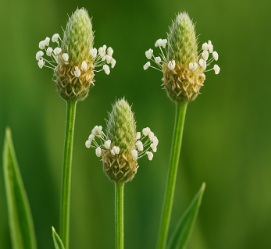
Psyllium
Rating : 8
| Evaluation | N. Experts | Evaluation | N. Experts |
|---|---|---|---|
| 1 | 6 | ||
| 2 | 7 | ||
| 3 | 8 | ||
| 4 | 9 | ||
| 5 | 10 |
Pros:
Anti-costipative (1) Anti-cholesterolemic (1) Cardioprotective (1)Cons:
To be taken in controlled quantity (1)10 pts from Whiz35
| Sign up to vote this object, vote his reviews and to contribute to Tiiips.Evaluate | Where is this found? |
| "Psyllium studies" about Psyllium Review Consensus 8 by Whiz35 (11982 pt) | 2019-Aug-24 17:20 |
| Read the full Tiiip | (Send your comment) |
Review of isolation, structural properties, chain conformation, and bioactivities of psyllium polysaccharides.
Zhang J, Wen C, Zhang H, Duan Y.
Int J Biol Macromol. 2019 Aug 2;139:409-420. doi: 10.1016/j.ijbiomac.2019.08.014.
Comparing the chemical composition of dietary fibres prepared from sugarcane, psyllium husk and wheat dextrin.
Chong RWW, Ball M, McRae C, Packer NH.
Food Chem. 2019 Nov 15;298:125032. doi: 10.1016/j.foodchem.2019.125032.
Supplementation with psyllium seed husk reduces myocardial damage in a rat model of ischemia/reperfusion.
Lim SH, Lee J.
Nutr Res Pract. 2019 Jun;13(3):205-213. doi: 10.4162/nrp.2019.13.3.205.
Physicochemical, scavenging and anti-proliferative analyses of polysaccharides extracted from psyllium (Plantago ovata Forssk) husk and seeds.
Patel MK, Tanna B, Gupta H, Mishra A, Jha B.
Int J Biol Macromol. 2019 Jul 15;133:190-201. doi: 10.1016/j.ijbiomac.2019.04.062.
The effects of psyllium supplementation on body weight, body mass index and waist circumference in adults: A systematic review and dose-response meta-analysis of randomized controlled trials.
Darooghegi Mofrad M, Mozaffari H, Mousavi SM, Sheikhi A, Milajerdi A.
Crit Rev Food Sci Nutr. 2019 Mar 18:1-14. doi: 10.1080/10408398.2018.1553140
The Effect of Psyllium Husk on Intestinal Microbiota in Constipated Patients and Healthy Controls.
Jalanka J, Major G, Murray K, Singh G, Nowak A, Kurtz C, Silos-Santiago I, Johnston JM, de Vos WM, Spiller R.
Int J Mol Sci. 2019 Jan 20;20(2). pii: E433. doi: 10.3390/ijms20020433.
Effect of flaxseed or psyllium vs. placebo on management of constipation, weight, glycemia, and lipids: A randomized trial in constipated patients with type 2 diabetes.
Soltanian N, Janghorbani M.
Clin Nutr ESPEN. 2019 Feb;29:41-48. doi: 10.1016/j.clnesp.2018.11.002.
Effect of Psyllium Fiber Supplementation on Diarrhea Incidence in Enteral Tube-Fed Patients: A Prospective, Randomized, and Controlled Trial.
Lertpipopmetha K, Kongkamol C, Sripongpun P.
JPEN J Parenter Enteral Nutr. 2019 Aug;43(6):759-767. doi: 10.1002/jpen.1489.
Safety
Intestinal obstruction caused by a laxative drug (Psyllium): A case report and review of the literature.
Hefny AF, Ayad AZ, Matev N, Bashir MO.
Int J Surg Case Rep. 2018;52:59-62. doi: 10.1016/j.ijscr.2018.10.001.
| Sign up to vote this object, vote his reviews and to contribute to Tiiips.EvaluateClose | (0 comments) |
| "Descrizione" about Psyllium Review Consensus 10 by Whiz35 (11982 pt) | 2025-Dec-03 16:19 |
| Read the full Tiiip | (Send your comment) |
Psyllium (Plantago ovata Forssk.)
Psyllium from Plantago ovata Forssk. consists mainly of the seed husk (outer coat or “husk”) and, to a lesser extent, the whole seed. The seeds are small, oval–elongated, with a colour ranging from yellow-brown to reddish-brown. The most relevant fraction from a technological standpoint is the outer cuticle, made up of cell wall layers rich in hydrophilic polysaccharides (mucilages). When in contact with water, these components absorb the liquid and form a viscous gel, causing a marked increase in volume.
From a compositional point of view, psyllium is characterised by a high content of soluble fibre and, to a variable extent, insoluble fibre, with very low levels of lipids and proteins. The mucilages are mainly composed of arabinose, xylose and other sugars that contribute to the formation of a colloidal matrix capable of modifying the viscosity of aqueous systems. The whole seed, in addition to the mucilaginous husk, contains an endosperm and embryo with minor fractions of starch, proteins and lipids.
In physical–functional terms, ground or flaked psyllium shows a high water-binding capacity and significant gelling ability, which affect the structure of doughs, dry mixes and rehydrated products. In food formulations it is used in small percentages to increase fibre content, improve water retention, stabilise structure or modify the texture of bakery products, instant mixes and granular preparations. Particle size, husk purity and hydration conditions (water/psyllium ratio, time and temperature) significantly determine the final viscosity and the rheological properties of the system in which psyllium is incorporated.
![]() | ![]() |
Botanical classification
Common name: psyllium, blond psyllium
Clade: Angiosperms
Order: Lamiales
Family: Plantaginaceae
Genus: Plantago
Species: Plantago ovata Forssk.
Climate
Psyllium is an annual herbaceous species typical of arid and semi–arid climates with a cool season. It adapts well to areas with mild winters and hot, dry summers, with limited rainfall during the crop cycle. It prefers moderate temperatures, generally between 10 and 25 °C during germination and vegetative growth. Excess humidity and prolonged rain close to seed maturation can compromise the quality and health of the crop.
Exposure
The crop requires full light to express its production potential. In full sun, plants develop short, erect stems and compact inflorescences; under strong shade plants elongate, are weaker, and produce fewer spikes and seeds.
Soil
Psyllium adapts well to light, sandy or sandy–loam soils, well drained, with pH from slightly acidic to neutral. Very clayey, compact soils or those prone to waterlogging are unfavourable, as they increase the incidence of root rots and make harvesting more difficult. A moderate level of organic matter improves soil structure, but excessive fresh organic inputs should be avoided as they encourage lodging and weed pressure.
Irrigation
Psyllium is relatively drought tolerant, but benefits from a moderate and stable soil moisture especially in the early growth stages. Supplementary irrigation can be useful in case of drought during germination and emergence. It is important to avoid waterlogging and excessive water near flowering and spike maturation, to preserve the quality of the mucilaginous seeds.
Temperature
Germination usually occurs at temperatures above 8–10 °C, with optimal development between 15 and 22 °C. Short episodes of moderate cold are generally tolerated in early stages, whereas severe or late frosts can severely damage seedlings and inflorescences. Excessively high temperatures, combined with drought and dry winds, accelerate maturation but may reduce seed size and overall yield.
Fertilization
Psyllium has moderate nutrient requirements and needs balanced fertilization with nitrogen (N), phosphorus (P) and potassium (K):
Phosphorus is important for root system development and good flowering;
Potassium contributes to tolerance to water and heat stress;
Nitrogen should be applied in moderate amounts to avoid excessive vegetative growth at the expense of seed set and to reduce lodging risk.
In many growing areas, a moderate application of well–matured organic amendment before sowing, integrated with small doses of mineral fertilizer, is sufficient.
Crop care
Main cultivation practices include:
Weed control, especially critical in early stages, via hoeing and/or selective weeding, since psyllium is poorly competitive;
Maintaining a loose soil without surface crust, to favour aeration and uniform water infiltration;
Appropriate crop rotation to reduce pressure from soil–borne pathogens and difficult weeds;
Monitoring of fungal diseases and possible pests (e.g. defoliating or sap–sucking insects), and applying integrated pest management strategies when necessary.
It is advisable to avoid repeated cultivation of Allium or Plantaginaceae on the same field for several years.
Harvesting
Harvest is carried out when the spikes are mature and the seeds have reached their typical colour (yellow–brown to light brown) and a dry, firm consistency. In extensive cultivation, combine harvesting is generally used, with machine settings adjusted to minimise seed loss. After harvesting, the product should be cleaned, dried to an appropriate moisture content and properly stored to preserve the quality of the mucilage contained in the seed coat.
Propagation
Propagation takes place by seed, usually through direct sowing in the field:
sowing is carried out in rows or broadcast, with shallow seed placement, to ensure uniform emergence;
an appropriate seeding rate allows good soil cover and adequate production of inflorescences.
In specialised production, the use of certified or controlled seed helps maintain varietal purity and consistent product quality in terms of mucilage content and commercial characteristics.
(Average ranges; real products vary slightly.)
Energy: 190–260 kcal
Protein: 1–4 g
Total fat: 0.5–2 g
SFA (Saturated Fatty Acids): negligible share
MUFA and PUFA: minor fractions compared with fibre
Available carbohydrates (excluding fibre): 2–10 g (residual)
Total dietary fibre: 78–88 g
Predominantly soluble, gel-forming fibre
Minerals: small amounts of potassium, calcium, magnesium, others in traces
Because normal serving sizes are only a few grams, the caloric contribution per typical dose is low, while the fibre contribution is very high.
Mucilage polysaccharides (mainly arabinoxylans / heteroxylans)
Soluble and insoluble dietary fibre (arabinose, xylose and other sugar units)
Small protein fraction
Small lipid fraction (triglycerides, phospholipids, sterols)
Mineral ash (K, Ca, Mg and others in variable traces)
Cultivation
Plantago ovata is grown in dry or semi-arid regions with appropriate agronomic management.
Harvesting and cleaning
Mature seeds are harvested, threshed and cleaned to remove plant debris and foreign matter.
Husk separation
Mechanical processes detach the seed coat (husk) from the seed.
Sizing and milling
Husks are sieved and classified as whole husk or milled to powder.
Stabilisation and packaging
Low-moisture stabilisation where needed, followed by packaging in moisture-barrier containers or bags.
Form: light flakes, small fragments or fine powder
Colour: pale beige to light brown
Odour and taste: very slight, essentially neutral
Very high water absorption and swelling capacity
Strong gel formation in the presence of water
Dry texture: granular or powdery
Hydrated texture: viscous, gel-like, sometimes perceived as “slimy”
Neutral flavour, making it suitable for many food applications
Technological roles:
gelling agent
thickener
texture improver and moisture-retainer in bakery formulations
structure enhancer in high-fibre or gluten-reduced recipes
Bakery applications (breads, flatbreads, crackers) to increase dough hydration, softness and volume
Addition to yogurt, smoothies, soups and purees
“High-fibre” and functional foods
Plant-based or gluten-reduced formulations as a natural binder and structuring agent
The main nutritional interest of psyllium comes from its very high soluble fibre content and gel-forming ability. Within an overall balanced diet and adequate hydration, psyllium can contribute to:
modulation of post-prandial glycaemic response
increased satiety due to gastric swelling and delayed gastric emptying
bowel regularity and stool normalisation (softening in constipation, increased bulk in low-fibre diets)
support of lipid profile management (particularly LDL-cholesterol), when used in appropriate doses as part of a controlled diet
These effects depend on dose, timing of intake and individual health status, and should not be interpreted as pharmacological claims.
Typical food-use doses are around 2–5 g psyllium husk per portion, adjusted according to the recipe. When consumed as a fibre supplement, dosage should follow medical or professional advice and always be accompanied by plenty of fluids.
Psyllium can cause allergic reactions in susceptible individuals (documented, though relatively rare).
May provoke gastrointestinal symptoms (bloating, discomfort) if taken in high doses or with insufficient fluid.
In industrial formulations, psyllium must be clearly listed in the ingredients, and any known cross-contamination risks should be declared.
Store in a cool, dry place, protected from moisture.
Keep packaging tightly closed to avoid water uptake and clumping.
Typical shelf-life: 12–36 months, depending on processing and packaging.
Exposure to humidity leads to loss of flowability, lump formation and possible microbiological risk over time.
Psyllium ingredients are subject to general food law requirements for contaminants and hygiene.
Manufacturers must apply GMP/HACCP systems and maintain full lot traceability.
In foods and supplements, psyllium must be declared in the ingredient list, along with any specific warnings (e.g. need for adequate fluid intake, use under medical supervision in certain conditions).
For food and supplement uses, the label should indicate at least:
name of the ingredient (e.g. “Psyllium husk – Plantago ovata”)
product form (whole husk, powder)
ingredient declaration in descending order of weight
recommended daily amount and instructions for safe use, where applicable
any advisory statements on allergy risk and fluid intake
Common issues
Clumping and poor dispersion
caused by rapid water uptake and surface gel formation.
Overly thick or rubbery texture in finished products
due to excessive dosage.
Unpleasant mucilaginous mouthfeel
perception issues when used at high levels in drinks or thin textures.
Preventive measures
Pre-dispersing psyllium in part of the liquid phase with good agitation
Using moderate doses and combining with other fibres or texturising agents
Ensuring adequate liquid-to-solid ratio in recipes
In cosmetics, psyllium-derived ingredients (e.g. Plantago Psyllium Husk Powder, Plantago Ovata Husk Powder) are used with several function types, such as:
Skin conditioning (helps keep skin in good condition)
Emulsion stabilising (supports emulsion formation and stability)
Thickening and viscosity control in creams, gels and lotions
Mild abrasive in some exfoliating or cleansing products (depending on particle size)
All cosmetic use must comply with applicable cosmetic regulations and safety assessments at finished-product level.
Psyllium (Plantago ovata husk) is a highly concentrated source of soluble, gel-forming fibre with a strong capacity to absorb water and form viscous gels. In food applications, it improves texture, moisture retention and structure, while contributing significantly to dietary fibre intake and supporting bowel function and metabolic control when used correctly.
Its use requires careful attention to dosage and hydration, both for technological performance and for consumer safety and comfort. In cosmetic formulations, psyllium-based ingredients provide natural thickening, conditioning and stabilising effects aligned with “clean-label” product trends.
SFA: Saturated Fatty Acids. Fats which, in excess, are associated with increased cardiovascular risk; psyllium contains only very small amounts.
MUFA: MonoUnsaturated Fatty Acids. A group of unsaturated fats generally considered favourable in a balanced diet.
PUFA: PolyUnsaturated Fatty Acids. Includes essential fatty acids; adequate intake can help support a healthy lipid profile.
GMP/HACCP: Good Manufacturing Practices / Hazard Analysis and Critical Control Points. Systems that ensure quality, hygiene and safety throughout production and processing.
BOD/COD: Biochemical Oxygen Demand / Chemical Oxygen Demand. Wastewater quality indicators used to evaluate the organic and oxidisable load of process effluents and their environmental impact.
Studies
It is a highly soluble viscose fiber and its seeds are used by traditional medicine for the treatment of constipation, diarrhea, irritable bowel syndrome, inflammatory bowel diseases, ulcerative colitis, colon cancer, diabetes and hypercholesterolemia (1).
There are several methods used as adjuvant therapy to alleviate the symptoms of constipation: probiotics, fibers, laxatives and changing eating habits. Psyllium demonstrated an ability to increase the frequency of bowel movement in a study lasting 6 months (2).
The scientific literature has identified viscous dietary fibres as a potential food for cholesterol reduction. This research confirmed the role of Psyllium in delaying the risk of cardiovascular disease associated with atherosclerosis in people with or without hypercholesterolemia (3).
References_________________________________________________________________________
(1) Marlett JA, Fischer MH. The active fraction of psyllium seed husk. Proc Nutr Soc. 2003 Feb;62(1):207-9. doi: 10.1079/pns2002201. PMID: 12749348.
Abstract. A series of experiments and evaluations of fractions isolated from psyllium seed husk (PSH) were used to test the overall hypothesis that a gel-forming component of PSH is not fermented and that it is this component that is responsible for the laxative and cholesterol-lowering properties of PSH. A gel is isolated from human stools collected during a controlled diet study when PSH is consumed but not when the control diet only is consumed. Evaluations of three fractions isolated from PSH suggest that gel-forming fraction B, which is about 55% of PSH, is poorly fermented and is the component that increases stool moisture and faecal bile acid excretion, the latter leading to lower blood cholesterol levels. Fraction C, representing < 15% of PSH, is viscous, but is rapidly fermented. Fraction A is alkali-insoluble material that is not fermented. In concentrations comparable with their presence in PSH, fractions A and C do not alter moisture and bile acid output. The active fraction of PSH is a highly-branched arabinoxylan consisting of a xylose backbone and arabinose- and xylose-containing side chains. In contrast to arabinoxylans in cereal grains that are extensively fermented, PSH possesses a structural feature, as yet unidentified, that hinders its fermentation by typical colonic microflora.
(2) Cheng J, Tennilä J, Stenman L, Ibarra A, Kumar M, Gupta KK, Sharma SS, Sen D, Garg S, Penurkar M, Kumar S, Ouwehand AC. Influence of Lactitol and Psyllium on Bowel Function in Constipated Indian Volunteers: A Randomized, Controlled Trial. Nutrients. 2019 May 21;11(5). pii: E1130. doi: 10.3390/nu11051130.
Abstract. Psyllium and lactitol have been reported to increase fecal volume, moisture content and bowel movement frequency (BMF). However, the benefits of their combined use on constipation has not been examined. The aim of this study was to evaluate the effects of a 4-week intervention with lactitol and/or psyllium on bowel function in constipated volunteers. Adults (N = 172) who were diagnosed with functional constipation per Rome III criteria were randomized to four treatment groups: 10 g lactitol, 3.5 g psyllium, a combination of 10 g lactitol and 3.5 g psyllium, or placebo. The primary endpoint was change in BMF from Day 0 to 28 as compared to placebo. Secondary endpoints were assessed by inventories, including stool consistency, patient assessment of constipation symptoms and quality of life, relief of constipation, 24-h food recall, physical activity, product satisfaction and adverse events (AE). BMF increased by 3.0 BMs with lactitol, by 2.9 with psyllium, and by 3.1 with the combination, but was not different from placebo (3.7 BMs). Other clinical endpoints were similar between treatments. No serious AEs were reported. In conclusion, this study showed a similar effect on relief of constipation in all treatment groups. The treatments that were administered to the volunteers were well tolerated.
(3) Jovanovski E, Yashpal S, Komishon A, Zurbau A, Blanco Mejia S, Ho HVT, Li D, Sievenpiper J, Duvnjak L, Vuksan V. Effect of psyllium (Plantago ovata) fiber on LDL cholesterol and alternative lipid targets, non-HDL cholesterol and apolipoprotein B: a systematic review and meta-analysis of randomized controlled trials. Am J Clin Nutr. 2018 Nov 1;108(5):922-932. doi: 10.1093/ajcn/nqy115.
Abstract. Background: Studies have identified viscous dietary fiber as potentially attenuating cholesterol, including psyllium, which reduces LDL cholesterol and thus may complement cardiovascular disease (CVD) treatment. Objectives: The aims of this study were to update evidence on the effect of psyllium on LDL cholesterol and to provide an assessment of its impact on alternate markers: non-HDL cholesterol and apolipoprotein B (apoB)....Conclusion: Psyllium fiber effectively improves conventional and alternative lipids markers, potentially delaying the process of atherosclerosis-associated CVD risk in those with or without hypercholesterolemia. This trial is registered at www.clinicaltrials.gov as NCT03346733.
| Sign up to vote this object, vote his reviews and to contribute to Tiiips.EvaluateClose | (0 comments) |
Read other Tiiips about this object in __Italiano (2)
Content:  
Last update:   2019-08-24 17:23:19 | Kcal/100g:   200 Family:   Threat factors:   |

