

Kale
Rating : 9
| Evaluation | N. Experts | Evaluation | N. Experts |
|---|---|---|---|
| 1 | 6 | ||
| 2 | 7 | ||
| 3 | 8 | ||
| 4 | 9 | ||
| 5 | 10 |
Pros:
Anti-inflammatory (1) Antioxidant (1)10 pts from Cpt98
| Sign up to vote this object, vote his reviews and to contribute to Tiiips.Evaluate | Where is this found? |
| "Black kale studies" about Kale Review Consensus 8 by Cpt98 (3271 pt) | 2019-Jul-15 19:03 |
| Read the full Tiiip | (Send your comment) |
Screening and identification of major phytochemical compounds in seeds, sprouts and leaves of Tuscan black kale Brassica oleracea (L.) ssp acephala (DC) var. sabellica L.
Giorgetti L, Giorgi G, Cherubini E, Gervasi PG, Della Croce CM, Longo V, Bellani L.
Nat Prod Res. 2018 Jul;32(14):1617-1626. doi: 10.1080/14786419.2017.1392953.
Abscisic acid and ethylene biosynthesis-related genes are associated with anthocyanin accumulation in purple ornamental cabbage (Brassica oleracea var. acephala).
Jin SW, Rahim MA, Jung HJ, Afrin KS, Kim HT, Park JI, Kang JG, Nou IS.
Genome. 2019 May 27:1-14. doi: 10.1139/gen-2019-0038
Effects of different cooking methods on the antioxidant capacity and flavonoid, organic acid and mineral contents of Galega Kale (Brassica oleracea var. acephala cv. Galega).
Armesto J, Gómez-Limia L, Carballo J, Martínez S.
Int J Food Sci Nutr. 2019 Mar;70(2):136-149. doi: 10.1080/09637486.2018.1482530.
Kale (Brassica oleracea var. acephala) as a superfood: Review of the scientific evidence behind the statement.
Šamec D, Urlić B, Salopek-Sondi B.
Crit Rev Food Sci Nutr. 2018 Mar 20:1-12. doi: 10.1080/10408398.2018.1454400.
| Sign up to vote this object, vote his reviews and to contribute to Tiiips.EvaluateClose | (0 comments) |
| "Descrizione" about Kale Review Consensus 10 by Cpt98 (3271 pt) | 2025-Dec-02 09:01 |
| Read the full Tiiip | (Send your comment) |
Kale, Black kale (Brassica oleracea var. acephala)
(also known as Tuscan kale, Lacinato kale, cavolo nero)
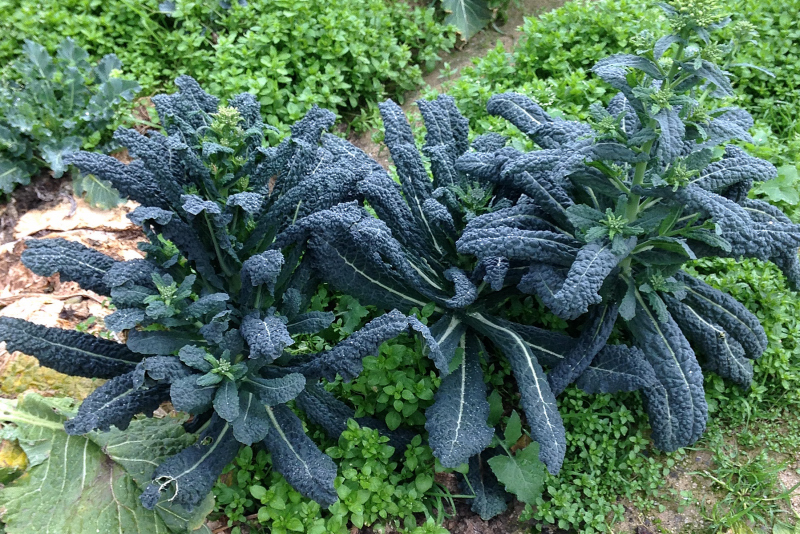
Black kale, often called Tuscan kale, Lacinato kale or by its Italian name cavolo nero, is a leafy variety of Brassica oleracea in the Brassicaceae family. Unlike headed cabbages, it does not form a compact “head” but produces an open rosette and central stalk with numerous elongated leaves.
The plant has a sturdy upright stem and long, narrow leaves that are dark green to almost black, heavily crinkled and deeply veined. The leaf surface is bumpy (“dinosaur skin” in some English names), with a thick central rib and slightly irregular edges. The extremely dark colour and robust structure reflect a high content of chlorophyll, carotenoids and other phytonutrients.
Black kale grows well in temperate to cool climates and is particularly tolerant of cold weather. Exposure to low temperatures often improves its flavour, making it slightly sweeter and less bitter. It is traditionally associated with central Italy (especially Tuscany), where it is a key ingredient in rustic soups and winter dishes. Leaves are harvested when they are well-developed but still tender, usually starting from the lower part of the plant and moving upwards as new leaves grow.

Botanical classification
Common name: Kale, Black kale (Tuscan kale)
Clade: Angiospermae
Order: Brassicales
Family: Brassicaceae
Genus: Brassica
Species: Brassica oleracea L. var. acephala
Climate
Kale prefers a cool, temperate climate, with mild autumns and winters, where it expresses its best quality. It tolerates cold and temperatures close to 0 °C well, which often improve leaf texture and flavour, while it suffers under prolonged excess heat, which can cause growth checks and tougher leaves.
Exposure
The ideal exposure is full sun, especially during the cooler months, to ensure efficient photosynthesis and vigorous leaf growth. In areas with very hot summers, light shading during the central hours of the day can be useful in the early stages of development, but in general black cabbage appreciates abundant light.
Soil
Kale grows best in medium–textured, deep, well–drained soils rich in organic matter, with a generally neutral to slightly subalkaline pH. A soft, well–worked soil without waterlogging supports a strong root system and balanced growth. Soils that are too compact or subject to poor aeration can cause growth slowdown and greater susceptibility to rot.
Irrigation
Irrigation should be regular but not excessive, keeping the soil consistently moist, especially during transplanting and early growth. Once well established, black cabbage tolerates short dry periods, but prolonged lack of water reduces growth and leaf quality. It is preferable to water in the morning or late afternoon, avoiding standing water and prolonged wet foliage. Mulching helps to reduce evaporation and stabilise soil moisture.
Temperature
The optimal temperature range for growth is generally between 10 and 20 °C. Black cabbage tolerates lower values, even slightly below 0 °C for short periods, while high, prolonged temperatures above 25–26 °C combined with low water availability can cause physiological stress, less tender leaves and reduced yield.
Fertilization
Fertilization is based on a good supply of well–matured organic matter before planting, to improve soil structure and provide a nutrient reserve. As a crop with strong leaf production, it needs a balanced availability of nitrogen, phosphorus and potassium. Nitrogen should be supplied in moderation and, if necessary, in small top dressings, to support growth without encouraging excessive, overly soft foliage; phosphorus and potassium contribute to plant strength and leaf quality.
Crop care
Crop care includes weed control by light hoeing or mulching, especially in the early development stages, and maintaining a loose soil surface to improve aeration and drainage. It is important to monitor for typical brassica pests (such as aphids and leaf–feeding caterpillars) and any fungal diseases, and to intervene promptly with appropriate methods, using crop rotation to reduce pest and disease pressure.
Harvest
Kale is harvested gradually by removing the outer, well–developed leaves as they reach the desired size, leaving the central growing point to allow new regrowth. The harvest period often extends for several months, especially in autumn and winter. It is advisable to harvest after the plants have experienced some cold, when the leaves are generally more tender and have a better flavour.
Propagation
Propagation is by seed, sown in seedbeds or plug trays and followed by transplanting to the field when seedlings have developed several true leaves and a sufficiently strong root system. Alternatively, direct sowing in the field is possible, followed by thinning to give each plant enough space. Plant spacing should allow good light exposure and aeration, encouraging robust plants and making leaf harvesting easier.
(raw leaves, edible portion)
Energy: ~ 35–40 kcal
Water: ~ 88–90 g
Total carbohydrates: ~ 5–6 g
Dietary fiber: ~ 2–3 g
Proteins: ~ 2–3 g
Total fats: ~ 0.5–1 g
SFA: traces
MUFA / PUFA: small amounts of unsaturated fats
Minerals: significant amounts of calcium, magnesium, potassium, iron, phosphorus
Vitamins: high in vitamin C, good levels of provitamin A (carotenoids), vitamin K and B-group vitamins
Phytonutrients: sulphur-containing compounds, flavonoids, chlorophyll and other antioxidants
Exact values vary with variety, season, growing conditions and freshness.
Water, the main component of the fresh leaves
Dietary fiber, supporting digestive health
Plant proteins in modest but meaningful amounts for a leafy vegetable
Vitamins: vitamin C, provitamin A (carotenoids), vitamin K, B-group vitamins
Minerals: calcium, potassium, magnesium, iron, phosphorus and trace elements
Phytonutrients and bioactive compounds: sulphur compounds typical of Brassicaceae, flavonoids and other natural antioxidants
Small lipid fraction, mainly unsaturated fats
Cultivation
adapted to temperate–cool climates, well suited for autumn and winter cropping
prefers deep, fertile, well-drained soils rich in organic matter
Sowing / transplanting
seeds often sown in nursery beds and seedlings transplanted to open field
or direct sowing in late summer/early autumn, depending on climate
Growth
forms an open rosette and a central stem with multiple elongated leaves
requires regular irrigation without waterlogging; excessive stress can reduce tenderness and yield
Harvest
leaves picked in several cuts: lower mature leaves first, leaving younger leaves to continue developing
harvest may continue throughout the cool season; slight frosts often improve taste
Post-harvest handling
selection of healthy leaves, removal of damaged parts
washing, trimming of tough central ribs where needed, packaging or direct culinary use
long, narrow leaves, dark green to almost black, heavily crinkled
thick central vein, slightly tougher than leaf blade
open growth habit, no head formation
firm yet flexible leaf texture when fresh
high water content, giving turgidity and juiciness
flavour: intense, slightly bitter, earthy and “green”, characteristic of cabbage family vegetables
aroma: vegetal and robust, with typical Brassicaceae notes
in cooking:
retains body and presence in dishes
becomes tender with sufficient cooking, while still providing texture
can keep a relatively deep green colour if cooked properly
technological behaviour:
ideal for soups, stews and braised dishes, where its structure withstands longer cooking
works well in sautéed or stir-fried preparations with garlic, oil and spices
pairs effectively with pulses, potatoes, grains and strong-flavoured ingredients (e.g. smoked meats, aged cheeses)
soups and stews: iconic ingredient in rustic vegetable soups, including traditional Tuscan dishes
braised or sautéed side dishes: cooked with olive oil, garlic, chilli, sometimes with other vegetables or legumes
mixed dishes and one-pot meals: combined with beans, lentils, chickpeas, potatoes, barley or other grains
warm salads: lightly blanched or sautéed and served warm with dressings, nuts, seeds, cheeses
stuffings and fillings: part of savoury fillings for pies, pastries or baked dishes
Black kale is considered a nutrient-dense vegetable, offering a rich combination of vitamins, minerals, fiber and phytonutrients at a relatively low caloric cost:
low in calories, high in micronutrient density
dietary fiber supports intestinal motility, satiety and a healthy gut microbiota
high vitamin C and provitamin A, together with other antioxidants, contribute to oxidative stress defence and support immune function
calcium, magnesium, potassium and iron support bone health, muscle function, electrolyte balance and oxygen transport
sulphur-containing compounds and flavonoids typical of Brassicaceae have been studied for potential protective metabolic and anti-inflammatory effects when consumed as part of a varied diet
Within a balanced dietary pattern, black kale can be considered a valuable functional vegetable, contributing significantly to overall nutrient intake and health maintenance.
A standard serving is around 150–200 g of fresh raw leaves (before cooking), although the final cooked volume is smaller due to water loss and shrinkage.
black kale is not among the major recognised food allergens
however, individuals with sensitivity to Brassicaceae (cabbage, broccoli, cauliflower, etc.) may show intolerance or allergic reactions
the relatively high fiber content can be challenging for some sensitive digestive systems when eaten in large quantities or undercooked; gentle cooking or pureeing can improve tolerability
store in the refrigerator at about 4–6 °C, preferably in a breathable bag or container with moderate humidity
typical shelf-life: about 5–7 days if properly stored; remove yellowing or damaged leaves
after washing, dry thoroughly and store in a closed container to reduce excessive moisture and oxidation
best consumed as fresh as possible to preserve texture, flavour and nutrient content
Black kale is a common vegetable; its safety is ensured by:
compliance with good agricultural practices (soil, water, fertilisers, plant protection)
respect of legal limits for pesticide residues
proper hygiene in harvesting, handling and distribution
washing under clean running water before consumption
There are no specific regulatory restrictions beyond general rules for fresh vegetables.
For packaged black kale (whole leaves, cut or pre-washed), the label should typically include:
product name: for example “black kale”, “Tuscan kale” or “cavolo nero”
form (whole leaves, chopped, washed)
net weight
country or region of origin (where required)
storage instructions (keep refrigerated, consume within…)
any usage indications (e.g. “wash before use” if not ready-to-eat)
In the kitchen
flavour too bitter or strong → cook more thoroughly, possibly blanching in water and then sautéing with aromatic ingredients or pairing with sweet/neutral components (potatoes, beans, carrots)
tough or fibrous texture → leaves too old or cooking time too short; use younger leaves or increase cooking time; remove thicker central ribs if necessary
too much liquid in dishes → drain well after boiling or blanching; adjust the amount of cooking liquid in soups or stews
In storage
yellowing or wilting leaves → storage too long or at improper temperature; use promptly or remove damaged portions
mould or off-odours → excessive humidity or prolonged storage; discard spoiled parts and improve storage conditions
Extracts from Brassicaceae plants, including kale-type leaves such as black kale, can be used in cosmetic formulations for:
skin conditioning: helping maintain skin softness, comfort and flexibility
potential antioxidant support, due to vitamin C, carotenoids and phenolic compounds
role as natural plant extracts in “green” or plant-based cosmetic lines
These cosmetic applications are minor compared with the primary role of black kale as a food, but they add conceptual value in formulations inspired by “superfood” ingredients.
Black kale (Brassica oleracea var. acephala) is a rustic, nutrient-rich and highly versatile leafy vegetable, deeply rooted in Mediterranean culinary tradition and well aligned with modern health-focused diets. Its dense profile of vitamins, minerals, fiber and phytonutrients, combined with a relatively low calorie content, makes it an excellent choice for soups, stews, side dishes and robust yet wholesome meals.
From a culinary perspective, its strong flavour and firm texture allow it to stand out in dishes and pair well with grains, pulses and savoury ingredients. From a nutritional standpoint, it acts as a high-impact vegetable that can significantly enhance the micronutrient and antioxidant content of the diet. While its cosmetic use remains secondary, black kale-derived extracts can provide skin-conditioning and antioxidant value in topical formulations.
Overall, black kale can be regarded as a functional, traditional and contemporary vegetable at the same time, merging heritage, health benefits and gastronomic versatility.
References__________________________________________________________________________
Ortega-Hernández E, Antunes-Ricardo M, Jacobo-Velázquez DA. Improving the Health-Benefits of Kales (Brassica oleracea L. var. acephala DC) through the Application of Controlled Abiotic Stresses: A Review. Plants (Basel). 2021 Nov 29;10(12):2629. doi: 10.3390/plants10122629.
Abstract. Kale (Brassica oleracea L. var. acephala DC) is a popular cruciferous vegetable originating from Central Asia, and is well known for its abundant bioactive compounds. This review discusses the main kale phytochemicals and emphasizes molecules of nutraceutical interest, including phenolics, carotenoids, and glucosinolates. The preventive and therapeutic properties of kale against chronic and degenerative diseases are highlighted according to the most recent in vitro, in vivo, and clinical studies reported. Likewise, it is well known that the application of controlled abiotic stresses can be used as an effective tool to increase the content of phytochemicals with health-promoting properties. In this context, the effect of different abiotic stresses (saline, exogenous phytohormones, drought, temperature, and radiation) on the accumulation of secondary metabolites in kale is also presented. The information reviewed in this article can be used as a starting point to further validate through bioassays the effects of abiotically stressed kale on the prevention and treatment of chronic and degenerative diseases.
Sundaram CS, Kumar JS, Kumar SS, Ramesh PLN, Zin T, Rao USM. Antibacterial and anticancer potential of Brassica oleracea var acephala using biosynthesised copper nanoparticles. Med J Malaysia. 2020 Nov;75(6):677-684.
Abstract. Introduction: Brassica oleracea var acephala was studied for preliminary phytochemical screening. The results showed that the ethanolic crude extract of the leaf contain high phytochemical activity hence B.oleracea var acephala is rich in flavonoids, phenolic compounds, carbohydrates and phytosterols. Materials and methods: The ethanolic extract was used to synthesise copper nanoparticles. The copper nanoparticles were successfully synthesised from copper sulphate solution which was identified by the colour change from dark green colour of the extract. Thus the B.oleracea var acephala is a good source to synthesis copper nanoparticles. The synthesised copper nanoparticles were characterised using Scanning Electron Microscope (SEM) analysis. The SEM image displayed the high-density nanoparticles synthesised by leaf extracts and that the nanoparticles were crystals in shape. Results: The copper nanoparticles (CNP) bind to the leaf extract. B.oleracea var acephala also has shown the antimicrobial and antioxidant activity. A comparative study was done between ethanolic its crude extract and nanoparticles. Both extracts exhibited zone of inhibition and better antioxidant potential but the CuNPs shows major zone of inhibition and showed more antioxidant activity. Anticancer activity of B.oleracea var acephala against Cervical HeLa cell line was confirmed using ethanolic crude extract and CNP. The results showed that HeLa cells proliferation was inhibited with increasing concentration of ethanolic crude extract and copper nanoparticles. From the results, it was seen that percentage viability of the cancer cells decreased with increased concentration of the samples whereas cytotoxicity against HeLa cell lines increased with the increased concentration of the samples.
Łukaszyk A, Kwiecień I, Kanik A, Blicharska E, Tatarczak-Michalewska M, Białowąs W, Czarnek K, Szopa A. Nutritional, Therapeutic, and Functional Food Perspectives of Kale (Brassica oleracea var. acephala): An Integrative Review. Molecules. 2025 Oct 28;30(21):4214. doi: 10.3390/molecules30214214.
Abstract. Kale (Brassica oleracea var. acephala) is a non-heading leafy vegetable of the Brassicaceae family, widely recognized for its dense nutritional profile and diverse phytochemical composition. This review provides a comprehensive and up-to-date synthesis of kale's botanical characteristics, cultivation practices, chemical constituents, biological activities, and applications in pharmacy, functional foods, and cosmetics. Importantly, this work highlights the novelty of kale's multifunctional role. Kale is particularly rich in vitamins (A, C, K), minerals (Ca, Fe, K), dietary fiber, glucosinolates, polyphenols, carotenoids, flavonoids, and chlorophylls, which contribute to its classification as a "superfood." In this article the discussion of the health-promoting effects of glucosinolates and their enzymatic degradation products, such as isothiocyanates, indoles, and nitriles, highlighting their antioxidant, anti-inflammatory, anticancer, antimicrobial, and lipid-lowering properties, was performed. Moreover, key compounds including sulforaphane, indole-3-carbinol (I3C), and diindolylmethane (DIM) are emphasized for their roles in chemoprevention, hormonal regulation, and cellular protection. The review also summarizes recent in vivo and clinical studies demonstrating kale's potential in reducing the risk of chronic diseases such as cardiovascular disorders, type 2 diabetes, and hormone-related cancers. The effects of kale on the composition of the gut microbiome, glycemic control, and cholesterol metabolism are also discussed. Advances in plant biotechnology, including micropropagation, somatic embryogenesis, and metabolite enhancement, are also discussed. Overall, this review supports the integration of kale into health-oriented dietary strategies and highlights its relevance in preventive medicine, food innovation, and cosmeceutical development.
Lučić D, Pavlović I, Brkljačić L, Bogdanović S, Farkaš V, Cedilak A, Nanić L, Rubelj I, Salopek-Sondi B. Antioxidant and Antiproliferative Activities of Kale (Brassica oleracea L. Var. acephala DC.) and Wild Cabbage (Brassica incana Ten.) Polyphenolic Extracts. Molecules. 2023 Feb 15;28(4):1840. doi: 10.3390/molecules28041840.
Abstract. Brassicaceae are rich in healthy phytochemicals that have a positive impact on human health. The aim of this study was to analyze the phenolic compounds and antioxidant and anticancer potential of traditional Croatian kale (Brassica oleracea L. var. acephala DC.) and wild cabbage (Brassica incana Ten.) extracts. The phenolic groups and antioxidant activity were determined by spectrophotometry, selected phenolic compounds (ferulic acid, sinapic acid, salicylic acid, kaempferol, and quercetin) were analyzed by LC-MS/MS, and anticancer potential was evaluated in vitro using HeLa cells. The extracts of both plant species are rich in phenolic compounds and showed significant antioxidant activity at similar levels. LC-MS/MS detected sinapic acid as the most abundant phenolic acid, followed by ferulic acid, while salicylic acid was present at lower concentrations. A comparative analysis showed that wild cabbage contained significantly more sinapic acid, while kale contained more kaempferol and quercetin. Both Brassica extracts at a concentration of 50 µg mL-1 showed an antiproliferative effect on HeLa cells, while they did not affect the proliferation of normal human skin fibroblasts. Wild cabbage extract also showed an antiproliferative effect on HeLa cells at a lower applied concentration of 10 µg mL-1 of extracts. The clonogenic analysis also revealed the inhibitory effect of the extracts on HeLa colony growth.
| Sign up to vote this object, vote his reviews and to contribute to Tiiips.EvaluateClose | (0 comments) |
Read other Tiiips about this object in __Italiano (2)
Content:  
Last update:   2025-12-02 08:54:24 | Kcal/100g:   32 Family:   Threat factors:  
|

