

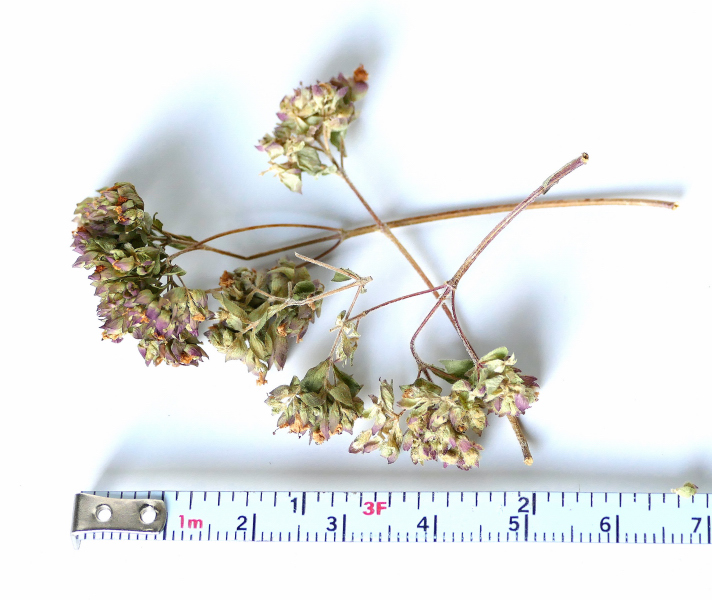
Oregano
Rating : 10
| Evaluation | N. Experts | Evaluation | N. Experts |
|---|---|---|---|
| 1 | 6 | ||
| 2 | 7 | ||
| 3 | 8 | ||
| 4 | 9 | ||
| 5 | 10 |
Pros:
Antifungal (1) Antimicrobial (1) Antioxidant (1) Antibacterial (1) Anti-atherosclerosis (1)10 pts from AColumn
| Sign up to vote this object, vote his reviews and to contribute to Tiiips.Evaluate | Where is this found? |
| "Oregano studies" about Oregano Review Consensus 8 by AColumn (9403 pt) | 2019-Aug-14 16:18 |
| Read the full Tiiip | (Send your comment) |
Essential oil and ethanol extract of oregano (Origanum vulgare L.) from Armenian flora as natural source of terpenes, flavonoids and other phytochemicals with antiradical, antioxidant, metal chelating, tyrosinase inhibitory and antibacterial activity.
Moghrovyan A, Sahakyan N, Babayan A, Chichoyan N, Petrosyan M, Trchounian A.
Curr Pharm Des. 2019 Jul 1. doi: 10.2174/1381612825666190702095612.
Antimicrobial activity of cellulosic pads amended with emulsions of essential oils of oregano, thyme and cinnamon against microorganisms in minced beef meat.
Agrimonti C, White JC, Tonetti S, Marmiroli N.
Int J Food Microbiol. 2019 Sep 16;305:108246. doi: 10.1016/j.ijfoodmicro.2019.108246.
Oregano (Origanum vulgare) extract for food preservation and improvement in gastrointestinal health.
Veenstra JP, Johnson JJ.
Int J Nutr. 2019;3(4):43-52. doi: 10.14302/issn.2379-7835.ijn-19-2703
Evaluation of antioxidant and antimicrobial activity of oregano (Origanum vulgare L.) preparations during storage of low-pressure mechanically separated meat (BAADER meat) from chickens.
Hać-Szymańczuk E, Cegiełka A, Karkos M, Gniewosz M, Piwowarek K.
Food Sci Biotechnol. 2018 Oct 16;28(2):449-457. doi: 10.1007/s10068-018-0491-1.
Influence of oregano essential oil on the inhibition of selected pathogens in "Alheira" during storage.
Carvalho MIP, Albano HCP, Teixeira PCM.
Acta Sci Pol Technol Aliment. 2019 Jan-Mar;18(1):13-23. doi: 10.17306/J.AFS.0624.
Effect of oregano (Origanum vulgare L. ssp. hirtum) and clove (Eugenia spp.) nanoemulsions on Zygosaccharomyces bailii survival in salad dressings.
Ribes S, Fuentes A, Barat JM.
Food Chem. 2019 Oct 15;295:630-636. doi: 10.1016/j.foodchem.2019.05.173.
Cellular antioxidant activity and in vitro inhibition of α-glucosidase, α-amylase and pancreatic lipase of oregano polyphenols under simulated gastrointestinal digestion.
Gutiérrez-Grijalva EP, Antunes-Ricardo M, Acosta-Estrada BA, Gutiérrez-Uribe JA, Basilio Heredia J.
Food Res Int. 2019 Feb;116:676-686. doi: 10.1016/j.foodres.2018.08.096.
| Sign up to vote this object, vote his reviews and to contribute to Tiiips.EvaluateClose | (0 comments) |
| "Descrizione" about Oregano Review Consensus 10 by AColumn (9403 pt) | 2025-Nov-27 18:18 |
| Read the full Tiiip | (Send your comment) |
Oregano (Origanum vulgare)
Description
Oregano (Origanum vulgare, family Lamiaceae) is a perennial aromatic herb typical of the Mediterranean region. The plant has small, oval, dark-green leaves and pink to purple flowers. The aroma is intense, warm, herbaceous and slightly pungent, with balsamic notes. It is used mainly dried, as drying concentrates the flavour and greatly improves shelf-life. Oregano is widely used in Italian and Mediterranean cuisine for pizza, sauces, salads, meats, vegetables and preserves.

Common name: Oregano (common oregano)
Parent plant: Origanum vulgare L.
Kingdom: Plantae
Clade: Angiosperms
Clade: Eudicots
Order: Lamiales
Family: Lamiaceae
Genus: Origanum
Species: Origanum vulgare L.
Oregano is a typical Mediterranean herb adapted to warm, temperate, and dry climates.
Optimal temperatures: 18–28 °C.
It tolerates summer heat and drought very well.
It withstands brief frosts (down to about –5 °C) if the soil is well drained.
It does not perform well in very cold, wet winters with waterlogged soils.
Requires full sun to:
maximize essential oil production,
obtain highly aromatic leaves and flowering tops,
keep plants compact and dense.
In partial shade it can grow, but is less aromatic and more prone to fungal diseases.
Oregano prefers soils that are:
light, sandy or stony,
well drained,
poor to moderately fertile,
with pH between 6.0 and 8.0.
It thrives in calcareous, low-fertility soils, typical of hillsides and coastal areas.
Heavy, clayey, or waterlogged soils favor root rot and decline.
Water requirement is low:
Provide moderate irrigation after transplanting and during early establishment.
Once well rooted, oregano tolerates long dry periods.
Overwatering reduces essential oil content and increases the risk of fungal diseases.
Germination: 15–20 °C
Optimal growth: 18–28 °C
Growth slows sharply below 5–7 °C
Mature plants can survive short episodes of cold if the soil is not waterlogged.
Aromatic herbs like oregano do not need heavy fertilization:
Excess nitrogen → lush green growth but diluted aroma.
Light applications of phosphorus and potassium support root development, flowering, and stress resistance.
A small amount of well-matured compost at planting time is usually sufficient.
Light hoeing/weed control during the first year, while the stand is closing.
Ensure good air circulation between plants to limit powdery mildew and other fungal diseases.
Oregano is generally hardy and little affected by pests; occasionally aphids or leafhoppers may appear.
After flowering, a light pruning (cut-back) helps keep the clump compact and stimulates new vegetative growth.
Mainly flowering tops and leaves are harvested.
The best time for maximum aroma is at the beginning of flowering, on dry days, preferably in the morning.
Stems are cut a few centimeters above ground, avoiding complete defoliation of the plant.
For drying:
tie small bundles and hang them in a shaded, dry, well-ventilated place,
once dry, crumble the leaves and store in airtight containers away from light and moisture.
Oregano can be propagated by:
Seed: sown in spring in seedbeds or directly outdoors; germination is slow and seedlings are delicate at first.
Herbaceous or semi-woody cuttings: taken in spring–summer; they root easily in a light substrate.
Division of clumps: in early spring or autumn; a quick method to multiply established plants.
Plants obtained by cuttings or division preserve the exact aromatic characteristics of the mother plant.
Indicative nutritional values per 100 g (dried oregano)
(Culinary use is usually only a few grams; values below are indicative for comparison.)
Energy: ≈ 265–280 kcal
Water: ≈ 8–10 g
Carbohydrates: ≈ 68 g
of which sugars: ≈ 4 g
Protein: ≈ 9–12 g
Total fat: ≈ 4–7 g
SFA (saturated fatty acids; should be moderated overall): ≈ 1–1.5 g
MUFA (monounsaturated fatty acids; generally favourable for lipid profile): ≈ 0.5–1 g
PUFA (polyunsaturated fatty acids; important for membranes and anti-inflammatory processes): ≈ 2–3 g
Dietary fibre: ≈ 40–45 g
Minerals: calcium, potassium, iron, magnesium, manganese
Vitamins: vitamin K, vitamin E, small amounts of vitamins A and C
Actual intake per serving is very small, so the real nutritional contribution to the diet is modest.
Key constituents
Essential oil (volatile fraction), typically rich in:
carvacrol (often the main component)
thymol
p-cymene
γ-terpinene and other monoterpenes
Polyphenols and flavonoids: rosmarinic acid, luteolin, apigenin and their derivatives
Tannins
Dietary fibre in the dried leaf
Mineral salts and a wide range of aromatic volatile compounds
Production process
Cultivation
Prefers sunny, dry, well-drained and often calcareous soils.
Rustic, low-input crop, easy to grow in integrated and organic systems.
Aerial parts (flowering tops) are usually harvested during full flowering, when essential-oil content is highest.
Harvest
Harvesting of flowering stems is done manually or mechanically.
Main harvest period is late spring to summer, depending on region and altitude.
Post-harvest
Drying in well-ventilated, shaded or low-temperature drying facilities to preserve aroma and colour.
Threshing / stripping to separate leaves and flowers from stems.
Sieving and grading to remove stems, dust and foreign matter.
Packaging in jars, sachets or bulk for industrial use.
Further processing
Production of:
dried oregano leaves and ground oregano
oregano essential oil (steam distillation)
antioxidant extracts for functional or preservative use
spice blends and seasoning mixes
Physical properties
Dried oregano consists of small, friable leaves and flower fragments, green to green-brown in colour.
Very intense, characteristic aroma.
Low moisture content → long shelf-life and good microbiological stability.
Sensory and technological properties
Aroma: warm, herbaceous, intense, spicy, balsamic with slightly pungent notes.
Taste: strong, aromatic, slightly bitter and piquant.
Very heat-stable flavour, suitable for long cooking (sauces, stews, baked dishes).
Polyphenols and essential oils help stabilise aroma in sauces and preserves.
Can contribute mild antimicrobial and antioxidant effects in some formulations (supportive, not a substitute for proper preservation).
Food applications
Key herb in Italian and Mediterranean dishes:
pizza and focaccia
tomato-based sauces and canned tomatoes
grilled or baked vegetables, salads, pulses, potatoes
white meats and some fish preparations
Widely used in marinades, spice blends, ready-made seasonings, tomato products, dressings and ready-to-eat meals.
Nutrition & health
Rich in natural antioxidants (carvacrol, thymol, rosmarinic acid and other phenolic compounds).
Traditional herbal uses include:
digestive and carminative support
mild antimicrobial and antifungal properties
tonic and expectorant functions in herbal infusions
Oregano essential oil is very concentrated and must not be ingested undiluted; it is usually reserved for carefully dosed preparations.
Use of dried oregano in normal culinary amounts is considered safe for the general population.
(Traditional uses do not replace medical diagnosis or treatment.)
Portion note
Typical culinary usage: 0.5–2 g of dried oregano per serving, depending on recipe and desired flavour intensity.
Allergens and intolerances
Oregano is not included among the major EU allergens.
Rare cases of sensitivity may occur in individuals allergic to other Lamiaceae herbs (e.g. thyme, marjoram).
Essential oil and highly concentrated preparations may be irritating to skin and mucous membranes if not properly diluted.
Storage and shelf-life
Dried oregano
Shelf-life: 18–36 months if stored in a cool, dry, dark place.
Store in well-closed containers to limit loss of volatile compounds and prevent moisture uptake.
Essential oil
Shelf-life: typically 2–4 years, when kept in tightly closed, dark-glass bottles, away from heat and light.
Safety and regulatory aspects
As a food herb, oregano must comply with regulations on:
pesticide residues (MRL)
microbiological quality and absence of foreign matter
Industrial processing must follow GMP and HACCP principles.
Oregano essential oil used in foods, supplements or cosmetics is subject to specific safety evaluations and maximum-use guidelines due to its high content of bioactive compounds such as carvacrol and thymol.
Labelling
Product name: “oregano” / Origanum vulgare.
Country or region of origin.
Batch/lot number, best-before date.
Storage instructions (e.g. “store in a cool, dry place, away from light”).
For spice mixes and flavoured products, oregano must be listed in the ingredient list, with percentage indicated if emphasised on the label.
Troubleshooting
Weak aroma → product too old, stored in open/light-exposed containers, or dried at too high a temperature; replace with fresher oregano.
Dark or brownish colour → oxidation or overly aggressive drying; generally indicates lower-quality aromatic profile.
Musty or mouldy odour → excess moisture or poor storage; product must be discarded.
Overly strong or harsh flavour in dishes → excessive dosage; oregano is potent and should be used in moderation.
Sustainability and supply chain
Oregano is a rustic, low-input crop with modest water and fertiliser requirements.
Well suited to organic farming and sustainable cultivation in Mediterranean climates.
Widespread local production in Italy and other Mediterranean countries supports short supply chains and regional specialities.
Drying allows significant reduction of waste and enables long-term storage and transport with relatively low environmental impact.
Main INCI functions (cosmetics)
Oregano-derived cosmetic ingredients include:
Origanum Vulgare Leaf Extract – used as an antioxidant and purifying agent.
Origanum Vulgare Oil – essential oil with antimicrobial, deodorant and toning properties, employed in small amounts in products for oily or impure skin and in some deodorant formulations.
All uses must comply with cosmetic safety regulations, considering potential irritation at higher doses.
Conclusion
Oregano is an essential aromatic herb in Italian and Mediterranean cuisine, valued for its intense, characteristic flavour and broad culinary versatility. Its richness in essential oils and phenolic compounds gives it functional properties as well, particularly antioxidant and mildly antimicrobial effects in traditional use. Easy cultivation, good storability and stable aroma make oregano a key ingredient in both household cooking and industrial food production.
Mini-glossary
SFA – Saturated fatty acids; fats that should be moderated due to their association with increased cardiovascular risk when consumed in excess.
MUFA – Monounsaturated fatty acids; generally beneficial for blood-lipid profile.
PUFA – Polyunsaturated fatty acids; important for cell membranes and anti-inflammatory pathways.
MRL – Maximum Residue Level; legal limit for pesticide residues in foods.
GMP – Good Manufacturing Practices; operational standards ensuring hygienic, controlled production.
HACCP – Hazard Analysis and Critical Control Points; preventive system for identifying and managing food-safety hazards.
Studies
Oregano is used to make an essential oil containing carvacrol and thymol, two phenolic monoterpenes with antimicrobial, antioxidant (1), antibacterial (2) and antifungal (3) properties.
Oregano contains a good amount of rosmarinic acid, 14.62 mg/g, which has neuroprotective and anti-atherosclerosis activity (4).
The species Origanum has as subspecies:
Other best-known Origanum species:
References__________________________________
(1) Alma M, Mavi A, Yildirim A, Digrak M, Hirata T. Screening chemical composition and in vitro antioxidant and antimicrobial activities of the essential oils from Origanum syriacum L. growing in Turkey. Biol Pharm Bull. 2003 Dec;26(12):1725-9.
Abstract. In the present study, essential oil from the leaves of Syrian oreganum [Origanum syriacum L. (Lauraceae)] grown in Turkish state forests of the Dortyol district, Turkey, was obtained by steam distillation. The chemical composition of oil was analysed by GC and GC-MS, and was found to contain 49.02% monoterpenes, 36.60% oxygenated monoterpenes and 12.59% sesquiterpenes. The major components are as follows: gamma-terpinene, carvacrol, p-cymene and beta-caryophyllene. Subsequently, the reducing power, antioxidant and 2,2-diphenyl-1-picrylhydrazyl (DPPH) radical-scavenging activities of the essential oil were studied. The reducing power was compared with ascorbic acid, and the other activities were compared with 2,6-di-tert-butyl-4-methyl phenol (BHT, butylated hydroxytoluene). The results showed that the activities were concentration dependent. The antioxidant activities of the oil were slightly lower than those of ascorbic acid or BHT, so the oil can be considered an effective natural antioxidant. Antimicrobial activities of the essential oil from the leaves of Origanum syriacum was also determined on 16 microorganisms tested using the agar-disc diffusion method, and showed antimicrobial activity against 13 of these.
(2) Baydar, H., Sağdiç, O., Özkan, G., & Karadoğan, T. (2004). Antibacterial activity and composition of essential oils from Origanum, Thymbra and Satureja species with commercial importance in Turkey. Food control, 15(3), 169-172.
Abstract. The antibacterial activity of essential oils and their derivatives has been recognized for a long time. In the present study, the chemical composition and the antibacterial properties of the essential oils obtained from the aerial parts of the four Lamiaceae species, wild oregano (Origanum minutiflorum) (endemic in Turkey), oregano (Origanum onites), black thyme (Thymbra spicata) and wild savory (Satureja cuneifolia), with commercial importance in Turkey, were evaluated. The major constituent of the oils determined by GC was cavracrol (86.9% in O. onites, 84.6% in O. minutiflorum, 75.5% in T. spicata and 53.3% in S. cuneifolia). Four essential oils were investigated for activity against Aeromonas hydrophila, Bacillus amyloliquefaciens, B. brevis, B. cereus, B. subtilis, Corynebacterium xerosis, Enterococcus faecalis, Escherichia coli, Klebsiella pneumoniae, Listeria monocytogenes, Micrococcus luteus, Mycobacterium smegmatis, Proteus vulgaris, Staphylococcus aureus and Yersinia enterocolitica, using a paper disc diffusion method. All essential oils inhibited all bacteria at concentrations of <1/100 (v/v). The essential oil of T. spicata was the most active. B. amyloliquefaciens was the most sensitive. The results of this study confirmed the possibility of using these four essential oils in food systems to prevent the growth of foodborne bacteria and extend the shelf life of processed foods.
(3) Salgueiro LR, Cavaleiro C, Pinto E, Pina-Vaz C, Rodrigues AG, Palmeira A, Tavares C, Costa-de-Oliveira S, Gonçalves MJ, Martinez-de-Oliveira J.Chemical composition and antifungal activity of the essential oil of Origanum virens on Candida species. Planta Med. 2003 Sep;69(9):871-4.
Abstract. The composition and the antifungal activity of the essential oil of Origanum virens on Candida species were studied. The essential oil was obtained from the aerial parts of the plant by hydrodistillation and analyzed by GC and GC-MS. The oil was characterized by its high content of carvacrol (68.1 %) and its biogenetic precursors, gamma-terpinene (9.9 %) and p-cymene (4.5 %). The minimal inhibitory concentration (MIC) and the minimal lethal concentration (MLC) were used to evaluate the antifungal activity against Candida strains (7 clinical isolates and 3 ATCC type strains). The inhibition of germ tube formation and flow cytometry, using the fluorescent probe propidium iodide (PI), were used to evaluate their mechanisms of action. MIC and MLC values were similar for most tested strains, ranging from 0.16 to 0.32 microL/mL. Concentrations lower than MIC values strongly prevent germ tube formation. The fungicidal effect is primarily due to an extensive lesion of the membrane.
(4) Al-Dhabi NA, Arasu MV, Park CH, Park SU. Recent studies on rosmarinic acid and its biological and pharmacological activities. EXCLI J. 2014 Oct 30;13:1192-5. eCollection 2014.
| Sign up to vote this object, vote his reviews and to contribute to Tiiips.EvaluateClose | (0 comments) |
Read other Tiiips about this object in __Italiano (3)
Content:  
Last update:   2024-09-30 17:09:54 | Kcal/100g:   300 Family:   Threat factors:   |

