

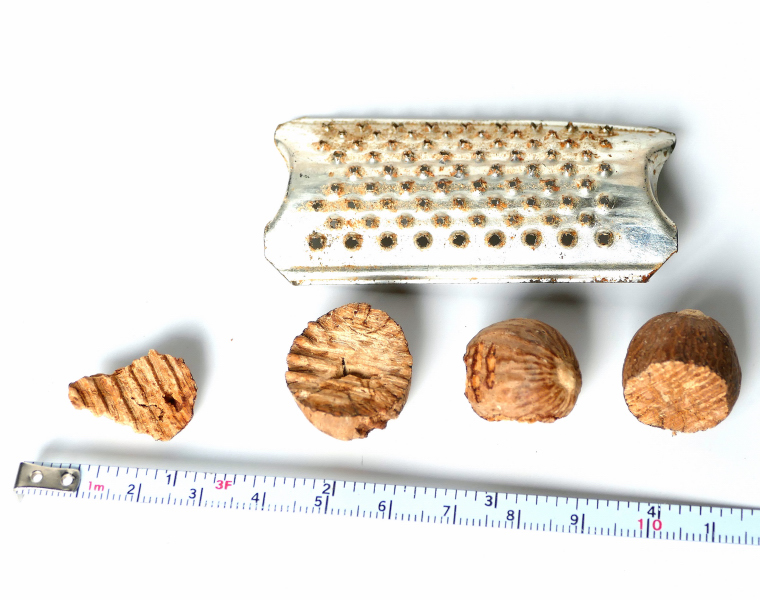
Nutmeg
Rating : 7
| Evaluation | N. Experts | Evaluation | N. Experts |
|---|---|---|---|
| 1 | 6 | ||
| 2 | 7 | ||
| 3 | 8 | ||
| 4 | 9 | ||
| 5 | 10 |
Pros:
Anti-inflammatory (1) Antifungal (1)Cons:
Possible specific allergy (1)10 pts from AColumn
| Sign up to vote this object, vote his reviews and to contribute to Tiiips.Evaluate | Where is this found? |
| "Nutmeg studies" about Nutmeg Review Consensus 8 by AColumn (9403 pt) | 2019-Aug-06 17:41 |
| Read the full Tiiip | (Send your comment) |
Efficacy of Myristica fragrans and Terminalia chebula as Pulpotomy Agents in Primary Teeth: A Clinical Study.
Mali S, Singla S, Sharma A, Gautam A, Niranjan B, Jain S.
Int J Clin Pediatr Dent. 2018 Nov-Dec;11(6):505-509. doi: 10.5005/jp-journals-10005-1565.
Appetite-enhancing effects of nutmeg oil and structure-activity relationship of habituation to phenylpropanoids.
Ogawa K, Ito M.
J Nat Med. 2019 Jun;73(3):513-522. doi: 10.1007/s11418-019-01295-7.
Myristica fragrans Kernels Prevent Paracetamol-Induced Hepatotoxicity by Inducing Anti-Apoptotic Genes and Nrf2/HO-1 Pathway.
Dkhil MA, Abdel Moneim AE, Hafez TA, Mubaraki MA, Mohamed WF, Thagfan FA, Al-Quraishy S.
Int J Mol Sci. 2019 Feb 25;20(4). pii: E993. doi: 10.3390/ijms20040993.
Dietary supplementation of 11 different plant extracts on the antioxidant capacity of blood and selected tissues in lightweight lambs.
Leal LN, Jordán MJ, Bello JM, Otal J, den Hartog LA, Hendriks WH, Martín-Tereso J.
J Sci Food Agric. 2019 Jul;99(9):4296-4303. doi: 10.1002/jsfa.9662.
PPARα Mediates the Hepatoprotective Effects of Nutmeg.
Yang XN, Liu XM, Fang JH, Zhu X, Yang XW, Xiao XR, Huang JF, Gonzalez FJ, Li F.
J Proteome Res. 2018 May 4;17(5):1887-1897. doi: 10.1021/acs.jproteome.7b00901.
Effects of osmotic dehydration treatment on volatile compound (Myristicin) content and antioxidants property of nutmeg (Myristica fragrans) pericarp.
Rahman N, Xin TB, Kamilah H, Ariffin F.
J Food Sci Technol. 2018 Jan;55(1):183-189. doi: 10.1007/s13197-017-2883-2.
In vitro evaluation of five different herbal extracts as an antimicrobial endodontic irrigant using real time quantitative polymerase chain reaction.
Vinothkumar TS, Rubin MI, Balaji L, Kandaswamy D.
J Conserv Dent. 2013 Mar;16(2):167-70. doi: 10.4103/0972-0707.108208.
Nutmeg liver.
Li YL, Lee KH, Cheng AK, Yu ML.
Abdom Radiol (NY). 2018 May;43(5):1275-1276. doi: 10.1007/s00261-017-1283-4.
| Sign up to vote this object, vote his reviews and to contribute to Tiiips.EvaluateClose | (0 comments) |
| "Descrizione" about Nutmeg Review Consensus 10 by AColumn (9403 pt) | 2025-Dec-03 19:13 |
| Read the full Tiiip | (Send your comment) |
Nutmeg (Myristica fragrans Houtt.)
The term nutmeg refers to the dried seed of the drupe of Myristica fragrans Houtt., an evergreen tropical tree originally from the Moluccas (Indonesia) and now cultivated in various tropical climate countries (South–East Asia, India, Sri Lanka, the Caribbean, and some areas of Africa). The fruit is a fleshy drupe which, at maturity, splits open to reveal the seed surrounded by a fleshy red–orange aril, commercially known as mace. After harvesting, the seeds undergo controlled drying processes, which reduce internal moisture and stabilise the aromatic components, making the product suitable for storage and subsequent processing (whole seeds, ground spice, extracts).
From a commercial perspective, nutmeg is marketed as whole seed, powder obtained by grinding, or as extract (oleoresin, essential oil). Major exporting countries concentrate production in specialised cropping systems, with trees grown in humid areas at relatively constant temperatures, on well-drained soils rich in organic matter. Post–harvest operations (fruit opening, mace separation, drying, selection, and storage) significantly influence commercial quality, water activity, and the stability of volatile compounds responsible for the aromatic profile.
The composition of nutmeg includes a fraction of fixed oil (lipids, mainly triglycerides), carbohydrates (starch), proteins, fibre, and a substantial proportion of essential oil (typically a few percent of dry matter). The essential oil contains mainly monoterpenes (for example α-pinene, β-pinene, sabinene, limonene) and phenylpropanoid derivatives such as myristicin, elemicin and, in some batches, safrole, which contribute to the aromatic characteristics and, at high doses, may have undesirable neurotropic effects. For this reason, the use of nutmeg in foods is subject to moderation, as a spice to flavour savoury and sweet dishes, meat products, sauces, and baked goods, in compliance with good manufacturing practice and the limits laid down by current regulations.
From a technological point of view, nutmeg is used by the food industry and, to a lesser extent, in pharmaceutical and cosmetic applications (aromatic preparations, personal care products), where its volatile components form part of fragrance blends. Proper management of the raw material (origin, drying, absence of microbiological contamination and unwanted residues) and control of the levels of phenylpropanoid compounds with potential risk are key aspects for ensuring quality and safe use in the various applications.

Botanical classification
Botanical name: Myristica fragrans Houtt.
Common name: nutmeg
Botanical family: Myristicaceae
Order: Magnoliales
Class: Magnoliopsida
Kingdom: Plantae
Nutmeg is an evergreen tree species native to humid tropical regions (particularly Indonesia), cultivated for its seeds and the aril (mace), both used as spices and as raw materials for the food, cosmetic, and pharmaceutical industries.
Cultivation and growth conditions
Climate
Nutmeg requires a humid tropical climate, with rainfall distributed throughout the year or with only a short dry season. Optimal conditions include high relative humidity, annual rainfall around 2,000–3,000 mm, and absence of frost. It is not suitable for temperate climates: low temperatures and large temperature fluctuations cause vegetative slowdown, flower drop, and tissue damage.
Exposure
In the early growth stages, the plant benefits from partial shade; in tropical plantations it is common to use cover crops or shade trees. Mature trees can tolerate full sun, provided that adequate water availability is ensured. Exposure should avoid strong winds, which can damage the canopy, flowers, and young fruits.
Soil
Nutmeg prefers deep, well-drained soils with loam to loam-sandy or loam-silty texture and good organic matter content. It is sensitive to waterlogging, which promotes root rot and fungal diseases. The optimal pH is slightly acidic to moderately acidic (about 5.5–6.5), but the plant can adapt to near-neutral values if drainage is efficient.
Irrigation
In a humid tropical environment, rainfall can cover most of the water requirements. Where there is a marked dry season, or in plantations outside the typical growing area, supplemental irrigation is needed, especially in the first years and during flowering and fruiting. Irrigation should keep the soil constantly moist but not saturated, avoiding both water deficits and excesses that may reduce yield and spice quality.
Temperature
The ideal temperature range is approximately 20–32 °C. The species is highly sensitive to low temperatures: prolonged exposure to values below about 10–12 °C can cause physiological stress, and frost is lethal. Excessively high temperatures combined with low humidity and intense solar radiation cause leaf and flower desiccation and reduce fruit set.
Fertilization
Fertilization should be planned based on soil analysis and phenological stages.
Main macronutrients: nitrogen (N), phosphorus (P), potassium (K). Nitrogen supports vegetative growth, phosphorus supports root development and flowering, potassium supports fruiting and seed quality.
Micronutrients: boron, zinc, magnesium and others may be required depending on soil conditions; specific deficiencies manifest through leaf symptoms and yield reduction.
The use of organic fertilizers or soil amendments is recommended to maintain soil fertility and improve physical structure.
Crop care
Pruning: Generally moderate, aimed at forming a balanced canopy, improving aeration and light penetration, and facilitating harvest operations. Dead, weak, or diseased branches are removed, and excessive vertical growth is contained.
Weed control: Light hoeing or managed ground cover to reduce competition for water and nutrients, especially in the first years after planting.
Plant protection: Regular monitoring for insect pests (e.g. phytophagous beetles and lepidopterans) and fungal diseases; interventions should follow agronomic guidelines and, where possible, integrated pest management principles.
Harvest
The tree begins fruiting several years after planting (typically 6–8 years, depending on conditions). Ripe fruits split partially, exposing the aril (mace) surrounding the seed.
Mace is harvested at the time of fruit opening and then dried.
The seed (nutmeg) is removed from the fruit, dried, and graded.
Harvesting should target well-ripened but not overripe fruits, in order to ensure good aromatic quality and proper storability.
Propagation
Nutmeg is propagated mainly by seed, selecting seeds from mother trees with high yield and quality. Germination is relatively slow, and young seedlings require controlled conditions of humidity and shade.
In some cases, grafting or vegetative propagation techniques may be used to maintain specific characteristics, but seed propagation remains the most common method in traditional growing areas. Seedlings are transplanted to the field once they have developed a suitable root system and vegetative structure.
Energy: ~525 kcal
Water: ~6 g
Protein: ~5.5–6 g
Total carbohydrates: ~49 g
Available carbohydrates: ~28–30 g
Dietary fibre: ~20–21 g
Total fat: ~35–36 g
saturated fatty acids (SFA) ~26 g
monounsaturated fatty acids (MUFA) ~3 g
polyunsaturated fatty acids (PUFA) ~0.3–0.4 g
Sodium: ~15–20 mg
Potassium: ~350 mg
Calcium: ~180 mg
Iron: ~3 mg
(Values refer to 100 % dry product; the actual culinary use is a fraction of a gram.)
Macronutrients
lipids, with a marked prevalence of SFA, and smaller fractions of MUFA and PUFA
carbohydrates including starches and a notable proportion of fibre
modest protein content
Essential oil (approximately 5–15 % of the seed)
Main components include sabinene, α-pinene, β-pinene, limonene, terpineols, myristicin, elemicin, eugenol and safrole. These drive the aroma, warmth and sensory complexity of nutmeg.
Unsaponifiable fraction
phytosterols, tocopherols (vitamin E), lipophilic pigments
Micronutrients
minerals such as calcium, potassium, iron
small amounts of vitamins (including vitamin E and some B vitamins)
Cultivation and harvesting
Trees thrive in hot, humid tropical climates. Mature fruits open naturally or are gently cut to retrieve the seed and aril.
Drying
Seeds are dried to reduce moisture (typically below 10 %) to ensure shelf-stability.
Shell removal and grading
The hard outer shell is cracked to release the inner kernel; seeds are sorted and graded by size and integrity.
Grinding
Whole nutmeg is ground under controlled temperature to preserve aromatic compounds. Powder is packaged airtight to limit aroma loss.
Essential oil extraction
Steam distillation of crushed seeds yields nutmeg essential oil used in food flavourings, perfumes and cosmetics.
Whole seeds are solid, hard, oval, about 2–3 cm long, brown externally and lighter, marbled internally.
Powder is fine to medium-fine depending on milling.
Lipophilic constituents predominate in the essential oil; minor water-soluble components contribute to taste nuances.
Whole seeds retain aroma far longer than powder due to reduced surface exposure.
Aroma: warm, spicy, sweet, resinous and slightly balsamic.
Flavour: persistent, slightly bitter, with gentle pungency in higher amounts.
Technological behaviour:
potent aromatic impact: minimal doses required
highly volatile compounds: the ground form loses aroma faster
works synergistically in spice blends to add depth and warmth
Domestic and professional cooking
mashed potatoes, béchamel, white sauces
vegetable dishes (spinach, cauliflower, potatoes)
meat and fish preparations
bakery and pastry (cakes, cookies, puddings, desserts)
spiced beverages (mulled drinks, milk infusions)
Food industry
spice blends, condiments, broths
baked goods, confectionery
aromatisation of beverages and liqueurs
Caloric density
Nutmeg is energy-dense due to lipid content; however, culinary use rarely exceeds a few tenths of a gram per serving, making its caloric impact negligible.
Lipid profile
The predominance of SFA is of limited nutritional relevance given the tiny amounts used. MUFA and PUFA are present in modest proportions.
Bioactive compounds
Phenylpropanoids (notably myristicin, elemicin, eugenol, safrole) display antioxidant activity and other biological interactions. Some of these compounds contribute to the spice’s potential for neurological effects at high doses.
Toxicity at high intake
Unusually high consumption (several grams at once) can trigger neurological and systemic toxic effects: nausea, tachycardia, agitation, hallucinations and, in extreme cases, severe outcomes.
Conventional culinary quantities remain well within safe limits for the general population.
For home use, staying within about 1 teaspoon (≈ 2–3 g per entire recipe), distributed across multiple servings, is considered prudent. Large concentrated amounts should be avoided, especially in children, pregnant women and individuals with liver or neurological conditions.
Nutmeg is not classed among the major EU food allergens.
True allergic reactions are rare but possible.
The essential oil may act as a skin or respiratory sensitiser at high concentration — more relevant in technical or cosmetic use than in food.
Whole seeds
best form for aroma preservation
store in airtight containers, protected from light, heat and humidity
retains quality for several years with gradual aroma reduction
Ground nutmeg
greater aromatic loss over time due to volatile evaporation and oxidation
store in sealed containers away from heat and light
for optimal aroma, use within 12–24 months of opening
Nutmeg is classified as a spice and subject to standards on contaminants, hygiene, pest-control residues and labelling.
Essential oil and extracts must comply with safety evaluations relating to compounds such as safrole and myristicin in accordance with applicable regulations.
Standard food-safety systems (including HACCP) apply to industrial handling and packaging.
For a food product containing nutmeg, labels should include:
product name (e.g. “nutmeg” or indication of origin)
nutmeg listed among ingredients in descending weight order
declaration of nutmeg-derived extracts or flavourings where used
mandatory information such as net content, lot, date coding, storage instructions and nutritional declaration where required
allergens from other ingredients highlighted clearly in the ingredient list
Weak aroma
prolonged storage, excessive heat exposure, old ground product
remedy: prefer whole nutmeg grated fresh; improve container sealing
Rancid or off-odour
oxidation of lipids or contamination
remedy: discard; review storage temperature, light exposure and humidity
Inconsistent particle size in powder
milling or blending defects
remedy: review grinding settings and quality checks
Sensory inconsistency between batches
variations in origin, crop year, drying conditions
remedy: tighten supplier specifications and conduct sensory screening
Nutmeg cultivation is part of tropical agro-ecosystems.
Sustainability depends on soil protection, water management, responsible phytosanitary practices and proper management of post-processing by-products.
Certified systems (e.g. organic, fair-trade, geographical claims where applicable) can enhance traceability, socio-environmental standards and fair value distribution.
Nutmeg-derived ingredients appear with INCI names such as:
Myristica Fragrans (Nutmeg) Kernel Oil / Nutmeg Oil
fragrance component
masking agent
possible antioxidant contribution
Myristica Fragrans (Nutmeg) Extract
aromatic and toning properties in selected formulations
Use in cosmetics must comply with concentration limits and safety guidelines relating to potentially sensitising or toxic constituents.
Nutmeg is an exceptionally aromatic spice with a complex chemical profile dominated by essential-oil constituents. Its high sensory potency makes it valuable in both culinary and industrial formulations at very low doses.
From a nutritional perspective, its caloric density and fat composition are not significant concerns due to minimal usage.
Safety is excellent within normal culinary use; unusually high intake presents recognised toxicological risks, particularly neurologically.
Correct sourcing, storage and dosage allow nutmeg to express its full aromatic potential while maintaining a favourable safety profile in both food and cosmetic applications.
SFA
Saturated fatty acids; excessive dietary intake at the expense of other fats may be less favourable for blood-lipid balance.
MUFA
Monounsaturated fatty acids; when replacing some SFA, they are associated with more favourable cardiovascular parameters.
PUFA
Polyunsaturated fatty acids; include omega-3 and omega-6 families with essential physiological roles.
HACCP
Hazard Analysis and Critical Control Points; a mandatory food-safety system based on identifying and controlling critical risks.
Myristicin
One of the main aromatic compounds of nutmeg essential oil; harmless at culinary exposure, but responsible for neurotoxic and psychotropic effects at high dosages.
Safrole
Aromatic compound found in trace amounts in some essential oils; subject to regulatory scrutiny due to potential carcinogenicity at high concentrations.
Studies
It is widely utilized both as food spice and in the alternative medicine where it has been reported for having antidiarrheal, anti-inflammatory, anti-tumor, antioxidant, antibacterial and antifungal properties. It contains a mixture of hydrophobic and volatile compounds, among these, the most relevant are the monoterpene hydrocarbons, followed by oxygenated monoterpenes and others such as sabinene, α-pinene, eugenol, myristicin (1) and β-caryophyllene, which are indicated as antimicrobial, antiseptic, antiparasitic, anti-inflammatory, antioxidant (2) and antifungal (3).
Several studies have demonstrated the hepatoprotective activity of myristicin contained in nutmeg (4).
Extracts, powders and, in particular, an essential oil are obtained from nutmeg in which the most well-known useful components appearing are mainly Limonene, Linalool, Eugenol.
Safety
Generally, nutmeg is well tolerated, but in some people ingestion of this berry can cause intolerance.
References_________________________________________________________________________
(1) Ashokkumar K, Simal-Gandara J, Murugan M, Dhanya MK, Pandian A. Nutmeg (Myristica fragrans Houtt.) essential oil: A review on its composition, biological, and pharmacological activities. Phytother Res. 2022 Jul;36(7):2839-2851. doi: 10.1002/ptr.7491. Epub 2022 May 13. PMID: 35567294; PMCID: PMC9541156.
(2) Matulyte I, Jekabsone A, Jankauskaite L, Zavistanaviciute P, Sakiene V, Bartkiene E, Ruzauskas M, Kopustinskiene DM, Santini A, Bernatoniene J. The Essential Oil and Hydrolats from Myristica fragrans Seeds with Magnesium Aluminometasilicate as Excipient: Antioxidant, Antibacterial, and Anti-inflammatory Activity. Foods. 2020 Jan 2;9(1):37. doi: 10.3390/foods9010037.
Abstract. Nutmeg (Myristica fragrans) essential oil has antimicrobial, antiseptic, antiparasitic, anti-inflammatory, and antioxidant properties. We have recently demonstrated that hydrodistillation of nutmeg essential oil by applying magnesium aluminometasilicate as an excipient significantly increases both the content and amount of bioactive substances in the oil and hydrolats. In this study, we aimed to compare the antioxidant, antimicrobial, and anti-inflammatory activity of hydrolats and essential oil obtained by hydrodistillation in the presence and absence of magnesium aluminometasilicate as an excipient. The 2,2-diphenyl-1-picrylhydrazyl (DPPH) radical scavenging method revealed that magnesium aluminometasilicate did not significantly improved antioxidant activity of both essential oil and hydrolat. Antibacterial efficiency was evaluated by monitoring growth of 15 bacterial strains treated by a range of dilutions of the essential oil and the hydrolats. Essential oil with an excipient completely inhibited the growth of E. faecalis, S. mutans (referent), and P. multocida, whereas the pure oil was only efficient against the latter strain. Finally, the anti-inflammatory properties of the substances were assessed in a fibroblast cell culture treated with viral dsRNR mimetic Poly I:C. The essential oil with an excipient protected cells against Poly I:C-induced necrosis more efficiently compared to pure essential oil. Also, both the oil and the hydrolats with aluminometasilicate were more efficient in preventing IL-6 release in the presence of Poly I:C. Our results show that the use of magnesium aluminometasilicate as an excipient might change and in some cases improve the biological activities of nutmeg essential oil and hydrolats.
(3) Rizwana H, Bokahri NA, S Alkhattaf F, Albasher G, A Aldehaish H. Antifungal, Antibacterial, and Cytotoxic Activities of Silver Nanoparticles Synthesized from Aqueous Extracts of Mace-Arils of Myristica fragrans. Molecules. 2021 Dec 20;26(24):7709. doi: 10.3390/molecules26247709.
Abstract. In the present study, mace-mediated silver nanoparticles (mace-AgNPs) were synthesized, characterized, and evaluated against an array of pathogenic microorganisms. Mace, the arils of Myristica fragrans, are a rich source of several bioactive compounds, including polyphenols and aromatic compounds. During nano synthesis, the bioactive compounds in mace aqueous extracts serve as excellent bio reductants, stabilizers, and capping agents. The UV-VIS spectroscopy of the synthesized NPs showed an intense and broad SPR absorption peak at 456 nm. Dynamic light scattering (DLS) analysis showed the size with a Z average of 50 nm, while transmission electron microscopy (TEM) studies depicted the round shape and small size of the NPs, which ranged between 5-28 nm. The peaks related to important functional groups, such as phenols, alcohols, carbonyl groups, amides, alkanes and alkenes, were obtained on a Fourier-transform infrared spectroscopy (FTIR) spectrum. The peak at 3 keV on the energy dispersive X-ray spectrum (EDX) validated the presence of silver (Ag). Mace-silver nanoparticles exhibited potent antifungal and antibacterial activity against several pathogenic microorganisms. Additionally, the synthesized mace-AgNPs displayed an excellent cytotoxic effect against the human cervical cancer cell line. The mace-AgNPs demonstrated robust antibacterial, antifungal, and cytotoxic activity, indicating that the mace-AgNPs might be used in the agrochemical industry, pharmaceutical industry, and biomedical applications. However, future studies to understand its mode of action are needed.
(4) Morita T, Jinno K, Kawagishi H, Arimoto Y, Suganuma H, Inakuma T, Sugiyama K. Hepatoprotective effect of myristicin from nutmeg (Myristica fragrans) on lipopolysaccharide/d-galactosamine-induced liver injury. J Agric Food Chem. 2003 Mar 12;51(6):1560-5. doi: 10.1021/jf020946n.
Abstract. To evaluate the hepatoprotective activity of spices, 21 different spices were fed to rats with liver damage caused by lipopolysaccharide (LPS) plus d-galactosamine (D-GalN). As assessed by plasma aminotranferase activities, nutmeg showed the most potent hepatoprotective activity. Bioassay-guided isolation of the active compound from nutmeg was carried out in mice by a single oral administration of the respective fractions. Myristicin, one of the major essential oils of nutmeg, was found to possess extraordinarily potent hepatoprotective activity. Myristicin markedly suppressed LPS/D-GalN-induced enhancement of serum TNF-alpha concentrations and hepatic DNA fragmentation in mice. These findings suggest that the hepatoprotective activity of myristicin might be, at least in part, due to the inhibition of TNF-alpha release from macrophages. However, further studies are needed to elucidate the hepatoprotective mechanism(s) of myristicin.
| Sign up to vote this object, vote his reviews and to contribute to Tiiips.EvaluateClose | (0 comments) |
Read other Tiiips about this object in __Italiano (2)
Content:   Last update:   2019-08-06 16:01:25 | Kcal/100g:   525 Family:   Threat factors:  
|

