

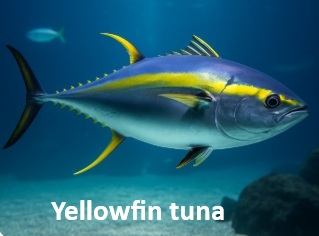
Yellowfin Tuna
Rating : 5.8
| Evaluation | N. Experts | Evaluation | N. Experts |
|---|---|---|---|
| 1 | 6 | ||
| 2 | 7 | ||
| 3 | 8 | ||
| 4 | 9 | ||
| 5 | 10 |
10 pts from Street82
| Sign up to vote this object, vote his reviews and to contribute to Tiiips.Evaluate | Where is this found? |
| " Yellowfin tuna studies" about Yellowfin Tuna by Street82 (2978 pt) | 2022-Jan-03 16:35 |
| Read the full Tiiip | (Send your comment) |
One of the reasons for concern about the consumption of yellowfin tuna is the presence of so-called heavy metals. Heavy metals are contaminants of great environmental concern because of their multiple origins (natural and anthropogenic), their ability to accumulate in organs and tissues, and the deleterious effects they can cause in organisms. Studies on the accumulation of metals in marine populations, such as fish, have increased in importance because of the risk to human health when metal-contaminated fish are consumed. The present work aimed to verify the concentrations of cadmium (Cd), mercury (Hg) and lead (Pb) in muscle tissue and liver of yellowfin tuna (Thunnus albacares) and dolphinfish (Coryphaena hippurus) from the eastern Pacific (1).
A comprehensive review of literature and studies on mercury concentrations in 36 fish species showed that (2) fish such as tuna and swordfish have the highest concentrations of CH3Hg or Methylmercury and mackerel and sardines from the Mediterranean Sea contain more CH3Hg than other harvesting areas (3). All these and other data are detailed in this study (4).
References________________________________________________________________________
(1) Araújo CVM, Cedeño-Macias LA. Heavy metals in yellowfin tuna (Thunnus albacares) and common dolphinfish (Coryphaena hippurus) landed on the Ecuadorian coast. Sci Total Environ. 2016 Jan 15;541:149-154. doi: 10.1016/j.scitotenv.2015.09.090.
(2) Pirrone N.; Mahaffey K. R. Dynamics of Mercury Pollution on Regional and Global Scales; Springer Publishers: New York, 2005; p 744.
(3) Pirrone N.; Mason R. Mercury Fate and Transport in the Global Atmosphere: Emissions, Measurements and Models; Springer: New York; p 637.
(4) Driscoll CT, Mason RP, Chan HM, Jacob DJ, Pirrone N. Mercury as a global pollutant: sources, pathways, and effects. Environ Sci Technol. 2013 May 21;47(10):4967-83. doi: 10.1021/es305071v.
| Sign up to vote this object, vote his reviews and to contribute to Tiiips.EvaluateClose | (0 comments) |
| "Descrizione" about Yellowfin Tuna Review Consensus 10 by Street82 (2978 pt) | 2025-Nov-15 16:08 |
| Read the full Tiiip | (Send your comment) |
Yellowfin tuna
(Thunnus albacares – fillets or loins, fresh, frozen or canned, in water, brine or oil)
Description
Yellowfin tuna is a large pelagic fish with firm, moderately lean flesh, widely used fresh, frozen and canned.
Muscle colour is pink to light red (darker than albacore/white tuna but lighter than bigeye/bluefin); after cooking or canning it becomes pale pink–beige and opaque.
Main commercial forms:
fresh/frozen loins and steaks for grilling, searing and sushi-type preparations (where legally permitted and microbiologically suitable);
canned chunks or solid pack in water, brine or vegetable oil;
ingredient in ready meals, salads, spreads and sandwich fillings.

Indicative nutritional values (per 100 g, raw fillet)
(Average values for fresh yellowfin; canned products in oil/brine can have higher energy and sodium.)
Energy: 105–115 kcal
Water: ≈ 74–76 g
Protein: 23–25 g
Total fat: 0.5–1.0 g
First occurrence: SFA/MUFA/PUFA = saturated/monounsaturated/polyunsaturated fatty acids; total fat is low, with a modest share of SFA and a relevant fraction of MUFA and PUFA (including marine omega-3). This overall profile is favourable compared with many red meats, especially when total dietary saturated fat is kept moderate.
Carbohydrates: 0 g
Cholesterol: 35–50 mg
Sodium (intrinsic): 35–60 mg (much higher if packed in brine or seasoned)
Selected micronutrients (approximate ranges):
Selenium: 60–80 µg
Niacin (vitamin B3): 8–15 mg
Vitamin B6: 0.8–1.1 mg
Vitamin B12: 1–3 µg
Phosphorus: 200–250 mg
Potassium: 350–450 mg
Long-chain omega-3 (EPA + DHA): typically 0.3–1.0 g per 100 g, depending on fatness and catch area.
(Canned yellowfin in oil may reach 180–220 kcal/100 g drained, with 8–14 g fat and 1.2–1.8 g salt.)
Key constituents
Proteins
High biological value (BV) proteins with a complete essential amino acid profile.
Rich in BCAA (branched-chain amino acids: leucine, isoleucine, valine) important for muscle metabolism.
Lipids
Overall low fat content in raw fillets.
Mix of SFA, MUFA and PUFA, with meaningful levels of omega-3 EPA (eicosapentaenoic acid) and DHA (docosahexaenoic acid).
No industrial trans fats; only minor natural marine trans isomers.
Minerals and vitamins
Important source of selenium, phosphorus, potassium, vitamin D, niacin and vitamins B6/B12.
Other compounds
High histidine content, which can be converted to histamine if the fish is mishandled (relevant for scombroid poisoning risk).
Production process
(Fresh/frozen and canned – simplified)
Fishing and landing
Capture of Thunnus albacares with gears such as longline, purse seine, pole-and-line or trolling.
Rapid chilling on board (ice or refrigerated seawater) to limit spoilage and histamine formation.
Reception and primary processing
Grading by size/quality;
heading, gutting, washing;
filleting and trimming into loins/steaks for the fresh/frozen market.
For frozen products
rapid blast freezing or plate freezing;
glazing and packaging;
distribution under frozen cold chain.
For canned yellowfin
pre-cooking (steaming or in water) of dressed fish or loins;
skin, bone and dark-muscle trimming;
filling into cans as chunks or solid pieces;
addition of covering medium (water, brine, oil) and salt/broth where used;
seaming and retorting (sterilisation) under pressure;
cooling, labelling and ambient storage.
Physical properties
Flesh: firm, dense and meaty, especially in loins and steaks; flakes into large pieces when cooked.
Colour: pink to deep rose when raw; becomes light beige–opaque after cooking/canning.
Odour: clean marine, slightly meaty; strong fishy, sour or ammoniacal odours indicate quality/handling issues.
Water activity: high in fresh/frozen fish; canned drained flesh is also high aw but microbiologically stable due to sterilisation.
Sensory and technological properties
Flavour: more pronounced than albacore but generally milder than bigeye/bluefin; often described as “meaty” rather than strongly fishy.
Texture: firm and cohesive; suitable for grilling, searing and high-heat cooking without falling apart when handled correctly.
Technological behaviour:
works well in steaks and seared applications (rare-to-medium centre) and in fully cooked dishes;
canned yellowfin holds shape in chunks/fillets, important for salads and ready dishes;
combines well with emulsified dressings (mayonnaise, sauces) and starchy carriers (pasta, rice).
Food applications
Retail and foodservice
grilled or seared steaks, skewers, tataki-type preparations;
ingredient in pasta, rice dishes, grain bowls, salads and sandwiches;
toppings for pizza and baked dishes.
Food industry
canned tuna for retail, foodservice and industrial uses;
ready-to-eat meals, tuna salads in MAP trays;
pâtés, spreads, high-protein snacks and meal components.
Nutrition & health
Yellowfin tuna is a high-protein, low-fat animal food with:
complete, highly digestible protein;
favourable fatty acid profile including marine omega-3 EPA and DHA.
Regular inclusion of such fish (within consumption guidelines) can help:
support heart health and normal blood lipids;
contribute to brain and vision functions (via DHA);
provide key micronutrients (selenium, vitamin D, B12, niacin).
Omega-3 note
Depending on origin and fatness, 100 g yellowfin can reasonably provide a significant fraction of daily EPA+DHA needs.
Mercury and consumption frequency
As a large predatory fish, yellowfin can accumulate methylmercury at moderate-to-high levels, with notable variability between individual fish and catch areas.
Many authorities classify yellowfin as a “good choice” fish: nutritionally valuable but to be eaten in moderation, especially for:
pregnant or breastfeeding individuals;
young children;
people with very high fish consumption.
Typical guidance for these sensitive groups: about one serving of yellowfin per week, combined with lower-mercury species on other occasions.
Histamine (scombroid) risk
Poor temperature control after capture can lead to high histamine levels and scombroid poisoning (flushing, headache, rash, gastrointestinal upset soon after eating).
Strict cold-chain management and process control greatly reduce this risk in properly handled commercial products.
Portion note: a usual portion as main protein is 100–150 g cooked or drained, supplying roughly 23–35 g protein and 0.3–1 g long-chain omega-3 depending on fat content and preparation.
Allergens and intolerances
Yellowfin tuna is a fish allergen and must be declared; it can trigger reactions in individuals with fish allergy.
Canned or prepared products may contain additional allergens such as:
soy (e.g. in sauces or broths),
milk or egg (in salads, pâtés, mayonnaise),
mustard, gluten and others depending on the recipe.
Histamine reactions are toxic, not IgE-mediated allergy, but can mimic allergic symptoms and require separate investigation.
Quality and specifications (typical themes)
Composition
protein, fat, moisture and salt within agreed specifications;
correct net and drained weights for canned products;
defined oil/water/brine ratios for packed items.
Physical/sensory
characteristic colour and odour;
absence of rancid, oxidised or strongly ammoniacal notes;
limited presence of bones and skin;
appropriate texture (not mushy, not excessively dry or fibrous).
Chemical
histamine below legal limits for scombroid fish;
mercury and other heavy metals within regulatory thresholds;
oxidation indices (e.g. peroxide value) controlled in products packed in oil.
Microbiological
canned products: commercial sterility after retorting;
fresh/chilled products: low total counts, absence of pathogens when stored under correct refrigeration.
Storage and shelf-life
Fresh/chilled
store at 0–2 °C, ideally on ice;
shelf-life of a few days, depending on initial freshness, packaging (e.g. vacuum or MAP) and handling.
Frozen
store at ≤ −18 °C;
typical quality shelf-life 6–12 months, with gradual loss of sensory quality over time.
Canned yellowfin
ambient storage in a cool, dry place, away from heat and sunlight;
typical shelf-life 2–5 years unopened;
once opened: transfer leftovers to a non-metallic container, refrigerate and consume within 1–3 days.
Safety and regulatory
Covered by regulations for fish and fishery products, including:
limits for histamine in tuna and related species;
maximum levels for mercury and other contaminants;
hygiene and microbiological criteria;
requirements for species naming and traceability.
Processing plants must operate under GMP/HACCP, with critical control points for:
time–temperature management from catch to processing;
thermal process validation for canned products;
cleaning, sanitation and prevention of cross-contamination.
Labeling
Typical designations:
“yellowfin tuna”, sometimes “ahi tuna” in some markets, plus scientific name Thunnus albacares where required.
Canned or prepared products must declare:
packing medium (in water, in brine, in oil);
added ingredients (salt, broth, spices, sauces);
net and drained weight;
nutrition declaration;
allergen (“fish”) and any additional allergens from recipes.
Clear labelling helps distinguish yellowfin from other tuna species and reduce mislabelling or substitution.
Troubleshooting
Dry, fibrous steaks
Cause: overcooking (especially grilling) or low-fat raw material.
Action: use shorter cooking times and moderate heat; marinate; serve slightly pink in the centre where safe and appropriate; choose fattier sections for grilling.
Strong fishy/metallic smell
Cause: lipid oxidation, age or poor storage conditions.
Action: reject product with pronounced off-odours; improve cold-chain, packaging and protection from oxygen and light.
Mushy canned texture
Cause: excessive thermal processing or poor raw material quality.
Action: adjust retort parameters; tighten raw material specifications and handling.
Consumer reports of flushing and rash after eating
Possible cause: histamine (scombroid) incident.
Action: test histamine in suspect batches, investigate time–temperature control, review HACCP plan.
Sustainability and supply chain
Yellowfin tuna stocks are managed in multiple ocean basins; sustainability depends on:
regional stock status and fishing pressure;
fishing gears used (some longline and purse seine operations may have higher bycatch than pole-and-line or troll);
compliance with regional management measures.
Buyers often favour:
products from well-managed stocks and lower-impact gears;
certified or eco-labelled tuna where available;
transparent traceability from vessel to can/pack.
At processing level, key aspects include:
management of effluents with controlled BOD/COD;
valorisation of by-products (trimmings for fishmeal and fish oil);
optimised and recyclable packaging and FIFO stock rotation to reduce waste and quality losses.
Conclusion
Yellowfin tuna (Thunnus albacares) is a lean, high-protein marine ingredient with valuable omega-3 fatty acids, vitamins and minerals and a versatile, meaty sensory profile. It performs well in fresh, frozen and canned formats, supporting a wide range of culinary and industrial applications. From a health standpoint, it can positively contribute to cardiometabolic and nutritional status when consumed as part of a varied diet and within mercury-consumption guidance, especially for sensitive groups. Robust control of histamine, mercury, hygiene and sustainability along the supply chain is essential to ensure safe, high-quality and responsible use.
Mini-glossary
SFA/MUFA/PUFA – Saturated/monounsaturated/polyunsaturated fatty acids; yellowfin tuna is low in total fat but provides a useful share of unsaturated fats, which generally support a more favourable blood lipid profile than high-SFA meats.
EPA/DHA/ALA – Eicosapentaenoic acid / docosahexaenoic acid / alpha-linolenic acid; EPA and DHA are long-chain marine omega-3s abundant in tuna and linked to heart and brain benefits, while ALA is a plant omega-3 that the body converts only partially to EPA/DHA.
BV (biological value) – Index of how efficiently the body can use dietary protein for tissue maintenance and growth; tuna proteins have high BV.
BCAA – Branched-chain amino acids (leucine, isoleucine, valine), important for muscle metabolism and abundant in fish and meat proteins.
GMP/HACCP – Good Manufacturing Practices / Hazard Analysis and Critical Control Points; core systems for hygienic, safe and traceable seafood processing.
BOD/COD – Biochemical/Chemical Oxygen Demand; indicators of organic and oxidisable load in wastewater, used to design and monitor effluent treatment for fish-processing plants.
FIFO – First In, First Out; stock-rotation rule ensuring older lots are used before newer ones, limiting oxidation, spoilage and waste.
Studies
The genus Thunnus , which belongs to the family Scombridae, includes eight species that are commonly known as tuna (1).
Thunnus albacares (Thunnus albacares, Bonnaterre 1788), also known as Yellowfin tuna, is an active pelagic migratory predator living in temperate and subtropical waters, but its global genetic structure is still poorly understood despite its importance to the tuna fishing industry (2). It lives in the Pacific, Atlantic and Indian Oceans.

There are several populations of tuna: the Eastern and Western Atlantic and Mediterranean bluefin tuna, the Southern bluefin tuna and the North Atlantic albacore are the most numerous.
Albacares tuna is distributed in a continuous pan-tropical belt of 45 degrees north and south of the equator, from the Gulf of Mexico in the western Atlantic eastwards to the coast of the American continent in the Pacific. It is now recognised as a single species, although it was initially classified into seven sub-species based primarily on morphological variation. Despite its demonstrated capacity for single large-scale movements, tagging studies on this species in the Pacific suggest dispersal on the order of hundreds rather than thousands of kilometres (3).
The global tuna population has declined by an average of 60 per cent over the last half century and fishing mortality has steadily increased to the point where approximately 12.5 per cent of tuna and their neighbouring species (mackerel, Spanish mackerel and bonitos) are caught globally each year (4).
References_______________________________________________________________________
(1) Collette BB, Nauen C. FAO species catalogue, Vol. 2. Scombrids of the world: an annotated and illustrated catalogue of tunas, mackerels, bonitos, and related species known to date. FAO Fish Synop. 1983;125:1–137
(2) Pecoraro C, Babbucci M, Villamor A, Franch R, Papetti C, Leroy B, Ortega-Garcia S, Muir J, Rooker J, Arocha F, Murua H, Zudaire I, Chassot E, Bodin N, Tinti F, Bargelloni L, Cariani A. Methodological assessment of 2b-RAD genotyping technique for population structure inferences in yellowfin tuna (Thunnus albacares). Mar Genomics. 2016 Feb;25:43-48. doi: 10.1016/j.margen.2015.12.002.
(3) Grewe PM, Feutry P, Hill PL, Gunasekera RM, Schaefer KM, Itano DG, Fuller DW, Foster SD, Davies CR. Evidence of discrete yellowfin tuna (Thunnus albacares) populations demands rethink of management for this globally important resource. Sci Rep. 2015 Nov 23;5:16916. doi: 10.1038/srep16916.
Abstract. Tropical tuna fisheries are central to food security and economic development of many regions of the world. Contemporary population assessment and management generally assume these fisheries exploit a single mixed spawning population, within ocean basins. To date population genetics has lacked the required power to conclusively test this assumption. Here we demonstrate heterogeneous population structure among yellowfin tuna sampled at three locations across the Pacific Ocean (western, central, and eastern) via analysis of double digest restriction-site associated DNA using Next Generation Sequencing technology. The differences among locations are such that individuals sampled from one of the three regions examined can be assigned with close to 100% accuracy demonstrating the power of this approach for providing practical markers for fishery independent verification of catch provenance in a way not achieved by previous techniques. Given these results, an extended pan-tropical survey of yellowfin tuna using this approach will not only help combat the largest threat to sustainable fisheries (i.e. illegal, unreported, and unregulated fishing) but will also provide a basis to transform current monitoring, assessment, and management approaches for this globally significant species.
(4) Juan-Jordá MJ, Mosqueira I, Cooper AB, Freire J, Dulvy NK. Global population trajectories of tunas and their relatives. Proc Natl Acad Sci U S A. 2011 Dec 20;108(51):20650-5. doi: 10.1073/pnas.1107743108.
Abstract. Tunas and their relatives dominate the world's largest ecosystems and sustain some of the most valuable fisheries. The impacts of fishing on these species have been debated intensively over the past decade, giving rise to divergent views on the scale and extent of the impacts of fisheries on pelagic ecosystems. We use all available age-structured stock assessments to evaluate the adult biomass trajectories and exploitation status of 26 populations of tunas and their relatives (17 tunas, 5 mackerels, and 4 Spanish mackerels) from 1954 to 2006. Overall, populations have declined, on average, by 60% over the past half century, but the decline in the total adult biomass is lower (52%), driven by a few abundant populations. The trajectories of individual populations depend on the interaction between life histories, ecology, and fishing pressure. The steepest declines are exhibited by two distinct groups: the largest, longest lived, highest value temperate tunas and the smaller, short-lived mackerels, both with most of their populations being overexploited. The remaining populations, mostly tropical tunas, have been fished down to approximately maximum sustainable yield levels, preventing further expansion of catches in these fisheries. Fishing mortality has increased steadily to the point where around 12.5% of the tunas and their relatives are caught each year globally. Overcapacity of these fisheries is jeopardizing their long-term sustainability. To guarantee higher catches, stabilize profits, and reduce collateral impacts on marine ecosystems requires the rebuilding of overexploited populations and stricter management measures to reduce overcapacity and regulate threatening trade.
Juan-Jordá MJ, Mosqueira I, Freire J, Dulvy NK. The conservation and management of tunas and their relatives: setting life history research priorities. PLoS One. 2013 Aug 8;8(8):e70405. doi: 10.1371/journal.pone.0070405.
Abstract. Scombrids (tunas, bonitos, Spanish mackerels and mackerels) support important fisheries in tropical, subtropical and temperate waters around the world, being one of the most economically- and socially-important marine species globally. Their sustainable exploitation, management and conservation depend on accurate life history information for the development of quantitative fisheries stock assessments, and in the fishery data-poor situations for the identification of vulnerable species. Here, we assemble life history traits (maximum size, growth, longevity, maturity, fecundity, spawning duration and spawning interval) for the 51 species of scombrids globally. We identify major biological gaps in knowledge and prioritize life history research needs in scombrids based on their biological gaps in knowledge, the importance of their fisheries and their current conservation status according to the International Union for Conservation of Nature Red List. We find that the growth and reproductive biology of tunas and mackerel species have been more extensively studied than for Spanish mackerels and bonitos, although there are notable exceptions in all groups. We also reveal that reproductive biology of species, particular fecundity, is the least studied biological aspect in scombrids. We identify two priority groups, including 32 species of scombrids, and several populations of principal market tunas, for which life history research should be prioritized following the species-specific life history gaps identified in this study in the coming decades. By highlighting the important gaps in biological knowledge and providing a priority setting for life history research in scombrid species this study provides guidance for management and conservation and serves as a guide for biologists and resource managers interested in the biology, ecology, and management of scombrid species.
| Sign up to vote this object, vote his reviews and to contribute to Tiiips.EvaluateClose | (0 comments) |
Read other Tiiips about this object in __Italiano (2)
Family:   Last update:   2023-02-07 11:35:10 | Fattori di minaccia:   |

