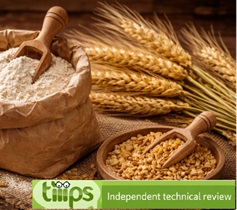
Senatore cappelli durum wheat semolina (Triticum turgidum subsp. durum): properties, uses, pros, cons, safety
Senatore Cappelli durum wheat semolina is a semolina obtained by milling a historic Italian durum wheat cultivar (Triticum turgidum subsp. durum, family Poaceae) developed in the early 1900s. It is mainly used for pasta, bread, and baked goods, with a sensory profile often described as intense and slightly nutty. In recent years, this variety has been rediscovered, especially within organic and territorial supply chains, and is found in Italy in regions including Marche, Tuscany, Calabria, and Basilicata.

Definition
Semolina is the coarser milling fraction compared with flour. In practice, semolina and flour come from the same cereal but differ in particle size, which affects water absorption, dough handling, and technological performance (pasta and baked goods). For durum wheat, semolina is the typical base for pasta and certain types of bread.
Production process and key constituents
How it is produced
Senatore Cappelli semolina is produced through: grain cleaning, conditioning (controlled humidification), milling, and sifting to separate the “semolina” fraction (granules) from finer flours and bran fractions. Stabilization and packaging are important to limit oxidation and aroma loss.
Key constituents
Starch and structural carbohydrates
Proteins and related fractions
Phenolic acids and polyphenols
Ferulic acid
p-Coumaric acid
Sinapic acid
Carotenoids
Technical note: several studies on Senatore Cappelli pasta report measurable polyphenols and flavonoids in the finished product; the Glycemic Index can also vary significantly depending on pasta shape, consistent with differences in structure and starch digestion kinetics.
Main uses
Food
Primary use in dry and fresh pasta, bread and semolina-based leavened goods, baked products, and snacks. Particle size and semolina quality directly influence water absorption, cooking firmness (pasta), and crumb structure (bread).
Industrial use
Raw material for mills and pasta manufacturers, particularly for “single-cultivar” lines or products positioned around territorial/organic identity.
Identification data and specifications
| Characteristic | Value | Note |
|---|
| Name | Senatore Cappelli durum wheat semolina | Historic Italian cultivar |
| Botanical name | Triticum turgidum subsp. durum | Durum wheat |
| Botanical family | Poaceae | Cereals |
| Breeding period | Early 1900s (historic release in the first decades) | Linked to breeding programs of that era |
| Distinct agronomic traits | Tall plant (up to ~1.8 m), long ears | Higher lodging risk with wind/weather |
| Agronomic yield | Indicatively lower than modern varieties | Values such as ~27 q/ha vs ~35 q/ha are often reported as an order of magnitude |
| Reported cultivation areas | Marche, Tuscany, Calabria, Basilicata | Presence varies by supply chain and year |
| Main use | Food | Pasta, bread, bakery |
Chemical-physical and nutritional properties (indicative)
| Characteristic | Indicative value | Note |
|---|
| Physical state | Granular powder | Typical “semolina” |
| Color | Golden yellow / amber | Batch- and grade-dependent |
| Odor and taste | Intense cereal, nutty notes | Varies with supply chain and freshness |
| Energy | About 330–360 kcal/100 g | Indicative range for durum semolinas |
| Protein | About 12–15 g/100 g | Depends on crop year and milling |
| Carbohydrates | About 65–75 g/100 g | Mostly starch |
| Fat | About 1.5–2.5 g/100 g | Low, but qualitatively relevant |
| Predominant lipids | PUFA and MUFA | Saturates are typically minor in cereals |
| Bioactive compounds | Polyphenols and phenolic acids; carotenoids | Evidence in pasta and/or outer fractions (husk/bran) |
Nutritional use note and bioactive compounds
Senatore Cappelli semolina, like other durum semolinas, is primarily an energy source (starch) with a meaningful protein contribution. From a nutraceutical perspective, literature on this cultivar highlights a phenolic component of interest and the presence of bioactive molecules, including phenolic acids and carotenoids (especially in outer fractions such as husk/bran).
In studies on Senatore Cappelli pasta, polyphenols and flavonoids have been measured, with indications that the GI can change markedly depending on product geometry (long vs short shapes), consistent with differences in structure and starch digestion kinetics. In other intervention/observation work, consumption of Senatore Cappelli-based products has been associated, in specific experimental contexts, with favorable changes in certain markers linked to atherosclerotic risk and with a reduction of gastrointestinal symptoms in selected subjects; these aspects should be interpreted cautiously and are not automatically transferable to any finished product.
Serving note.
For semolina as an ingredient, the “real” serving is that of the finished food (pasta/bread/crackers). In practice, a typical portion is defined by the label and individual needs; for pasta, portions vary widely depending on nutritional goals and dietary context.
Pros and cons
Pros
A sensory profile often perceived as more intense than many standard semolinas.
Potential contribution of representative bioactives (phenolics and carotenoids), especially in less refined products or those retaining outer fractions.
Well suited to territorial and organic supply chains where cultivar identity is a differentiating factor.
Cons
Contains gluten and is not suitable for celiac disease or wheat allergy.
Higher technological variability across batches and supply chains (particle size, protein level, dough behavior).
Historically more challenging cultivation due to tall stature and lower yield vs modern varieties, impacting cost and availability.
Safety, regulatory, and environmental aspects
Safety and allergens.
It is a gluten-containing cereal. Possible traces of other cereals/allergens depend on milling and packing facilities. For wheat sensitivity, management should follow labeling and clinical guidance.
Storage and shelf-life.
Store in a cool, dry place, protected from light and humidity. Over time, aromatic intensity may decrease and, under unfavorable conditions, the risk of oxidized off-notes may increase.
Labelling.
Food labeling should clearly cover: ingredient denomination, allergens (gluten), and alignment of any claims with applicable regulations and supply-chain documentation.
Troubleshooting
Dough not extensible or too dry.
Action: increase hydration, extend resting time, optimize mixing based on particle size and protein level.
Inconsistent cooking firmness (pasta).
Action: verify semolina quality and mixing/extrusion parameters; if the goal is not strictly “single-cultivar,” consider blending with semolina having complementary characteristics.
Bitter or “stale” notes.
Action: verify freshness and storage; reduce exposure to heat/humidity; rotate stock.
Conclusion
Senatore Cappelli durum wheat semolina is an ingredient with strong historic and agronomic identity, now often positioned within territorial and organic supply chains. Technologically, it offers a recognizable sensory profile and, nutritionally, may contribute representative bioactives (phenolics and carotenoids), with evidence in pasta and outer fractions that should be read prudently and always tied to the finished product and dietary context.
Mini-glossary
PUFA. Polyunsaturated fatty acids; within a balanced diet they are generally considered favorable when they replace saturated fats, with potential benefits for lipid profile.
MUFA. Monounsaturated fatty acids; often considered favorable in cardiovascular terms when they replace saturated fats in a balanced diet.
GI. Glycemic index; a measure of post-prandial glycemic response relative to a reference food. GI can vary with shape, recipe, processing, and portion size.
Studies
This study confirms the presence of polyphenols and flavonoids in Senatore Cappelli pasta, while warning that the value of the Glycemic Index is influenced by the shape of the pasta (1).
In the Mediterranean diet, wheat is a prominent component, and in particular the Senatore Cappelli genotype has a targeted nutraceutical character, due to its polyphenolic content, with beneficial health effects on markers of atherosclerosis and on the reduction of gastrointestinal symptoms (2).
Furthermore, this wheat variety has revealed the presence of bioactive molecules such as phenolic acids and carotenoids, particularly in the bran (3).
References__________________________________________________________________________
(1) Pugnaloni S, Alia S, Gabrielli M, Di Paolo A, Turco I, Mazzanti L, Orsini R, Vignini A, Ferretti G. Senatore cappelli (Triticum turgidum ssp. durum) pasta: a study on the nutritional quality of whole grains and its physical form. Int J Food Sci Nutr. 2022 Jun;73(4):451-459. doi: 10.1080/09637486.2021.2025212.
Abstract. Pasta is one of the components of the Mediterranean Diet, despite considerable attention given, its use is still debated. Several studies encouraged the consumption of whole grain because of its many properties and the positive association between refined carbohydrates and insulin resistance, by measuring the Glycaemic Index (GI), an indicator of the physiological effects of a carbohydrate meal. In this study, the GI and polyphenol content of Senatore Cappelli (Triticum turgidum ssp. durum) pasta were evaluated. Using spectrophotometric methods, total polyphenols and flavonoids were found to be 113.5 mg/100 g and 52.96 mg/100 g, respectively. To measure the GI, a standard assay was performed, and values of 47.9 ± 5.2 for long format pasta and 68.5 ± 4.6 for short format pasta were obtained. The present study confirms the presence of polyphenols and flavonoids in pasta Senatore Cappelli. The value of GI is influenced by the pasta shape. These informations could provide valuable data for practitioners preparing personalised diets.
(2) Giacosa A, Peroni G, Rondanelli M. Phytochemical Components and Human Health Effects of Old versus Modern Italian Wheat Varieties: The Case of Durum Wheat Senatore Cappelli. Nutrients. 2022 Jul 5;14(13):2779. doi: 10.3390/nu14132779.
Abstract. The Mediterranean diet has significant beneficial health effects and wheat is a major component of the Mediterranean diet, mainly in the form of bread and pasta. Modern wheat generally refers to varieties that were developed after the introduction of dwarfing genes in the 1950s, while old varieties are considered those developed before that time. Research findings on Italian wheat varieties showed that the total polyphenol content in both old and modern durum and soft wheat varieties are similar; but the old varieties have a higher number of polyphenols and of isomer forms. In particular, the durum wheat Senatore Cappelli genotype shows a very high variety of polyphenolic components. Recent studies have demonstrated healthy cardiovascular effects (favorable changes of atherosclerosis markers such as lipid parameters and hemorheological variables) as well as a marked reduction in gastrointestinal and extra-intestinal symptoms in non-celiac gluten sensitivity subjects with the consumption of pasta obtained by old durum wheat Senatore Cappelli variety, even though this type of wheat contains high amounts of gluten. In conclusion, old wheat Italian varieties, and in particular the Senatore Cappelli genotype, are characterized by multiple nutraceutical specificities that could suggest their use for health-promoting purposes. Additional research is needed to confirm these findings, focusing attention also on the effect of different environments and years.
(3) Armeli F, Beccaccioli M, Prencipe SA, Schifano E, Tufi D, Brasili E, Cottarelli A, Giampaoli O, Mengoni B, Miccheli A, Pinto A, Sciubba F, Uccelletti D, Businaro R, Vinci G, Reverberi M, De Giusti M. Bioactive molecules in wheat "Senatore Cappelli" food chain: Extraction, analysis, processing, and beneficial properties. Food Chem Toxicol. 2025 Jul;201:115475. doi: 10.1016/j.fct.2025.115475.



 Durum wheat semolina Senatore Cappelli