

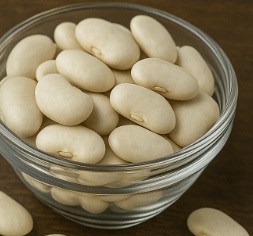
White bean
Rating : 7.5
| Evaluation | N. Experts | Evaluation | N. Experts |
|---|---|---|---|
| 1 | 6 | ||
| 2 | 7 | ||
| 3 | 8 | ||
| 4 | 9 | ||
| 5 | 10 |
10 pts from Whiz35
| Sign up to vote this object, vote his reviews and to contribute to Tiiips.Evaluate | Where is this found? |
| "White bean studies" about White bean Review Consensus 8 by Whiz35 (11982 pt) | 2019-Jul-27 12:53 |
| Read the full Tiiip | (Send your comment) |
Dry Bean Preferences and Attitudes among Midwest Hispanic and Non-Hispanic White Women.
Winham DM, Tisue ME, Palmer SM, Cichy KA, Shelley MC.
Nutrients. 2019 Jan 15;11(1). pii: E178. doi: 10.3390/nu11010178.
Composition of two Spanish common dry beans (Phaseolus vulgaris), 'Almonga' and 'Curruquilla', and their postprandial effect in type 2 diabetics.
Olmedilla-Alonso B, Pedrosa MM, Cuadrado C, Brito M, Asensio-S-Manzanera C, Asensio-Vegas C.
J Sci Food Agric. 2013 Mar 30;93(5):1076-82. doi: 10.1002/jsfa.5852
Protein⁻Phenolic Interactions as a Factor Affecting the Physicochemical Properties of White Bean Proteins.
Sęczyk Ł, Świeca M, Kapusta I, Gawlik-Dziki U.
Molecules. 2019 Jan 23;24(3). pii: E408. doi: 10.3390/molecules24030408
Production, Quality, and Acceptance of Tempeh and White Bean Tempeh Burgers.
Vital RJ, Bassinello PZ, Cruz QA, Carvalho RN, de Paiva JCM, Colombo AO.
Foods. 2018 Aug 30;7(9). pii: E136. doi: 10.3390/foods7090136.
A proprietary alpha-amylase inhibitor from white bean (Phaseolus vulgaris): a review of clinical studies on weight loss and glycemic control.
Barrett ML, Udani JK.
Nutr J. 2011 Mar 17;10:24. doi: 10.1186/1475-2891-10-24. Review.
Systematic Review and Meta-Analysis of a Proprietary Alpha-Amylase Inhibitor from White Bean (Phaseolus vulgaris L.) on Weight and Fat Loss in Humans.
Udani J, Tan O, Molina J.
Foods. 2018 Apr 20;7(4). pii: E63. doi: 10.3390/foods7040063.
| Sign up to vote this object, vote his reviews and to contribute to Tiiips.EvaluateClose | (0 comments) |
| "Descrizione" about White bean Review Consensus 10 by Whiz35 (11982 pt) | 2025-Nov-27 16:28 |
| Read the full Tiiip | (Send your comment) |
The white bean (Navy bean) is a variety of bean belonging to the species Phaseolus coccineus, in the botanical family Fabaceae. It differs from common beans (Phaseolus vulgaris) by its very large, flattened, bright white seeds and by its vigorous climbing habit, with showy red or white flowers. It is traditionally grown in cooler, hilly or mountainous areas and prefers well-drained soils and mild climates.
As a food ingredient, the white bean is valued for its soft, creamy texture and delicate flavor, which make it very versatile in cooking. It provides plant proteins, dietary fiber, complex carbohydrates and minerals such as iron, magnesium and potassium. In the kitchen it is used in soups, stews, side dishes, salads and vegetarian dishes, where it holds its shape well and easily absorbs flavors and seasonings. Because of the large size of the seeds, it is often used as a “main element” in rustic or traditional dishes, where its buttery consistency enhances the character of the recipe.

Common bean (Phaseolus vulgaris)
Description
The common bean (Phaseolus vulgaris, family Fabaceae) is the edible seed of a leguminous plant originally domesticated in Central and South America. There are many cultivars (borlotti, cannellini, black beans, red kidney, white beans, etc.), differing in size, shape, colour and culinary performance. The dry seed has a tough seed coat and becomes soft and creamy after cooking.
Beans are a staple food in many cuisines worldwide thanks to their high protein content, significant fibre level and good energy contribution.
Common name: Bean (common bean)
Parent plant: Phaseolus vulgaris L.
Kingdom: Plantae
Clade: Angiosperms
Clade: Eudicots
Order: Fabales
Family: Fabaceae
Genus: Phaseolus
Species: Phaseolus vulgaris L.
Note: The word “bean” can also refer to other Phaseolus species (e.g. P. lunatus, P. coccineus), but Phaseolus vulgaris is the most widely cultivated species worldwide.
Common bean is a typical warm-season crop and prefers temperate–warm climates.
Optimal temperatures: 20–26 °C.
It does not tolerate frost (damage already at 0–2 °C).
Flowering and pod set are sensitive to excessive heat (>32–35 °C).
High air humidity favors fungal diseases.
Requires full sun.
Direct light supports photosynthesis, plant development, and pod production.
In shade, plants grow but yields are low.
Common bean prefers soils that are:
light to medium-textured,
well drained,
rich in organic matter,
with pH between 6.0 and 7.5.
Heavy, compact, or waterlogged soils slow growth and increase root disease risk.
As a legume, Phaseolus vulgaris fixes atmospheric nitrogen through symbiosis with Rhizobium, improving soil fertility.
Water requirement is moderate, but supply must be regular:
Water is essential during germination and flowering.
Water stress can cause flower drop and poor pod set.
Excess water leads to root rot and other problems.
Stable soil moisture is crucial for uniform pod formation.
Germination: 15–22 °C
Optimal growth: 18–28 °C
Heat stress above 32–35 °C
Highly sensitive to cold
Beans are relatively undemanding:
Nitrogen: usually unnecessary thanks to nitrogen fixation.
Phosphorus: supports root development and early growth.
Potassium: improves pod quality and stress tolerance.
Organic amendments help improve soil structure and fertility.
Early hoeing to control weeds.
For climbing varieties: use of stakes, poles, or nets for support.
Crop rotation with cereals helps reduce soil-borne pests and diseases.
Monitoring for:
aphids,
leaf miners,
caterpillars and beetles,
powdery mildew, anthracnose, rust.
Good canopy aeration helps limit fungal infections.
Harvest time depends on the type of bean:
Green beans (snap beans): harvested when pods are tender and seeds not yet developed.
Fresh shelling beans: harvested when seeds are fully formed but still soft.
Dry beans: harvested when pods and seeds are fully mature and dry.
Green beans should not be harvested late, or pods quickly become fibrous.
Beans are propagated by seed.
Direct sowing in the field, 2–4 cm deep.
Spacing: 5–10 cm between plants for bush types, 20–30 cm for climbing types.
Germination is fast if the soil is warm and moist.
Bush beans are earlier; climbing beans produce over a longer period.
Indicative nutritional values per 100 g (dry beans)
Energy: ≈ 330–350 kcal
Water: ≈ 10–12 g
Carbohydrates: ≈ 55–60 g
of which sugars: ≈ 2–3 g
Protein: ≈ 20–22 g
Total fat: ≈ 1–2 g
SFA (saturated fatty acids; should be moderated overall): ≈ 0.2–0.3 g
MUFA (monounsaturated fatty acids; generally favourable for lipid profile): ≈ 0.2–0.3 g
PUFA (polyunsaturated fatty acids; important for membranes and anti-inflammatory functions): ≈ 0.5–1 g
Dietary fibre: ≈ 15 g
Minerals: iron, magnesium, potassium, phosphorus, zinc
Vitamins: folate, vitamin B1, vitamin B6, small amounts of vitamin K
(Values vary with variety and cultivation conditions.)
Key constituents
Plant proteins (globulins, albumins and legumins)
Starch and other complex carbohydrates
Soluble and insoluble fibre
Polyphenols, especially in dark-coloured beans (anthocyanins, flavonoids)
Lecithins and other phospholipids
Natural antinutritional factors: lectins in raw beans, phytates, protease inhibitors (largely inactivated by soaking and proper cooking)
Production process
Cultivation
Requires temperate climate and well-drained soils.
Crop cycle: about 70–120 days depending on variety and use (fresh shelling vs dry seed).
Bush and climbing types are both cultivated.
Adequate water supply is important during flowering and pod setting.
Harvest
For fresh shelling beans: harvest before full maturity, when seeds are plump but still soft.
For dry beans: harvest when pods are dry and seeds fully mature.
Harvest may be mechanical or manual, depending on scale and variety.
Post-harvest
Drying of beans to safe moisture (≈ 12–14%) to ensure storage stability.
Mechanical cleaning (screening), removal of foreign matter, grading by size and quality.
Packaging in sacks or retail packs.
Further processing
Production of:
canned beans (pre-cooked and preserved in brine)
bean flour
ingredients for soups, purees, creams and ready meals
fermented bean products in certain traditional cuisines
Physical properties
Typically oval or kidney-shaped seeds with a hard outer coat.
Wide range of seed colours and patterns (white, cream, red, brown, black, speckled).
Marked increase in volume and weight after soaking and cooking.
Cooked beans have a soft, often creamy interior with the coat remaining mostly intact in well-managed cooking.
Sensory and technological properties
Flavour: mild, slightly sweet or earthy; varies by variety.
Good ability to absorb flavours and seasonings during cooking.
Starch-rich varieties are ideal for purees, soups and creamy textures.
When properly soaked and cooked, beans maintain structural integrity without excessive splitting.
Technologically valuable as natural thickeners due to their starch and fibre content.
Food applications
Soups, stews, minestrone, purees and cream soups
Side dishes, salads, ethnic dishes (e.g. chili, bean curries, feijoada)
Traditional dishes such as pasta e fagioli, cassoulets and regional stews
Ingredient for vegetable burgers, protein-rich spreads, and alternative flours
Canned beans for quick use in home cooking and industrial recipes
Nutrition & health
Excellent source of plant protein, useful in vegetarian and vegan diets when combined with cereals for amino-acid balance.
High fibre content supports intestinal regularity, satiety and better glycaemic control within a balanced diet.
Good source of folate, important for DNA synthesis and cell division.
Significant potassium content contributes to maintaining normal blood pressure.
Soaking and cooking substantially reduce antinutritional factors (lectins, protease inhibitors) and improve digestibility.
People with irritable bowel syndrome or sensitivity to fermentable carbohydrates may need to moderate intake or use specific preparation methods.
Portion note
Cooked beans: 120–150 g per serving as a main protein portion.
Dry beans: 40–50 g per person (yielding roughly ≥ 120 g cooked).
Allergens and intolerances
Beans are not among the major EU allergens.
Allergic reactions can occur in individuals sensitised to Fabaceae (legume) proteins.
Some consumers may experience bloating or gastrointestinal discomfort due to fermentable carbohydrates (FODMAPs); gradual introduction and proper soaking/cooking can help.
Storage and shelf-life
Dry beans
12–18 months in a cool, dry, dark place.
Avoid high humidity to prevent mould growth or insect infestation.
Cooked / canned beans
Canned, unopened: typically 2–3 years if stored properly.
After opening: 2–3 days in the refrigerator in a covered container, with beans kept in their liquid or clean brine.
Safety and regulatory aspects
Controls focus on:
pesticide residues (MRL)
mycotoxins and mould contamination in poorly stored dry beans
microbiological safety in cooked/canned products
Processing plants must adhere to GMP and HACCP systems.
Canned products must also comply with regulations on heat treatment, hermetic sealing and storage.
Labelling
Name: “beans” / Phaseolus vulgaris.
Variety or type where relevant (e.g. “borlotti beans”, “cannellini beans”, “black beans”).
Country of origin.
Batch/lot number, best-before date, storage instructions.
For canned beans: net weight and drained weight, ingredient list (beans, water, salt and any additives).
Troubleshooting
Beans that remain hard after cooking → very old beans, insufficient soaking time, or very hard water; longer soaking and cooking or use of softer water recommended.
Split skins → overly vigorous boiling, sudden temperature changes or insufficient soaking.
Off or bitter flavours → spoilage, oxidation or poor storage; product should be discarded.
Presence of insects or webbing in dry beans → improper storage; affected batches must not be used.
Sustainability and supply chain
Beans are a low-impact crop that can improve soil fertility through biological nitrogen fixation.
Very good nutritional yield per hectare, supporting sustainable diets.
Well suited to organic farming and crop-rotation systems.
Important in sustainable protein strategies as a plant-based alternative to animal proteins.
Main INCI functions (cosmetics)
Cosmetic derivatives from beans may include:
Phaseolus Vulgaris Extract – used as an antioxidant and toning ingredient in some formulations.
Hydrolyzed Bean Protein – skin and hair-conditioning agent.
Usage remains relatively niche compared with other botanical ingredients.
Conclusion
The common bean is a versatile, highly nutritious and sustainable food, central to many traditional and modern dietary patterns. Rich in proteins, fibre and essential micronutrients, it is an excellent raw material for both classic recipes and innovative plant-based products. Appropriate cultivation, processing, soaking and cooking ensure good nutritional quality, safety and sensory performance throughout the supply chain.
Mini-glossary
SFA – Saturated fatty acids; fats that should be moderated due to their association with increased cardiovascular risk when excessive.
MUFA – Monounsaturated fatty acids; generally beneficial for blood-lipid profile.
PUFA – Polyunsaturated fatty acids; important for cell membranes and anti-inflammatory processes.
FODMAP – Fermentable Oligo-, Di-, Monosaccharides And Polyols; short-chain carbohydrates that can cause digestive discomfort in sensitive individuals.
MRL – Maximum Residue Level; legal limit for pesticide residues in foods.
GMP – Good Manufacturing Practices; operational rules ensuring hygienic, controlled production.
HACCP – Hazard Analysis and Critical Control Points; preventive system for identifying and managing food-safety hazards.
Studies
The content of the beans includes (1):
In addition to providing nutrients such as multifaceted carbohydrates, high protein, dietary fiber, minerals and vitamins, the beans also contain a rich variety of polyphenol compounds with potential health benefits (2).
In a comparison between white beans and beans of different colors, white beans were shown to be richer in dietary fiber, uronic acid (a product of sugar oxidation), and calcium (3).
With regard to the problem of high blood sugar an extract of white beans proved effective in lowering the glycemic index (4).
References___________________________________________
(1) Sathe SK, Deshpande SS, Salunkhe DK. Dry beans of Phaseolus. A review. Part 1. Chemical composition: proteins Crit Rev Food Sci Nutr. 1984;20(1):1-46.
(2) Hayat I, Ahmad A, Masud T, Ahmed A, Bashir S. Nutritional and health perspectives of beans (Phaseolus vulgaris L.): an overview. Crit Rev Food Sci Nutr. 2014;54(5):580-92. doi: 10.1080/10408398.2011.596639.
Abstract. Beans, the variants of Phaseolus vulagris, are nutritionally and economically important food crop in each part of the world. Besides providing nutrients such as multifaceted carbohydrates, elevated proteins, dietary fiber, minerals, and vitamins, these also contain rich variety of polyphenolic compounds with prospective health benefits. This review mainly focuses the important nutritional aspects of beans as well as their contribution in decreasing the risks of chronically degenerative diseases.
(3) Rivera A, Plans M, Sabaté J, Casañas F, Casals J, Rull A, Simó J. The Spanish Core Collection of Common Beans (Phaseolus vulgaris L.): An Important Source of Variability for Breeding Chemical Composition. Front Plant Sci. 2018 Nov 13;9:1642. doi: 10.3389/fpls.2018.01642.
Abstract. The Iberian Peninsula is considered as a secondary center of diversity for the common bean, and the Spanish National Plant Genetic Resources Centre's germplasm bank holds more than 3,000 Spanish accessions of Phaseolus vulgaris L. from which a core collection of 202 landraces has been selected. In order to encourage the use of this abundant resource, this study aimed to characterize genetic diversity, by measuring chemical composition in these core collections (in both the seed coat and cotyledon) using previously developed near infrared spectroscopy models. Crucially, these landraces in question all originated under similar agroclimatic conditions, allowing these field trials to be conducted in a single location without significantly altering the agronomic behavior of individual accessions. Using previously reported data, we also explored the correlations between chemical composition and culinary/sensory traits, as well as possible associations between chemical composition and seed coat color or gene pool (Middle American or Andean). The general Mahalanobis distance was >3 in only 11 of 1,950 estimations, confirming the robustness of the regression models previously developed. Variability was greater in seed coat than in cotyledon compounds and ranges for all compounds were wide: ash 34-94 g/kg, Ca 5-31 g/kg, dietary fiber 554-911 g/kg, Mg 2-4.4 g/kg, uronic acid 95-155 g/kg, protein 192-304 g/kg, starch 339-446 g/kg, amylose 208-291 g/kg, amylopectin 333-482 g/kg, and apparent amylose 241-332 g/kg. Accessions with white seed coats tended to be richer in ash, dietary fiber, uronic acid, and Ca, and accessions of the Middle American gene pool had on average 65% more Ca than the Andean gene pool. Strong genetic correlations were not identified between chemical and culinary/sensory traits. This is particularly positive with regards to plant breeding, as it means that synchronic improvement of nutritional composition and sensory traits is possible. The genetic diversity of chemical composition described in the Spanish core collection of beans therefore represents a promising opportunity to develop cultivars with superior nutritional profiles.
(4) Udani JK, Singh BB, Barrett ML, Preuss HG. Lowering the glycemic index of white bread using a white bean extract. Nutr J. 2009 Oct 28;8:52. doi: 10.1186/1475-2891-8-52.
Abstract. Background: Phase 2((R)) is a dietary supplement derived from the common white kidney bean (Phaseolus vulgaris). Phase 2 has been shown to inhibit alpha-amylase, the complex carbohydrate digesting enzyme, in vitro. The inhibition of alpha-amylase may result in the lowering of the effective Glycemic Index (GI) of certain foods. The objective of this study was to determine whether the addition of Phase 2 would lower the GI of a commercially available high glycemic food (white bread). Methods: An open-label 6-arm crossover study was conducted with 13 randomized subjects. Standardized GI testing was performed on white bread with and without the addition of Phase 2 in capsule and powder form, each in dosages of 1500 mg, 2000 mg, and 3000 mg. Statistical analysis was performed by one-way ANOVA of all seven treatment groups using unadjusted multiple comparisons (t tests) to the white bread control. Results: For the capsule formulation, the 1500 mg dose had no effect on the GI and the 2000 mg and 3000 mg capsule doses caused insignificant reductions in GI. For the powder, the 1500 mg and 2000 mg doses caused insignificant reductions in the GI, and the 3000 mg dose had a significant effect (-20.23 or 34.11%, p = 0.023) Conclusion: Phase 2 white bean extract appears to be a novel and potentially effective method for reducing the GI of existing foods without modifying their ingredient profile.
Lange E, Kęszycka PK, Pałkowska-Goździk E, Billing-Marczak K. Comparison of Glycemic Response to Carbohydrate Meals without or with a Plant-Based Formula of Kidney Bean Extract, White Mulberry Leaf Extract, and Green Coffee Extract in Individuals with Abdominal Obesity. Int J Environ Res Public Health. 2022 Sep 25;19(19):12117. doi: 10.3390/ijerph191912117.
Abstract. Due to the rising prevalence of obesity and type 2 diabetes, a strategy that can positively influence diet quality in a simple way is being explored, since a low glycemic index (GI) diet is advised in the dietoprophylaxis and diet therapy of diabetes. Methods: Twenty-three women with abdominal obesity participated in the study. The postprandial glycemic response and glycemic index were determined after three carbohydrate meals (noodle soup, white rice, strawberry sorbet) without or with the addition of a plant-base supplement (extracts of kidney bean, white mulberry leaf, and green coffee) with a potentially hypoglycemic effect. For two products (instant noodle soup and white rice), the addition of the plant supplement resulted in a reduction in glicemic iAUC values (respectively, by: 17.1%, p = 0.005 and 5.3%; p = 0.03; 40.6%, p = 0.004 and 5.3%, p = 0.019). However, this effect was not observed for strawberry sorbet. The blood glucose concentrations 30 min after the consumption of instant noodle soup and white rice with the plant-based formula addition significantly affected the GI value of tested meals (p = 0.0086, r = 0.53; p = 0.0096, r = 0.53), which may indicate the effect of this plant supplement on enterohormone and/or insulin secretion. Conclusion: A formula containing kidney bean, white mulberry leaves, and green coffee extracts may therefore be a notable factor in lowering postprandial glycemia and the GI of carbohydrate foods. However, further research is needed to determine for which food groups and meals its use may be most effective.
Barrett ML, Udani JK. A proprietary alpha-amylase inhibitor from white bean (Phaseolus vulgaris): a review of clinical studies on weight loss and glycemic control. Nutr J. 2011 Mar 17;10:24. doi: 10.1186/1475-2891-10-24. PMID: 21414227;
Abstract. Obesity, and resultant health hazards which include diabetes, cardiovascular disease and metabolic syndrome, are worldwide medical problems. Control of diet and exercise are cornerstones of the management of excess weight. Foods with a low glycemic index may reduce the risk of diabetes and heart disease as well as their complications. As an alternative to a low glycemic index diet, there is a growing body of research into products that slow the absorption of carbohydrates through the inhibition of enzymes responsible for their digestion. These products include alpha-amylase and glucosidase inhibitors. The common white bean (Phaseolus vulgaris) produces an alpha-amylase inhibitor, which has been characterized and tested in numerous clinical studies. A specific and proprietary product named Phase 2® Carb Controller (Pharmachem Laboratories, Kearny, NJ) has demonstrated the ability to cause weight loss with doses of 500 to 3000 mg per day, in either a single dose or in divided doses. Clinical studies also show that Phase 2 has the ability to reduce the post-prandial spike in blood glucose levels. Experiments conducted incorporating Phase 2 into food and beverage products have found that it can be integrated into various products without losing activity or altering the appearance, texture or taste of the food. There have been no serious side effects reported following consumption of Phase 2. Gastro-intestinal side effects are rare and diminish upon extended use of the product. In summary, Phase 2 has the potential to induce weight loss and reduce spikes in blood sugar caused by carbohydrates through its alpha-amylase inhibiting activity.
| Sign up to vote this object, vote his reviews and to contribute to Tiiips.EvaluateClose | (0 comments) |
Read other Tiiips about this object in __Italiano (2)
Content:  
Last update:   2025-11-27 16:27:28 | Kcal/100g:   90 Family:   Threat factors:   |

