

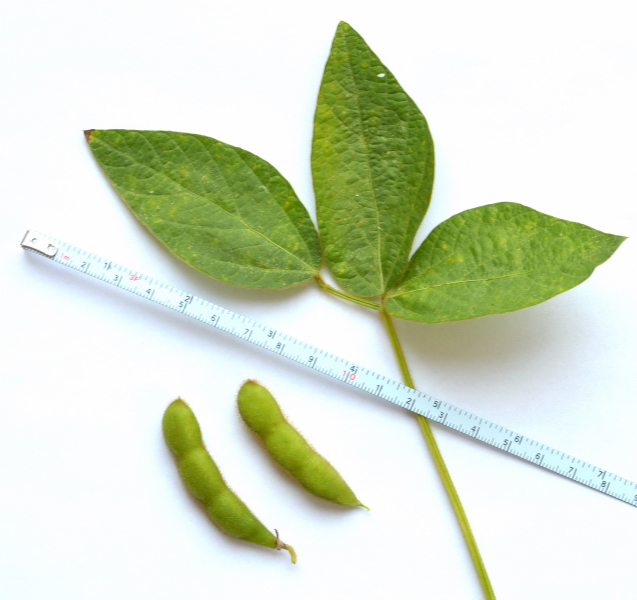
Natural Soya
Rating : 7.5
| Evaluation | N. Experts | Evaluation | N. Experts |
|---|---|---|---|
| 1 | 6 | ||
| 2 | 7 | ||
| 3 | 8 | ||
| 4 | 9 | ||
| 5 | 10 |
Cons:
Allergen (1)0 pts from FRanier
| Sign up to vote this object, vote his reviews and to contribute to Tiiips.Evaluate | Where is this found? |
| "Descrizione" about Natural Soya by FRanier (10041 pt) | 2025-Oct-29 12:20 |
| Read the full Tiiip | (Send your comment) |
Soy is an annual seedling belonging to the Fabaceae family.
It is one of the most cultivated plants in the world and is used in human and animal nutrition.
Natural soy is not transgenic, so it has not undergone any changes to its DNA.
It is a leguminacea (like beans, peas etc.) introduced as an alternative to maize for the low cost and to avoid mycotoxins on grain and other parasites.
The spread of soy is due to the growing demand of consumers who have discovered some interesting properties of this legume.
But the benchmark that has advanced it in the market is the low cost.
There are about 30 varieties on the market:
Fukui, Demetra, Blanca, Taira, Regir, Dekabig, Atlantic, Bahia, PR92B63, Pacific, Nikko, Nikir, Condor, Pedro, Juliet, Tea, Ascasubi, Brilliant, Colorado, Fortress, Sapporo, Goriziana, Aires, Sponsor, Indian, Hilario, Neoplanta, Cresir, Shama, Syngenta, Sekoia, A
From the soy they are obtained:
Soy contains several polyphenol compounds, especially isoflavones, which have positive effects on human health, but their presence in percentage varies depending on the type of soy.
Isoflavones (classified as phytoestrogens) have shown positive potential against cardiovascular disease, diabetes, cancer. osteoporosis and neurogenerative disorders. In the soybean, 12 different types were identified divided into:
In 1999, the FDA recognized soy proteins with some protection against coronary heart disease and authorized the following posology: 25 grams of soy protein per day as part of a low-fat, cholesterol-low diet.
In 2017, the FDA announced its intention to review the authorization for lack of scientific data as only 19 studies confirmed the usefulness of soy in reducing coronary risk, while 27 studies did not support this positive thesis.
It's a rather controversial food.
On the one hand, some studies draw attention to isoflavones present in soy that help defend the cardiovascular system by regulating cellular and enzymatic functions in situations such as inflammation, thrombosis and atherosclerotic progression (2).
On the other hand, it is feared that it may cause damage, particularly to Alzheimer's disease, if ingested in the form of an industrial product. This study analyses the problem (3).
However, a certain amount of post-2017 scientific studies confirm the positive activity of soy bea on human health.
In a 20 km cycling race, a fermented soybean extract improved the performance of athletes both in terms of power and speed (4).
Patients with type 2 diabetes achieved improved blood conditions, increased brachial blood flow, improved endothelial function, increased total serum antioxidants and lipid profile. There was no significant effect on blood pressure and HDL cholesterol (5)
Soy and its isoflavones have a positive influence on mortality risks associated with cancer and cardiovascular disorders (6).
Soy studies
References__________________________________________
(1) Orts A, Revilla E, Rodriguez-Morgado B, Castaño A, Tejada M, Parrado J, García-Quintanilla A. Protease technology for obtaining a soy pulp extract enriched in bioactive compounds: isoflavones and peptides Heliyon. 2019 Jun 22;5(6):e01958. doi: 10.1016/j.heliyon.2019.e01958.
Abstract. This work presents a new bioprocess process for the extraction of bioactive components from soy pulp by-product (okara) using an enzymatic technology that was compared to a conventional water extraction. Okara is rich in fiber, fat, protein, and bioactive compounds such as isoflavones but its low solubility hampers the use in food and fertilizer industry. After the enzymatic attack with endoproteases half of the original insoluble proteins were converted into soluble peptides. Linked to this process occured the solubilization of isoflavones trapped in the insoluble protein matrix. We were able to extract up to 62.5% of the total isoflavones content, specially aglycones, the more bioactive isoflavone forms, whose values rose 9.12 times. This was probably due to the increased solubilization and interconversion from the original isoflavones. In conclusion, our process resulted in the formulation of a new functional product rich in aglycones and bioactive peptides with higher antioxidant potency than the original source. Therefore, we propose that the enzymatic extraction of okara bioactive compounds is an advantageous tool to replace conventional extraction.
(2) González Cañete N, Durán Agüero S. Soya isoflavones and evidences on cardiovascular protection. Nutr Hosp. 2014 Jun 1;29(6):1271-82. doi: 10.3305/nh.2014.29.6.7047. Spanish.
(3) Roccisano D, Henneberg M, Saniotis A. A possible cause of Alzheimer's dementia - industrial soy foods. Med Hypotheses. 2014 Mar;82(3):250-4. doi: 10.1016/j.mehy.2013.11.033. Epub 2013 Dec 7.
(4) Seeley AD, Jacobs KA, Signorile JF. Acute Soy Supplementation Improves 20-km Time Trial Performance, Power, and Speed. Med Sci Sports Exerc. 2020 Jan;52(1):170-177. doi: 10.1249/MSS.0000000000002102.
Abstract. Introduction: Isoflavones, a chemical class of phytoestrogens found in soybeans and soy products, may have biological functions similar to estradiol. After binding with ERβ or perhaps independently of estrogen receptors, isoflavones may augment vascular endothelial relaxation, contributing to improved limb blood flow. Purpose: To determine if acute fermented soy extract supplementation influences 20-km time trial cycling performance and cardiac hemodynamics compared with a placebo. Methods: Subjects included 25 cyclists and triathletes (31 ± 8 yr, V˙O2peak: 55.1 ± 8.4 mL·kg·min). Each subject completed a V˙O2peak assessment, familiarization, and two 20-km time trials in randomized order after ingestion of a fermented soy extract supplement or placebo. The fermented soy extract consisted of 30 g powdered supplement in 16 fl. ounces of water. The placebo contained the same quantities of organic cocoa powder and water. Each trial consisted of 60 min of rest, 30 min at 55% Wpeak, and a self-paced 20-km time trial. Results: Soy supplementation elicited a faster time to 20-km completion (-0.22 ± 0.51 min; -13 s), lower average HR (-5 ± 7 bpm), and significantly greater power (7 ± 3 W) and speed (0.42 ± 0.16 km·h) during the last 5 km of the time trial compared with placebo. Analysis of the results by relative fitness level (<57 vs ≥ 57 mL⋅kg⋅min) indicated that those with a higher level of fitness reaped the largest performance improvement alongside a reduced HR (-5 ± 7 bpm). Conclusions: Ingestion of a fermented soy extract supplement improved sprint-distance performance through improvements in both power and speed. For those with great aerobic fitness, soy supplementation may help to decrease cardiac demand alongside performance improvement.
(5) Sedaghat A, Shahbazian H, Rezazadeh A, Haidari F, Jahanshahi A, Mahmoud Latifi S, Shirbeigi E. The effect of soy nut on serum total antioxidant, endothelial function and cardiovascular risk factors in patients with type 2 diabetes. Diabetes Metab Syndr. 2019 Mar - Apr;13(2):1387-1391. doi: 10.1016/j.dsx.2019.01.057
(6) Nachvak SM, Moradi S, Anjom-Shoae J, Rahmani J, Nasiri M, Maleki V, Sadeghi O. Soy, Soy Isoflavones, and Protein Intake in Relation to Mortality from All Causes, Cancers, and Cardiovascular Diseases: A Systematic Review and Dose-Response Meta-Analysis of Prospective Cohort Studies J Acad Nutr Diet. 2019 Jul 2. pii: S2212-2672(19)30362-4. doi: 10.1016/j.jand.2019.04.011
Woo HW, Kim MK, Lee YH, Shin DH, Shin MH, Choi BY. Habitual consumption of soy protein and isoflavones and risk of metabolic syndrome in adults ≥ 40 years old: a prospective analysis of the Korean Multi-Rural Communities Cohort Study (MRCohort). Eur J Nutr. 2019 Oct;58(7):2835-2850. doi: 10.1007/s00394-018-1833-8.
Abstract. Purpose: Although considerable attention has been paid to the potential benefits of soy protein and isoflavones for preventing metabolic syndrome (MetS) and its components, findings linking habitual consumption of these factors to MetS are limited. This study aimed to evaluate the association of MetS incidence with habitual intake of soy protein/isoflavones among Korean men and women aged ≥ 40 years old who did not have MetS at baseline (n = 5509; 2204 men and 3305 women). Methods: Dietary intake of soy protein/isoflavones at baseline and average consumption during follow-up were used. Results: A significant inverse association between dietary intake and incidence of MetS was found in women (incidence rate ratios, IRR = 0.60, 95% CI = 0.46-0.78, P for trend = 0.0094 for the highest quintile of average soy protein intake compared with the lowest quintile; IRR = 0.57, 95% CI = 0.44-0.74, P for trend = 0.0048 for the highest quintile of average isoflavones intake compared with the lowest quintile). A tendency towards an inverse association was also found in men, although it was not significant for the highest quintile (IRR = 0.80, 95% CI = 0.58-1.11, P for trend = 0.9759, comparing the lowest to the highest quintile of average soy protein intake; IRR = 0.73, 95% CI = 0.53-1.01, P for trend = 0.8956, comparing the lowest to the highest quintile of average isoflavones intake). In terms of individual abnormalities, a significant inverse association was found between soy protein and isoflavones and the incidence of low-high-density lipoprotein cholesterol in both men and women. Abdominal obesity and elevated blood pressure were inversely related to soy protein/isoflavones only in women, and an inverse association of elevated triglyceride appeared only in men. Conclusion: Our findings suggest that habitual intake of soy protein and isoflavones is inversely associated with the risk of MetS and its components. There is likely to be a reverse J-shaped association of average intake with MetS.
| Sign up to vote this object, vote his reviews and to contribute to Tiiips.EvaluateClose | (0 comments) |
Read other Tiiips about this object in __Italiano (4)
Content:   Last update:   2012-11-01 12:28:46 | Kcal/100g:   330 Family:   Threat factors:   |

