



Palmitoylethanolamide: what it is, cosmetic uses, safety and alternatives
Palmitoylethanolamide (Palmitamide MEA) is a chemical compound, ethanolamide of palmitic acid. Ethanolamides consist of carboxylic acid and amides.
Palmitoylethanolamide is a fatty acid amide derived from palmitic acid and monoethanolamine (MEA). It is primarily used in cosmetic and personal care products for its emollient, conditioning, and thickening properties. Palmitoylethanolamide is commonly found in shampoos, conditioners, lotions, and creams, where it helps improve the texture of the product and provides hydration and softness to the skin and hair.
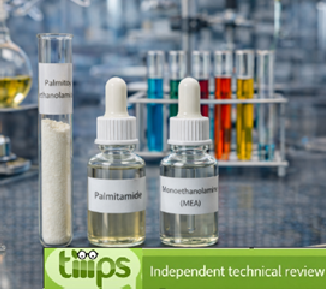
Chemical Composition and Structure
Palmitoylethanolamide is an amide formed by the reaction between palmitic acid, a long-chain saturated fatty acid, and monoethanolamine. This chemical structure enables Palmitoylethanolamide to form a protective film on the skin or hair, helping to retain moisture and enhance the smoothness and softness of the skin and hair.
Physical Properties
It typically appears as a white or yellowish waxy solid, soluble in oils and partially soluble in water. Palmitoylethanolamide is stable and can be used in a wide range of cosmetic formulations due to its emollient and thickening properties.
Production Process
Palmitamide MEA is produced through a condensation reaction between palmitic acid and monoethanolamine, followed by a purification process to obtain a stable and safe product for cosmetic use.
The name describes the structure of the molecule:
- Palmitamide refers to an amide derived from palmitic acid, a common saturated fatty acid. An amide is a functional group consisting of a carbonyl group (C=O) linked to a nitrogen atom (N).
- MEA (2-aminoethanol) or Monoethanolamine belongs to the first generation of ethanolamines, is a primary amine and is a strongly alkaline agent, corrosion inhibitor and chemical intermediate.
Description and function of the raw materials used in production
- Palmitic acid - A saturated fatty acid commonly found in fats and oils.
- Monoethanolamine (MEA) - An organic molecule used to produce amides and other compounds.
The synthesis process takes place in different steps:
- Production of palmitic acid from natural sources such as palm oil or animal fats. It can also be produced synthetically.
- Conversion. Palmitic acid is converted to palmitamide through a reaction with ammonia.
- Reaction with monoethanolamine. Palmitamide undergoes a reaction process with monoethanolamine to form palmitamide MEA.
- Purification. The final product is purified to remove any unreacted materials and by-products from the reaction mixture to obtain pure Palmitamide MEA.
Safety
MEA should not be included in products formulated as aerosols and in products containing N-nitroso. Scientific literature agrees that MEA can penetrate and absorb into the skin and cause skin irritation, particularly on the scalp.
What it is used for and where
Cosmetics
Antistatic agent. Static electricity build-up has a direct influence on products and causes electrostatic adsorption. The antistatic ingredient reduces static build-up and surface resistivity on the surface of the skin and hair.
Surfactant - Foam booster. Its function is to introduce gas bubbles into the water for a purely aesthetic factor, which does not affect the cleaning process, but only satisfies the commercial aspect of the detergent by helping to spread the detergent on the hair. This helps in the commercial success of a shampoo formulation. Since sebum has an inhibiting action on the bubble, more foam is produced in the second shampoo.
Viscosity Enhancing Agent - aqueous. Since viscosity is important for increasing the chemical and physical stability of the product, Viscosity Enhancing Agent acqueous is an important dosage factor in gels, suspensions, emulsions, solutions. Increasing viscosity makes formulations less sedimentary and more homogeneously thickened.
Alternatives
| Option (INCI) | Product type | Key advantages |
|---|---|---|
| Glyceryl Stearate | Co-emulsifier/emollient (glycerin + fatty acid ester) | Builds structure and body, improves slip and comfort, widely viewed as natural-origin. |
| Cetearyl Alcohol | Plant-derived fatty alcohol (structurant) | Increases viscosity and stability, enhances texture and feel, reduces tack in leave-on systems. |
| Hydrogenated Lecithin | Phospholipid (soy/sunflower-derived) | Supports barrier-like feel and sensory profile, improves stability and deposition, useful in soothing lamellar systems. |
| Butyrospermum Parkii (Shea) Butter | Plant butter (emollient/structurant) | Adds cushion and richness, improves comfort, ideal for barrier and rich-texture products. |
| Avena Sativa (Oat) Kernel Oil | Functional plant oil (soothing) | Provides emolliency with a skin-soothing positioning, helps relieve dryness, suitable for gentle formulas. |
 |  |
 |  |
- Molecular Formula C18H37NO2
- CAS 544-31-0
- UNII 6R8T1UDM3V
- EC Number 208-867-9
| Property | Value |
|---|---|
| Molecular weight | 299.49 (calculated) |
| pKa (most acidic; 25 °C) | −0.67 (calculated) |
| pKa (most basic; 25 °C) | 14.49 (calculated) |
| Density (20 °C) | 0.910 g/cm³ (calculated) |
| Melting point | 98 °C |
| Boiling point | 461.5 °C (calculated) |
| log P (25 °C) | 5.796 (calculated) |

