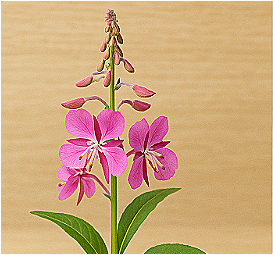
Epilobium angustifolium extract (Epilobium angustifolium)
Description
Epilobium angustifolium extract is derived from the aerial parts of Epilobium angustifolium L., a perennial herbaceous plant belonging to the Onagraceae family and widely distributed across Europe, Asia, and North America. The extract represents a concentrated and standardized botanical ingredient obtained from the plant material, enabling consistent quality and reproducibility in industrial formulations compared with unprocessed herbal material.
From a phytochemical standpoint, the extract is characterized by a complex profile of polyphenols, flavonoids, ellagitannins (notably oenothein B), phenolic acids, and mucilage components. These constituents define the functional profile of the extract and support its use in formulations aimed at maintaining physiological balance and tissue protection. The presence of high-molecular-weight tannins contributes to the technical interest of the extract in cosmetic and nutraceutical matrices.
The extract form offers enhanced stability, improved shelf life, and ease of formulation, particularly in solid, semi-solid, and liquid systems. For these reasons, Epilobium angustifolium extract is widely used as a functional botanical ingredient in cosmetic, nutraceutical, and technical applications, where standardization, safety, and formulation compatibility are essential.
INCI name / Technical name:
CAS number: 90028-31-2 (Number associated with botanical extracts of Epilobium angustifolium)
EC number: 289-821-5
Name breakdown and function of the components
Epilobium: botanical genus identifying the plant source
angustifolium: species designation referring to the narrow-leaved morphology of the plant
Extract: concentrated botanical preparation obtained from plant material, providing standardized composition and functional consistency
The combined phytochemical components are responsible for the functional and technical properties of the extract in finished products.
Botanical classification (APG IV system)
| Category | Data |
|---|
| Common name | epilobium |
| Botanical name | Epilobium spp. |
| Kingdom | Plantae |
| Clade | angiosperms → eudicots |
| Order | Myrtales |
| Family | Onagraceae |
| Genus | Epilobium |
| Most used species | Epilobium angustifolium L. (≡ Chamerion angustifolium), Epilobium parviflorum Schreb. |
Dry extract characteristics
| Parameter | Specification |
|---|
| Plant part used | aerial parts |
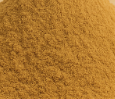
| Physical form | fine powder |
| Color | light brown to brown |
| Extraction method | aqueous or hydroalcoholic extraction followed by drying |
| Extraction ratio | variable (e.g. 4:1 – 10:1) |
| Solubility | partially soluble in water |
Indicative nutritional values per 100 g (dry extract)
Average indicative values. The extract is used at much lower dosages.
| Component | Average value |
|---|
| Energy | ~ 230–280 kcal |
| Total carbohydrates | ~ 40–50 g |
| Dietary fiber | ~ 25–35 g |
| Proteins | ~ 8–10 g |
| Total lipids | ~ 1–3 g |
| Ash | ~ 7–11 g |
Nutritional use note and bioactive compounds
At typical intake levels in food supplements (generally 250–1000 mg/day), the caloric contribution is negligible.
The nutritional relevance of Epilobium dry extract is functional rather than nutritional, being primarily linked to its bioactive compound profile rather than to macronutrient intake.
Main bioactive compounds present:
Ellagitannins: oenothein B (characteristic marker of the Epilobium genus)
Polyphenols: gallic acid, caffeic acid, chlorogenic acid and ellagic acid
Flavonoids: quercetin, myricetin, kaempferol and related glycosides
Tannins: contributing to astringent and antioxidant activity
Phenolic acids: supporting overall antioxidant capacity
These compounds are discussed in scientific literature for anti-inflammatory, antioxidant, and functional support activities, particularly related to urinary and prostate well-being.
Medical applications (traditional and scientific interest)
| Area | Application |
|---|
| Traditional herbal medicine | Support of urinary tract well-being |
| Prostate function | Traditional use to maintain prostate function |
| Anti-inflammatory activity | Studied in relation to polyphenols and oenothein B |
| Antioxidant activity | High content of phenolic compounds |
| Traditional digestive use | Infusions used for mild digestive discomfort |
Note: medical uses are traditional or experimental and do not replace pharmacological therapies.
Cosmetic applications
| Cosmetic area | Function |
|---|
| Skin care | Soothing and antioxidant properties |
| Balancing cosmetics | Use in products for sensitive or impure skin |
| Anti-age products | Support against oxidative skin stress |
| Natural cosmetics | Functional botanical ingredient |
Main INCI functions:
Skin conditioning
Soothing
Antioxidant
Protecting
Industrial applications
| Sector | Application |
|---|
| Nutraceutical industry | Food supplements in capsules, tablets, and powders |
| Herbal industry | Production of dry extracts and phytotherapeutic blends |
| Cosmetic industry | Functional ingredient for natural formulations |
| Pharmaceutical research | Study of phenolic and tannin compounds |
| Food industry | Limited use as a functional ingredient |
Environmental impact
Epilobium angustifolium extract is considered to have a low environmental impact, as it is derived from a renewable plant source. It is not classified as hazardous to the environment. When produced in accordance with good agricultural and manufacturing practices, the extract supports responsible resource use and controlled management of processing residues, contributing to a favorable environmental profile.
References__________________________________________________________________________
Ruszová E, Cheel J, Pávek S, Moravcová M, Hermannová M, Matějková I, Spilková J, Velebný V, Kubala L. Epilobium angustifolium extract demonstrates multiple effects on dermal fibroblasts in vitro and skin photo-protection in vivo. Gen Physiol Biophys. 2013 Sep;32(3):347-59. doi: 10.4149/gpb_2013031.
Abstract. Stress-induced fibroblast senescence is thought to contribute to skin aging. Ultraviolet light (UV) radiation is the most potent environmental risk factor in these processes. An Epilobium angustifolium (EA) extract was evaluated for its capacity to reverse the senescent response of normal human dermal fibroblasts (NHDF) in vitro and to exhibit skin photo-protection in vivo. The HPLC-UV-MS analysis of the EA preparation identified three major polyphenol groups: tannins (oenothein B), phenolic acids (gallic and chlorogenic acids) and flavonoids. EA extract increased the cell viability of senescent NHDF induced by serum deprivation. It diminished connective tissue growth factor and fibronectin gene expressions in senescent NHDF. Down-regulation of the UV-induced release of both matrix metalloproteinase-1 and -3 and the tissue inhibitor of matrix metalloproteinases-1 and -2, and also down-regulation of the gene expression of hyaluronidase 2 were observed in repeatedly UV-irradiated NHDF after EA extract treatment. Interestingly, EA extract diminished the down-regulation of sirtuin 1 dampened by UV-irradiation. The application of EA extract using a sub-irritating dose protected skin against UV-induced erythema formation in vivo. In summary, EA extract diminished stress-induced effects on NHDF, particularly on connective tissue growth factor, fibronectin and matrix metalloproteinases. These results collectively suggest that EA extract may possess anti-aging properties and that the EA polyphenols might account for these benefits.
Nowak A, Cybulska K, Makuch E, Kucharski Ł, Różewicka-Czabańska M, Prowans P, Czapla N, Bargiel P, Petriczko J, Klimowicz A. In Vitro Human Skin Penetration, Antioxidant and Antimicrobial Activity of Ethanol-Water Extract of Fireweed (Epilobium angustifolium L.). Molecules. 2021 Jan 10;26(2):329. doi: 10.3390/molecules26020329.
Abstract. Epilobium angustifolium L. is applied as an antiseptic agent in the treatment of skin diseases. However, there is a lack of information on human skin penetration of active ingredients with antioxidative potential. It seems crucial because bacterial infections of skin and subcutaneous tissue are common and partly depend on oxidative stress. Therefore, we evaluated in vitro human skin penetration of fireweed ethanol-water extracts (FEEs) by determining antioxidant activity of these extracts before and after penetration study using 2,2-diphenyl-1-picrylhydrazyl (DPPH), 2,2'-azino-bis(3-ethylbenzothiazoline-6-sulfonic acid) (ABTS), and Folin-Ciocalteu methods. Microbiological tests of extracts were done. The qualitative and quantitative evaluation was performed using gas chromatography-mass spectrometry (GC-MS) and high-performance liquid chromatography (HPLC-UV) methods. The in vitro human skin penetration using the Franz diffusion chamber was assessed. The high antioxidant activity of FEEs was found. Gallic acid (GA), chlorogenic acid (ChA), 3,4-dihydroxybenzoic acid (3,4-DHB), 4-hydroxybenzoic acid (4-HB), and caffeic acid (CA) were identified in the extracts. The antibacterial activities were found against Serratia lutea, S. marcescens, Bacillus subtilis, B. pseudomycoides, and B. thuringiensis and next Enterococcus faecalis, E. faecium, Streptococcus pneumoniae, Pseudomonas aeruginosa, and P. fluorescens strains. In vitro penetration studies showed the penetration of some phenolic acids and their accumulation in the skin. Our results confirm the importance of skin penetration studies to guarantee the efficacy of formulations containing E. angustifolium extracts.
Nowak A, Zielonka-Brzezicka J, Perużyńska M, Klimowicz A. Epilobium angustifolium L. as a Potential Herbal Component of Topical Products for Skin Care and Treatment-A Review. Molecules. 2022 May 31;27(11):3536. doi: 10.3390/molecules27113536.
Abstract. Epilobium angustifolium L. (EA) has been used as a topical agent since ancient times. There has been an increasing interest in applying EA as a raw material used topically in recent years. However, in the literature, there are not many reports on the comprehensive application of this plant to skin care and treatment. EA contains many valuable secondary metabolites, which determine antioxidant, anti-inflammatory, anti-aging, and antiproliferative activity effects. One of the most important active compounds found in EA is oenothein B (OeB), which increases the level of ROS and protects cells from oxidative damage. OeB also influences wound healing and reduces inflammation by strongly inhibiting hyaluronidase enzymes and inhibiting COX-1 and COX-2 cyclooxygenases. Other compounds that play a key role in the context of application to the skin are flavonoids, which inhibit collagenase and hyaluronidase enzymes, showing anti-aging and anti-inflammatory properties. While terpenes in EA play an important role in fighting bacterial skin infections, causing, among other things cell membrane, permeability increase as well as the modification of the lipid profiles and the alteration of the adhesion of the pathogen to the animal cells. The available scientific information on the biological potential of natural compounds can be the basis for the wider use of EA in skin care and treatment. The aim of the article is to review the existing literature on the dermocosmetic use of E. angustifolium.