



Ajuga reptans extract (Ajuga reptans)
Description
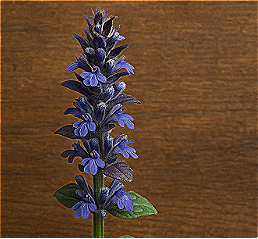
Ajuga reptans extract is obtained from the perennial herb Ajuga reptans, belonging to the Lamiaceae family. The extract represents a concentrated and stable form of the plant’s bioactive constituents, including phenolic compounds, iridoids, and flavonoids. Due to its phytochemical profile, it is used as a functional ingredient in cosmetic formulations, dietary supplements, and selected technical applications, where botanical actives are required in a standardized form.
 |  |
Botanical identification
| Category | Data |
|---|---|
| Common name | bugleweed, common bugle |
| Botanical name | Ajuga reptans L. |
| Botanical family | Lamiaceae |
| Plant part used | aerial parts (leaves and stems) |
| Ingredient form | extract |
Description of the extract
| Item | Description |
|---|---|
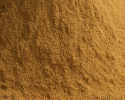
| Appearance | fine powder |
| Color | light brown to brown |
| Odor | characteristic, herbal |
| Solubility | partially soluble in water; soluble in hydroalcoholic solvents |
| Extraction ratio | variable (typically 5:1 – 10:1, depending on manufacturer) |
| Carrier | may contain maltodextrins or other plant-derived carriers |
Key constituents
| Compound class | Description |
|---|---|
| Iridoids | including aucubin and related compounds, characteristic of the Ajuga genus |
| Flavonoids | apigenin, luteolin, and derivatives |
| Polyphenols | associated with antioxidant activity |
| Tannins | responsible for astringent properties |
| Phytosterols | present in trace amounts |
Indicative nutritional values per 100 g of extract
Average estimated values. The extract is not used as a food ingredient but as a functional component. Typical usage levels range from tens to hundreds of milligrams.
| Component | Indicative value |
|---|---|
| Energy | ~ 250–300 kcal |
| Total carbohydrates | ~ 50–60 g |
| — of which sugars | ~ 10–15 g |
| Dietary fiber | ~ 20–25 g |
| Proteins | ~ 8–12 g |
| Total lipids | ~ 2–4 g |
| — saturated fatty acids (SFA – Saturated Fatty Acids) | < 1 g |
| — monounsaturated fatty acids (MUFA – MonoUnsaturated Fatty Acids) | < 1 g |
| — polyunsaturated fatty acids (PUFA – PolyUnsaturated Fatty Acids) | < 1 g |
| Ash | ~ 8–12 g |
Nutritional profile note
From a nutritional perspective, extract of Ajuga reptans is not intended to provide energy or macronutrient intake.
Its relevance is functional, linked to the concentration of bioactive compounds (iridoids, flavonoids, and tannins) compared with the fresh plant.
Medical applications (traditional and scientific interest)
| Area | Application |
|---|---|
| Traditional herbal medicine | Used as a supportive ingredient for respiratory tract well-being |
| Anti-inflammatory activity | Interest in iridoids and polyphenols for inflammation modulation |
| Astringent activity | Tannin content traditionally used to help control secretions |
| Traditional wound care | Topical use in herbal preparations to support skin repair |
| Digestive support | Traditional use in concentrated decoctions |
Note: medical applications are traditional or experimental and do not replace pharmacological treatments.
Cosmetic applications
| Cosmetic area | Function |
|---|---|
| Skin care | Extract used for soothing, astringent, and balancing properties |
| Oily and sensitive skin products | Support for skin normalization |
| Scalp care | Included in balancing scalp formulations |
| Natural cosmetics | Functional ingredient in phytocosmetic lines |
Main INCI functions:
Skin conditioning
Soothing
Astringent
Protecting
Industrial applications
| Sector | Application |
|---|---|
| Herbal industry | Production of supplements and botanical preparations |
| Natural cosmetics | Standardizable botanical raw material |
| Phytochemical research | Study of iridoids and polyphenols |
| Nutraceutical sector | Interest as a plant-derived functional ingredient |
Safety and usage considerations
| Aspect | Guidance |
|---|---|
| General use | generally well tolerated at traditional usage levels |
| Warnings | avoid use in case of hypersensitivity to Lamiaceae plants |
| Quality requirements | ensure purity standards and absence of contaminants |
| Regulatory status | use depends on intended application (cosmetics, supplements, research) |
INCI name / Technical name:
INCI: Ajuga Reptans Extract
Technical name: Ajuga reptans extract
CAS number:
90082-42-1
EC number:
290-256-5
Formula
Not uniquely definable.
The extract is a complex mixture of plant-derived secondary metabolites, mainly including:
iridoids
flavonoids
phenylpropanoids
tannins
Name breakdown and function of the components
Ajuga: botanical genus of the source plant
reptans: botanical species, identifying the creeping habit of the plant
extract: concentrated form obtained by removing the extraction solvent, providing improved stability, ease of handling, and consistent dosing
The phytochemical components contribute to the functional, protective, and antioxidant-related properties of the extract.
Description of the production process and raw materials used
The production process typically includes:
Harvesting and selection of the aerial parts of Ajuga reptans
Controlled drying to preserve active constituents
Extraction using suitable solvents (water, ethanol, or hydroalcoholic mixtures)
Filtration and concentration of the liquid extract
Final drying (spray drying or vacuum drying) to obtain a free-flowing powder
Main raw materials:
Ajuga reptans dried plant material
Extraction solvents (water, ethanol)
Optional technological carriers used during drying
Appearance, color, odor, and solubility
Appearance: fine powder
Color: light brown to dark brown
Odor: characteristic, herbal
Solubility: partially soluble in water; soluble in hydroalcoholic mixtures
Environmental impact
Ajuga reptans extract is considered to have a low environmental impact, as it is derived from a renewable botanical source. When produced using responsible agricultural practices and controlled extraction processes, it does not pose significant environmental hazards. The extract is not classified as environmentally dangerous; however, compliance with good manufacturing practices and appropriate waste management remains essential to minimize environmental footprint.
Studies
Ajuga reptans has been studied in the medical field for about fifteen years, mostly on guinea pigs, and scientific publications are not numerous.
We start from 1992 with an Italian study which found vasoconstrictor characteristics (1), then a 1996 study which discovered four anthocyanins (flavonoid family) in flowers (2) confirmed by a subsequent work by the same authors in 2001 (3), then a 2004 study finding out the effectiveness of Ajuga against mosquito-like insects (4) and another 2009 publication on the discovery of new steroids from the seedling (5). For those who would like to delve deeper, I suggest these two recent studies (6).

