



Spearmint extract
(From Mentha spicata leaves)
Description
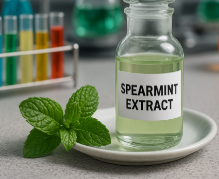
Spearmint extract is a flavouring ingredient obtained from spearmint leaves (Mentha spicata) through extraction processes (hydrolytic, alcoholic, glycolic, glyceric, or supercritical) that concentrate the aromatic fraction and, in part, the phenolic compounds.
It may be available as:
hydroalcoholic extract (liquid),
glycolic/glyceric extract for food and cosmetic use,
spray-dried dry extract on a carrier (e.g. maltodextrin),
or as a standardized extract for essential oil (carvone) or polyphenol content.
It has a fresh, sweet, herbaceous, and minty aromatic profile, softer and less pungent than peppermint.
Indicative nutritional values per 100 g
(concentrated extract for food use; values vary widely depending on solvent and strength)
Energy: 100–350 kcal
Protein: 0–3 g (generally low)
Carbohydrates: 5–40 g
sugars: 0–10 g (depends on the carrier)
Lipids: 0.5–30 g (from essential oils / aromatic fraction and/or oily carriers)
SFA (first occurrence): minor share, depends on the carrier oil
MUFA: variable
PUFA: variable
TFA: not expected
Fiber: 0–5 g (higher in dry extracts on fiber-rich carriers)
Vitamins/minerals: generally negligible at usage levels
The extract is used at typical levels between 0.01–1% in the finished product, so the nutritional impact is practically negligible.
Main constituents
Components of spearmint essential oil (in extracts that retain the volatile fraction):
carvone (key compound responsible for the typical spearmint aroma),
limonene,
menthone,
menthyl acetate,
other monoterpenes and their esters.
Polyphenols and water-soluble phenolic derivatives (in hydroalcoholic or aqueous extracts):
phenolic acids (e.g. rosmarinic, caffeic, ferulic acids depending on the process),
flavonoids (in traces, depending on extraction).
Non-volatile components: partial chlorophylls, pigments, sugars, water-soluble extractives.
Carriers (in dry extracts): maltodextrin, gum arabic, or other authorized carriers.
Production process
(general scheme, variable depending on the extract type)
Cultivation and harvesting of Mentha spicata leaves and tops at the optimal vegetative stage, when essential oil content is highest.
Cleaning: removal of foreign materials; washing with potable water when required.
Raw material preparation:
possible chopping or coarse grinding,
drying (if using dried herb) at controlled temperature.
Extraction:
with water (industrial infusion/decoction),
with ethanol/hydroalcoholic solutions,
with glycols/glycerine or other authorized food-grade solvents,
or by concentrating the hydrolate/distillate obtained through steam distillation (for essential-oil-rich extracts).
Filtration and vacuum concentration to reduce solvent content.
For dry extracts:
mixing with carrier (maltodextrin or others),
spray-drying or other drying technology.
Standardization: adjustment of characteristic substances (e.g., % of essential oils or polyphenols).
Packaging: in suitable containers (bottles, tanks, bags/drums for dry extracts) providing barrier protection from light, oxygen, and moisture.
Production according to GMP/HACCP, with controls for purity, residual solvents (if used), pesticides, heavy metals, and microbiology.
Physical properties
Appearance:
liquid extract: from clear to slightly opalescent, colour from straw yellow to green-brown (depending on pigment content);
dry extract: fine powder, from whitish to light green or beige, depending on the carrier and concentration.
Odour: fresh, sweet, herbaceous, typical of spearmint.
Flavour: minty, sweet and less pungent than peppermint; may show slight herbaceous notes.
Solubility:
water-soluble extracts: completely or partially soluble in water;
hydroalcoholic extracts: miscible with water and alcohol;
extracts rich in essential oil: soluble in fats and organic solvents, emulsifiable in water through emulsifiers or encapsulation.
Stability: good if protected from light, heat and oxygen; the main issues are oxidation and loss of volatile fraction.
Sensory and technological properties
Provides a fresh, sweet and minty note to beverages and foods, without the “sharpness” typical of peppermint.
May contribute to the perception of sweetness and “cleanliness” of taste, even at relatively low doses.
In concentrated extracts, the aromatic profile is rounder and less variable than the raw plant material, thanks to standardization.
In encapsulated dry extracts, the aroma is more stable during baking/cooking and in dry mixes, with controlled release.
Can reduce the perception of off-notes in some functional products (e.g. vitamins, minerals, some active molecules).
Food applications
Beverages: mint teas and herbal infusions, iced tea, flavoured waters, soft drinks, functional beverages and energy drinks.
Confectionery and sweets: candies, chewing gum, mint chocolate, jellies, marshmallows.
Bakery products: cookies, shortbread, cakes, dessert bases (often using encapsulated extracts).
Dairy products: ice creams, flavoured yogurts, spoonable desserts, creams.
Ready foods and sauces: fresh dressings, yogurt-based sauces, sauces for cold dishes, ready-to-eat meals with a “fresh” note.
Functional products: bars, functional chewing gums, chewable or liquid supplements flavoured to improve palatability.
Nutrition and health
At normal use levels, spearmint extract does not provide significant amounts of macro- or micronutrients.
Components of the essential oil (in particular carvone and other terpenes) are being studied for potential effects on digestion, breath freshness and sensation of gastrointestinal comfort, but this evidence belongs more to the herbal context than to standard nutrition claims for foods.
The polyphenol fraction (if present) may contribute slightly to the total antioxidant activity of the product, but generally at modest levels.
It is generally considered safe at flavouring doses, within a varied and balanced diet.
Portion note
Typical dosages in the finished product:
0.01–0.3% for beverages and dairy products;
0.05–0.5% for candies, chewing gum and confectionery;
0.05–1% in dry mixes and bakery products (depending on extract type and desired intensity).
Allergens and intolerances
Spearmint extract itself does not contain major allergens.
Rare individual sensitivities to mint essential oils may occur (irritation at high concentrations, especially on mucous membranes or sensitive skin).
It is naturally gluten- and lactose-free, except for supply-chain contamination or possible carriers containing allergens (e.g. lactose, soy, milk proteins) in some formulated extracts.
In blends and compound flavours, all present allergens must be correctly checked and declared.
Storage and shelf-life
Store in well-closed containers, protected from light, heat and air.
Recommended temperature: generally 10–20 °C, in a dry environment.
Indicative shelf-life:
liquid extracts: 12–24 months;
dry/encapsulated extracts: 18–36 months, with good stability if properly stored.
Main causes of degradation:
oxidation (loss of freshness, appearance of oxidized/earthy notes);
loss of volatile fraction (decrease in aromatic intensity);
moisture uptake in dry extracts (clumping, microbiological risk if conditions are critical).
Safety and regulatory
In the EU and similar markets it is classified as a flavouring preparation (natural flavouring, if obtained from mint using permitted processes).
It must comply with:
requirements for botanical raw materials (limits for pesticides, mycotoxins, heavy metals);
limits for residual solvents (if used);
microbiological requirements (especially for dry extracts and concentrated products).
Production and packaging must follow GMP/HACCP, with full traceability from the plant to the finished extract.
In the case of use in supplements or “borderline” products, specific regulations for food supplements and/or flavouring substances may apply.
Labelling
In Italy/EU it may be declared as:
“natural spearmint flavour” (“aroma naturale di menta verde”) if at least 95% of the flavouring component comes from Mentha spicata;
“natural flavour” if the flavour comes from several plant sources.
As a single ingredient it may also appear as “spearmint extract” (“estratto di menta verde”) when used both for flavouring and for a functional role (e.g. in infusions or products with a predominantly botanical component).
On labels, flavours are generally listed under the category “flavours” or “natural flavours”; additional specific descriptions may be used for marketing purposes.
Troubleshooting
Aroma too weak in the finished product:
old or poorly stored extract → check production date and storage conditions;
insufficient dosage → increase the dose within sensory and legal limits;
matrix–product interactions (e.g. strong sweetness or acidity) → retune the flavour profile.
Aroma too strong, “herbaceous” or bitter:
overdosing or extract too concentrated → reduce dosage, possibly use a “sweeter” or more standardized extract.
Instability in acidic or dairy beverages:
phase separation or turbidity with oily extracts → use water-soluble/emulsified forms or dry extracts;
adjust pH or the emulsifying system.
Loss of aroma after cooking:
volatilization at high temperatures → use thermostable encapsulated extracts, or add part of the extract at the end of processing or in cold fillings/creams.
Sustainability and supply chain
Spearmint can be grown in intensive systems or in crop rotations with other herbaceous crops; key sustainability aspects include:
efficient water management (targeted irrigation);
controlled use of plant protection products and fertilizers;
protection of biodiversity and soil fertility.
Extraction and distillation processes generate effluents (aromatic waters, plant residues) that must be treated appropriately; the pollution load can be monitored using indicators such as BOD/COD.
Organic, fair trade or other sustainable supply-chain certifications can enhance the value of the extract for “clean label” and premium products.
Main INCI functions (cosmetics)
(as “Mentha Viridis (Spearmint) Leaf Extract”, “Mentha Viridis (Spearmint) Leaf Oil”)
Fragrance component (fresh, sweet, herbaceous note).
Refreshing and toning in sensory perception (especially in oral care and body care products).
Used in: toothpastes, mouthwashes, shampoos, shower gels, body creams, deodorants.
Must be dosed carefully to avoid possible irritation in very sensitive individuals (especially on mucous membranes).
Conclusion
Spearmint extract is a versatile aromatic ingredient, ideal for imparting a fresh, sweet and clean note to beverages, sweet products, dairy products, bakery goods and functional foods. Although it does not provide a significant nutritional contribution, it plays a key role in the sensory profile of the product and can enhance the perception of freshness and palatability. A well-managed supply chain, compliance with GMP/HACCP, the choice of the most suitable extract form (liquid, water-soluble, encapsulated) and proper storage allow the production of a stable, safe and high-quality ingredient, suitable both for industrial use and for artisanal production.
Mini-glossary
SFA – Saturated Fatty Acids (acidi grassi saturi): type of fats associated with higher cardiovascular risk when consumed in excess; in spearmint extracts they are present only in minimal amounts and are not significant at use levels.
MUFA – Mono-unsaturated Fatty Acids (acidi grassi monoinsaturi): fats generally neutral or favourable for health; may occur in the oily carriers of the extract.
PUFA – Poly-unsaturated Fatty Acids (acidi grassi polinsaturi): more sensitive to oxidation; present in modest amounts in possible carriers.
TFA – Trans Fatty Acids (acidi grassi trans): not characteristic of spearmint extracts; any traces depend on the carriers, not on the extract itself.
GMP/HACCP – Good Manufacturing Practices / Hazard Analysis and Critical Control Points: systems that ensure quality, hygiene and safety in food production.
BOD/COD – Biological / Chemical Oxygen Demand: indicators of the polluting impact of processing effluents on water bodies.
Carvone: terpene that is the main aromatic molecule of spearmint, responsible for its typical sweet-minty profile.

