



E407a — alga Eucheuma trasformata (PES, Processed Eucheuma Seaweed)
(da alghe rosse—soprattutto Kappaphycus alvarezii e Eucheuma denticulatum; idrocolloide gelificante/addensante “meno raffinato” rispetto alla carragenina E407)
Descrizione
• Idrocolloide ottenuto da alghe rosse essiccate e trattate alcalinamente, senza rimuovere la cellulosa e parte dei sali minerali naturali: contiene quindi una miscela di carragenine (prevalentemente κ da Kappaphycus e ι da Eucheuma), cellulosa e sali.
• Funzioni principali: gelificante, addensante, stabilizzante di sospensioni ed emulsioni (gel termo-reversibili modulati da ioni K⁺/Ca²⁺ e dalla presenza di proteine).
• Alternativa economica alla E407 (carragenina raffinata) quando si desidera maggiore tolleranza di processo e buona funzionalità a dosi contenute.
Valori nutrizionali indicativi (per 100 g di polvere; l’uso è tecnologico, a bassi dosaggi)
• Energia: 120–200 kcal (polisaccaridi in larga parte non digeribili)
• Carboidrati (come polisaccaridi): 50–75 g
• Fibre alimentari (cellulosa + frazione solubile): 20–40 g
• Proteine: ≤3 g • Grassi: ≤1 g • Ceneri: 15–35% (K, Ca, Na, Mg) • Sodio: variabile (tip. 200–1.000 mg)
• Nota: alle dosi d’uso tipiche (≤1%), l’apporto calorico e di nutrienti al prodotto finito è trascurabile.
Principali sostanze contenute
• Carragenine: frazioni κ (gel rigidi, K⁺-dipendenti) e ι (gel elastici, Ca²⁺-dipendenti), con eventuali tracce λ (addensante non gelificante).
• Cellulosa e sostanze insolubili native dell’alga (responsabili di torbidità/opalescenza).
• Sali minerali (K⁺, Ca²⁺, Mg²⁺, Na⁺) e oligoelementi; umidità residua controllata.
Processo di produzione
• Raccolta/coltivazione delle alghe, lavaggi e essiccazione.
• Trattamento alcalino controllato per modulare il profilo κ/ι → lavaggi, neutralizzazione, asciugatura.
• Macinazione e setacciatura a granulometria; nessuna estrazione/precipitazione che rimuova la cellulosa (differenza chiave vs E407).
• Controlli qualità e confezionamento secondo GMP/HACCP.
Proprietà fisiche
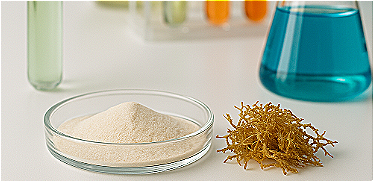
• Aspetto: polvere da bianco-avorio a beige/bruno chiaro.
• Solubilità/idratazione: si disperde in acqua fredda; idrata e si solubilizza con riscaldamento (≈70–90 °C).
• pH soluzione 1%: ~7,0–8,5 (grado-dipendente).
• Gel: termo-reversibili; κ → gel rigidi e fragili (rafforzati da K⁺, sinergia con gomma di semi di carruba); ι → gel morbidi/elastici (rafforzati da Ca²⁺).
• Stabilità: idrolisi acida a pH <4 e T elevate; tolleranza salina buona.
Proprietà sensoriali e tecnologiche
• Addensamento e gelificazione efficaci a bassi solidi; controllo di sinèresi in gel/creme.
• Stabilizzazione di particolati (es. cacao nel latte) e emulsioni; compatibilità con proteine del latte.
• Sinergie: forte con gomma di semi di carruba (LBG) per gel κ più coesi; combinazioni con xantano per texture e tolleranza termica.
• Torbidità maggiore rispetto a E407 (per cellulosa); utile dove serve “corpo” e aspetto opalescente.
Impieghi alimentari
• Lattiero e bevande: latte al cacao, drink proteici/vegetali, dessert/creme, gel al latte (0,05–0,35%).
• Carni e salumi cotti / RTE: legame acqua/gel termici (0,2–0,8%; con KCl/CaCl₂ o salamoie).
• Gel acquosi/dolci: gel elastici o rigidi (0,2–1,0% a seconda di ioni/solidi).
• Salse e condimenti: corpo/stabilità (0,1–0,4%).
• Pet food umido e prodotti in lattina: struttura e anti-sinèresi.
Nutrizione e salute
E407a agisce come fibra tecnologica a biodisponibilità energetica bassa; alle dosi d’uso l’apporto nutrizionale è minimo. Non è poligeenan (carragenina degradata a basso PM, non ammessa negli alimenti). In genere è ben tollerato; in soggetti molto sensibili un eccesso può dare distensione addominale o feci più morbide. In prodotti lattiero-caseari migliora sazietà percepita modulando viscosità.
Sul piano di sicurezza, gli organismi valutatori hanno autorizzato E407a per impieghi previsti entro QS (quantum satis) nelle categorie consentite; valgono le buone pratiche di processo e la conformità alle specifiche di purezza.
Uno studio del 2024 avverte sul rischio di sviluppare tumori con elevate assunzioni di emulsionanti, (tra i quali E440, Pectina, E471 mono- e digliceridi degli acidi grassi, carragenina, E407, carbonato di sodio E500) (1)
Qualità e specifiche (temi tipici)
• Identità/purezza: contenuto in carragenine (κ/ι), materia insolubile (cellulosa) entro range, metalli nei limiti, sabbia/corpi estranei assenti.
• Funzionali: viscosità a 1,5% (T/pH/ioni definiti), gel strength (metodo e ioni dichiarati), sinèresi.
• Fisico-chimica: umidità, aw, pH sospensione, colore (CIELAB), ceneri totali/insolubili.
• Microbiologia: cariche basse; patogeni assenti/25 g.
• Contaminanti: pesticidi/IPA/metalli ≤ limiti; ossido di etilene non ammesso.
Conservazione e shelf-life
• Conservare asciutto, al buio, in pack barriera all’umidità; evitare odori/CO₂.
• Shelf-life tipica: 24–36 mesi sigillato; richiudere e usare essiccante dopo apertura.
Sicurezza e regolatorio
• Additivo E407a (alga Eucheuma trasformata), autorizzato in UE a QS secondo categoria/prodotto e GMP; specifiche su composizione (carragenina/cellulosa/sali), metalli e contaminanti.
• In molte giurisdizioni ADI “non specificata” per carragenine/PES alle condizioni d’uso.
• Etichettare secondo normativa additivi; mantenere dossier tecnico e tracciabilità GMP/HACCP.
Etichettatura
• Denominazione: “E407a — alga Eucheuma trasformata” (oppure “processed Eucheuma seaweed” in elenco ingredienti in inglese dove richiesto).
• Indicare allergeni solo se presenti da altre componenti di ricetta; riportare condizioni d’uso dove previsto.
Troubleshooting
• Gel debole → ioni insufficienti/errati, solido basso, grado non idoneo → aggiungere K⁺ (κ) o Ca²⁺ (ι), aumentare % o usare blend con LBG.
• Idratazione scarsa/grumi → dispersione inadeguata → premix con zucchero o altri solidi, forte shear in freddo, riscaldare a 80–90 °C.
• Sinèresi → rete poco compatta → aumentare ioni, inserire LBG/xantano, alzare solidi.
• Idrolisi acida (perdita viscosità) → pH <4 e T alta → alzare pH di processo o ridurre tempo/temperatura, aggiungere tamponi.
• Torbidità eccessiva → frazione insolubile elevata → passare a E407 o grado PES più raffinato/filtrato.
Sostenibilità e filiera
• Le alghe rosse hanno basso input di terra/fertilizzanti e assorbono CO₂; possono supportare economie costiere.
• Criticità: raccolta sostenibile, controllo specie/biomassa, gestione salamoie/process water verso target BOD/COD e uso di packaging riciclabile.
• Preferire fornitori con tracciabilità geografica e pratiche di aquacoltura responsabile.
Principali funzioni INCI (cosmesi)
• Carrageenan / Chondrus Crispus (Carrageenan) Extract / Eucheuma Seaweed Extract: viscosity-increasing, film-forming, stabilizzante/emulsionante in gel, lozioni e dentifrici; uso secondo normativa cosmetica e valutazioni di tollerabilità.
Conclusione
E407a (PES) offre gelificazione e stabilizzazione affidabili con costi competitivi e buona robustezza di processo, a fronte di maggiore torbidità rispetto alla carragenina raffinata. La resa ottimale dipende da ioni, pH/temperatura, sinergie con LBG e corretta dispersione/idratazione.
Mini-glossario
• PES: Processed Eucheuma Seaweed — alga Eucheuma trasformata contenente carragenine + cellulosa/sali.
• Carragenina κ/ι/λ: frazioni con comportamento rispettivamente gel rigido, gel elastico e addensante non gelificante.
• LBG: gomma di semi di carruba — sinergica con carragenina κ per gel più forti e meno sinèresi.
• QS (quantum satis): impiego “quanto basta” per l’effetto tecnologico, nel rispetto delle GMP.
• Sinèresi: rilascio di siero dai gel per contrazione/instabilità della rete.
• Termo-reversibile: gel che fonde/ri-gelifica con cicli di temperatura.
• Poligeenan: carragenina degradata a basso PM, non ammessa in alimenti.
• GMP/HACCP: buone pratiche di fabbricazione / analisi dei rischi e punti critici di controllo.
• BOD/COD: domanda biochimica/chimica di ossigeno — metriche per il carico inquinante dei reflui.

