



Onion And Carrot Juice Concentrate
(from Allium cepa bulbs and Daucus carota roots)
Description
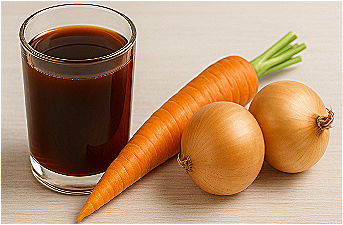
• Savory vegetable juice concentrate produced by pressing onions and carrots, followed by clarification (optional) and vacuum concentration to targeted °Brix.
• Delivered as aseptic ambient, chilled, or frozen concentrate; used for reconstitution to single-strength juice or as a flavor, color, and sweetness builder in culinary applications.
• Typical targets (blend-dependent): concentrate °Brix 45–70 (onion 45–70; carrot 60–75), single-strength °Brix ~7–12; pH ~5.2–6.2 (low-acid food—requires validated heat treatment).
Indicative Nutrition Values (Single-Strength, Per 100 Ml | Concentrate, Per 100 G)
• Energy: 20–35 kcal | 150–240 kcal
• Carbohydrates: 4–8 g (sugars 3–6 g) | 30–55 g (sugars 25–45 g)
• Protein: 0.2–0.6 g | 1.5–3.0 g
• Fat: ~0 g (trace) — includes SFA (saturated fatty acids; keep low for LDL control), MUFA and PUFA negligible | ~0–0.5 g total fat
• Fibre: ~0 g (cloudy styles may retain pectins) | 0–1 g
• Sodium: <30 mg | <150 mg (naturally low; varies with raw materials)
• Potassium: 80–200 mg | 500–900 mg
• Provitamin A (as β-carotene, carrot-driven): 100–600 μg | 800–4000 μg (processing-dependent)
Key Constituents
• Sugars: glucose, fructose, sucrose (carrot typically higher than onion).
• Organic acids: malic (dominant), citric (minor), succinic traces.
• Carotenoids (carrot): β-carotene, α-carotene; contribute orange color and provitamin A activity.
• Sulfur compounds (onion): S-alk(en)yl-L-cysteine sulfoxides and thermal breakdown products that drive savory sweetness and onion notes after heating.
• Polyphenols/flavonoids: chlorogenic acids (carrot), quercetin glycosides (onion), procyanidins (low–moderate after processing).
• Pectins/colloids: affect body and haze (retained more in cloudy concentrates).
• Minerals: potassium prominent; sodium naturally low unless added via recipe.
• Undesirables to control: pesticide residues ≤ MRL, heavy metals within limits, excessive 5-HMF (overheating), nitrate load (raw material dependent), off-odors from sulfur over-processing.
Production Process
• Raw Material: Clean, sound onions and carrots; culling of decayed/mouldy roots; cultivar selection for color (carrot) and sweetness/pungency (onion).
• Preparation: Washing, peeling or topping/tailing as specified; milling/crushing; optional enzyme maceration (pectinases) to improve yield.
• Juice Extraction: Belt or screw pressing; deaeration to limit enzymatic browning and sulfur volatilization.
• Stabilization Path:
– Clear: depectinization, fining/flotation, polishing filtration.
– Cloudy: minimal clarification to preserve cloud and mouthfeel.
• Concentration: Gentle vacuum evaporation with flavor capture/return; target °Brix per spec.
• Thermal Processing: HTST or aseptic; frozen pack as alternative.
• Packaging: Aseptic bags-in-drum, totes, or retail packs with low headspace (nitrogen); light/oxygen barriers as required.
Sensory And Technological Properties
• Color: Pale straw (onion-forward) to vivid orange (carrot-forward); hue deepens with °Brix and heat history.
• Aroma/Flavor: Sweet vegetal with caramelized onion notes on cooking; carrot contributes earthy-sweet and fruity top notes.
• Functionality: Natural sweetness and body (Brix), savory base for soups/sauces; carotenoid-driven color for orange/golden shades; Maillard reactivity in thermal processes.
• Stability: Sensitive to oxidation (browning), carotenoid bleaching by light/oxygen, and sulfur note imbalance with aggressive heat.
Food Applications
• Culinary: Soups, broths, sauces, gravies, curries, ready meals, baby food, marinades, glazes.
• Beverages: Vegetable blends and shots (with acidification as needed).
• Ingredient: Natural color/orange hue, sweetness adjuster in reduced-sugar savory systems, flavor base for plant-based meats and snacks.
Nutrition & Health
Onion–and–carrot concentrates deliver readily available carbohydrates with modest energy at single strength, making them useful for quick flavor and gentle caloric contribution without added fat. Fibre is largely removed during clarification, so the glycaemic response is generally faster than eating whole vegetables; pairing with protein, fats, and intact fibre in the meal helps moderate this effect.
Carotenoids from carrot—chiefly β-carotene—provide provitamin A potential. Retention depends on cultivar, exposure to heat/oxygen/light, and storage; using protected packaging and avoiding over-processing supports better preservation. Because carotenoids are fat-soluble, consuming carrot-rich preparations with a small amount of dietary fat can improve absorption.
Onion contributes organosulfur compounds that, after thermal transformation, support savory depth. While many onion polyphenols (e.g., quercetin glycosides) are reduced by juicing and clarification, gentle processing and cloudy styles may conserve a fraction.
The concentrates are very low in fat; SFA (saturated fatty acids) are minimal (helpful when limiting saturates), and monounsaturates and polyunsaturates are negligible. Sodium is naturally low unless added in the finished recipe, which allows precise salt control in low-sodium formulations.
For individuals sensitive to FODMAPs, note that onion-derived fructans are water-soluble and can persist into juice, potentially triggering gastrointestinal discomfort in IBS. Carrot components are generally better tolerated, but blends remain a consideration—portioning and testing tolerance are prudent strategies.
Nitrate levels in carrots vary by agronomy and season; reputable sourcing and specifications help keep nitrates within safe ranges. As with all low-acid vegetable juices (pH >4.6), validated heat processing and hygienic design are essential for safety. In balanced diets, onion–carrot concentrates offer flavor, color, hydration, and some micronutrients; however, whole vegetables remain superior for dietary fibre and broader phytochemical diversity.
Quality And Specifications (Typical Topics)
• Identity/Composition: °Brix (concentrate and single-strength target), pH, titratable acidity, carotenoids (as β-carotene), potassium.
• Appearance: Color (CIELAB), turbidity (NTU), absence of phase separation (if clear), controlled cloud (if cloudy).
• Chemistry: 5-HMF within spec, nitrate spec (carrot-dependent), sulfur volatiles profile (onion balance), low peroxide value in fat-containing blends.
• Residues/Contaminants: Pesticides ≤ MRL, heavy metals within limits; sulfites declared if used/≥10 mg/kg (generally not used).
• Microbiology: Absence of pathogens in 25 g; total counts per spec; spore control via heat/aw management; no fermentative activity.
• Functional Tests: Dilution performance to single-strength (SS) °Brix, heat-step trials for flavor/color, light/O₂ stress, carotenoid stability curves.
Storage And Shelf-Life
• Aseptic Ambient: Store cool, dark, and dry; avoid temperature cycling.
• Frozen: −18 °C or below; thaw under refrigeration; avoid refreezing.
• After Opening: Refrigerate 0–4 °C; use within 3–7 days (per spec).
• Shelf-Life: Typically 9–18 months ambient aseptic; longer when frozen (product- and pack-specific).
Safety And Regulatory
• Designation: “Onion and carrot juice concentrate” (ingredient) or “vegetable juice concentrate (onion, carrot)” per jurisdiction.
• Category: Vegetable juice/concentrate for food use (flavor/color); low-acid—process under validated thermal schedules and GMP/HACCP.
• Labeling: Declare components in descending order; “from concentrate” where required; declare sulphites if present ≥10 mg/kg; origin/lot/date codes per law.
• Claims: Provitamin A claims require assay and compliance; “no added sugar” applies if none is added during concentration or reconstitution.
Labeling
• Name Of The Food/Ingredient: “Onion and carrot juice concentrate” (or “vegetable juice concentrate (onion, carrot)”).
• Ingredients List: Onion juice concentrate, carrot juice concentrate; optional acidity regulators/antioxidants if used (and permitted).
• Allergen/Intolerance Notes: Not a priority allergen; onion fructans may affect FODMAP-sensitive consumers (advisory, not regulatory).
• Reconstitution Guidance: Provide dilution to SS °Brix target (e.g., 6:1 to reach ~10–12 °Brix, blend-dependent).
Troubleshooting
• Excessive Browning/Caramel Notes: Over-concentration or oxygen exposure → reduce residence time, improve deaeration, optimize vacuum.
• Color Fading (Carrot): Light/oxygen bleaching → use light-barrier packs, add permitted antioxidants, minimize headspace.
• Harsh Sulfur/“Raw Onion” Notes: Insufficient enzyme/thermal control → apply controlled blanch/deactivation, adjust heat profile.
• Cloud Instability/Phase Separation: Over-depectinization or ionic imbalance → retune enzymes/finings; manage pH/ions; consider cloud stabilizers where permitted.
• Sediments/Crystals: Pectin or tartrate precipitates → cold stabilization and polishing filtration.
Sustainability And Supply Chain
• Raw Material: Local sourcing, seasonal contracts, and grading to reduce field and pack-house losses.
• By-Products: Pomace to pectin/fibre, feed, or bioenergy.
• Process: Heat/air recovery, CIP water reuse, wastewater treatment toward BOD/COD targets; recyclable/renewable packaging where feasible.
• Systems: Supplier audits, robust traceability, and preventive controls under GMP/HACCP.
Conclusion
Onion and carrot juice concentrate is a versatile, clean-label building block that delivers natural sweetness, savory depth, orange-gold color, and formulation flexibility. Product success hinges on raw-material selection, oxygen and heat management, appropriate clarification, and protective packaging, with reconstitution and processing parameters tuned to the end use.
INCI Functions (Cosmetics)
• Allium Cepa (Onion) Bulb Juice/Extract: Skin-conditioning; soothing/appearance-improving in scar care; fragrance (characteristic).
• Daucus Carota Sativa (Carrot) Root Juice/Extract: Skin-conditioning, antioxidant, colorant (yellow-orange; β-carotene), humectant (formulation-dependent).
Mini-Glossary
• °Brix: Percentage of soluble solids (mostly sugars); correlates with sweetness and body.
• SS (Single-Strength): Reconstituted juice at typical natural °Brix of the source vegetable/fruit.
• S-Alk(en)yl-L-Cysteine Sulfoxides (ACSOs): Onion sulfur precursors that convert to flavor-active compounds with cutting/heat.
• β-Carotene: Carrot carotenoid; provitamin A and orange colorant; light/oxygen sensitive.
• Polyphenols: Antioxidant phytochemicals (e.g., quercetin, chlorogenic acids); levels decline with clarification/heat.
• PPO: Polyphenol oxidase; enzyme driving enzymatic browning; controlled by blanching/oxygen management.
• MRL: Maximum residue limits for pesticides on foods.
• FODMAP: Fermentable oligo-, di-, monosaccharides and polyols; may trigger GI symptoms in sensitive people (onion fructans).
• SFA: Saturated fatty acids; excessive intake can raise LDL-cholesterol—keep low.
• MUFA: Monounsaturated fatty acids; beneficial when replacing saturates.
• PUFA: Polyunsaturated fatty acids; include n-6 and n-3 families; generally favourable when balanced and protected from oxidation.
• GMP/HACCP: Good manufacturing practice / hazard analysis and critical control points—validated preventive hygiene systems.
• BOD/COD: Biochemical/chemical oxygen demand—wastewater impact metrics guiding treatment and discharge limits.

