



Dehydrated parsley (Petroselinum crispum (Mill.) Fuss, family Apiaceae)
Description
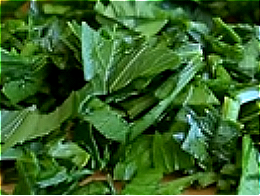
Parsley leaves harvested, washed, cut, and dried (warm-air dehydration or freeze-drying for premium grades); sold as flakes, chopped leaf, or powder.
Sensory profile: green–herbaceous, lightly camphoraceous/peppery; lower aromatic intensity than fresh but stable and convenient for toppings/seasoning.
Caloric value (per 100 g)
~250–320 kcal/100 g (varies with residual moisture).
Indicative (dry basis): carbohydrate ~45–55 g, fiber ~25–35 g, protein ~18–25 g, fat ~3–6 g; sodium naturally low.
Key constituents
Essential oil traces in dried leaf: apiol, myristicin, limonene, pinenes.
Flavonoids: apigenin (as apiin), luteolin; phenolic acids (e.g., caffeic, ferulic).
Chlorophylls and carotenoids (light/oxygen sensitive); vitamin K high (leaf), vitamin C reduced by drying; minerals (K, Ca, Fe).
Analytical markers: moisture/aw, ash, essential oils (GC), flavonoids (HPLC), color L*a*b* or ASTA (for powders).
Production process
Raw material: sound leaves, free of soil and foreign matter.
Washing/draining → cutting → drying (typically 35–55 °C warm air) or freeze-drying → sieving/grading → optical sorting → barrier packaging.
Controls under GMP/HACCP: stones/metal removal (magnets/sieves), pesticides/metals, microbiology.
Sensory and technological properties
Desirable green color (chlorophyll): risk of olive/brown shift from heat, acidic pH, or light.
Fast rehydration in moist matrices; as a topping it preserves leafy particulates.
Freeze-dried grades better preserve aroma and color; oxygen accelerates oxidation/discoloration.
Food uses
Toppings for soups, sauces, eggs, meats/fish; herb blends and dry seasoning (dressings, rubs).
Typical dosages: 0.05–0.5% in sauces/soups; 0.2–1.0% in dry seasonings; to taste for finishing.
In acidic products (mayonnaise/dressings) evaluate color stability.
Nutrition and health
Provides fiber and micronutrients (notably vitamin K; consider interactions with vitamin K antagonists).
Salt naturally low; sugars very low.
Avoid unauthorized health claims.
Lipid profile
Low total fat; only trace SFA, MUFA, PUFA—no meaningful nutritional impact at use levels.
Health note: diets relatively higher in MUFA/PUFA vs SFA are generally favorable/neutral for blood lipids; effect here is not material.
Quality and specifications (typical topics)
Moisture ≤8–12%; aw ≤0.60–0.65; ash ≤15% (leaf).
Particle size (leaf cut, mid-cut, fine/powder), stem count and extraneous matter within limits.
Color (L*a*b* / ASTA), essential-oil markers (GC), flavonoids (HPLC).
Microbiology: TVC, yeasts/molds compliant; Salmonella absent in 25 g; E. coli within limits.
Residues: pesticides/metals compliant; mycotoxins generally non-critical when processing is correct.
Storage and shelf-life
Store cool/dry/dark in moisture- and oxygen-barrier packs (multilayer bags; optional O₂ absorber).
Avoid humidity (risk of caking and microbial growth) and light (discoloration).
Typical shelf-life: 18–24 months (warm-air dried) up to 24–36 months (freeze-dried) if sealed. Apply FIFO.
Allergens and safety
Parsley is not a major EU allergen, but cross-reactivity can occur within Apiaceae (e.g., celery, carrot; celery–mugwort–birch–spice syndrome).
Furocoumarins generally low in leaf; concentrated essential oils (not this commodity) may be irritant.
In-plant: prevent foreign bodies and cross-contact with allergens.
INCI functions in cosmetics
Listings: Petroselinum Crispum (Parsley) Leaf Extract, Petroselinum Crispum (Parsley) Seed Oil.
Roles: fragrance, skin conditioning, mild antioxidant potential; evaluate photostability and sensitization from essential oils.
Troubleshooting
Brown/olive discoloration: excessive heat/acid/light → lower temperature, protect from light, add late in process; consider freeze-dried grade.
Weak aroma: prefer fresh lots, barrier packs; in formulation increase dose or pair with other fresh herbs/acids.
Grit/foreign matter: strengthen field washing, sieving, and optical sorting.
Caking: high humidity → use desiccants, reseal promptly, upgrade liner barrier.
Sustainability and supply chain
Promote GACP (good agricultural and collection practices), efficient irrigation, and reduced pesticides.
Processing: favor renewable energy for drying when possible; treat effluents to BOD/COD targets.
Recyclable packaging; traceability and audits under GMP/HACCP.
Conclusion
Dehydrated parsley is a practical, stable way to deliver herbaceous notes and a green visual accent across applications. Quality hinges on raw material, gentle drying, and protection from light/oxygen, ensuring longer-lasting color and aroma.
Mini-glossary
aw — Water activity: lower aw improves microbial and caking stability.
ASTA — American Spice Trade Association (color): standardized color intensity index for spices/herbs.
HPLC/GC — High-performance liquid chromatography / Gas chromatography: quantify flavonoids and volatiles.
SFA — Saturated fatty acids: excess may raise LDL; trace in parsley.
MUFA — Monounsaturated fatty acids (e.g., oleic): generally favorable/neutral for blood lipids; trace here.
PUFA — Polyunsaturated fatty acids (n-6/n-3): beneficial when balanced; trace here.
ALA — Alpha-linolenic acid (n-3): present at trace levels in herbs; low nutritional relevance.
EPA/DHA — Long-chain n-3 fatty acids: typical of fish; absent in parsley.
MCT — Medium-chain triglycerides: not characteristic of herbs.
GMP/HACCP — Good Manufacturing Practice / Hazard Analysis and Critical Control Points: hygiene and preventive-safety systems with defined CCP.
GACP — Good agricultural and collection practices: agronomic best practices for herbs.
BOD/COD — Biochemical/Chemical oxygen demand: indicators of effluent impact from processing.
FIFO — First in, first out: stock rotation that uses older lots first.
Environmental and Safety Considerations
Parsley is an environmentally low-impact plant, requiring minimal pest control and fertilizer when grown under proper conditions.
It is safe for most people when consumed in typical food amounts, but excessive consumption can lead to health issues due to its oxalate content and the essential oil apiol, which can be toxic in large quantities.
Sustainable and organic farming practices are recommended to maintain soil health and reduce environmental impact.
Studies
Its components flavonoids, coumarin, tocopherol, carotenoids and ascorbic acid give this herb antioxidant, anti-inflammatory and antihypertensive activity.
Vitamin C, an antioxidant, is present with a high content, 248 mg/100g and chlorophyll which has an inhibitory effect on the dehydration of calcium oxalate with 0,185mg/g (1).
Overall, parsley has been shown to be effective in preventing urolithiasis (the process of stone formation in the urinary tract) (2).
In this study, the histopathological and biochemical results of oral administration of a parsley-rich diet demonstrated efficacy in reducing stress-induced gastric lesions by supporting the cellular antioxidant defense system (3).
Scientific evidence of the traditional use of parsley extract as an anti-diabetic agent and antioxidant in type 1 diabetes mellitus is confirmed in this other study (4).

