

Hello, Guest!


🔍
REVIEW

Description

Al222
Al222 (25124 pt) 2025-Oct-14 14:09

Palm kernel and palm fruit oil

Originemesocarpo (polpa) della stessa drupa.
Sinonimi/frazioni: CPO (grezzo), RBD palm oil; frazioni fisiche: palm olein (liquida, per frittura), palm stearin (solida, strutturante); olio di palma rosso (carotenoidi elevati).

Definizione
Olio semisolido palmitico/oleico ottenuto dalla polpa del frutto. Il grado RBD è pallido e neutro; la frazionazione ne modula il profilo solido per usi in frittura (olein) o come grasso da struttura (stearin).

Valore calorico
≈ 884 kcal per 100 g.

Composizione in acidi grassi (tipica, % sul totale)

  • Saturi (SFA ~48–52%): palmitico ~43–47%, stearico ~4–6%

  • Monoinsaturi (MUFA ~38–42%): oleico ~37–40%

  • Polinsaturi (PUFA ~8–12%): linoleico ~9–11%, ALA ≤0,5%

  • Minori: toco(trien)oli, fitosteroli; carotenoidi conservati nell’olio rosso.

Proprietà fisico–chimiche (RBD, indicative)

  • Aspetto: giallo chiaro, semisolido a 20–25 °C; slip point ~31–34 °C.

  • Punto di fumo: ~230–235 °C (RBD).

  • Indice di saponificazione: ~195–205 mg KOH/g.

  • Stabilità ossidativa: buona (alto MUFA/SFA, pochi PUFA).

Funzionalità & impieghi

  • Frittura: olein con bassa tendenza a schiumare, buona stabilità.

  • Structuring: stearin per shortening, margarine, laminazione (β′ preferito con giusto temperaggio).

  • Confetteria/spread: rete cristallina fine, spalmabilità; sostituto di grassi parzialmente idrogenati.

  • Cosmetica: emolliente; feedstock per esteri, alcoli e tensioattivi.

Note regolatorie/qualità

  • Controllo 3-MCPD/GE in deodorazione; specifiche su FFA, perossidi, anisidina.

  • Allergeni: assenti intrinseci.

  • Olio rosso: ricco di β-carotene e tocotrienoli (uso nutrizionale/fortificazione).

Conservazione
Fresco, asciutto, al buio; 12–24 mesi (più breve per olio rosso).


Confronto rapido: Olio di palmisto vs Olio di palma (frutto)

  • Parte del frutto

    • Palmisto (PKO): seme (nocciolo).

    • Palma (PO): polpa (mesocarpo).

  • Profilo acidi grassi

    • PKO: laurinico (C12 alto) → molto saturo, punto di fusione più basso ma cristallizzazione rapida; ottimo per coatings laurinici e saponi.

    • PO: palmitico/oleico → equilibrio SFA/MUFA, frazionabile in olein/stearin per frittura e shortening.

  • Proprietà sensoriali/tecniche

    • PKO: gusto neutro, snap e durezza a T ambiente, alta saponificabilità.

    • PO: neutro (RBD), plasticità e β′ desiderabile con temperaggio; olein limpido in climi caldi.

  • Impieghi tipici

    • PKO: ricoperture, creme ricche, confectionery laurinico, saponi schiumogeni, tensioattivi.

    • PO: fritture, margarine/shortening, laminazioni, creme spalmabili, personal care.

  • Nutrizionale

    • PKO: saturi più elevati (C12/C14).

    • PO: saturi elevati ma con quota MUFA maggiore; olio rosso con carotenoidi/tocotrienoli.

  • Processo/contaminanti di raffinazione

    • Entrambi richiedono controllo di 3-MCPD esteri e esteri di glicidolo (ALARA).

  • Sostenibilità

    • Per entrambi: preferire forniture con NDPE (No Deforestation, No Peat, No Exploitation), RSPO/equivalenti, tracciabilità a piantagione e programmi per piccoli coltivatori.

Conclusione
L’olio di palmisto è un laurinico ad alta saturazione, eccellente per coatings, saponi e applicazioni che richiedono cristallizzazione rapida e struttura. L’olio di palma dal frutto è un workhorse più versatile, frazionabile per frittura (olein) o structuring (stearin), con buona stabilità termica. La scelta dipende da texture desiderata, curva SFC, processo e criteri di sostenibilità della filiera.

L'olio di palma si ricava dalla polpa della pianta (Elaeis guineensis) con un procedimento di rottura della pianta e spremitura del midollo.

Profilo Nutrizionale (per 100 grammi):

  • Calorie Circa 884 kcal, tipico per gli oli vegetali.
  • Proteine Trascurabili, come per la maggior parte degli oli.
  • Grassi Circa 100 grammi, con una presenza significativa di grassi saturi, ma contiene anche grassi monoinsaturi e polinsaturi.
  • Carboidrati Nessuno.
  • Fibre Nessuna.
  • Vitamine e Minerali Ricco di vitamina E, in particolare di tocotrienoli, potenti antiossidanti. Può contenere anche piccole quantità di altre vitamine liposolubili e minerali.

Vi sono due sistemi di estrazione dell'olio :

  • a secco: si utilizzano presse meccaniche che schiacciano la pianta
  • umido: si utilizza l'acqua calda per filtrare l'olio.

Il prodotto che se ne ricava è impuro, in quanto vi sono residui di pianta, detriti cellulari e materiale fibroso. Poi si inserisce l'acqua calda in modo da formare una barriera nella quale i solidi precipitano verso il fondo del contenitore , liberando l'olio che passerà in setacci.

La miscela così ottenuta e liberata da corpi estranei viene fatta bollire per un'ora o due e l'olio di palma, più leggero dell'acqua sale in superficie e viene travasato.

Quindi l'olio passa in un'altra fase in cui viene ancora scaldato e scremato dalle impurità che verranno usate o per saponificazione o per combustibile le cui ceneri hanno un alto contenuto di potassio e sono quindi utili per concimare.

Per il suo basso costo, questo olio rappresenta, nei paesi in via di sviluppo, una fonte nutrizionale molto diffusa.

Al suo interno troviamo un contenuto elevato di grassi saturi e di acido palmitico.

Nell'industria alimentare viene utilizzato per varie ragioni :

  • costa poco
  • migliora il gusto
  • conserva più a lungo i cibi in cui è aggiunto

Tuttavia, da studi recenti, pare stabilita una connessione tra questo olio e alcuni disturbi cardiovascolari (1) soprattutto quando questo olio viene riscaldato (2).
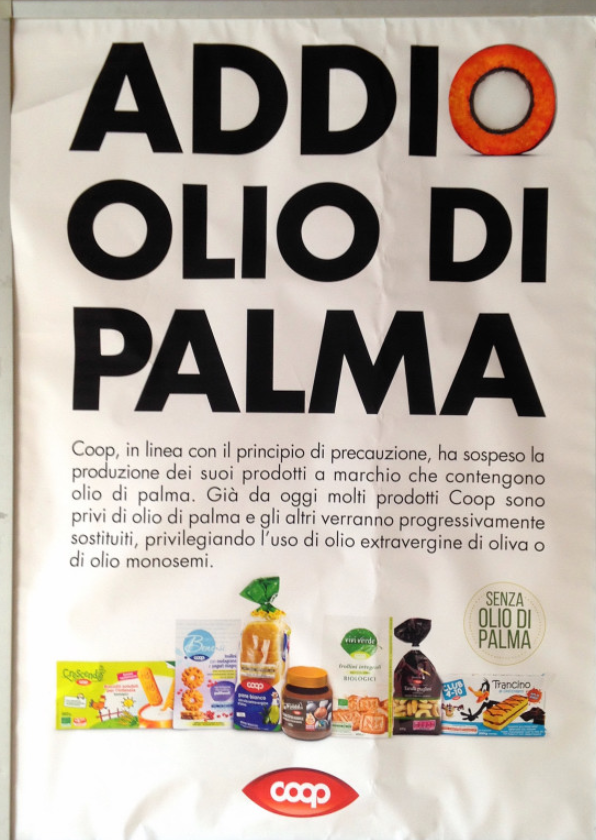

Fin dal suo esordio in campo alimentare, questo olio è stato dapprima contestato per la deforestazione che produce in quanto contadini e le aziende che lo producono tendono a sradicare boschi e foreste per estrarlo, stante la grande richiesta. In seguito però, già dal 1991, si è posta attenzione al problema salute con studi che ne hanno rilevato una difficile interpretazione univoca dell'evidenza di questo olio rispetto a malattie coronariche e tumori (3).

Studi del 2004 ponevano l'attenzione al rischio che tale olio potesse creare, se ossidato e cioè non fresco, con la creazione di un profilo lipidico negativo, tossicità a rene, polmone, fegato e cuore, mentre l'olio di palma rosso, in virtù del suo contenuto di beta carotene poteva proteggere da carenza di vitamina A e da alcune forme di cancro (4).

Nell'olio di palma vi è una forte componente di acidi grassi saturi, in particolare l'acido palmitico e questi studi del 2014 lo confermano (5).

Un altro studio del 2015 ribadisce l'alto contenuto di grassi saturi  e fornisce risultanti non incoraggianti sull'aumento del colesterolo dannoso LDL (6).

A livello di confronto, tra l'olio di palma e l'olio di girasole, si conferma che l'olio di palma come olio vegetale altamente saturo, può indurre disfunzioni del metabolismo dei lipidi del fegato prima di toccare i livelli sierici dei lipidi. L'olio di girasole, invece, un olio vegetale altamente insaturo, ha dimostrato di essere ben metabolizzato nel fegato (7).

Tutti questi studi concordano nell'attribuire all'olio di palma un alto contenuto di grassi saturi e, in una lunga e articolata disamina delle proprietà biologiche e nutrizionali di questo olio, svolta da un gruppo di ricercatori dell' Università di Napoli, risultati controversi sotto il profilo salutare (8).

Uno studio mirato a rilevare le mutazioni prodotte nell'olio di palma, usato come olio di frittura per patatine, ha rilevato che, a temperature di 150, 165 e 180° vengono prodotte alterazioni termo-ossidative, cambiamenti nella composizione degli acidi grassi e alterazione del colore. In sintesi, più aumenta la temperatura, più aumenta l'ossidazione dell'olio di palma (9).

Altro problema legato all'olio di palma è costituito dalla crescente deforestazione messa in atto per piantare enormi quantità di palme.

Esiste in commercio anche un olio "rosso" di palma con caratteristiche fisiche e gusto leggermente migliori.

Olio di palma studi 2018-2019

Olio di palma studi 2015-2016

Olio di palma studi 2004-2014

Bibliografia_______________________________________________________________________

(1) Chen BK, Seligman B, Farquhar Multi-Country analysis of palm oil consumption and cardiovascular disease mortality for countries at different stages of economic development: 1980-1997. Global Health. 2011 Dec 16;7(1):45. doi: 10.1186/1744-8603-7-45.

Abstract Background: Cardiovascular diseases represent an increasing share of the global disease burden. There is concern that increased consumption of palm oil could exacerbate mortality from ischemic heart disease (IHD) and stroke, particularly in developing countries where it represents a major nutritional source of saturated fat....Conclusions: Increased palm oil consumption is related to higher IHD mortality rates in developing countries. Palm oil consumption represents a saturated fat source relevant for policies aimed at reducing cardiovascular disease burdens.

(2) Xian TK, Omar NA, Ying LW, Hamzah A, Raj S, Jaarin K, Othman F, Hussan F.  Reheated palm oil consumption and risk of atherosclerosis: evidence at ultrastructural level.  Evid Based Complement Alternat Med. 2012;2012:828170. doi: 10.1155/2012/828170.

Abstract. Background. Palm oil is commonly consumed in Asia. Repeatedly heating the oil is very common during food processing. Aim. This study is aimed to report on the risk of atherosclerosis due to the reheated oil consumption. Material and Methods. Twenty four male Sprague Dawley rats were divided into control, fresh-oil, 5 times heated-oil and 10 times heated-oil feeding groups. Heated palm oil was prepared by frying sweet potato at 180°C for 10 minutes. The ground standard rat chows were fortified with the heated oils and fed it to the rats for six months. Results. Tunica intima thickness in aorta was significantly increased in 10 times heated-oil feeding group (P < 0.05), revealing a huge atherosclerotic plaque with central necrosis projecting into the vessel lumen. Repeatedly heated oil feeding groups also revealed atherosclerotic changes including mononuclear cells infiltration, thickened subendothelial layer, disrupted internal elastic lamina and smooth muscle cells fragmentation in tunica media of the aorta. Conclusion. The usage of repeated heated oil is the predisposing factor of atherosclerosis leading to cardiovascular diseases. It is advisable to avoid the consumption of repeatedly heated palm oil.

(3)  Cottrell RC. Introduction: nutritional aspects of palm oil.  Am J Clin Nutr. 1991 Apr;53(4 Suppl):989S-1009S. Review.

Abstract. The production, composition, and food uses of palm oil are outlined in this introduction to a detailed appraisal of the nutritional and health implications of the use of palm oil in the food supply. The putative role of dietary fats and oils in general, and of palm oil in particular, in the etiology of coronary heart disease and cancer is critically assessed. It is concluded that the evidence available is difficult to interpret unambiguously. Some evidence to suggest that the minor components of palm oil might have useful biological effects is also discussed.

(4)  Edem DO. Palm oil: biochemical, physiological, nutritional, hematological, and toxicological aspects: a review.  Plant Foods Hum Nutr. 2002 Fall;57(3-4):319-41. Review.

Abstract. The link between dietary fats and cardiovascular diseases has necessitated a growing research interest in palm oil, the second largest consumed vegetable oil in the world. Palm oil, obtained from a tropical plant, Elaeis guineensis contains 50% saturated fatty acids, yet it does not promote atherosclerosis and arterial thrombosis. The saturated fatty acid to unsaturated fatty acid ratio of palm oil is close to unity and it contains a high amount of the antioxidants, beta-carotene, and vitamin E. Although palm oil-based diets induce a higher blood cholesterol level than do corn, soybean, safflower seed, and sunflower oils, the consumption of palm oil causes the endogenous cholesterol level to drop. This phenomenon seems to arise from the presence of the tocotrienols and the peculiar isomeric position of its fatty acids. The benefits of palm oil to health include reduction in risk of arterial thrombosis and atherosclerosis, inhibition of endogenous cholesterol biosynthesis, platelet aggregation, and reduction in blood pressure. Palm oil has been used in the fresh state and/or at various levels of oxidation. Oxidation is a result of processing the oil for various culinary purposes. However, a considerable amount of the commonly used palm oil is in the oxidized state, which poses potential dangers to the biochemical and physiological functions of the body. Unlike fresh palm oil, oxidized palm oil induces an adverse lipid profile, reproductive toxicity and toxicity of the kidney, lung, liver, and heart. This may be as a result of the generation of toxicants brought on by oxidation. In contrast to oxidized palm oil, red or refined palm oil at moderate levels in the diet of experimental animals promotes efficient utilization of nutrients, favorable body weight gains, induction of hepatic drug metabolizing enzymes, adequate hemoglobinization of red cells and improvement of immune function. Howerer, high palm oil levels in the diet induce toxicity to the liver as shown by loss of cellular radial architecture and cell size reductions which are corroborated by alanine transaminase to asparate transaminase ratios which are higher than unity. The consumtion of moderate amounts of palm oil and reduction in the level of oxidation may reduce the health risk believed to be associated with the consumption of palm oil. Red palm oil, by virtue of its beta-carotene content, may protect against vitamin A deficiency and certain forms of cancer.

(5) Fattore E, Bosetti C, Brighenti F, Agostoni C, Fattore G. Palm oil and blood lipid-related markers of cardiovascular disease: a systematic review and meta-analysis of dietary intervention trials. Am J Clin Nutr. 2014 Jun;99(6):1331-50. doi: 10.3945/ajcn.113.081190.

(6)  Sun Y, Neelakantan N, Wu Y, Lote-Oke R, Pan A, van Dam RM.  Palm Oil Consumption Increases LDL Cholesterol Compared with Vegetable Oils Low in Saturated Fat in a Meta-Analysis of Clinical Trials. J Nutr. 2015 Jul;145(7):1549-58. doi: 10.3945/jn.115.210575. Epub 2015 May 20. 

(7) Go RE, Hwang KA, Kim YS, Kim SH, Nam KH, Choi KC. Effects of palm and sunflower oils on serum cholesterol and fatty liver in rats. 
J Med Food. 2015 Mar;18(3):363-9. doi: 10.1089/jmf.2014.3163. 

Abstract. Palm oil is a common cooking ingredient used in the commercial food industry as the second largest consumed vegetable oil in the world. Because of its lower cost and highly saturated nature, it usually maintains a solid form at room temperature and is used as a cheap substitute for butter. However, there has been a growing health concern about palm oil because of the link between dietary fats and coronary heart disease. Palm oil contains ∼49% saturated fat, a relatively high concentration compared with other vegetable oils. Consequently, high intakes of saturated fat from palm oil induce a larger increase in plasma concentrations of total cholesterol and low-density lipoproteins. In the present study, we examined the hyperlipidemia of palm oil and the risk of cardiovascular disease (CVD) using a rat model in comparison with sunflower oil with a relatively low level of saturated fat. On in vivo examination using Sprague-Dawley (SD) rats for 22 days, there were no significant differences in serum lipid levels, suggesting that palm oil may not cause hyperlipidemia and elevate CVD risk. However, liver samples obtained from SD rats fed with palm oil showed a lot of large lipid inclusions stained with the Oil Red O working solution, but not much lipid accumulation was observed in rats treated with sunflower oil. In addition, lipid accumulation in the mixed oil group fed the combination of palm and sunflower (1:1) oil was shown to be at an intermediary level between the palm oil group and sunflower oil group. Taken together, these results indicate that palm oil, a highly saturated form of vegetable oil, may induce dysfunction of the liver lipid metabolism before affecting serum lipid levels. On the other hand, sunflower oil, a highly unsaturated vegetable oil, was shown to be well metabolized in liver.

(8) Biological and Nutritional Properties of Palm Oil and Palmitic Acid: Effects on Health http://www.mdpi.com/1420-3049/20/9/17339

(9) Aniołowska M, Kita A. The effect of frying on glycidyl esters content in palm oil.  Food Chem. 2016 Jul 15;203:95-103. doi: 10.1016/j.foodchem.2016.02.028. Epub 2016 Feb 3.