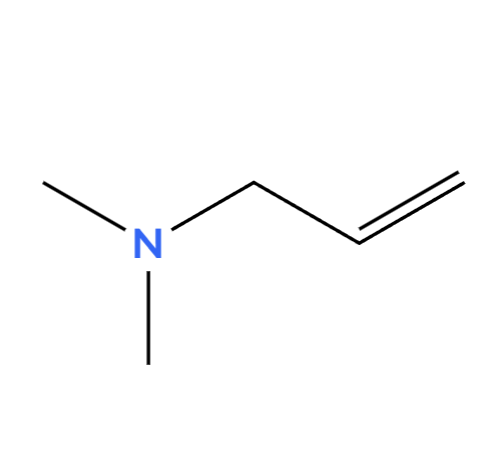
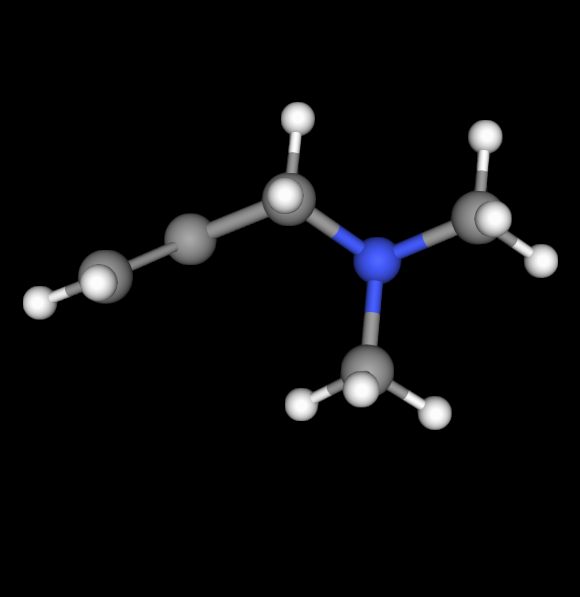
Dimethyltolylamine (DMTA) is an aromatic secondary amine used primarily as a co-initiator in UV-curable and radical polymerization systems, especially in combination with peroxides or photoinitiators.
In cosmetics, it is mainly found in professional UV/LED-curable nail products, where it enhances the efficiency of curing systems, speeds up polymerization, and improves cross-linking depth and adhesion.
1. Chemical structure and physical properties
IUPAC name: N,N-dimethyl-p-toluidine
Molecular formula: C₉H₁₃N
Molar mass: 135.21 g/mol
Chemical class: aromatic secondary amine
Functional groups: dimethylamino group (-N(CH₃)₂), aromatic ring
Physical properties:
Appearance: clear liquid
Color: colorless to pale yellow
Odor: faintly amine-like
Boiling point: 217 °C
Water solubility: insoluble
Solubility: miscible with many organic solvents and monomers
Density: ~0.91 g/cm³ at 20 °C
Stability: sensitive to oxidation; reacts with strong oxidizers
2. Main associated substances
DMTA is a pure compound, but often used in synergy with:
Benzoyl peroxide (BPO) – as a redox initiator
Photoinitiators – such as TPO or camphorquinone (in dual systems)
Methacrylate and acrylate monomers – in UV gels and dental resins
These combinations allow rapid, deep, and controlled polymerization under UV/LED light.
3. Production or synthesis method
Dimethyltolylamine is industrially synthesized by:
It is a fully synthetic compound, not found in nature, and reserved for technical and professional uses.
4. Functional properties
Property | Effect / Value |
|---|
Catalytic activity | High, especially with BPO or other initiators |
Curing speed | Increases polymerization rate significantly |
UV role | Enhances depth and completeness of UV curing |
Color impact | May cause yellowing if overused or exposed to oxygen |
Compatibility | Excellent with (meth)acrylic monomers and resins |
5. Applications
Cosmetic (professional use only):
UV-curable nail gels: co-initiator with BPO for fast curing
Hybrid gel polishes: improves adhesion and depth of cure
Base gels, top coats, builder gels: enhances mechanical strength and gloss
Other sectors:
Dental materials: in light-curable composites
UV adhesives: for electronics, optics, automotive
High-performance coatings: as a curing accelerator
6. Safety and regulations
Acute toxicity: moderate; depends on dose and exposure route
Sensitization potential: possible in cases of prolonged exposure or incomplete curing
Environmental concerns: toxic to aquatic organisms, poorly biodegradable
EU Cosmetics Regulation (2025/877) II/1745:
Not permitted in leave-on or rinse-off skin contact products
Allowed only in UV-curable systems (e.g., professional nail gels)
CLP classification (EU):
H302 – Harmful if swallowed
H315 – Causes skin irritation
H319 – Causes serious eye irritation
H411 – Toxic to aquatic life with long-lasting effects
IFRA: not applicable (not a fragrance ingredient)
Use only in controlled, polymerized products, with full curing under proper UV/LED lamps to ensure safety.
7. Conclusion
Dimethyltolylamine (DMTA) is a technically essential co-initiator in UV-curable polymer systems, especially in professional nail gels and similar cosmetic applications. It significantly accelerates polymerization, improves adhesion and mechanical performance, and enables efficient curing under light.
Due to its moderate toxicity, irritant potential, and environmental impact, DMTA is strictly regulated and permitted only in polymerized cosmetic systems that are not in direct contact with the skin during application. Its use requires careful formulation and complete UV curing to ensure consumer safety.
Prohibited in the European Community from 1.9.2025
References__________________________________________________________________________
Manimaran NH, Usman H, Kamga KL, Davidson SL, Beckman E, Niepa THR. Developing a Functional Poly(dimethylsiloxane)-Based Microbial Nanoculture System Using Dimethylallylamine. ACS Appl Mater Interfaces. 2020 Nov 11;12(45):50581-50591. doi: 10.1021/acsami.0c11875.
Abstract. Here, a novel poly(dimethylsiloxane) (PDMS)-based microbial culture system was investigated. Bacteria were encapsulated in functional and semipermeable membranes, mimicking the cell microenvironment and facilitating mass transport for interrogating microbial dynamics, thereby overcoming one of the major challenges associated with commercially available PDMS such as Sylgard 184. The hydrophobic nature and lack of control in the polymer network in Sylgard 184 significantly impede the the tunability of the transport and mechanical properties of the material as well as its usage as an isolation chamber for culturing and delivering microbes. Therefore, a novel PDMS composition was developed and functionalized with dimethylallylamine (DMAA) to alter its hydrophobicity and modify the polymer network. Characterization techniques including NMR spectroscopy, contact angle measurements, and sol-gel process were utilized to evaluate the physical and chemical properties of the newly fabricated membranes. Furthermore, the DMAA-containing polymer mixture was used as a proof of concept to generate hydrodynamically stable microcapsules and cultivate Escherichia coli cells in the functionalized capsules. The membrane exhibited a selective permeability to tetracycline, which diffused into the capsules to inhibit the growth of the encapsulated microbes. The functionality achieved here with the addition of DMAA, coupled with the high-throughput encapsulation technique, could prove to be an effective testing and diagnostic tool to evaluate microbial resistance, growth dynamics, and interspecies interaction and lays the foundation for in vivo models.
Bailey GS, Gillett D, Hill DF, Petersen GB. Automated sequencing of insoluble peptides using detergent. Bacteriophage fl coat protein. J Biol Chem. 1977 Apr 10;252(7):2218-25.
Abstract. Peptides which are highly nonpolar and insoluble under moderate conditions of pH and ionic strength cannot be subjected to automated sequence analysis. We report a method for solubilization of one such peptide, bacteriophage fl coat protein, by chemical modification in the presence of sodium dodecyl sulfate. Following this treatment the 50-residue peptide was degraded stepwise in an automated sequenator using a single cleavage Quadrol program with high repetitive yield through residue 47. We also report a modified program using detergent incorporated into dimethylallylamine buffer which permitted sequencing with high repetitive yields for at least the first 18 residues of the unmodified and otherwise highly insoluble coat protein. The presence of detergent caused no observable difficulties in detection of residues by gas chromatography, thin layer chromatography, or amino acid analysis.
Wang W, Wang X, Lakey PSJ, Ezell MJ, Shiraiwa M, Finlayson-Pitts BJ. Gas Phase and Gas-Solid Interface Ozonolysis of Nitrogen Containing Alkenes: Nitroalkenes, Enamines, and Nitroenamines. J Phys Chem A. 2022 Aug 18;126(32):5398-5406. doi: 10.1021/acs.jpca.2c04400.
Abstract. Emerging contaminants are of concern due to their rapidly increasing numbers and potential ecological and human health effects. In this study, the synergistic effects of the presence of multifunctional nitro, amino and carbon-carbon double bond (C═C) groups on the gas phase ozonolysis in O2 or at the air/solid interface were investigated using five simple model compounds. The gas phase ozonolysis rate constants at 296 K were (3.5 ± 0.9) × 10-20 cm3 molecule-1 s-1 for 2-methyl-1-nitroprop-1-ene and (6.8 ± 0.8) × 10-19 cm3 molecule-1 s-1 for 4-methyl-4-nitro-1-pentene, with lifetimes of 134 and 7 days in the presence of 100 ppb ozone in the atmosphere, respectively. The rate constants for gas phase E-N,N-dimethyl-1-propenylamine and N,N-dimethylallylamine reactions with ozone were too fast (>10-18 cm3 molecule-1 s-1) to be measured, implying lifetimes of less than 5 days. A multiphase kinetics model (KM-GAP) was used to probe the gas-solid kinetics of 1-dimethylamino-2-nitroethylene, yielding a rate constant for the surface reaction of 1.8 × 10⁻⁹ cm2 molecule-1 s-1 and in the bulk 1× 10-16 cm3 molecule-1 s-1. These results show that a nitro group attached to the C═C lowers the gas phase rate constant by 2-3 orders of magnitude compared to the simple alkenes, while amino groups have the opposite effect. The presence of both groups provides counterbalancing effects. Products with deleterious health effects including dimethylformamide and formaldehyde were identified by FTIR. The identified products differentiate whether the initial site of ozone attack is C═C and/or the amino group. This study provides a basis for predicting the environmental fates of emerging contaminants and shows that both the toxicity of both the parent compounds and the products should be taken into account in assessing their environmental impacts.
Lü H, Wang J, Wang X, Wu X, Lin X, Xie Z. Single-step preparation and characterization of polymeric monolith for pressurized capillary electrochromatography of typical homologs. J Sep Sci. 2007 Nov;30(17):2993-9. doi: 10.1002/jssc.200700220.
Abstract. A monolithic stationary phase was prepared in a single step by in situ copolymerization of iso-butyl methacrylate (IBMA), ethylene dimethacrylate (EDMA), and N,N-dimethylallylamine (DMAA) in a binary porogenic solvent consisting of N,N-dimethylformamide (DMF) and 1,4-butanediol. As the frame structures of monoliths, the amino groups are linked to support the EOF necessary for driving the mobile phase through the monolithic capillary, while the hydrophobic groups are introduced to provide the nonpolar sites for the chromatographic retention. To evaluate the column performance, separations of typical kinds of neutral or charged homologs, such as alkylbenzenes, phenols (including isomeric compounds of hydroquinone, resorcin, and catechol), and anilines (including isomeric compounds of o-phenylenediamine and 1,4-phenylenediamine), were performed, respectively on the prepared column under the mode of pressurized pCEC. Effects of the buffer pH and the mobile phase composition on the linear velocity of mobile phase and the retention factors of these compounds were investigated. It was found that the retention mechanism of charged solutes could be attributed to a mixed mode of hydrophobic interaction and electrophoresis, while an RP chromatographic behavior on the monolithic stationary phases was exhibited for neutral solutes. Especially, basic compounds such as anilines were well separated on the monolithic columns in the "counterdirectional mode," which effectively eliminated the electrostatic adsorption of basic analytes on the charged surface of the stationary phases.