



Definition
Hydroxycitronellal is a synthetic aromatic compound belonging to the class of oxygenated terpenic aldehydes. It is widely used in perfumery and cosmetics for its fresh, floral, and sweet lily-of-the-valley-like scent.
It does not occur naturally in pure form and is manufactured through chemical synthesis.
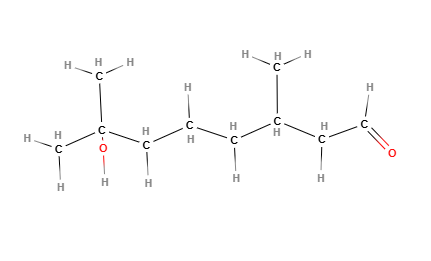
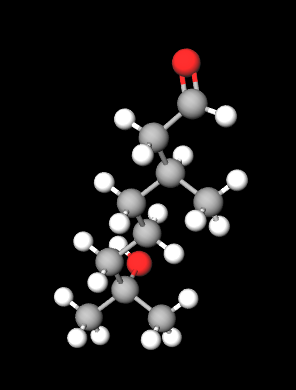
1. Chemical structure
IUPAC name: 7-hydroxy-3,7-dimethyloctanal
Molecular formula: C₁₀H₂₀O₂
Molar mass: 172.26 g/mol
Chemical class: oxygenated aliphatic aldehyde
Functional groups: aldehyde (-CHO) and hydroxyl (-OH)
Appearance: clear, colorless to pale yellow liquid
Boiling point: ~250 °C
Solubility: slightly soluble in water, soluble in alcohols and oils
Odor: fresh, floral, sweet, resembling lily of the valley
2. Main constituents
Hydroxycitronellal is a pure compound, but in commercial fragrance blends, it may appear alongside or be formulated with other aroma molecules such as:
Benzyl alcohol
Linalool
Citronellol
Geraniol
Other minor terpenic alcohols and aldehydes
These may serve as co-formulants to support or complement its floral character.
3. Production or extraction method
Hydroxycitronellal is produced industrially via synthetic methods, typically in the following way:
Starting material: Citronellal (obtained by fractional distillation from citronella oil or chemical synthesis)
Reaction:
selective hydration of the double bond in citronellal to introduce a hydroxyl group
partial oxidation under controlled conditions
Purification: achieved by fractional distillation or selective crystallization
This process yields a stable product with a high content of the desired isomer with consistent olfactory performance.
4. Olfactory properties
Main note: floral, fresh, sweet
Olfactory reference: lily of the valley
Fragrance family: floral–aldehydic
Persistence: moderate
Usage: typically a heart note in perfume compositions
5. Applications
Cosmetic and fragrance industry
Perfumes (especially floral and green floral accords)
Creams and lotions
Deodorants and skin care products
Shampoos, conditioners
Soaps and detergents
Home care: fabric softeners, air fresheners
INCI Functions:
Perfuming. Unlike fragrance, which can also contain slightly less pleasant or characteristic odours, the term perfume indicates only very pleasant fragrances. Used for perfumes and aromatic raw materials.
Cosmetic Safety
Restricted cosmetic ingredient as III/72 a Relevant Item in the Annexes of the European Cosmetics Regulation (EU) 2023/1545. Substance or ingredient reported: Hydroxycitronellal
Product Type, body parts (a) Oral products (b) Other products
Maximum concentration in ready for use preparation (b) 1,0 %
Other (a) (b) The presence of the substance must be indicated in the list of ingredients referred to in Article 19(1)(g) when its concentration exceeds: — 0,001 % in leave-on products — 0,01 % in rinse-off products
Aroma industry
Used to reconstruct the scent of lily of the valley, which cannot be extracted naturally
Common in floral and spring-themed compositions
6. Safety and regulations
IFRA (International Fragrance Association): sets strict concentration limits in cosmetics due to potential for skin sensitization
EU Cosmetic Regulation 1223/2009 – Annex III:
must be declared on labels if concentrations exceed:
0.001% in leave-on products
0.01% in rinse-off products
Identified as a potential allergen via dermatological patch tests
Not classified as carcinogenic, mutagenic, or toxic to reproduction
At normal use levels, it is considered safe, though highly concentrated forms may cause skin irritation or allergic contact dermatitis
7. Conclusion
Hydroxycitronellal is a synthetic fragrance material with a soft, floral-lily note, widely appreciated for its ability to impart freshness and delicacy to a fragrance blend. Though synthetic, it is a cornerstone of modern perfumery used to recreate olfactory effects that cannot be derived from nature.
Its use is well regulated, and with proper labeling and formulation, it remains a safe and valuable aromatic component in cosmetics and personal care.
 |  |
Comparative Profile: Hydroxycitronellal vs Lyral vs Lilial
| Property | Hydroxycitronellal | Lyral (Hydroxyisohexyl 3-Cyclohexene Carboxaldehyde) | Lilial (Butylphenyl Methylpropional) |
|---|---|---|---|
| CAS Number | 107-75-5 | 31906-04-4 | 80-54-6 |
| Molecular formula | C₁₀H₂₀O₂ | C₁₃H₂₂O₂ | C₁₄H₂₀O |
| Odor profile | Floral, fresh, lily-of-the-valley | Floral, soft, muguet-like | Floral, aldehydic, sweet-lily |
| Main use | Perfumery, personal care | Perfumery (formerly common in muguet-type fragrances) | Perfumery (white floral notes) |
| Natural/synthetic | Synthetic (derived from citronellal) | Fully synthetic | Fully synthetic |
| Allergen status | Potential sensitizer – labeling required | Strong sensitizer – now prohibited in EU | Reprotoxic – banned in EU from March 2022 |
| EU status | Restricted (Annex III – max % limits) | Prohibited (Annex II – entry 1666) | Prohibited (Annex II – entry 1669) |
| IFRA status | Restricted (maximum levels vary by product) | Prohibited since 2017 (IFRA Standards Amendment 49) | Prohibited under IFRA Standards from 2021 |
Regulatory overview: fragrance allergens (EU + IFRA)
EU Regulation 1223/2009 – Annex III
Lists 26 fragrance allergens (soon to be expanded to 80+) that must be declared on cosmetic labels if present above:
0.001% in leave-on products
0.01% in rinse-off products
These include:
Hydroxycitronellal, Linalool, Geraniol, Citral, Coumarin, Eugenol, etc.
These ingredients are not banned, but restricted and labeled for consumer awareness and allergy prevention.
Annex II – Prohibited substances
Some substances are completely banned due to high risk (e.g., mutagenicity, carcinogenicity, reproductive toxicity):
Lyral (entry 1666): prohibited due to strong allergenic potential
Lilial (entry 1669): banned because of classification as CMR 1B (toxic for reproduction)
IFRA Standards (International Fragrance Association)
IFRA imposes concentration limits or outright bans based on toxicological review:
Hydroxycitronellal: restricted by product category
Lyral and Lilial: prohibited in all fragrance products due to high risk
Compliance with IFRA standards is voluntary but widely adopted by responsible manufacturers and brands

