



Il Cloruro di calcio diidrato è un composto cristallino ampiamente utilizzato nei settori medico, farmaceutico, cosmetico e industriale grazie alle sue proprietà igroscopiche e stabilizzanti. Funziona come fonte di ioni calcio, stabilizzante e agente essiccante in varie formulazioni. La sua elevata solubilità in acqua e compatibilità con altri ingredienti lo rendono un componente versatile ed essenziale.
Composizione Chimica e Struttura
- Il Cloruro di Calcio è un composto ionico neutro composto da ioni calcio (Ca²⁺) e ioni cloruro (Cl⁻).
- La forma diidrata include due molecole di acqua di cristallizzazione, che ne migliorano la solubilità e stabilità.
Proprietà Fisico-Chimiche
- Aspetto: Polvere cristallina bianca o granulare, inodore.

- Peso Molecolare: 147,01 g/mol.
- Solubilità: Altamente solubile in acqua (74,5 g/100 mL a 20°C) e moderatamente solubile in alcol.
- pH: Tipicamente compreso tra 4,5 e 9,0 in una soluzione acquosa al 5%.
- Igroscopicità: Fortemente igroscopico, assorbe facilmente l'umidità dall'aria.
Processo di Produzione
Approvvigionamento della Materia Prima:
- Derivato da salamoie naturali o come sottoprodotto nella produzione di carbonato di sodio (processo Solvay).
Purificazione:
- Le impurità vengono rimosse tramite precipitazione e filtrazione.
Cristallizzazione:
- Il cloruro di calcio viene cristallizzato con due molecole di acqua per formare la versione diidrata.
Essiccazione e Confezionamento:
- Il prodotto cristallino viene essiccato in condizioni controllate e confezionato per preservarne le proprietà igroscopiche.
Applicazioni
Applicazioni Mediche
Sostituzione Elettrolitica:
- Utilizzato in soluzioni endovenose per trattare l'ipocalcemia, l'arresto cardiaco e l'iperkaliemia.
Agente Emostatico:
- Favorisce la coagulazione del sangue ed è impiegato in alcuni interventi chirurgici.
Soluzioni per Dialisi:
- Incluso nelle formulazioni per emodialisi e dialisi peritoneale per bilanciare i livelli di calcio.
Nelle gocce per gli occhi (colliri), può svolgere diversi ruoli:
Supporto elettrolitico
- Il calcio è un minerale importante per vari processi cellulari, tra cui la corretta funzionalità delle cellule epiteliali corneali. Aggiunto alla formulazione, contribuisce a mantenere un equilibrio di ioni simile a quello naturalmente presente nell’occhio.
Controllo dell’osmolarità
- Come altri sali (ad esempio cloruro di sodio, cloruro di potassio, ecc.), il cloruro di calcio aiuta a regolare la concentrazione di soluti nella soluzione. Un’adeguata osmolarità è fondamentale per evitare irritazioni o secchezza oculare.
Stabilità della formulazione
- La presenza di ioni calcio può contribuire alla stabilità complessiva del collirio, aiutando a garantire che gli altri ingredienti rimangano efficaci e che la soluzione conservi nel tempo le proprie caratteristiche fisiche e chimiche.
In sintesi, il cloruro di calcio diidrato viene impiegato nelle gocce oftalmiche per riprodurre quanto più fedelmente possibile la composizione dei fluidi dell’occhio, ridurre l’irritazione e favorire la salute e l’idratazione della superficie oculare.
Applicazioni Farmaceutiche
Stabilizzante:
- Garantisce la stabilità di soluzioni iniettabili e altri prodotti farmaceutici.
Integratore di Calcio:
- Presente in compresse o sciroppi per la supplementazione di calcio.
Applicazioni Cosmetiche
Agente Condizionante per la Pelle:
- Migliora l'idratazione e l'elasticità della pelle quando incluso in creme e lozioni.
Stabilizzante:
- Previene la separazione degli ingredienti in emulsioni.
Applicazioni Industriali
Essiccante:
- Utilizzato per rimuovere l'umidità in applicazioni di essiccazione.
Antighiaccio e Controllo della Polvere:
- Impiegato nella manutenzione stradale per abbassare il punto di congelamento dell'acqua e controllare la polvere.
Additivo Alimentare (E509):
- Agisce come agente rassodante in verdure in scatola e come fonte di calcio in prodotti fortificati.
Considerazioni Ambientali e di Sicurezza
Impatto Ambientale:
- Considerato sicuro ed eco-compatibile se usato in modo appropriato; l'uso eccessivo può influire sulla salinità del suolo e delle acque.
Profilo di Sicurezza:
- Non tossico se utilizzato entro le concentrazioni raccomandate.
- Può causare irritazioni a pelle o occhi; è necessario un utilizzo corretto.
Conservazione e Manipolazione:
- Deve essere conservato in contenitori ermetici per prevenire l'assorbimento dell'umidità.
Conclusione
Il Cloruro di calcio diidrato è un composto versatile e indispensabile con ampie applicazioni in medicina, farmaceutica, cosmetica e industria. La sua natura igroscopica, l'elevata solubilità e il ruolo come fonte di ioni calcio lo rendono un ingrediente utile in numerosi campi.
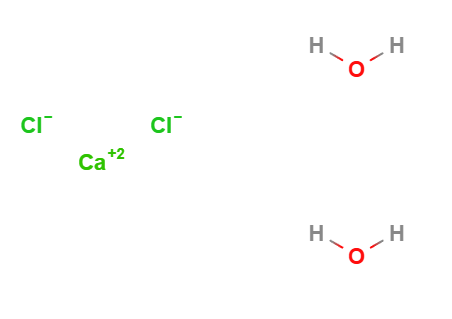 |  |
Molecular Formula CaCl2H4O2
Molecular Weight 147.01 g/mol
CAS 10035-04-8
UNII M4I0D6VV5M
EC Number
Synonyms:
Calcium chloride 2-hydrate

