



Diethylhexyl Adipate (DEHA) is an ester derived from adipic acid and 2-ethylhexanol. It is widely used in cosmetics and personal care products as an emollient, plasticizer, and solvent. Known for its lightweight texture and ability to impart a smooth, non-greasy feel, it enhances product spreadability and provides conditioning benefits to both skin and hair. Its versatility and compatibility with various formulations make it a valuable ingredient in skincare, makeup, and haircare products.
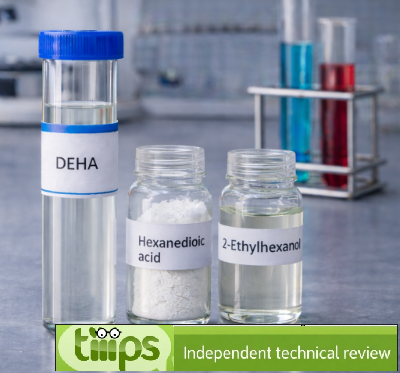
Chemical Composition and Structure
Diethylhexyl Adipate is an ester with the chemical formula C22H42O4.
- Core Structure: Derived from adipic acid (a dicarboxylic acid) and two molecules of 2-ethylhexanol (a branched alcohol).
- Properties:
- Hydrophobic, enhancing its emollient qualities.
- Contributes to the flexibility and softness of formulations.
Physicochemical Properties
- Appearance: Clear, colorless liquid.
- Odor: Neutral, mild.
- Solubility: Insoluble in water but highly soluble in oils and organic solvents.
- Viscosity: Low, contributing to its lightweight feel.
- Stability: High thermal and oxidative stability, suitable for various cosmetic formulations.
Production Process
- Esterification: Adipic acid reacts with 2-ethylhexanol in the presence of an acid catalyst to form Diethylhexyl Adipate.
- Purification: The crude product undergoes purification processes to remove unreacted materials and byproducts, yielding a high-purity cosmetic-grade ingredient.
- Quality Assurance: The final product is tested for stability, purity, and compatibility with other ingredients.
Applications
Medical Applications
- Acts as a solubilizer and carrier for active ingredients in topical formulations.
- Used in dermatological products to enhance skin hydration and improve application texture.
Cosmetics
Skincare:
- Used in creams, lotions, and serums as an emollient to soften and smooth the skin.
- Improves product spreadability, leaving a lightweight, silky finish.
Makeup:
- Incorporated in foundations, primers, and lipsticks to enhance texture, flexibility, and long-lasting wear.
- Provides a smooth application and a non-greasy finish.
Haircare:
- Found in conditioners and hair serums for its ability to add softness and shine.
- Reduces frizz and enhances the manageability of hair.
Industrial Applications
- Used as a plasticizer in formulations to enhance flexibility and reduce brittleness in products such as nail polishes and other coatings.
- Provides excellent solubilization properties for difficult-to-dissolve ingredients.
Environmental and Safety Considerations
Biodegradability:
- DEHA is biodegradable under controlled conditions, making it an environmentally friendly choice for cosmetic formulations.
Safety Profile:
- Considered safe for cosmetic use within regulated concentrations.
- Low potential for skin irritation or sensitization, suitable for most skin types.
Sustainability:
- Responsible sourcing of raw materials is recommended to minimize the environmental impact of production.
Alternatives
| Option (INCI) | Product type | Key advantages |
|---|---|---|
| Coco-Caprylate/Caprate | Plant-derived dry-touch emollient | Dry feel, good slip, DEHA-like sensory replacement |
| Caprylic/Capric Triglyceride (MCT) | Lightweight, stable triglyceride | Excellent spread, oxidation stability, broad formulation compatibility |
| Squalane | Silky emollient | Non-tacky, high skin comfort, suitable for sensitive skin |
| Dicaprylyl Carbonate | Dry-feel ester | Less greasy after-feel, light sensory profile, common DEHA alternative |
| Isoamyl Laurate | Ultra-light ester | High spreadability, soft feel, good for leave-on and color cosmetics |
| C13-15 Alkane | “Silicone-like” emollient | High slip, dry finish, useful in sunscreens and primers |
| Neopentyl Glycol Diheptanoate | Dispersion-focused ester | Improves UV filter/powder dispersion, slip, and performance |
| Triethylhexanoin | UV-compatibility ester | Enhances slip and UV filter compatibility; prefer high-purity grades |
| Ethylhexyl Olivate / Cetearyl Olivate | Olive-derived esters | Emolliency and barrier support, helpful for natural-origin positioning |
Conclusion
Diethylhexyl Adipate is a multifunctional and reliable ingredient, valued for its emollient, plasticizing, and solvent properties. Its compatibility with a wide range of cosmetic formulations, coupled with its ability to improve texture and spreadability, makes it an essential component in modern skincare, haircare, and makeup products.
Key Properties
- Chemical Structure: Ester of adipic acid and 2-ethylhexanol.
- INCI Functions: Emollient, Plasticizer, Solvent.
- Advantages: Lightweight, non-greasy, enhances texture and spreadability, suitable for various cosmetic applications.
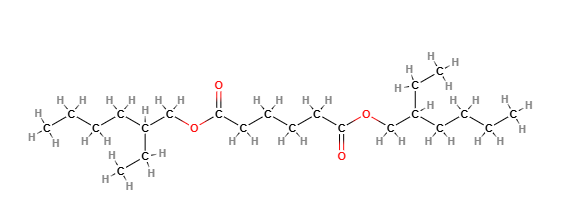 | 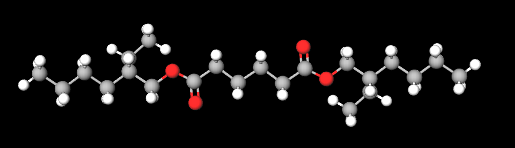 |
Molecular Formula C22H42O4
Molecular Weight 370.6 g/mol
CAS 103-23-1
UNII MBY1SL921L
EC Number 203-090-1
DTXSID0020606
Nikkaji J3.602A
Synonyms:
DEHA
Diethylhexyl adipate

