



Ceresin (Ozokerite) is a hydrocarbon wax (petroleum-based) obtained through a chemical neutralization process to remove acidic materials. It is a complex combination of saturated hydrocarbons, predominantly straight-chain, with carbon numbers mainly ranging from C20 to C50. This type of wax is used in cosmetics and personal care products as a viscosity-increasing agent, stabilizer, and film-forming agent due to its solid consistency and protective properties.
Chemical Composition and Structure
Ozokerite consists of saturated linear and branched hydrocarbons. The carbon chain length range (C20-C50) provides the wax with high stability, making it suitable for applications requiring thermal resistance and film-forming characteristics.
Physical Properties
It appears as a solid wax, white or yellowish, with a melting point ranging between 55°C and 100°C. It is insoluble in water but soluble in oils and organic solvents. Its consistency makes it ideal for improving viscosity and stability in cosmetic formulations.
Production Process
Ozokerite is produced through a chemical and physical treatment process of crude petroleum waxes. This process includes chemical neutralization to remove acidic materials, resulting in a pure and stable product suitable for cosmetic and industrial use.
Applications
Medical: Used in topical medications and patches to provide consistency, stability, and film-forming properties.
Cosmetics: Ozokerite is used in lipsticks, lip balms, creams, lotions, and eyeliners as a viscosity-increasing and stabilizing agent. It improves texture and supports the formation of a protective film on the skin.
However, some studies have shown toxicity and xenobiotic reaction for long-term exposure (1).
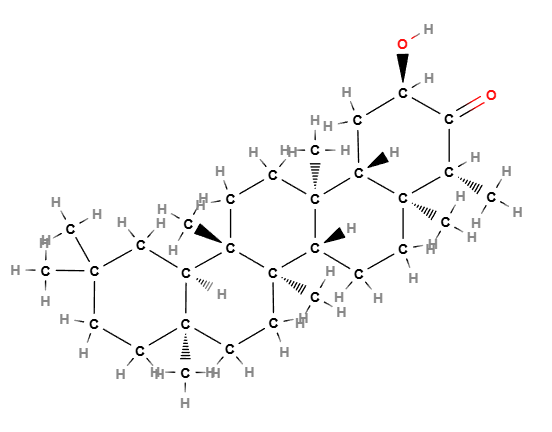 | 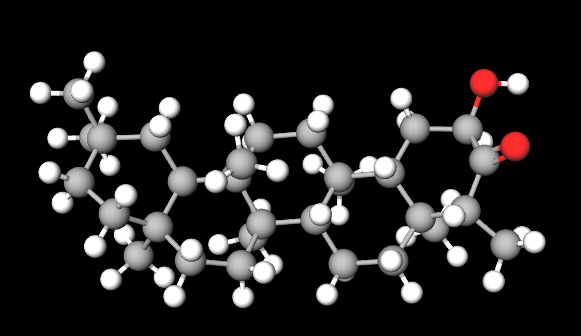 |
Molecular Formula C30H50O2
Molecular Weight 442.7 g/mol
CAS 64742-33-2 12198-93-5
UNII
EC Number 680-864-9 265-134-6
Nikkaji J1.620.292D
Synonyms:
Ceresin
Cerin
Ozocerite
Ozokerite

