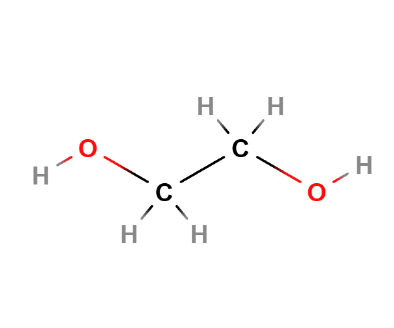
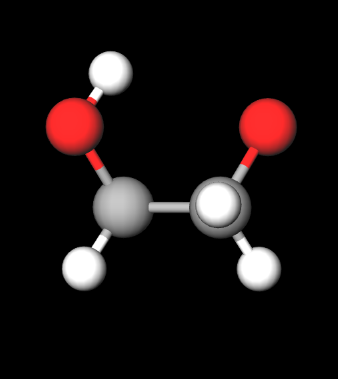
Glicole etilenico è un composto organico incolore, inodore e dal sapore dolce. È un tipo di diolo (glicole) ed è comunemente utilizzato come solvente e antigelo in varie applicazioni, tra cui cosmetici, farmaceutici e processi industriali. Nelle formulazioni cosmetiche, Glicole etilenico è apprezzato per le sue proprietà umettanti, che aiutano a trattenere l'umidità nella pelle, rendendolo un ingrediente utilizzato in idratanti e creme.
Composizione Chimica e Struttura
- Formula Chimica: C2H6O2
- Struttura: Presenta due gruppi idrossilici (-OH) attaccati a una catena di due carboni, conferendogli la capacità di formare legami idrogeno con l'acqua, il che migliora la sua solubilità e le proprietà di ritenzione dell'umidità.
La struttura del Glicole etilenico gli consente di funzionare efficacemente come umettante e solvente in varie formulazioni.
Proprietà Fisiche
Aspetto: Liquido chiaro e incolore.
Solubilità: Altamente solubile in acqua e in molti solventi organici.
pH: Generalmente neutro, garantendo compatibilità con varie formulazioni cosmetiche.
Odore: Inodore o con odore molto lieve.
Stabilità: Stabile in condizioni normali di conservazione; deve essere protetto da calore eccessivo e luce.
Processo di Produzione
Sintesi: Glicole etilenico è prodotto dall'ossido di etilene attraverso una reazione di idrolisi, in cui l'ossido di etilene reagisce con acqua.
Purificazione: Il prodotto risultante viene purificato per rimuovere impurità e garantire un composto di alta qualità.
Formulazione: Glicole etilenico purificato viene incorporato in vari prodotti cosmetici per migliorarne le proprietà idratanti e la texture.
Applicazioni
Cosmetici: Comunemente utilizzato in lozioni, creme e sieri per le sue proprietà idratanti, aiutando a trattenere l'idratazione della pelle e migliorando la texture.
Farmaceutici: Impiegato come solvente per ingredienti attivi in varie formulazioni.
Usi Industriali: Utilizzato come antigelo e refrigerante in applicazioni automobilistiche e industriali, oltre a essere un materia prima per la produzione di altri chimici (1).
Considerazioni Ambientali e di Sicurezza
Deve essere usato con cautela poiché l'ingestione può essere tossica. (2). Attenzione: è un tipo di alcol incolore, inodore, dal sapore dolce ma velenoso (3).
Pratiche di approvvigionamento e formulazione responsabili sono essenziali per garantire che l'ingrediente sia utilizzato in modo sicuro e sostenibile.
Molecular Formula C2H6O2
Molecular Weight 62.07 g/mol
CAS 107-21-1
UNII FC72KVT52F
EC Number 203-473-3
DTXSID8020597
Synonyms:
1,2-ethanediol
Ethane-1,2-diol
Bibliografia__________________________________________________________________________
(1) Knop K, Hoogenboom R, Fischer D, Schubert US. Poly(ethylene glycol) in drug delivery: pros and cons as well as potential alternatives. Angew Chem Int Ed Engl. 2010 Aug 23;49(36):6288-308. doi: 10.1002/anie.200902672. PMID: 20648499.
Abstract. Poly(ethylene glycol) (PEG) is the most used polymer and also the gold standard for stealth polymers in the emerging field of polymer-based drug delivery. The properties that account for the overwhelming use of PEG in biomedical applications are outlined in this Review. The first approved PEGylated products have already been on the market for 20 years. A vast amount of clinical experience has since been gained with this polymer--not only benefits, but possible side effects and complications have also been found. The areas that might need consideration and more intensive and careful examination can be divided into the following categories: hypersensitivity, unexpected changes in pharmacokinetic behavior, toxic side products, and an antagonism arising from the easy degradation of the polymer under mechanical stress as a result of its ether structure and its non-biodegradability, as well as the resulting possible accumulation in the body. These possible side effects will be discussed in this Review and alternative polymers will be evaluated.
(2) Montjoy CA, Rahman A, Teba L. Ethylene glycol and methanol poisonings: case series and review. W V Med J. 2010 Sep-Oct;106(6):17-23. PMID: 21928557.
Abstract. Introduction: Ethylene glycol (EG) and methanol (MTH) are common industrial solvents and are responsible for accidental, suicidal, and epidemic poisonings.1 Since the clinical signs and symptoms associated with EG and MTH poisoning are nonspecific, it is important for the medical community to consider these toxicities given that early treatment prevents death.2 The hallmark of toxic alcohol poisoning is a combination of a high anion gap metabolic acidosis and osmolar gap.3 In order to determine laboratory abnormalities and outcomes associated with EG and MTH ingestion at our institution, a retrospective chart review was obtained.....Conclusion: Most patients with EG and MTH intoxication have a decreased level of consciousness making an adequate history unobtainable. One must rely on laboratory data for clues in making a diagnosis of intoxication. A review of the clinical features, pharmacokinetics, laboratory analysis, and management of EG and MTH poisoning is included in this discussion to help raise medical community
(3) Patocka J, Hon Z. Ethylene glycol, hazardous substance in the household. Acta Medica (Hradec Kralove). 2010;53(1):19-23. PMID: 20608228.
Abstract. Ethylene glycol is a colorless, odorless, sweet-tasting but poisonous type of alcohol found in many household products. The major use of ethylene glycol is as an antifreeze in, for example, automobiles, in air conditioning systems, in de-icing fluid for windshields, and else. People sometimes drink ethylene glycol mistakenly or on purpose as a substitute for alcohol. Ethylene glycol is toxic, and its drinking should be considered a medical emergency. The major danger from ethylene glycol is following ingestion. Due to its sweet taste, peoples and occasionally animals will sometimes consume large quantities of it if given access to antifreeze. While ethylene glycol itself has a relatively low degree of toxicity, its metabolites are responsible for extensive cellular damage to various tissues, especially the kidneys. This injury is caused by the metabolites, glycolic and oxalic acid and their respective salts, through crystal formation and possibly other mechanisms. Toxic metabolites of ethylene glycol can damage the brain, liver, kidneys, and lungs. The poisoning causes disturbances in the metabolism pathways, including metabolic acidosis. The disturbances may be severe enough to cause profound shock, organ failure, and death. Ethylene glycol is a common poisoning requiring antidotal treatment.
McQuade DJ, Dargan PI, Wood DM. Challenges in the diagnosis of ethylene glycol poisoning. Ann Clin Biochem. 2014 Mar;51(Pt 2):167-78. doi: 10.1177/0004563213506697. Epub 2013 Nov 11. PMID: 24215789.
Abstract. Ethylene glycol poisoning, while uncommon, is clinically significant due to the associated risk of severe morbidity or lethality and it continues to occur in many countries around the world. The clinical presentation of ethylene glycol toxicity, while classically described in three phases, varies widely and when combined with the range of differential diagnoses that must be considered makes diagnosis challenging. Early and accurate detection is important in these patients, however, as there is a need to start antidotal treatment early to prevent serious harm. In this article, we will review the literature and provide guidance regarding the diagnosis of ethylene glycol poisoning. While gas chromatography is the gold standard, the usefulness of this test is hampered by delays in access due to availability. Consequently, there are several surrogate markers that can give an indication of ethylene glycol exposure but these must be interpreted with caution and within the clinical context. An in-depth review of these tests, particularly the detection of a raised osmolar gap or an raised anion gap acidosis, will form the main focus of this article.