



Tioconazolo è un composto chimico antifungino utilizzato per trattare le infezioni fungine della pelle e delle unghie.
Processo industriale di sintesi chimica
- Preparazione dei reagenti. Le principali materie prime includono 2,4-dicloroacetofenone, 1H-imidazolo e tiocianato di potassio.
- Sintesi dell'intermedio. La reazione inizia con la condensazione del 2,4-dicloroacetofenone con 1H-imidazolo in presenza di un agente di condensazione come il cloruro di alluminio. Questo forma un intermedio importante per i successivi passaggi di sintesi.
- Formazione del tiocianato. L'intermedio viene quindi fatto reagire con il tiocianato di potassio in presenza di un solvente appropriato, come il dimetilformammide (DMF), per formare il composto tiocianato.
- Ciclizzazione. Il composto tiocianato subisce una ciclizzazione sotto condizioni controllate di calore e pressione per formare la struttura di base del tioconazolo.
- Purificazione. Il tioconazolo grezzo viene purificato per rimuovere impurità e sottoprodotti della reazione utilizzando tecniche come la cristallizzazione, la filtrazione e la cromatografia.
- Stabilizzazione. Il tioconazolo purificato viene stabilizzato per garantirne la stabilità durante il trasporto e lo stoccaggio, prevenendo la degradazione.
- Controllo di qualità. Il tioconazolo viene sottoposto a rigorosi test di qualità per assicurare che soddisfi gli standard di purezza, efficacia e sicurezza. Questi test includono l'analisi chimica, la spettroscopia e i test microbiologici.
A cosa serve e dove si usa
Il Tioconazolo è un agente antifungino appartenente alla classe dei derivati azolici. È efficace nel combattere una vasta gamma di infezioni fungine, inclusi quelli che causano la tigna, il piede d'atleta e le infezioni delle unghie. Questo farmaco agisce inibendo la sintesi dell'ergosterolo, un componente vitale della membrana cellulare dei funghi, bloccando così la crescita e la riproduzione dei funghi. Viene comunemente utilizzato in creme, gel, e soluzioni topiche. Il Tioconazolo è apprezzato per la sua efficacia e la sua capacità di ridurre rapidamente i sintomi delle infezioni fungine (1).
Cosmetica - Funzioni INCI
- Agente antimicrobico. Questo ingrediente è in grado di sopprimere o inibire la crescita e la replicazione di un ampio spettro di microrganismi come batteri, funghi e virus rendendo lo strato corneo temporaneamente battericida e fungicida (2).
Applicazioni commerciali
Trattamento antifungino. Il tioconazolo è usato in creme, gel e lozioni per trattare infezioni fungine come la tinea pedis (piede d'atleta), tinea cruris (tigna inguinale) e tinea corporis (tigna del corpo).
Prevenzione. Aiuta a prevenire la ricrescita dei funghi nelle aree trattate, mantenendo la pelle sana.
Versatilità. Può essere utilizzato in vari prodotti per la cura della pelle destinati al trattamento delle infezioni fungine localizzate (3).
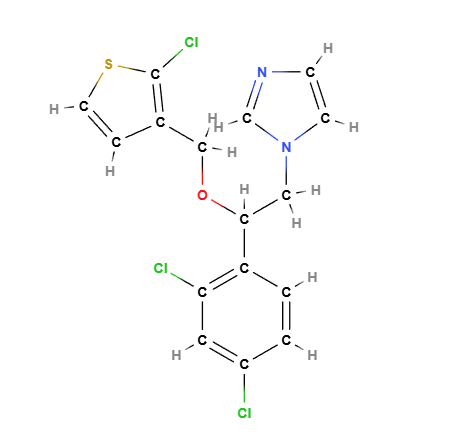 | 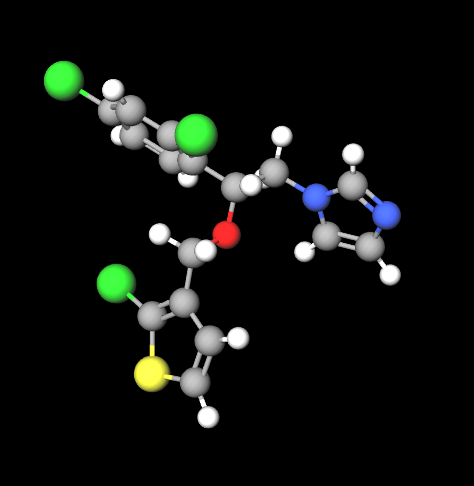 |
Molecular Formula C16H13Cl3N2OS
Molecular Weight 387.7 g/mol
CAS 65899-73-2
UNII S57Y5X1117
EC Number 265-973-8
Synonyms:
Vagistat
Mykontral
Monistat
Trosderm
Trosid
Trosyd

