

|

|
| App | Log in |
|
|
|
| App | Log in |

 | "Descrizione" by Whiz35 (11969 pt) | 2025-Oct-14 15:38 |
Vegetable glycerin
Glycerin (Glycerine). Trivalent alcohol, hygroscopic. Glycerin is the trade name when the percentage of glycerol is 95%, but the names Glycerin and Glycerol are mostly used to identify the same product. In practice: the pure chemical component is called glycerol, while glycerine contains about 95% glycerol.
Synonyms/labeling: glycerol, glycerine; food additive E422; pharmacopeial grade USP/EP (“Glycerin”, “Glycerol”)
Origin: derived from vegetable oils/fats (e.g., palm, canola/rapeseed, soy, coconut) via hydrolysis or transesterification of triglycerides; also available from fermentation (sugar-based routes)
Definition
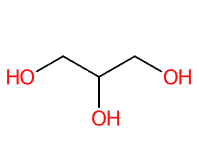
A triol (propane-1,2,3-triol) that is highly hygroscopic, colorless, odorless, and sweet-tasting. Widely used as a humectant, solvent/vehicle, plasticizer, and cryoscopic agent in foods, cosmetics, and pharmaceuticals.
Caloric value
~4.3 kcal per g (≈ 17 kJ/g). Contributes energy in foods and supplements; high single doses may exert osmotic laxative effects.
Physicochemical properties (typical at 20–25 °C)
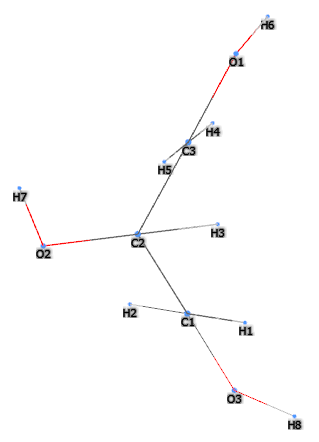
Formula: C₃H₈O₃; MW 92.09 g/mol
Appearance: clear, viscous liquid
Taste/odor: odorless, sweet (~0.6× sucrose)
Density: ~1.26 g/mL (20 °C)
Viscosity: ~1.2–1.5 Pa·s (1200–1500 mPa·s), temperature-dependent
Boiling point: ~290 °C (decomposes; much lower under vacuum)
Freezing point: ~18 °C (forms eutectic mixtures with water)
Refractive index (20 °C): ~1.474–1.475
pH (5–10% aq.): ~neutral
Solubility: miscible with water and lower alcohols; limited in oils/fats (use co-solvents/emulsifiers)
Hygroscopicity: very high; readily absorbs atmospheric moisture
Stability: stable at pH 4–10; risk of dehydration to acrolein above ~200–250 °C under dry/acid conditions—avoid overheating
It occurs as an odourless, colourless to brown viscous liquid. Insoluble in chloroform, ether, carbon disulphide, benzene, oil. Miscible with ethanol and water. Can absorb moisture from the air as well as other volatile chemicals such as hydrogen sulphide, hydrogen cyanide and sulphur dioxide.
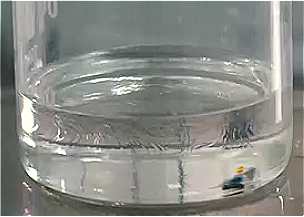
Manufacture and purification
Vegetable triglycerides are hydrolyzed or transesterified, yielding crude glycerine (e.g., from biodiesel). Purification includes removal of salts and glycols, decolorization, and vacuum distillation to produce tech and USP/EP grades (typically ≥99.5% glycerol). Critical impurities: methanol, diethylene/ethylene glycol, heavy metals, residual ash, water.
Technological functions
Humectant: retains moisture in bakery, bars, icings, tobacco, and cosmetics; helps softness and anti-staling.
Solvent/vehicle: for flavors, extracts, sweeteners, and water-soluble actives; improves dispersibility.
Plasticizer: for films/coatings (gelatin, starches, pectins) and softgel capsules.
Cryoscopic agent: depresses freezing point (frozen desserts) and limits crystallization.
Viscosifier: increases syrup/drink viscosity.
Water-activity reduction: at high levels can lower aw (osmotic preservation effect).
Applications and indicative use levels
Food (E422): baked goods, confectionery/chewing gum, beverages, syrups, spreads. Typical 0.5–5%; up to 20–30% in syrups/specific uses.
Cosmetics/personal care: creams/lotions, cleansers, soaps, toothpastes, hair care; 2–30% (up to 50–60% in certain products).
Pharmaceutical: oral syrups (sweetening/viscosity), suppositories (vehicle), mouthwashes, drops; GRAS excipient.
Technical (food-grade): humectant for paper/tobacco; heat-transfer/antifreeze solutions where food contact may occur.
Nutrition and tolerance
Metabolism: enters carbohydrate and lipid pathways (glycerolysis/gluconeogenesis); modest glycemic impact relative to sugars.
GI effects: high bolus intakes may cause bloating/diarrhea (osmotic); beverage portions ≤ ~10–15 g per serving are often better tolerated.
Dental: non-cariogenic.
Allergens: none inherent; naturally gluten-free and vegan (when plant-sourced and certified).
Safety and regulatory
GRAS (FDA) for multiple uses; in the EU authorized as E422 under GMP/q.s. unless category limits apply.
Pharmacopeia: USP/EP compliance for pharma/cosmetic use.
Impurity control: stringent limits for methanol and (di)ethylene glycol; always choose grade appropriate to application (food/pharma).
High-temperature caution: prevent conditions that generate acrolein (toxic/irritant).
Inhalation: hot aerosols/vapors may irritate—avoid unnecessary nebulization/overheating.
Quality specifications (typical)
Assay (glycerol): ≥99.5% (USP/EP)
Low acidity/alkalinity, low ash, very low color (APHA)
Heavy metals and residual solvents within legal limits
Microbiological: generally unfavorable to growth at high concentrations (low aw), though osmophilic yeasts can persist—observe GMP
Storage and handling
Keep containers tightly closed (stainless steel or food-grade HDPE), protected from humidity and heat; minimize contamination (hygroscopic).
Typical shelf life: 24–36 months unopened; periodically check color/odor and key specs.
Sustainability and sourcing
Broadly available from vegetable supply chains; large volumes are co-products of biodiesel. Consider traceability (oil origin), relevant certifications (e.g., RSPO if palm-derived), or palm-free sourcing per policy.
Troubleshooting
Excess tackiness (food/cosmetics): reduce % glycerine or balance with less-hygroscopic polyols (erythritol/sorbitol) or starches/fibers.
Cold thickening/crystallization: work slightly warmer and/or dilute; consider the water–glycerol eutectic.
Emulsion instability: glycerine enlarges the aqueous phase—rebalance emulsifiers and fat SFC.
Unwanted sweetness: replace part with propylene glycol (food-grade) or water where permitted.
Skin irritation (rare): verify purity and concentration; buffer formulas (pH 5–6) and add soothers (panthenol, allantoin).
Labeling
Foods: “Glycerine (E422)” or “Glycerol.”
Cosmetics (INCI): “Glycerin.”
Pharmaceuticals: per pharmacopeia/local guidance.
What it is used for and where it is used
There are approximately 1,600 applications for glycerol.
Food
Hygroscopic agent, emulsifier, sweetener and solvent.
Military
Preparation of nitroglycerine, an explosive. Anticorrosive agent
Pharmaceutical
Syrups, suppository ointments as humectant, lubricant. Inserted in medicinal tablets as a humectant and flow agent.
Cosmetics
Its water solubility, hygroscopicity and hydrophilicity characteristics give glycerine humectant and moisturising capacities that are of great importance in most topical cosmetic applications. It attracts water to the surface of the skin and in this way maintains the hydration of the stratum corneum. By improving skin texture, it acts as a skin barrier. In cleansers, shampoos and other cosmetic products, it is included in the formula with the aim of moisturising and softening the skin, preserving it from ageing or roughness. It is also used in toothpastes as a humectant and to protect gum and tooth tissue.
Classic glycerine acts in cosmetic formulations in a number of useful ways, which I list in alphabetical order.
Denaturant. The ionic or polar molecules of this ingredient included in formulations that interact with protein groups, modulate the properties of the solution to suit specific needs.
Hair conditioning agent. A large number of ingredients with specific purposes can co-exist in a hair shampoo: cleansers, conditioners, thickeners, mattifying agents, sequestering agents, fragrances, preservatives, special additives. However, the indispensable ingredients are the cleansers and conditioners as they are necessary and sufficient for hair cleansing and manageability. The others act as commercial and non-essential auxiliaries such as: appearance, fragrance, colouring, etc. Hair conditioning agents have the task of increasing shine, manageability and volume, and reducing static electricity, especially after treatments such as colouring, ironing, waving, drying and brushing. They are, in practice, dispersing agents that may contain cationic surfactants, thickeners, emollients, polymers. The typology of hair conditioners includes: intensive conditioners, instant conditioners, thickening conditioners, drying conditioners.
Humectant. Hygroscopic compound used to minimise water loss in the skin and to prevent it from drying out by facilitating faster and greater absorption of water into the stratum corneum of the epidermis. The epidermis is the most superficial of the three layers that make up human skin (epidermis, dermis and hypodermis) and is the layer that maintains hydration in all three layers. In turn, the epidermis is composed of five layers: horny, the most superficial, granular, spinous, shiny, and basal. Humectants have the ability to retain the water they attract from the air in the stratum corneum and have the function of moisturising the skin. They are best used before emollients, which are oil-based.
Oral care agent. This ingredient can be placed in the oral cavity to improve and/or maintain oral hygiene and health, to prevent or improve a disorder of the teeth, gums, mucous membrane.
Fragrance. It plays a very important role in the formulation of cosmetic products as it allows perfume to be enhanced, masked or added to the final product, improving its commercial viability. The consumer always expects to find a pleasant scent in a cosmetic product.
Skin conditioning agent. It is the mainstay of topical skin treatment by restoring, increasing or improving skin tolerance to external factors, including melanocyte tolerance. The most important function of the conditioning agent is to prevent skin dehydration, but the subject is rather complex and involves emollients and humectants.
Skin protectant. It creates a protective barrier on the skin to defend it from harmful substances, irritants, allergens, pathogens that can cause various inflammatory conditions. These products can also improve the natural skin barrier and in most cases more than one is needed to achieve an effective result.
Solvent. It is the substance for dissolving or dispersing surfactants, oils, dyes, flavourings, bactericidal preservatives in solution.
Viscosity control agent. It controls and adapts viscosity to the required level for optimal chemical and physical stability of the product and dosage in gels, suspensions, emulsions, solutions.
Textile industry
Finishing techniques, co-solvent, dispersant, moisture absorbent. Wetting agent, hygroscopic agent, anti-shrinkage treatment of fabrics.
Coatings
Alkyd resin (modified thermosetting polyester), polyester resin, epoxy resin and glycidyl ether. and also: papermaking, in leather, photography, metalworking, rubber, printing and dyeing, antifreeze in lubricants and the petroleum sector
For more information:
Typical optimal commercial product characteristics Glycerol
| Appearance | Colorless to brown colored liquid |
| Boiling Point | 290.0±0.0 °C at 760 mmHg |
| Melting Point | 17.8℃(18.17℃,20℃) |
| Density | 1.3±0.1 g/cm3 1.26331 (20 ºC) |
| pH | 5.5-8 (25℃, 5M in H2O) |
| Flash Point | 160.0±0.0 °C |
| Relative vapor density (air = 1) | 3.1 |
| Viscosity (20 ºC) : 1412 mpa. S (25 ºC) | 945 mpa. S |
| Surface tension (20 ºC) | 63.3 mN/m |
| Saturated vapor pressure (kPa) | 0.4 (20 ºC) |
| Ignition temperature | 370° |
| Volume expansion coefficient/K - 1 | 0.000615 |
| Saponification equivalent | ≤5mg/kg |
| Heavy metals | ≤2mg/kg |
| Refractive Index | 1.47547~1.4730 |
 |  |
 | 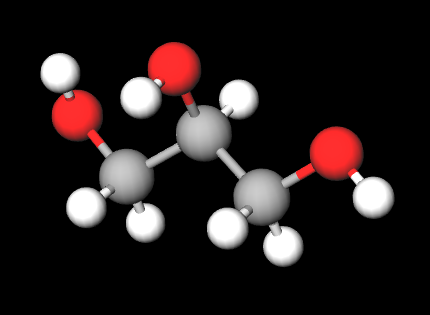 |
- Molecular Formula : C3H8O3 CH2OH-CHOH-CH2OH
- Linear Formula : HOCH2CH(OH)CH2OH
- PMolecular Weight : 92.094 g/mol
- Exact Mass 92.047340
- CAS : 56-81-5 8043-29-6 25618-55-7 8013-25-0
- UNII PDC6A3C0OX
- EC Number: 200-289-5
- MDL number: MFCD00004722
- PubChem Substance ID: 24895216
- DSSTox Substance ID DTXSID9020663 DTXSID4020662
- IUPAC propane-1,2,3-triol
- InChI=1S/C3H8O3/c4-1-3(6)2-5/h3-6H,1-2H2
- InChl Key PEDCQBHIVMGVHV-UHFFFAOYSA-N
- SMILES C(C(CO)O)O
- ChEBI 17754
- ICSC 0624
- NSC 759633 9230
- RTECS MA8050000
- NCI C29077
Synonyms:
- Glycerin
- Glycerine
- Glycyl alcohol
- 1,2,3-trihydroxypropane
- 1,2,3-Propanetriol
- Polyglycerine
| Evaluate |

