Hickory Smoke Flavor is a flavor obtained from the smoke of burning walnut wood and is used to impart a smoky flavor to food products.
The name describes the structure of the ingredient:
- Natural refers to flavors that come from real ingredients. In the context of "Natural Hickory Smoke Flavor", it indicates a flavor that has been derived from the actual smoke produced by burning hickory wood.
- Hickory refers to a type of wood that is often used for smoking foods, particularly meats, to impart them with a distinctive smoky flavor.
- Smoke Flavor indicates that the flavor has been derived from the smoking process, where food is exposed to smoke to gain a smoky flavor.
Description of raw materials used in production.
- The primary raw material for the production of natural Hickory smoke flavor is Hickory wood. This wood is burned under controlled conditions to produce smoke.
Step-by-step summary of its industrial production process.
- Hickory wood is burned under controlled conditions.
- The smoke produced is captured and cooled by passing it through a condensation system.
- This condensate is then purified to remove any unwanted compounds.
- The resulting product can be further concentrated, and sometimes dried, to produce a powdered form.
Form and color.
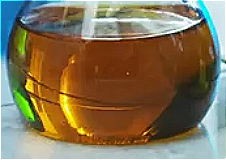
Natural Hickory Smoke Flavor may appear as an amber-colored liquid or as a light brown powder.
Commercial applications.
It's used in a variety of food products to impart a smoky flavor, such as meats, sauces, snacks, and other prepared products.
Safety
Smoked flavoring products have increased in recent decades as barbecue use has expanded and are regulated in Europe by Regulation (EC) No. 1321/2013 (1). In this study, ten commonly used liquid smoke flavorings were analyzed and used two different solvents to investigate whether polar or nonpolar substances have the ability to cause toxic effects. The results indicated that the liquid smoke flavorings contain compounds with hazardous properties (2).
References_____________________________________________________________________
(1) https://eur-lex.europa.eu/legal-content/IT/TXT/PDF/?uri=CELEX:32013R1321
(2) Selin E, Mandava G, Vilcu AL, Oskarsson A, Lundqvist J. An in vitro-based hazard assessment of liquid smoke food flavourings. Arch Toxicol. 2022 Feb;96(2):601-611. doi: 10.1007/s00204-021-03190-1. Epub 2021 Nov 20. PMID: 34799742; PMCID: PMC8837572.
Abstract. Liquid smoke products are widely used as a food additive to create a desired smoke flavour. These products may contain hazardous chemicals generated during the wood-burning process. However, the toxic effects of these types of hazardous chemicals constituting in the commercially available products are largely unknown. Therefore, a test battery of cell-based in vitro methods, covering different modes of actions of high relevance to human health, was applied to study liquid smoke products. Ten liquid smoke flavourings were tested as non-extracted and extracted. To assess the potential drivers of toxicity, we used two different solvents. The battery of in vitro methods covered estrogenicity, androgenicity, oxidative stress, aryl hydrocarbon receptor activity and genotoxicity. The non-extracted samples were tested at concentrations 0.002 to 1 μL liquid smoke flavouring/mL culture medium, while extracted samples were tested from 0.003 to 200 μL/mL. Genotoxicity was observed for nearly all non-extracted and all hexane-extracted samples, in which the former had higher potency. No genotoxicity was observed for ethyl acetate-extracted samples. Oxidative stress was activated by almost all extracted and non-extracted samples, while approximately half of the samples had aryl hydrocarbon receptor and estrogen receptor activities. This study used effect-based methods to evaluate the complex mixtures of liquid smoke flavourings. The increased bioactivities seen upon extractions indicate that non-polar chemicals are driving the genotoxicity, while polar substances are increasing oxidative stress and cytotoxic responses. The differences in responses indicate that non-extracted products contain chemicals that are able to antagonize toxic effects, and upon extraction, the protective substances are lost. © 2021. The Author(s).




