Lactase refers to the specific enzyme that hydrolyzes lactose, a sugar found in milk, into glucose and galactose. It is an enzyme produced in the small intestine of many mammals, including humans. However, production may decrease with age.
Its main function is to break down lactose, thus facilitating its digestion.It is often used as a supplement for lactose-intolerant people to help them digest milk products (1).
Description of raw materials used in production.
- Lactase is primarily produced from microorganisms, such as certain fungi and bacteria, that naturally produce this enzyme. Common strains used include Aspergillus niger and Kluyveromyces lactis.
Step-by-step summary of industrial chemical synthesis process.
- Cultures of lactase-producing microorganisms are grown in bioreactors under optimal conditions.
- Once an adequate cell density is reached, enzyme production is induced.
- The enzyme is then extracted from the cells or the culture medium.
- The lactase is purified through various techniques like chromatography or filtration.
- The purified enzyme is then formulated into liquid solutions, tablets, or powder for sale.
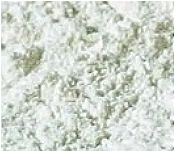
Pure lactase is a white or nearly white powder. However, in commercial formulations, it can appear in various forms, including liquid solutions, tablets, or powders.
Commercial Applications
Food Products. Lactase is added to many dairy products to produce "lactose-free" versions suitable for individuals with lactose intolerance (2).
Dietary Supplements. Lactase supplements are available for people with lactose intolerance. These supplements aid in breaking down lactose, preventing symptoms like bloating, gas, and diarrhea.
Medical Applications
Gastroenterology. Lactase may be administered to hospital patients with lactose intolerance to help them better digest lactose found in certain foods and medications (3).
Other Applications
Biomedical Research. Lactase is used in research to study lactose intolerance and to develop new treatments and dietary strategies for individuals with this condition.
References_____________________________________________________________________
(1) Stourman N, Moore J. Analysis of lactase in lactose intolerance supplements. Biochem Mol Biol Educ. 2018 Nov;46(6):652-662. doi: 10.1002/bmb.21185.
Abstyract. Lactase is the enzyme responsible for the digestion of the disaccharide lactose, and deficiency in this enzyme causes the prevalent medical condition lactose intolerance. Management of lactose intolerance can be achieved through the administration of lactase supplements. Lactase is an appropriate platform for advanced enzymatic study because its medical application is a motivator for student learning. The following is an upper-level biochemistry laboratory sequence that integrates student inquiry and exposure to advanced laboratory techniques. Students investigate three different lactase supplements through experimentation that includes the Bradford assay, SDS-PAGE, continuous and discontinuous kinetic assays, and zymography. Upon completion of this project, students compile their results and conclusions in a scientifically formatted paper comparing supplement protein content and activity. This safe and inexpensive laboratory project enriches student understanding of key biochemical concepts while mirroring work performed in a realistic research setting. © 2018 International Union of Biochemistry and Molecular Biology, 46(6):652-662, 2018.
(2) Leis R, de Castro MJ, de Lamas C, Picáns R, Couce ML. Effects of Prebiotic and Probiotic Supplementation on Lactase Deficiency and Lactose Intolerance: A Systematic Review of Controlled Trials. Nutrients. 2020 May 20;12(5):1487. doi: 10.3390/nu12051487.
Abstract. Lactose intolerance (LI) is characterized by the presence of primarily gastrointestinal clinical signs resulting from colonic fermentation of lactose, the absorption of which is impaired due to a deficiency in the lactase enzyme. These clinical signs can be modified by several factors, including lactose dose, residual lactase expression, concurrent ingestion of other dietary components, gut-transit time, and enteric microbiome composition. In many of individuals with lactose malabsorption, clinical signs may be absent after consumption of normal amounts of milk or, in particular, dairy products (yogurt and cheese), which contain lactose partially digested by live bacteria. The intestinal microbiota can be modulated by biotic supplementation, which may alleviate the signs and symptoms of LI. This systematic review summarizes the available evidence on the influence of prebiotics and probiotics on lactase deficiency and LI. The literature search was conducted using the MEDLINE (via PUBMED) and SCOPUS databases following Preferred Reporting Items for Systematic Reviews and Meta-Analyses (PRISMA) guidelines, and included randomized controlled trials. For each study selected, the risk of bias was assessed following the Cochrane Collaboration methodology. Our findings showed varying degrees of efficacy but an overall positive relationship between probiotics and LI in relation to specific strains and concentrations. Limitations regarding the wide heterogeneity between the studies included in this review should be taken into account. Only one study examined the benefits of prebiotic supplementation and LI. So further clinical trials are needed in order to gather more evidence.
(3) Deng Y, Misselwitz B, Dai N, Fox M. Lactose Intolerance in Adults: Biological Mechanism and Dietary Management. Nutrients. 2015 Sep 18;7(9):8020-35. doi: 10.3390/nu7095380.
Abstract. Lactose intolerance related to primary or secondary lactase deficiency is characterized by abdominal pain and distension, borborygmi, flatus, and diarrhea induced by lactose in dairy products. The biological mechanism and lactose malabsorption is established and several investigations are available, including genetic, endoscopic and physiological tests. Lactose intolerance depends not only on the expression of lactase but also on the dose of lactose, intestinal flora, gastrointestinal motility, small intestinal bacterial overgrowth and sensitivity of the gastrointestinal tract to the generation of gas and other fermentation products of lactose digestion. Treatment of lactose intolerance can include lactose-reduced diet and enzyme replacement. This is effective if symptoms are only related to dairy products; however, lactose intolerance can be part of a wider intolerance to variably absorbed, fermentable oligo-, di-, monosaccharides and polyols (FODMAPs). This is present in at least half of patients with irritable bowel syndrome (IBS) and this group requires not only restriction of lactose intake but also a low FODMAP diet to improve gastrointestinal complaints. The long-term effects of a dairy-free, low FODMAPs diet on nutritional health and the fecal microbiome are not well defined. This review summarizes recent advances in our understanding of the genetic basis, biological mechanism, diagnosis and dietary management of lactose intolerance.




