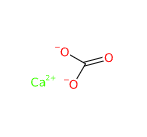
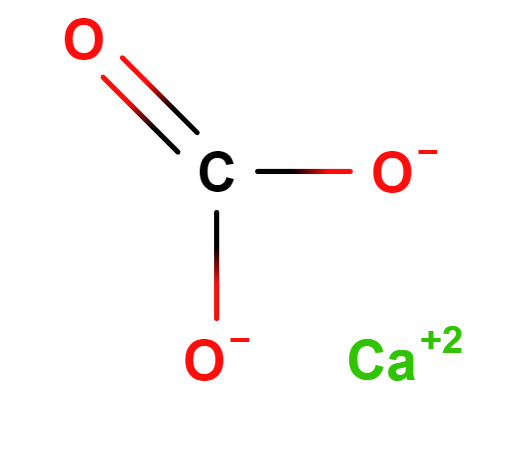
Calcite or Calcium carbonate, an inorganic compound, is one of the most common minerals found in rock agglomerates throughout the world and consists mainly of: calcium, carbon, oxygen. It is the primary component of eggshells, snails, pearls and marine organisms. Calcium carbonate is the active ingredient in agricultural lime and is created when calcium ions in hard water react with carbonate ions to create limescale.
The name "calcium carbonate" is derived from its chemical composition: one calcium ion combined with one carbonate ion.
Calcium carbonate is not typically synthesized in a laboratory or industrial setting because it is readily available in nature. However, it can be synthesized by mixing solutions of calcium ions and carbonate ions. The resulting precipitate is calcium carbonate.
Here is a simple example of how this can be done:
- Preparation of solutions. A solution of calcium chloride (CaCl2) and another solution of sodium carbonate (Na2CO3). These are the sources of the calcium ions and carbonate ions, respectively.
- Mixing of solutions. A sodium carbonate solution is added to the calcium chloride solution while the compounds are mixed.
- Formation of precipitate. As the solutions mix, a precipitate of calcium carbonate forms. The reaction is: CaCl2 + Na2CO3 -> CaCO3 + 2NaCl.
- Isolation of product. The calcium carbonate precipitate can be collected by filtration, then washed and dried to obtain the pure compound.
It appears in the form of a white powder insoluble in water colorless, odorless and tasteless.

What it is used for and where
Food
Ingredient included in the list of European food additives as dye E170.
Constructions (cement, plasters, asphalt).
The use of calcium carbonate precipitate protect concrete surface against the ingress of harmful external agents (1).
Medical
Antacid. Calcium carbonate is widely used as an antacid. It helps neutralize acid in the stomach, providing relief from indigestion symptoms.
Calcium Supply. Calcium carbonate is a common source of calcium in calcium supplement formulations. Calcium is an essential nutrient for bone and teeth health.
Binder. Calcium carbonate can be used as a binder in tablets. It helps hold the ingredients in the tablet together.
Diluent. Calcium carbonate can be used as a diluent in tablets. It increases the volume of the tablet, making it easier to handle and swallow.
Coloring Agent. Calcium carbonate is sometimes used as a white coloring agent in tablets.
The synthesised biobased Calcium carbonate nanocrystals had demonstrated to be an effective carrier for delivery of anticancer drug doxorubicin (DOX). Findings suggest that Calcium carbonate nanocrystals hold tremendous promise in the areas of controlled drug delivery and targeted cancer therapy (2).
Dentin hypersensitivity reduction in adults with a clinical diagnosis of dentin hypersensitivity (3).and indicated as a treatment in cases of calcium deficiency in elderly subjects and in combination with therapies for osteoporosis (4). Calcium carbonate is able to increase calcium levels and neutralise plaque acids (5).
Cosmetics
Skin conditioning agent. It is the mainstay of topical skin treatment as it has the function of restoring, increasing or improving skin tolerance to external factors, including melanocyte tolerance. The most important function of the conditioning agent is to prevent skin dehydration, but the subject is rather complex and involves emollients and humectants that can be added in the formulation.
Safety. It is an ingredient that has no particular health warnings and can therefore be used in all cosmetic products.
and is widely used by industries:
- Adhesives, sealants
- Rugs
- Environment (process of desulfurization of combustion gases)
- Fertilizers
- Food and pharmaceutical
- Glass and ceramics
- Products for the home
- Paints and surface coatings
- Paper
- Plastics and composites
- Rubber and elastomers
For more information:
Calcium carbonate studies
Typical commercial product characteristics Calcium carbonate
| Appearance | White powder |
| pH | 9.0-10.5 |
Boiling Point
| 333.6ºC at 760mmHg |
Melting Point
| 825°C |
Flash Point
| 197ºC |
| Density | 2.93 g/mL at 25 °C(lit.) |
| Refraction Index | 1.6583 |
| PSA | 63.19000 |
HCL insoluble content
| ≤0.20% |
Volatile content below 105℃
| ≤1.00 |
Free Alkali
| ≤0.10% |
Whiteness degree
| ≥90% |
Oil Absorption
| 50-60ml/g |
Sedimentation volume
| ≥2.2-2.8 ml/g |
| Fe | ≤0.12% |
| Mn | ≤0.01% |
Average Particle
| 0.5-15um |
| Mesh | 400/800/1000/1250/1500 |
| Safety | 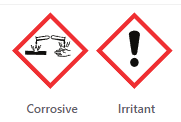 |
- Molecular Formula CCaO3 CaCO3
- Molecular Weight 100.086 g/mol
- Exact Mass 101.962982
- CAS 471-34-1
- UNII H0G9379FGK
- EC Number 207-439-9
- DSSTox Substance ID DTXSID3036238 DTXSID9050486 DTXSID90109374 DTXSID80163829
- IUPAC calcium;carbonate
- InChI=1S/CH2O3.Ca/c2-1(3)4;/h(H2,2,3,4);/q;+2/p-2
- InChl Key VTYYLEPIZMXCLO-UHFFFAOYSA-L
- SMILES C(=O)([O-])[O-].[Ca+2]
- MDL number MFCD00010906
- PubChem Substance ID 329749202
- ChEBI 3311
- ICSC 1193
- RXCUI 1897
- RTECS EV9580000 FF9335000
- Beilstein 8008338
- NCI C332
Synonyms :
- CI 77220
- Calcite (Ca(Co3))
- Aragonite
- Cupric carbonate
- C50 (carbonate)
- Carbonic acid, calcium salt (1:1)
References____________________________________________________________________
(1) Zhang Z, Weng Y, Ding Y, Qian S. Use of Genetically Modified Bacteria to Repair Cracks in Concrete. Materials (Basel). 2019 Nov 26;12(23):3912. doi: 10.3390/ma12233912.
Abstract. In this paper, we studied the crack-repair by spraying bacteria-based liquid around the cracks in concrete. To enhance the repair efficiency and speed up the repair process, the transposon mutagenesis method was employed to modify the genes of Bacillus halodurans and create a mutant bacterial strain with higher efficiency of calcium carbonate productivity by catalyzing the combination of carbonate and calcium ion. The efficiency of crack-repairing in concrete by spraying two kinds of bacterial liquid was evaluated via image analysis, X-ray computed tomography (X-CT) scanning technology and the sorptivity test. The results show that the crack-repair efficiency was enhanced very evidently by spraying genetically modified bacterial-liquid as no microbiologically induced calcite precipitation (MICP) was found within the cracks for concrete samples sprayed using wild type bacterial-liquid. In addition, the crack-repair process was also shortened significantly in the case of genetically modified bacteria.
(2) Shafiu Kamba A, Ismail M, Tengku Ibrahim TA, Zakaria ZA. A pH-sensitive, biobased calcium carbonate aragonite nanocrystal as a novel anticancer delivery system. Biomed Res Int. 2013;2013:587451. doi: 10.1155/2013/587451.
Abstract. The synthesised biobased calcium carbonate nanocrystals had demonstrated to be an effective carrier for delivery of anticancer drug doxorubicin (DOX). The use of these nanocrystals displayed high levels of selectivity and specificity in achieving effective cancer cell death without nonspecific toxicity. These results confirmed that DOX was intercalated into calcium carbonate nanocrystals at high loading and encapsulation efficiency (4.8 and 96%, resp.). The CaCO₃/DOX nanocrystals are relatively stable at neutral pH (7.4), resulting in slow release, but the nanocrystals progressively dissociated in acidic pH (4.8) regimes, triggering faster release of DOX. The CaCO₃/DOX nanocrystals exhibited high uptake by MDA MB231 breast cancer cells and a promising potential delivery of DOX to target cells. In vitro chemosensitivity using MTT, modified neutral red/trypan blue assay, and LDH on MDA MB231 breast cancer cells revealed that CaCO₃/DOX nanocrystals are more sensitive and gave a greater reduction in cell growth than free DOX. Our findings suggest that CaCO₃ nanocrystals hold tremendous promise in the areas of controlled drug delivery and targeted cancer therapy.
(3) Collins JR, Richardson D, Sotero K, Mateo LR, Mauriz I. Beneficial effects of an arginine-calcium carbonate desensitizing paste for treatment of dentin hypersensitivity. Am J Dent. 2013 Apr;26(2):63-7.
Abstract. Purpose: To evaluate the clinical efficacy of a single professional application of a Pro-Relief desensitizing fluoride-free paste containing 8% arginine and calcium as compared to a fluoride-free prophylaxis paste on dentin hypersensitivity reduction in adults with a clinical diagnosis of dentin hypersensitivity. Methods: This single-center, parallel group, double-blind and randomized clinical study conducted in Santo Domingo, Dominican Republic included 50 (25 per group) adult male and female subjects. Each study subject had two teeth hypersensitive to air blast stimuli when applied directly at its cervical surface (gingivo-facial 1/3). An air blast hypersensitivity score equal or greater to 2 (Schiff Cold Air Sensitivity Scale) was randomly assigned to one of two treatment groups (1) Pro-Relief in-office desensitizing fluoride-free paste containing 8% arginine and calcium carbonate (Test Paste group), and (2) a fluoride-free prophylaxis paste (Control Paste group). Prior to their baseline examination, subjects were instructed to return to the clinical facility having refrained from eating and drinking for 2 hours. An assessment of air blast hypersensitivity and examinations of oral soft and hard tissue were performed at the baseline. Subjects were provided a professional in-office prophylaxis with their assigned prophylaxis paste. A post hypersensitivity examination was performed immediately after the oral prophylaxis. Results: All subjects completed the study. At the post-hypersensitivity examination, subjects assigned to the Test Paste group and Control Paste group both exhibited statistically significant (P = 0000) reductions (compared to baseline), to air blast hypersensitivity of 44.7% and 25.6%, respectively. At the post-hypersensitivity examination, subjects in the Test Paste group exhibited a statistically significant (P = 0.005) reduction of 24.4% in mean air blast hypersensitivity scores as compared to the Control Paste group.
(4) Wang J, Tao S, Jin X, Song Y, Zhou W, Lou H, Zhao R, Wang C, Hu F, Yuan H. Calcium Supplement by Tetracycline guided amorphous Calcium Carbonate potentiates Osteoblast promotion for Synergetic Osteoporosis Therapy. Theranostics. 2020 Jul 9;10(19):8591-8605. doi: 10.7150/thno.45142.
(5) Lynch RJ, ten Cate JM. The anti-caries efficacy of calcium carbonate-based fluoride toothpastes. Int Dent J. 2005;55(3 Suppl 1):175-8. doi: 10.1111/j.1875-595x.2005.tb00055.x.
Abstract. Aim: To summarise clinical support for the anti-caries efficacy of fluoride toothpastes containing sodium monofluorophosphate (SMFP) and to discuss the possible means by which the abrasive particles in calcium carbonate-based SMFP toothpastes might complement and/or enhance fluoride efficacy. Background: The anti-caries efficacy of fluoride has been proven beyond any reasonable doubt, and the efficacy of SMFP, when incorporated into a variety of compatible toothpaste formulations, has been established in numerous clinical trials. Calcium carbonate-based toothpastes may also influence caries by effecting an increase in plaque calcium levels; an inverse relationship between plaque calcium and caries is well-established. It has also been reported that plaque fluoride levels are dependent on plaque calcium levels. Hence elevated plaque calcium resulting from the use of calcium carbonate-based toothpastes has the potential to elevate plaque fluoride, itself linked to reduced caries experience. It has been shown that calcium carbonate particles are retained by plaque and this may also influence caries by neutralising harmful plaque acids and concurrently liberating calcium. Conclusion: Fluoride delivered from calcium carbonate-based SMFP toothpastes is an effective means of reducing caries. Further, calcium carbonate may confer additional benefits through elevation of oral calcium levels and neutralisation of plaque-acids.