

|

|
| App | Log in |
|
|
|
| App | Log in |

 | "Descrizione" by Handy23 (4244 pt) | 2026-Feb-12 16:35 |
Review Consensus: 10 Rating: 10 Number of users: 1
| Evaluation | N. Experts | Evaluation | N. Experts |
|---|---|---|---|
| 1 | 6 | ||
| 2 | 7 | ||
| 3 | 8 | ||
| 4 | 9 | ||
| 5 | 10 |
E170: proprietà, usi, pro, contro, sicurezza
E170 o Carbonato di calcio composto inorganico, è uno dei minerali più comuni che si trova in agglomerati rocciosi in tutto il mondo ed è formato principalmente da : calcio, carbonio, ossigeno. E' il componente primario di gusci d'uovo, di lumache, perle ed organismi marini. Il carbonato di calcio è l'ingrediente attivo nella calce agricola e si forma quando gli ioni di calcio nell'acqua dura reagiscono con gli ioni di carbonato per creare incrostazioni di calcare.
Il nome "carbonato di calcio" deriva dalla sua composizione chimica: un ion calcio (Ca2+) combinato con un ion carbonato (CO3 2-).
Il carbonato di calcio non viene tipicamente sintetizzato in un laboratorio o in un ambiente industriale perché è facilmente disponibile in natura. Tuttavia, può essere sintetizzato mescolando soluzioni di ioni di calcio e ioni di carbonato. Il precipitato risultante è il carbonato di calcio.
Ecco un semplice esempio di come può essere fatto:
- Preparazione delle soluzioni. Una soluzione di cloruro di calcio (CaCl2) e una soluzione di carbonato di sodio (Na2CO3). Questi sono le fonti degli ioni di calcio e degli ioni di carbonato, rispettivamente.
- Miscelazione delle soluzioni. Viene aggiunta una soluzione di carbonato di sodio alla soluzione di cloruro di calcio mentre i composti vengono mescolati.
- Formazione del precipitato. Mentre le soluzioni si mescolano, si forma un precipitato di carbonato di calcio. La reazione è: CaCl2 + Na2CO3 -> CaCO3 + 2NaCl.
- Isolamento del prodotto. Il precipitato di carbonato di calcio può essere raccolto per filtrazione, quindi lavato e asciugato per ottenere il composto puro.
Si presenta in forma di polvere bianca insolubile in acqua incolore, inodore e insapore.

A cosa serve e dove si usa
Alimentazione
Ingrediente inserito nella lista degli additivi alimentari europei come colorante E170.
Costruzioni (cemento, intonaci, asfalto).
L'uso del precipitato di carbonato di calcio protegge la superficie del calcestruzzo da agenti esterni dannosi. Oppure o per riparare le fessurazioni nel calcestruzzo invecchiato (1).
Medicina.
I nanocristalli di carbonato di calcio biobased sintetizzati hanno dimostrato di essere un vettore efficace per il rilascio di doxorubicina farmaco antitumorale (DOX). I risultati suggeriscono che i nanocristalli di carbonato di calcio mantengono un'enorme promessa nelle aree di somministrazione controllata di farmaci e terapia mirata contro il cancro (2).
Riduzione della ipersensibilità dentinale in adulti con una diagnosi clinica di ipersensibilità dentinale (3) e indicato come trattamento nei casi di carenza di calcio nei soggetti anziani e in associazione alle terapie per l'osteoporosi (4). Il carbonato di calcio è in grado di aumentare i livelli di calcio e neutralizzare gli acidi della placca (5).
Cosmetica
Colorante. Ingrediente CI 77220 che ha la funzione primaria di colorare la soluzione in cui è inserito in modo temporaneo, semi-permanente o permanente, sia da solo che in presenza dei componenti complementari aggiunti per la colorazione.
Sicurezza. E' un ingrediente che non ha particolari avvertenze riguardanti il profilo salutare per cui può essere utilizzato in tutti i prodotti cosmetici.
e nei seguenti settori industriali:
- Adesivi, sigillanti
- Tappeti
- Ambiente (processi di desolforazione dei gas di combustione)
- Concimi
- Alimentare e farmaceutico
- Vetro e ceramica
- Prodotti per la casa
- Vernici e rivestimenti di superficie
- Carta
- Materie plastiche e materiali compositi
- Gomma ed elastomeri
- Cosmetici
Per approfondire: Carbonato di calcio studi
Caratteristiche tipiche del prodotto commerciale Calcium carbonate
| Appearance | White powder |
| pH | 9.0-10.5 |
| Boiling Point | 333.6ºC at 760mmHg |
| Melting Point | 825°C |
| Flash Point | 197ºC |
| Density | 2.93 g/mL at 25 °C(lit.) |
| Refraction Index | 1.6583 |
| PSA | 63.19000 |
| HCL insoluble content | ≤0.20% |
| Volatile content below 105℃ | ≤1.00 |
| Free Alkali | ≤0.10% |
| Whiteness degree | ≥90% |
| Oil Absorption | 50-60ml/g |
| Sedimentation volume | ≥2.2-2.8 ml/g |
| Fe | ≤0.12% |
| Mn | ≤0.01% |
| Average Particle | 0.5-15um |
| Mesh | 400/800/1000/1250/1500 |
| Safety | 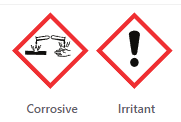 |
 |  |
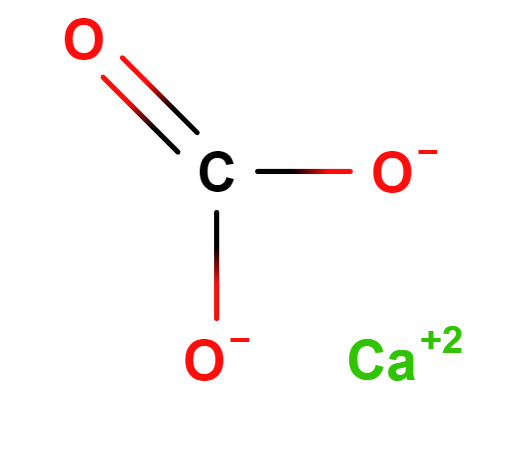 | 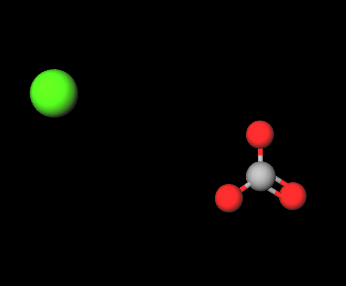 |
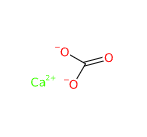
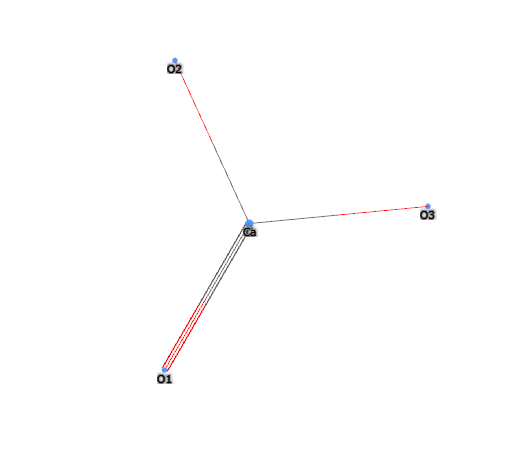
- Formula molecolare CCaO3 CaCO3
- Peso molecolare 100.086 g/mol
- Massa esatta 101.962982
- CAS 471-34-1
- UNII H0G9379FGK
- EC Number 207-439-9
- DSSTox Substance ID DTXSID3036238 DTXSID9050486 DTXSID90109374 DTXSID80163829
- IUPAC calcium;carbonate
- InChI=1S/CH2O3.Ca/c2-1(3)4;/h(H2,2,3,4);/q;+2/p-2
- InChl Key VTYYLEPIZMXCLO-UHFFFAOYSA-L
- SMILES C(=O)([O-])[O-].[Ca+2]
- MDL number MFCD00010906
- PubChem Substance ID 329749202
- ChEBI 3311
- ICSC 1193
- RXCUI 1897
- RTECS EV9580000 FF9335000
- Beilstein 8008338
- NCI C332
Sinonimi :
- CI 77220
- Cupric carbonate
- Aragonite
- Calcite (Ca(Co3))
- C50 (carbonate)
- Carbonic acid, calcium salt (1:1)
Bibliografia_____________________________________________________________________
(1) Zhang Z, Weng Y, Ding Y, Qian S. Use of Genetically Modified Bacteria to Repair Cracks in Concrete. Materials (Basel). 2019 Nov 26;12(23):3912. doi: 10.3390/ma12233912.
Abstract. In this paper, we studied the crack-repair by spraying bacteria-based liquid around the cracks in concrete. To enhance the repair efficiency and speed up the repair process, the transposon mutagenesis method was employed to modify the genes of Bacillus halodurans and create a mutant bacterial strain with higher efficiency of calcium carbonate productivity by catalyzing the combination of carbonate and calcium ion. The efficiency of crack-repairing in concrete by spraying two kinds of bacterial liquid was evaluated via image analysis, X-ray computed tomography (X-CT) scanning technology and the sorptivity test. The results show that the crack-repair efficiency was enhanced very evidently by spraying genetically modified bacterial-liquid as no microbiologically induced calcite precipitation (MICP) was found within the cracks for concrete samples sprayed using wild type bacterial-liquid. In addition, the crack-repair process was also shortened significantly in the case of genetically modified bacteria.
(2) Shafiu Kamba A, Ismail M, Tengku Ibrahim TA, Zakaria ZA. A pH-sensitive, biobased calcium carbonate aragonite nanocrystal as a novel anticancer delivery system. Biomed Res Int. 2013;2013:587451. doi: 10.1155/2013/587451.
Abstract. The synthesised biobased calcium carbonate nanocrystals had demonstrated to be an effective carrier for delivery of anticancer drug doxorubicin (DOX). The use of these nanocrystals displayed high levels of selectivity and specificity in achieving effective cancer cell death without nonspecific toxicity. These results confirmed that DOX was intercalated into calcium carbonate nanocrystals at high loading and encapsulation efficiency (4.8 and 96%, resp.). The CaCO₃/DOX nanocrystals are relatively stable at neutral pH (7.4), resulting in slow release, but the nanocrystals progressively dissociated in acidic pH (4.8) regimes, triggering faster release of DOX. The CaCO₃/DOX nanocrystals exhibited high uptake by MDA MB231 breast cancer cells and a promising potential delivery of DOX to target cells. In vitro chemosensitivity using MTT, modified neutral red/trypan blue assay, and LDH on MDA MB231 breast cancer cells revealed that CaCO₃/DOX nanocrystals are more sensitive and gave a greater reduction in cell growth than free DOX. Our findings suggest that CaCO₃ nanocrystals hold tremendous promise in the areas of controlled drug delivery and targeted cancer therapy.
(3) Collins JR, Richardson D, Sotero K, Mateo LR, Mauriz I. Beneficial effects of an arginine-calcium carbonate desensitizing paste for treatment of dentin hypersensitivity. Am J Dent. 2013 Apr;26(2):63-7.
Abstract. Purpose: To evaluate the clinical efficacy of a single professional application of a Pro-Relief desensitizing fluoride-free paste containing 8% arginine and calcium as compared to a fluoride-free prophylaxis paste on dentin hypersensitivity reduction in adults with a clinical diagnosis of dentin hypersensitivity. Methods: This single-center, parallel group, double-blind and randomized clinical study conducted in Santo Domingo, Dominican Republic included 50 (25 per group) adult male and female subjects. Each study subject had two teeth hypersensitive to air blast stimuli when applied directly at its cervical surface (gingivo-facial 1/3). An air blast hypersensitivity score equal or greater to 2 (Schiff Cold Air Sensitivity Scale) was randomly assigned to one of two treatment groups (1) Pro-Relief in-office desensitizing fluoride-free paste containing 8% arginine and calcium carbonate (Test Paste group), and (2) a fluoride-free prophylaxis paste (Control Paste group). Prior to their baseline examination, subjects were instructed to return to the clinical facility having refrained from eating and drinking for 2 hours. An assessment of air blast hypersensitivity and examinations of oral soft and hard tissue were performed at the baseline. Subjects were provided a professional in-office prophylaxis with their assigned prophylaxis paste. A post hypersensitivity examination was performed immediately after the oral prophylaxis. Results: All subjects completed the study. At the post-hypersensitivity examination, subjects assigned to the Test Paste group and Control Paste group both exhibited statistically significant (P = 0000) reductions (compared to baseline), to air blast hypersensitivity of 44.7% and 25.6%, respectively. At the post-hypersensitivity examination, subjects in the Test Paste group exhibited a statistically significant (P = 0.005) reduction of 24.4% in mean air blast hypersensitivity scores as compared to the Control Paste group.
(4) Wang J, Tao S, Jin X, Song Y, Zhou W, Lou H, Zhao R, Wang C, Hu F, Yuan H. Calcium Supplement by Tetracycline guided amorphous Calcium Carbonate potentiates Osteoblast promotion for Synergetic Osteoporosis Therapy. Theranostics. 2020 Jul 9;10(19):8591-8605. doi: 10.7150/thno.45142.
(5) Lynch RJ, ten Cate JM. The anti-caries efficacy of calcium carbonate-based fluoride toothpastes. Int Dent J. 2005;55(3 Suppl 1):175-8. doi: 10.1111/j.1875-595x.2005.tb00055.x.
Abstract. Aim: To summarise clinical support for the anti-caries efficacy of fluoride toothpastes containing sodium monofluorophosphate (SMFP) and to discuss the possible means by which the abrasive particles in calcium carbonate-based SMFP toothpastes might complement and/or enhance fluoride efficacy. Background: The anti-caries efficacy of fluoride has been proven beyond any reasonable doubt, and the efficacy of SMFP, when incorporated into a variety of compatible toothpaste formulations, has been established in numerous clinical trials. Calcium carbonate-based toothpastes may also influence caries by effecting an increase in plaque calcium levels; an inverse relationship between plaque calcium and caries is well-established. It has also been reported that plaque fluoride levels are dependent on plaque calcium levels. Hence elevated plaque calcium resulting from the use of calcium carbonate-based toothpastes has the potential to elevate plaque fluoride, itself linked to reduced caries experience. It has been shown that calcium carbonate particles are retained by plaque and this may also influence caries by neutralising harmful plaque acids and concurrently liberating calcium. Conclusion: Fluoride delivered from calcium carbonate-based SMFP toothpastes is an effective means of reducing caries. Further, calcium carbonate may confer additional benefits through elevation of oral calcium levels and neutralisation of plaque-acids.

