



Zinc sulfate: properties, uses, pros, cons, safety
Zinc Sulfate – inorganic salt of zinc and sulfuric acid, available in multiple forms (anhydrous and hydrates), used in cosmetics mainly for astringent profiles and to support oral hygiene
Synonyms: zinc sulfate, zinc sulphate, white vitriol (historical usage), goslarite (heptahydrate mineral form)
INCI / Functions: astringent, antimicrobial, antiplague, oral care
Definition
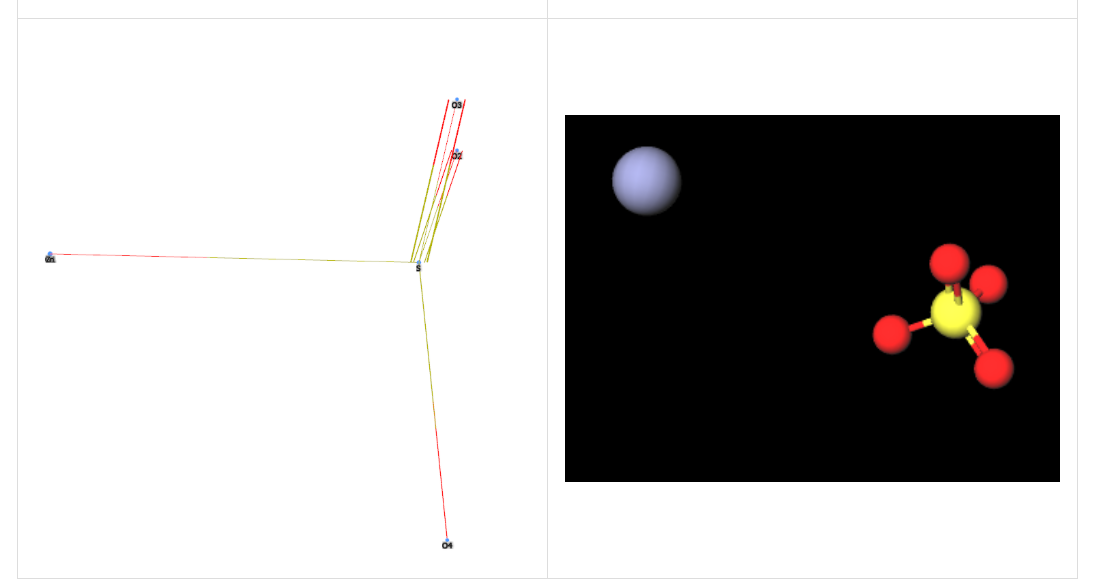
Zinc sulfate is an inorganic salt with the base formula ZnSO₄. Commercially it is frequently encountered as the monohydrate (ZnSO₄·H₂O) or the heptahydrate (ZnSO₄·7H₂O), in addition to the anhydrous form: these variants differ in molecular weight, water of crystallization, and partially in physical behavior (flowability, hygroscopicity), but they share the same ionic chemistry in solution (release of Zn²⁺ and sulfate).
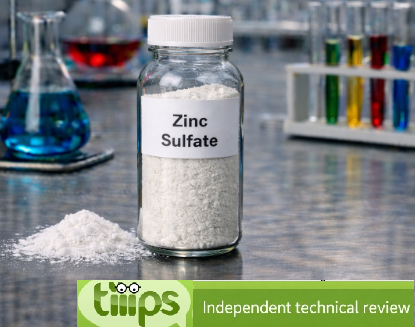
In water, the salt is typically highly soluble and produces solutions that can be acidifying (pH depends on concentration and grade). In cosmetic formulation, its interest derives from the combination of:
contribution to a perceived astringent feel (useful in selected bases);
functional support in oral care (e.g., plaque control and oral deodorization, depending on system design);
potential antimicrobial contribution at the system level, which should always be interpreted in the context of the finished product (not automatically as a preservative, unless supported by specific dossiers and claims).
Because multiple hydrated forms exist with different CAS numbers, anchoring qualification to CAS/EC, assay, and calculation basis (anhydrous vs hydrate) is essential to avoid dosing and documentation errors.
Main uses
Cosmetics.
In cosmetics, Zinc Sulfate is used mainly where an astringent contribution and/or functional support in oral care is desired. In oral hygiene formulations (toothpastes, mouthwashes, gels), zinc is often selected to support plaque control and oral deodorization (reduction of malodor-related compounds), with efficacy tied to the overall system (surfactants, humectants, pH, polymers, flavors) and to the zinc form selected.
It may also appear in certain deodorants and in selected emulsions, where its role is more “sensory/functional” than pharmacological. In all cases, correct management relies on: pH control, compatibility with base components (complexing anions, polymers, surfactants), prevention of instability (haze/precipitates), and comfort evaluation, particularly for products intended for mucosa or sensitive areas.
It is a restricted ingredient as III/24 an item in the Annexes of the European Cosmetics Regulation 1223/2009
Antimicrobial agent. This ingredient is able to suppress or inhibit the growth and replication of a broad spectrum of microorganisms such as bacteria, fungi and viruses by making the stratum corneum temporarily bactericidal and fungicidal.
Antiplaque agent. This ingredient has the property of preventing the onset of caries by fighting the bacteria responsible for acid corrosion of teeth.
Coupling agent. It is an ingredient that plays the role of a 'coupling component' in oxidation colours and reacts with a precursor when an oxidising agent is present.
Oral care agent. This ingredient can be placed in the oral cavity to improve and/or maintain oral hygiene and health, to prevent or improve a disorder of the teeth, gums, mucous membrane.
Medical
Zinc sulphate is often used in medical medicine to counteract the lack of zinc in the human body, as an adjuvant in the treatment of burns, wounds and acne, multiple recalcitrant viral warts, as a low-toxic, well-tolerated alternative to D-penicillamine.
In severe rheumatoid arthritis and psoriasis, its efficacy is questioned by scientific studies (1) and may therefore be considered an effective third-line anti-rheumatic drug, like gold and d-penicillamine (2).
Other uses
Highly soluble fertiliser for treated soils, but if soils are not treated, it can cause up to 40% yield loss (4).
Animal feed.
It is used to increase the concentration of zinc in vegetables.
Safety
Zinc sulfate is well tolerated and adverse effects are mild (3).
Identification data and specifications
| Identifier | Value |
|---|---|
| INCI name | Zinc Sulfate |
| Formula (base) | ZnSO₄ |
| Molecular weight (anhydrous) | 161.44 g/mol (indicative) |
| CAS number (anhydrous) | 7733-02-0 |
| EC/EINECS number | 231-793-3 |
| CAS number (monohydrate, common) | 7446-19-7 |
| CAS number (heptahydrate, common) | 7446-20-0 |
| Typical commercial appearance | white powder/crystals; sometimes pharmacopeial grade for monohydrate |
| Solubility | water-soluble (typically high) |
Chemical-physical properties (indicative)
| Property | Value | Note |
|---|---|---|
| Water solubility | high | facilitates use in aqueous systems |
| Aqueous pH | tends to be acidic | depends on concentration and grade |
| Speciation | Zn²⁺ release | behavior also depends on pH and ligands/complexants in the formula |
| Stability | good as a salt | issues are more often formulation-compatibility driven than chemical degradation |
Functional role and practical mechanism
| Function | What it does in formula | Technical note |
|---|---|---|
| Astringent | contributes to a “tightening” feel | depends on dose, vehicle, and pH |
| Antimicrobial (support) | helps control microbial growth within the system | may not replace a preservative: must be evaluated on finished product |
| Antiplague | functional support in oral care products | efficacy depends on the full system (surfactants, polymers, pH) |
| Oral care | deodorization/oral protection support | often paired with flavors and mild cleansing systems |
Formulation compatibility
Zinc sulfate is an ionic salt, so compatibility is governed by pH, ionic strength, and the presence of species that can complex zinc.
pH as a critical variable. In aqueous formulations, pH affects zinc speciation and the likelihood of haze or clarity shifts, especially if reactive or complexing anions are present.
Interactions with anions and complexants. Phosphates, carbonates, certain anionic polymers, and chelator-rich systems can reduce “free” Zn²⁺ or form less soluble salts. This can be beneficial (reduced irritancy, effect modulation) or detrimental (loss of transparency, reduced perceived oral-care efficacy): define by formulation objective and verify experimentally.
Compatibility with surfactants and polymers. In cleansing bases and toothpastes, salts can change rheology and foam. In thickened systems (carbomers, natural polymers, celluloses), electrolyte load can lower viscosity or alter texture; it is common to retune thickeners and salts.
Stability and packaging. While the salt itself is chemically stable, the finished product can show drift in color/odor if the formula is not balanced or if packaging promotes moisture uptake (powders) or contamination. For oral care, it is also essential to validate flavor stability and avoid metallic aftertaste.
Use guidelines (indicative)
| Application | Typical range | Technical note |
|---|---|---|
| Toothpastes | 0.1–1.0% | antiplague/oral care support; verify taste and compatibility with abrasives/polymers |
| Mouthwashes / oral gels | 0.05–0.5% | pay attention to pH, clarity, and mucosal comfort |
| Deodorants | 0.1–1.0% | astringent/deodorant intent; validate tolerability |
| Selected emulsions/lotions | 0.05–0.5% | control stability and interactions with chelators/polymers |
Quality, grades, and specifications
| QC parameter | What to check |
|---|---|
| Identity | INCI alignment and CAS correspondence of the form (anhydrous/hydrate) |
| Assay | content and calculation basis (as anhydrous ZnSO₄ vs as hydrate) |
| Metals and impurities | limits for Pb, Cd, As, etc., per use destination and grade |
| Moisture/hygroscopicity | flowability, caking, and storage stability |
| Particle size | impacts dissolution and processing |
| Documentation | updated SDS/CoA; Ph. Eur./USP grade where required |
Safety, regulatory, and environment
The safety profile of zinc sulfate is typically dominated by:
irritation (especially ocular and, at higher concentrations, dermal/mucosal);
hazards related to powders (inhalation exposure in workplace settings) and concentrated solutions;
environmental management: zinc ions are relevant for aquatic toxicity and must be properly managed in industrial effluents.
In cosmetics, the correct approach is assessment on the finished product (use scenario, application area, target population), with particular care for oral-care products and products intended for sensitive skin.
In manufacturing, applying GMP (Good manufacturing practice, buone pratiche di fabbricazione) reduces variability, contamination, and specification drift; benefit: improved repeatability and process control. Where preventive risk control is required along the chain, HACCP (Hazard analysis and critical control points, analisi dei rischi e controllo dei punti critici) is a methodological reference; benefit: preventive risk management at critical process and quality points.
Formulation troubleshooting
| Problem | Possible cause | Recommended intervention |
|---|---|---|
| Haze/opalescence | complexation/precipitation with anions (phosphates/carbonates) or off-target pH | retune pH, reduce reactive anions, change addition order, consider a different hydrate form |
| Viscosity drop | thickener electrolyte sensitivity | increase/change thickener, rebalance salts, hot/cold testing |
| Metallic aftertaste (oral care) | high free Zn²⁺ or interaction with flavor | reduce dose, adjust pH, retune flavor/sweetener, consider controlled complexation |
| Perceived irritation | level too high or unsuitable matrix | reduce concentration, optimize pH and humectants, verify mucosal compatibility |
| Instability over time | unsuitable packaging, contamination, pH drift | improve packaging, tighten process hygiene, add compatible buffers |
Conclusion
Zinc sulfate is a versatile inorganic salt used in cosmetics mainly for astringent functions and oral-care support (antiplague/system antimicrobial contribution within the formula context). Formulation success depends primarily on pH management, ionic compatibility (complexants/anions), rheology control, and sensorial validation (taste in oral care). Correct qualification of the form (anhydrous vs hydrate) and purity specifications is decisive for stability, repeatability, and compliance.
Mini-glossary
INCI: standard nomenclature for cosmetic ingredient labeling.
Astringent: sensory tightening effect, dependent on dose and vehicle.
Complex/complexant: chemical interaction that binds Zn²⁺ and changes its availability and behavior in formula.
GMP: Good manufacturing practice; benefit: reduces variability and operational risks.
HACCP: Hazard analysis and critical control points; benefit: strengthens prevention and control at critical points.
Synonyms:
- Zinc sulphate
- Bonazen
- Medizinc
- Optised
- Sulfuric acid, zinc salt (1:1)

