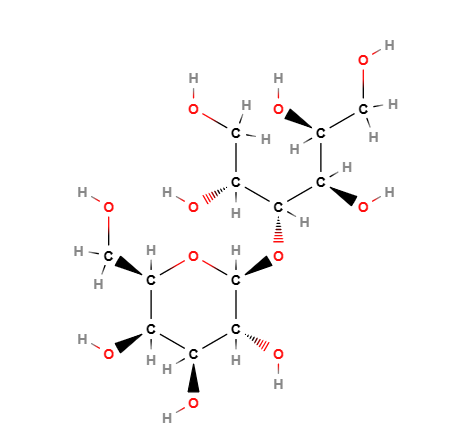
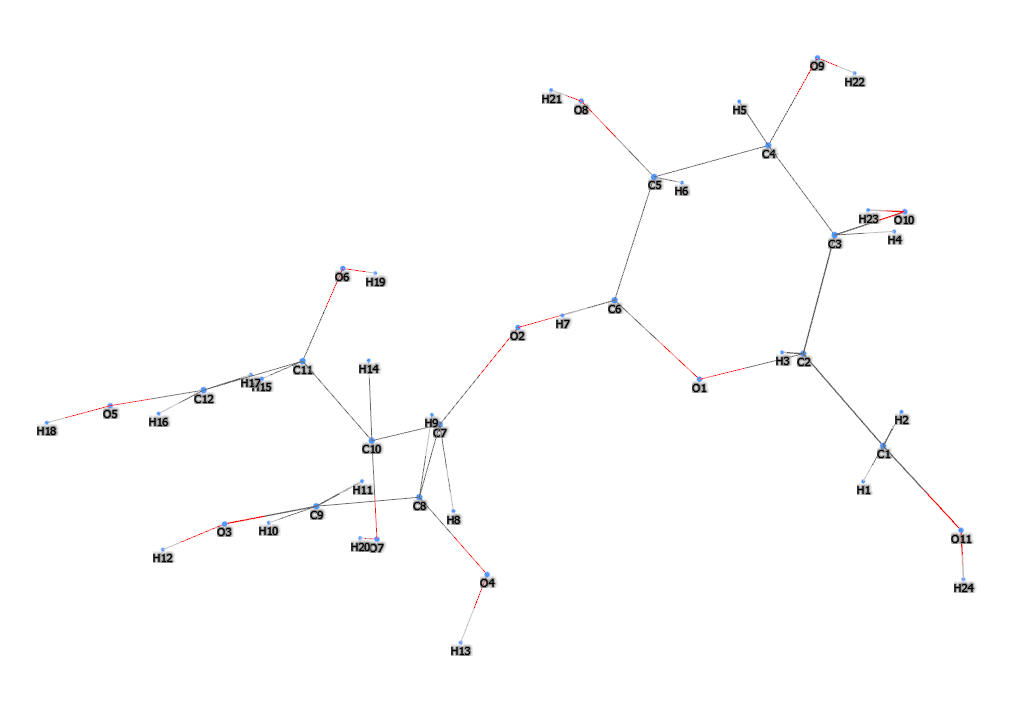
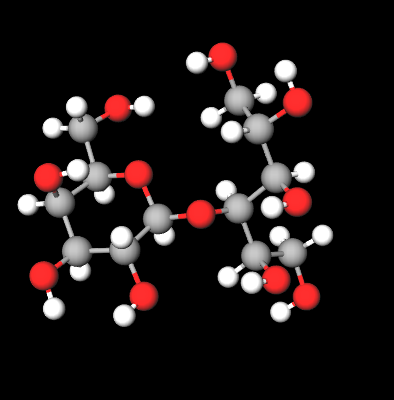
E966 (Lactitol) is an organic chemical compound, a sugar alcohol, osmotic polyol disaccharide derived from the controlled catalytic hydrogenation of lactose.
It appears in the form of a white powder.

What it is used for and where
Food
Ingredient included in the list of European food additives as E966 as a sweetener.
Cosmetics
Skin conditioning agent. It is the mainstay of topical skin treatment as it has the function of restoring, increasing or improving skin tolerance to external factors, including melanocyte tolerance. The most important function of the conditioning agent is to prevent skin dehydration, but the subject is rather complex and involves emollients and humectants that can be added in the formulation.
Humectant. Hygroscopic compound used to minimise water loss in the skin and to prevent it from drying out by facilitating faster and greater absorption of water into the stratum corneum of the epidermis. The epidermis is the most superficial of the three layers that make up human skin (epidermis, dermis and hypodermis) and is the layer that maintains hydration in all three layers. In turn, the epidermis is composed of five layers: horny, the most superficial, granular, spinous, shiny, and basal. Humectants have the ability to retain the water they attract from the air in the stratum corneum and have the function of moisturising the skin. They are best used before emollients, which are oil-based.
Medical
It is an osmotic disaccharide laxative that increases faecal volume and stimulates peristalsis, useful in the treatment of constipation in adults although some studies have not found effective results (1).
- Molecular Formula C12H24O11
- Molecular Weight 344.31
- CAS 585-86-4
- UNII L2B0WJF7ZY
- EC Number 209-566-5
References_____________________________________________________________________
(1) Miller, L.E., Tennilä, J. and Ouwehand, A.C., 2014. Efficacy and tolerance of lactitol supplementation for adult constipation: a systematic review and meta-analysis. Clinical and Experimental Gastroenterology, pp.241-248.
Abstract. Background. Constipation is a common complaint in adults. Lactitol is an osmotic disaccharide laxative that increases fecal volume and stimulates peristalsis. In this paper, we present the first meta-analysis on the efficacy and tolerance of lactitol for adult constipation. Methods. We searched MEDLINE® and Embase, with no date or language restrictions, for studies of lactitol supplementation on adult constipation. A random-effects meta-analysis was performed on pre- to posttreatment changes in stool frequency and consistency with lactitol among all studies, as well as a comparison of efficacy and tolerance outcomes in randomized controlled trials (RCTs) of lactitol versus lactulose. Results. A total of eleven studies representing 663 distinct patients were included in the final analysis, including five single-arm studies, four RCTs comparing lactitol with lactulose, one RCT comparing lactitol with placebo, and one nonrandomized controlled trial comparing lactitol with stimulant laxatives. Weekly stool frequency was significantly increased with lactitol compared with baseline (standardized mean difference [SMD]: 1.56, P<0.001). Stool consistency also improved over the supplementation period with lactitol (SMD: 1.04, P<0.001). Approximately one-third of patients experienced an adverse event; however, symptoms were generally mild and rarely (5%) resulted in study withdrawal. In RCTs of lactitol versus lactulose, lactitol was slightly more effective than lactulose in increasing weekly stool frequency (SMD: 0.19, P=0.06). No statistically significant differences between lactitol and lactulose were identified in any other efficacy or tolerance outcome. Lactitol demonstrated favorable efficacy and tolerance in individual studies when compared to stimulant laxatives and placebo. Conclusion. Lactitol supplementation is well tolerated and improves symptoms of adult constipation. The efficacy and tolerance of lactitol and lactulose are similar, with a trend for more frequent stools with lactitol. Limited evidence suggests lactitol is superior to stimulant laxatives and placebo for relieving constipation symptoms.
Patil, D.H., Grimble, G.K. and Silk, D.B., 1987. Lactitol, a new hydrogenated lactose derivative: intestinal absorption and laxative threshold in normal human subjects. British Journal of Nutrition, 57(2), pp.195-199.
Abstract. 1. In the first part of the study, the absorption of lactitol, a new disaccharide analogue of lactose, was studied using an in vivo jejunal perfusion technique in man. Intestinal uptake of lactitol from isotonic solutions containing 10, 30, 60, and 100 mmol lactitol/l was insignificant. 2. In the second part of the study the laxative threshold of lactitol was determined and compared with that of sorbitol in a double-blind, randomized, cross-over study on twenty-one normal subjects. Laxative threshold was considered to be either the maximum dose tolerated without unacceptable diarrhoea or gastrointestinal side effects, or when the maximum dose in the study was reached. Increasing amounts of lactitol, sorbitol or placebo were administered in two divided doses each day until subjects developed diarrhoea or severe gastrointestinal side effects. The laxative threshold of lactitol (74 (SE 5) g/d) was similar to that of sorbitol (71 (SE 5) g/d). 3. These findings indicate that lactitol is not absorbed by the human small intestine. Although diarrhoea or other gastrointestinal side effects occurred as the dose was increased, 40 g lactitol/d was well tolerated.