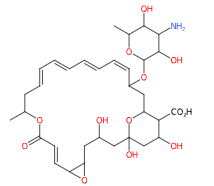
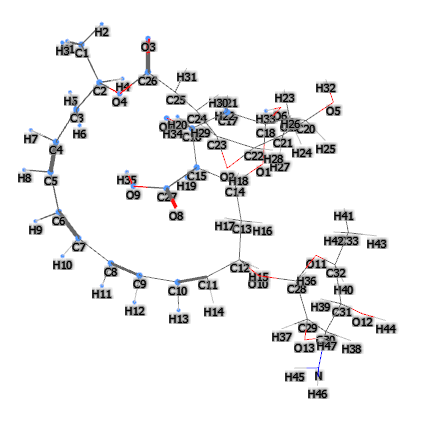
E235 (Natamycin) is a natural polyene tetraene antimicrobial peptide that is obtained during the fermentation of strains of the Gram-positive bacterium Streptomyces natalensis found in soil.
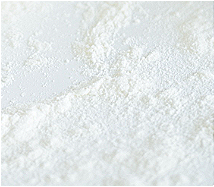
It appears in the form of a white powder.
What it is used for and where
Medical
It is an antifungal used in many diseases such as fungal keratitis that can develop into infectious keratitis (1)
Food
It has the function of preventing fungal growth at low pH, low humidity and low temperature in food products. However, it is incompatible with peroxyacetic acid, resulting in reduced effectiveness against green mould (2).
Ingredient listed in the European food additives list as E235, preservative.
Cosmetics
It is an ingredient used as an antimicrobial and antifungal.
Antimicrobial agent. This ingredient is able to suppress or inhibit the growth and replication of a broad spectrum of microorganisms such as bacteria, fungi and viruses by making the stratum corneum temporarily bactericidal and fungicidal.
Preservative. Any product containing organic, inorganic compounds, water, needs to be preserved from microbial contamination. Preservatives act against the development of harmful microorganisms and against oxidation of the product.
Natamycin studies
Molecular Formula C33H47O13N C33H47NO13
Molecular Weight 665.7
CAS 7681-93-8
UNII 8O0C852CPO
EC Number 231-683-5
DSSTox ID
IUPAC (1R,3S,5R,7R,8E,12R,14E,16E,18E,20E,22R,24S,25R,26S)-22-[(2R,3S,4S,5S,6R)-4-amino-3,5-dihydroxy-6-methyloxan-2-yl]oxy-1,3,26-trihydroxy-12-methyl-10-oxo-6,11,28-trioxatricyclo[22.3.1.05,7]octacosa-8,14,16,18,20-pentaene-25-carboxylic acid
InChl=1S/C33H47NO13/c1-18-10-8-6-4-3-5-7-9-11-21(45-32-30(39)28(34)29(38)19(2)44-32)15-25-27(31(40)41)22(36)17-33(42,47-25)16-20(35)14-24-23(46-24)12-13-26(37)43-18/h3-9,11-13,18-25,27-30,32,35-36,38-39,42H,10,14-17,34H2,1-2H3,(H,40,41)/b4-3+,7-5+,8-6+,11-9+,13-12+/t18-,19-,20+,21+,22+,23-,24-,25+,27-,28+,29-,30+,32+,33-/m1/s1
InChl Key NCXMLFZGDNKEPB-FFPOYIOWSA-N
SMILES CC1CC=CC=CC=CC=CC(CC2C(C(CC(O2)(CC(CC3C(O3)C=CC(=O)O1)O)O)O)C(=O)O)OC4C(C(C(C(O4)C)O)N)O
MDL number MFCD00135085
PubChem Substance ID 329754196
RTECS TK3325000
NCI C47634
RXCUI 7268
Metabolomics Workbench 98963
Synonyms:
- Pimaricin
- delvocid
- antibiotic A 5283
- mycophyt
- delvopos
- Synogil
References_________________________________________________________________________
(1) Prajna NV, Radhakrishnan N. Intrastromal natamycin: A well-aimed arrow in a difficult battle. Indian J Ophthalmol. 2021 Oct;69(10):2565. doi: 10.4103/ijo.IJO_775_21.
(2) Chen D, Förster H, Nguyen K, Adaskaveg JE. Organic Acid Sanitizers for Natamycin and Other Fungicides in Recirculating Application Systems for Citrus Postharvest Decay Management. Plant Dis. 2021 Oct;105(10):2907-2913. doi: 10.1094/PDIS-01-21-0227-RE.
Abstract. Natamycin is a new postharvest biofungicide for citrus and some other fruit crops in the United States that can be effectively used in recycling drench or flooder treatments. These applications necessitate sanitation of the fungicide solution to ensure that it remains free from contamination by bacteria that are potentially human pathogens. During in vitro experiments, heated (48°C) citric acid (1,100 or 2,200 μg/ml) amended with sodium dodecylbenzenesulfonate (SDBS) (60 or 120 μg/ml, respectively) significantly reduced the viability of a nonpathogenic strain of Escherichia coli in natamycin solutions by >5 log10 compared with the control. During laboratory studies with Penicillium digitatum-inoculated lemon fruit, 1,000 μg/ml of natamycin mixed with 1,000 μg/ml of lactic acid or citric acid and with or without SDBS (55 μg/ml) effectively and significantly reduced green mold. Natamycin mixed with lactic acid at ≥2,000 μg/ml, however, caused fruit injury, resulting in browning and rind pitting. Natamycin was incompatible with peroxyacetic acid, resulting in reduced efficacy against green mold. Sodium hypochlorite mixed with natamycin lost its toxicity to E. coli; however, the performance of natamycin was not affected. With heated (average 49°C) drench treatments on an experimental packing line, natamycin (1,000 μg/ml), fludioxonil (300 μg/ml), or azoxystrobin (300 μg/ml) mixed with citric acid (1,000 μg/ml) and SDBS (55 μg/ml) were effective against green mold without fruit injury. At a pH between 3.6 and 3.8, citric acid-SDBS significantly reduced the viability of E. coli by approximately 4 log10 in mixtures with fludioxonil or azoxystrobin, but not with natamycin. However, natamycin at 1,000 μg/ml mixed with 2,000 μg/ml of citric acid and SDBS (55 μg/ml) significantly reduced E. coli counts by >4 log10 within 4 min when the pH was maintained between 3.0 and 3.3, and the efficacy of the fungicide was retained. The use of citric acid with a surfactant can be a viable alternative sanitation method for natamycin in citrus packinghouses utilizing heated recirculating fungicide systems.
Chen D, Förster H, Adaskaveg JE. Natamycin, a Biofungicide for Managing Major Postharvest Fruit Decays of Citrus. Plant Dis. 2021 May;105(5):1408-1414. doi: 10.1094/PDIS-08-20-1650-RE.
Abstract. The antifungal polyene macrolide natamycin was evaluated as a postharvest biopesticide for citrus fruit. Aqueous spray applications with 1,000 µg/ml were moderately to highly effective against green mold incidence after inoculation but did not reduce sporulation of Penicillium digitatum on infected fruit. Treatments with natamycin were significantly more effective against green mold on grapefruit and lemon than on orange and mandarin, with 92.9, 88.5, 57.5, and 60.9% reductions in decay, respectively, as compared with the control. The biofungicide was compatible with a storage fruit coating but was less effective when applied in a packing coating. However, when either fruit coating was applied following an aqueous natamycin treatment (i.e., staged applications), the incidence of decay was reduced to ≤10.7% as compared with the untreated control (with 81.9%). The incidence of sour rot of lemon and mandarin was also significantly reduced from the untreated control by natamycin (1,000 µg/ml) but propiconazole (540 µg/ml) and propiconazole + natamycin (540 + 500 µg/ml) mixtures generally were significantly more effective than natamycin alone when using a severe inoculation procedure. Experimental and commercial packingline studies demonstrated that natamycin-fludioxonil or natamycin-propiconazole mixtures applied in a storage fruit coating or as an aqueous flooder treatment were highly effective and typically resulted in a >85.0% reduction of green mold and sour rot. Resistance to natamycin has never been documented in filamentous fungi. Thus, the use of natamycin, in contrast to other registered postharvest fungicides for citrus, can be an antiresistance strategy and an effective treatment in mixtures with other fungicides for the management of major postharvest decays of citrus.
McKay AH, Förster H, Adaskaveg JE. Efficacy and Application Strategies for Propiconazole as a New Postharvest Fungicide for Managing Sour Rot and Green Mold of Citrus Fruit. Plant Dis. 2012 Feb;96(2):235-242. doi: 10.1094/PDIS-06-11-0525.
Abstract. Few postharvest treatments are available for managing sour rot of citrus caused by Galactomyces citri-aurantii and they are generally not very effective. The demethylation-inhibiting (DMI) triazole fungicides propiconazole and cyproconazole were found to be highly effective and more efficacious than other DMIs evaluated, such as metconazole and tebuconazole, in reducing postharvest sour rot of citrus. Additional studies were conducted with propiconazole as a postharvest treatment because it has favorable toxicological characteristics for food crop registration in the United States and the registrant supports a worldwide registration. Regression and covariance analyses were performed to determine optimal time of application after inoculation and fungicide rate. In laboratory studies, decay incidence increased when propiconazole applications were delayed from 8 to 24 h (lemon) or 18 to 42 h (grapefruit) after inoculation. Effective rates of the fungicide were 64 to 512 μg/ml and were dependent on inoculum concentration of the sour rot pathogen and on the type of citrus fruit. Propiconazole was found to be compatible with sodium hypochlorite at 100 μg/ml and 1 to 3% sodium bicarbonate without loss of efficacy for decay control on lemon. The addition of hydrogen peroxide/peroxyacetic acid at 80 μg/ml slightly decreased the effectiveness of propiconazole. Heated (48°C) solutions of propiconazole did not significantly improve the efficacy compared with solutions at 22°C. In experimental packing-line studies, aqueous in-line drenches applied alone or followed by applications of the fungicide in storage or packing fruit coatings were highly effective, reducing sour rot to between 0 and 1.2% compared with 83.8% decay incidence in the control when treatments were made up to 16 h after inoculation. When the fungicide was applied in either fruit coating, decay was only reduced to 49.1 to 57.1% incidence. Tank mixtures of propiconazole with the citrus postharvest fungicides fludioxonil and azoxystrobin were highly effective in reducing green mold caused by isolates of Penicillium digitatum sensitive or moderately resistant to imazalil and sour rot. Propiconazole will be an important postharvest fungicide for managing sour rot of citrus and potentially can be integrated into current management practices to reduce postharvest crop losses caused by DMI-sensitive isolates of P. digitatum.
Wang D, Shen W, Yuan J, Sun J, Wang M. Advances in the biosynthesis of natamycin and its regulatory mechanisms. Sheng Wu Gong Cheng Xue Bao. 2021 Apr 25;37(4):1107-1119. doi: 10.13345/j.cjb.200394.
Abstract. Natamycin is a polyene macrolide antibiotics with strong and broad spectrum antifungal activity. It not only effectively inhibits the growth and reproduction of fungi, but also prevents the formation of some mycotoxins. Consequently, it has been approved for use as an antifungal food preservative in most countries, and is also widely used in agriculture and healthcare. Streptomyces natalensis and Streptomyces chatanoogensis are the main producers of natamycin. This review summarizes the biosynthesis and regulatory mechanism of natamycin, as well as the strategies for improving natamycin production. Moreover, the future perspectives on natamycin research are discussed.