



Il blu di bromotimolo è un additivo colorante comunemente utilizzato in varie applicazioni industriali, cosmetiche e scientifiche. È apprezzato per le sue proprietà di colorante e la sua versatilità come indicatore di pH.
Nome chimico
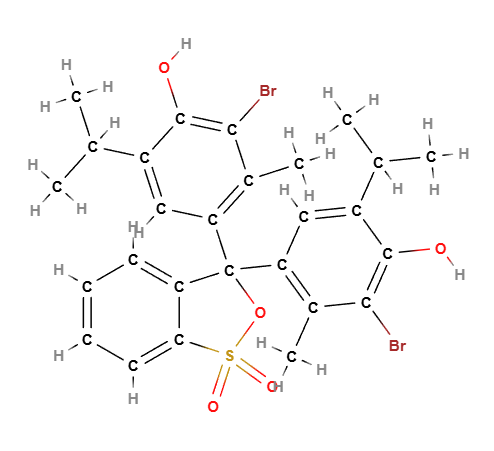
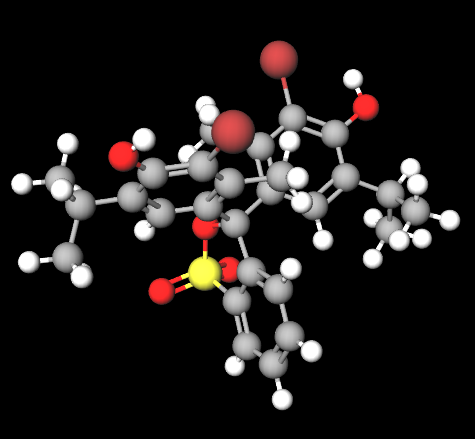
2-bromo-4-[3-(3-bromo-4-hydroxy-2-methyl-5-propan-2-ylphenyl)-1,1-dioxo-2,1λ6-benzoxathiol-3-yl]-3-methyl-6-propan-2-ylphenol
Composizione chimica e struttura
Il blu di bromotimolo è un colorante sintetico con la formula chimica C27H28Br2O5S. Appartiene alla famiglia dei coloranti sulfoneftaleinici. La struttura include due atomi di bromo, che contribuiscono alle sue proprietà di cambiamento di colore, e un complesso sistema ad anello aromatico che stabilizza la molecola.
Proprietà fisiche
Il blu di bromotimolo si presenta tipicamente come una polvere cristallina che può variare dal giallo al blu, a seconda del suo stato e del livello di pH. È poco solubile in acqua ma solubile in etanolo e altri solventi organici. Il composto è noto per la sua stabilità, che lo rende adatto a varie applicazioni dove è richiesto un preciso cambiamento di colore.
Processo industriale di sintesi chimica
- Preparazione dei reagenti. Le principali materie prime includono timolo, bromuro di potassio (KBr), e acido solforico (H₂SO₄).
- Sintesi del bromotimolo. Il timolo viene dissolto in acido solforico concentrato. A questa soluzione viene aggiunto lentamente bromuro di potassio con agitazione costante. La reazione tra timolo e bromuro di potassio in presenza di acido solforico produce bromotimolo.
- Formazione del precipitato. La soluzione risultante viene diluita con acqua distillata, causando la precipitazione del bromotimolo.
- Filtrazione. La sospensione viene filtrata per separare il precipitato solido di bromotimolo dalla soluzione acquosa.
- Lavaggio. Il precipitato di bromotimolo viene lavato con acqua deionizzata per rimuovere eventuali impurità solubili.
- Essiccazione. Il bromotimolo lavato viene essiccato a temperatura controllata per rimuovere l'umidità residua e ottenere una polvere secca.
- Macinazione. Il bromotimolo essiccato viene macinato per ottenere una polvere di particelle fini e uniformi. Questo passaggio può includere l'uso di mulini a sfere o altri macchinari di macinazione.
- Sintesi finale. La polvere di bromotimolo viene trattata con una soluzione alcalina, come idrossido di sodio (NaOH), per formare il bromotimolo blu.
- Filtrazione e lavaggio. La sospensione viene filtrata e lavata con acqua deionizzata per rimuovere eventuali impurità.
- Essiccazione. Il bromotimolo blu lavato viene essiccato a temperatura controllata per rimuovere l'umidità residua e ottenere una polvere secca.
- Controllo di qualità. Il bromotimolo blu viene sottoposto a rigorosi test di qualità per assicurare che soddisfi gli standard di purezza, intensità del colore e sicurezza. Questi test includono l'analisi chimica e la spettroscopia.
A cosa serve e dove si usa
Cosmetica
Ingrediente cosmetico soggetto a restrizioni IV/151 come Voce pertinente negli allegati del regolamento europeo sui cosmetici n. 1223/2009. Sostanza o ingrediente segnalato:
- Phenol, 4,4'-(3H-2,1-benzoxathiol-3-ylidene)bis[2-bromo-3-methyl-6-(1-methylethyl)-, S,S-dioxide.
Cosmetica - Funzioni INCI
- Colorante. Questo ingrediente ha la funzione di colorare la soluzione in cui è inserito in modo temporaneo, semi-permanente o permanente, sia da solo che in presenza dei componenti complementari aggiunti per la colorazione.
Sicurezza
E' un ingrediente che ha qualche controindicazione importante riguardante il profilo salutare: da utilizzare esclusivamente in prodotti cosmetici che hanno contatto con la pelle per breve tempo.
Medicina
Il blu di bromotimolo è utilizzato in alcuni test medici e procedure diagnostiche. Ad esempio, può essere utilizzato nei test respiratori per misurare i livelli di anidride carbonica, dove il cambiamento di colore indica la presenza di CO2.
Applicazioni varie
Indicatore di pH. Il blu di bromotimolo è ampiamente utilizzato come indicatore di pH in ambito laboratoristico (1). Cambia colore dal giallo a pH inferiori a 6,0 al blu a pH superiori a 7,6, ed è quindi utile per monitorare i cambiamenti di pH in varie reazioni chimiche e soluzioni.
Acquari e piscine. È utilizzato per monitorare il pH dell'acqua in acquari e piscine. Il cambiamento di colore fornisce un'indicazione visiva della qualità dell'acqua, aiutando a mantenere condizioni ottimali per la vita acquatica e i nuotatori.
 |  |
Molecular Formula C27H28Br2O5S
Molecular Weight 624.4 g/mol
CAS 76-59-5
EC number 200-971-2
UNII VGU4LM0H96
DTXSID3058799
MFCD00005872
Synonyms:
Dibromothymolsulfophthalein

