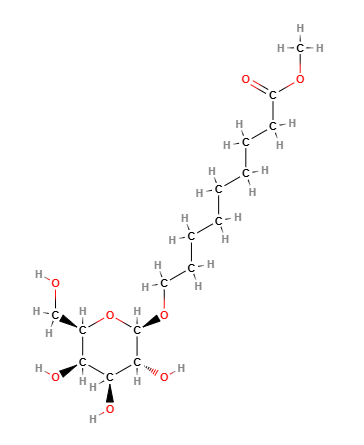
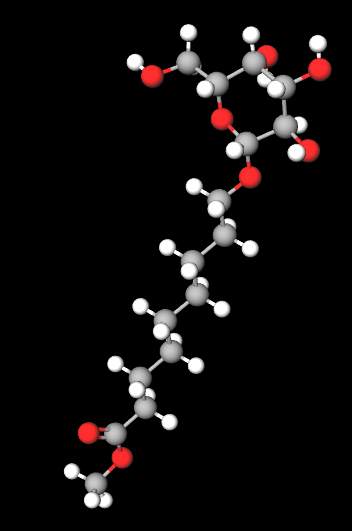
Il galattosio è uno zucchero semplice, un monosaccaride, che svolge un ruolo chiave in vari processi biologici. È comunemente utilizzato nelle formulazioni cosmetiche e farmaceutiche per le sue proprietà idratanti e condizionanti per la pelle.
Composizione chimica e struttura
Il galattosio è uno zucchero esoso, contenente sei atomi di carbonio. È un isomero del glucosio e ha la formula chimica C₆H₁₂O₆. La struttura del galattosio presenta un anello a sei membri con cinque atomi di carbonio e un atomo di ossigeno, formando un anello piranosico. Ha gruppi idrossilici (-OH) attaccati a ciascun atomo di carbonio, che contribuiscono alla sua reattività e solubilità.
Proprietà fisiche
Il galattosio si presenta come una polvere cristallina bianca. È altamente solubile in acqua e ha un sapore dolce, sebbene meno dolce rispetto al glucosio. La solubilità e la bassa dolcezza lo rendono adatto a varie formulazioni cosmetiche e farmaceutiche. È stabile nelle normali condizioni di stoccaggio e non provoca irritazioni significative quando applicato sulla pelle.
Processo di produzione
La produzione di galattosio avviene attraverso diversi metodi, tra cui:
- Idrolisi del lattosio: Il galattosio può essere ottenuto dal lattosio, un disaccaride presente nel latte, mediante idrolisi. Questo processo coinvolge la scomposizione enzimatica del lattosio utilizzando l'enzima lattasi, che lo separa in glucosio e galattosio.
- Sintesi chimica: Il galattosio può anche essere sintetizzato chimicamente tramite processi complessi e l'uso di diversi reagenti chimici. Tuttavia, questo metodo è meno comune rispetto all'idrolisi enzimatica.
- Purificazione: Il galattosio ottenuto da questi processi viene purificato per rimuovere eventuali impurità e sottoprodotti. La purificazione di solito include cristallizzazione, filtrazione e altre tecniche per garantire un prodotto ad alta purezza.
- Formulazione: Il galattosio purificato viene incorporato in varie formulazioni. Può essere combinato con altri ingredienti per creare creme, lozioni, sieri e prodotti farmaceutici.
- Controllo qualità: Il prodotto finale subisce test di controllo qualità per garantire che soddisfi gli standard di sicurezza, efficacia e prestazione. Questo include verifiche sulla purezza, stabilità e compatibilità con altri ingredienti.
- Conservazione: Il galattosio viene conservato in contenitori ermetici, protetto da luce, umidità e calore, per mantenere la sua stabilità ed efficacia.
Applicazioni
Mediche: Il galattosio è utilizzato nelle formulazioni farmaceutiche per il suo ruolo in vari processi metabolici( 1). Può essere impiegato nei trattamenti per alcuni disturbi metabolici e come componente in determinate formulazioni farmacologiche (2).
Cosmetiche: Nelle formulazioni cosmetiche, il galattosio è apprezzato per le sue proprietà idratanti e condizionanti per la pelle. È utilizzato in creme, lozioni e sieri per migliorare i livelli di idratazione della pelle, migliorare la texture e supportare la salute della pelle.
Altro: Il galattosio è anche utilizzato in altri ambiti, inclusi integratori alimentari e prodotti alimentari, per i suoi benefici nutrizionali e proprietà funzionali.
Cosmetica - Funzioni INCI
- Agente condizionante della pelle. Rappresenta il perno del trattamento topico della pelle in quanto ha la funzione di ripristinare, aumentare o migliorare la tolleranza cutanea a fattori esterni, compresa la tolleranza dei melanociti. La funzione più importante dell'agente condizionante è prevenire la disidratazione della pelle, ma il tema è piuttosto complesso e coinvolge emollienti ed umettanti che possono essere aggiunti nella formulazione.
Considerazioni ambientali e di sicurezza
Il galattosio è generalmente considerato sicuro per l'uso in cosmetici e farmaci quando utilizzato secondo le linee guida raccomandate. È uno zucchero naturale con un basso rischio di irritazione o reazioni allergiche. Dal punto di vista ambientale, la produzione di galattosio, specialmente da fonti naturali come il lattosio, è relativamente sostenibile. Tuttavia, è importante garantire che i processi di produzione seguano pratiche sostenibili per minimizzare eventuali impatti ecologici.
Molecular Formula C6H12O6
Molecular Weight
CAS 59-23-4
UNII X2RN3Q8DNE
EC Number 200-416-4
Synonyms:
D-Galactopyranoside
D-Galactose
D-Gal
D-Galactopyranose
Bibliografia__________________________________________________________________________
(1) Coelho AI, Berry GT, Rubio-Gozalbo ME. Galactose metabolism and health. Curr Opin Clin Nutr Metab Care. 2015 Jul;18(4):422-7. doi: 10.1097/MCO.0000000000000189. PMID: 26001656.
Abstract. Purpose of review: Galactose - a key source of energy and a crucial structural element in complex molecules - is particularly important for early human development. However, galactose metabolism might be important not only for fetal and neonatal development but also for adulthood, as evidenced by the inherited disorders of galactose metabolism. The purpose of this review is to summarize the current evidence of galactose metabolism in health and disease. Recent findings: The biological importance of galactose goes beyond its importance as a nutrient and a metabolite. Galactose has been selected by evolutionary pressure to exert also a crucial structural role in macromolecules. Additionally, galactose has recently been reported as beneficial in a number of diseases, particularly in those affecting the brain. Summary: Galactose is crucial for human metabolism, with an established role in energy delivery and galactosylation of complex molecules, and evidence for other roles is emerging.
(2) Savin VJ, McCarthy ET, Sharma R, Charba D, Sharma M. Galactose binds to focal segmental glomerulosclerosis permeability factor and inhibits its activity. Transl Res. 2008 Jun;151(6):288-92. doi: 10.1016/j.trsl.2008.04.001.
Abstract. Focal segmental glomerulosclerosis (FSGS) is associated with circulating permeability activity (Palb) and recurs after transplantation in about 30% of patients. The FS permeability factor (FSPF) consists of anionic low-molecular-weight protein(s) that might be excluded by the anionic filtration barrier. We postulated that FSPF may interact with sugars of the glycocalyx, and we tested its affinity for sugars using column chromatography. FSPF showed high affinity for galactose; Palb activity was absent from unbound material and present in eluate after dialysis to remove galactose. In parallel studies, Palb activity of serum was lost after adding galactose > or = 10(-12) M. To determine whether galactose also abolishes plasma Palb activity in vivo, a patient with posttransplant FSGS was given galactose and serum samples were collected. Intravenous infusion of galactose decreased Palb from 0.88 before infusion to undetectable levels postinfusion and at 48 hours. Oral galactose diminished Palb activity; Palb reached a nadir after 2 weeks and remained low for at least 4 weeks after galactose was discontinued. We conclude that FSPF has high affinity for galactose based on chromatography. Additionally, galactose inactivates FSPF and may lead to its clearance from plasma. The interaction between FSPF and glomeruli may depend on FSPF binding to galactose, and the FSPF-galactose complex may be susceptible to uptake by galactose-binding proteins and to catabolism. We propose testing galactose as a novel nontoxic therapy for nephrotic syndrome in FSGS to determine whether galactose slows progression and whether pretransplant therapy decreases rates of recurrence and graft loss.
Paigen K. Role of the galactose pathway in the regulation of beta-galactosidase. J Bacteriol. 1966 Nov;92(5):1394-403. doi: 10.1128/jb.92.5.1394-1403.1966.
Abstract. Paigen, Kenneth (Roswell Park Memorial Institute, Buffalo, N.Y.). Role of the galactose pathway in the regulation of beta-galactosidase. J. Bacteriol. 92:1394-1403. 1966.-Galactose and its metabolites, galactose-1-phosphate, uridine diphosphogalactose, and uridine diphosphoglucose, as well as metabolites derived from uridine diphosphoglucose, were tested for their role in the regulation of beta-galactosidase. In cultures of wild-type Escherichia coli strains K-12 and B, exogenous galactose was no more effective as a repressor than were other carbon sources. Exogenous galactose also did not repress beta-galactosidase when added to mutants which can accumulate intracellular galactose or galactose-1-phosphate, indicating that these compounds do not repress. In such strains, repression of beta-galactosidase formation did occur if galactose was added in the presence of another metabolizable carbon source. This repression is presumably a consequence of the growth inhibition which follows the accumulation of these compounds, and the general catabolite repression which develops during growth inhibition. Exogenous galactose did repress beta-galactosidase in a mutant which accumulates uridine diphosphogalactose. This appears to result from a combination of several factors. These include a general inhibition of protein synthesis through depletion of the uridine triphosphate pool, catabolite inhibition as a consequence of growth inhibition, as well as a specific inhibition of beta-galactosidase formation. Glucose repression of beta-galactosidase was normal in a mutant strain blocked in the formation of uridine diphosphoglucose from uridine triphosphate and glucose-1-phosphate, indicating that neither uridine diphosphoglucose nor any compound uniquely derived from it functions as the hypothetical catabolite repressor. It is concluded that at least two separate mechanisms exist for the endogenous repression of beta-galactosidase in E. coli. One is exerted by uridine diphosphogalactose or its metabolic product; the other, by the generalized catabolite repressor which is still formed in strains unable to make uridine diphosphogalactose or uridine diphosphoglucose.
Cooper GS, Hulka BS, Baird DD, Savitz DA, Hughes CL Jr, Weinberg CR, Coleman RA, Shields JM. Galactose consumption, metabolism, and follicle-stimulating hormone concentrations in women of late reproductive age. Fertil Steril. 1994 Dec;62(6):1168-75. PMID: 7957979.
Abstract. Objective: To test the hypothesis that high galactose consumption and low activity of galactose-1-phosphate uridyl transferase (transferase) is associated with early ovarian senescence among nongalactosemic women. Design: Cross-sectional study. Data collection consisted of a self-administered questionnaire with sections on diet (food frequency data to measure galactose consumption), reproductive, and medical histories. One blood sample was collected to measure FSH and transferase activity; FSH was used as a measure of ovarian senescence. Among women who were having menstrual periods at least every 8 weeks, the blood sample was drawn in the early follicular phase (days 2 to 4) of a menstrual cycle....Conclusion: These data do not support the hypothesis that low transferase activity represents a genetic predisposition for early ovarian senescence, as measured by FSH levels in women ages 38 to 49 years. However, the hypothesized positive association between galactose consumption and FSH was supported.