Methyl p-hydroxybenzoate: properties, uses, pros, cons, safety
Methyl p-hydroxybenzoate is a preservative from the paraben family, used to control microbial growth and extend shelf life. It is the methyl ester of p-hydroxybenzoic acid and is especially effective against yeasts and molds, while activity against some bacteria can be more limited. In practice it is used as a food additive (E218) and also in pharmaceutical and cosmetic products to improve long-term microbiological stability. Performance depends on the formulation ph and the overall preservation system, often showing synergy when combined with other preservatives. Because water solubility is not high, it may require specific solubilization or incorporation strategies during manufacturing. Its use is subject to regulatory limits by product category and concentration, and formulators also consider the potential for sensitization in susceptible individuals.
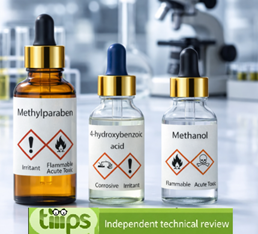
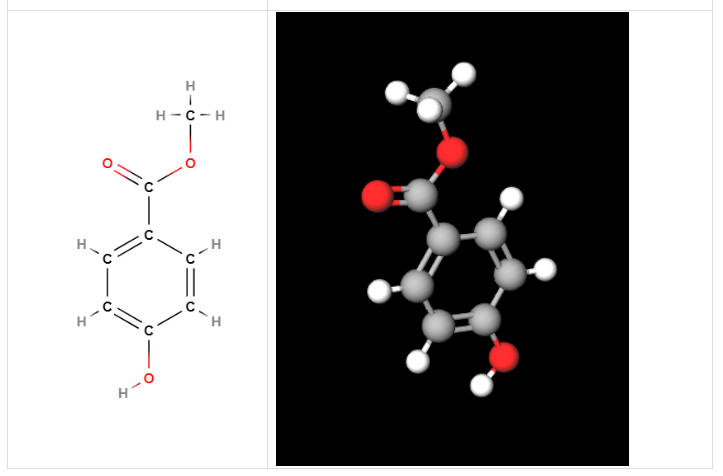
The name defines the structure of the molecule
- "Methyl" indicates the presence of a methyl group, which is an alkyl group with the formula CH3.
- "p-hydroxy" indicates the presence of a hydroxy group (OH) in the para position relative to the benzoate functional group on the benzene structure.
- "Benzoate" indicates the presence of a benzoate group, which is an ester of benzoic acid.
Description of raw materials used in production
- p-Hydroxybenzoic Acid - An aromatic compound that is the primary precursor of methylparaben.
- Methanol - Used as an alkylating agent to esterify the p-hydroxybenzoic acid.
- Catalyst - For example, sulfuric acid, which accelerates the esterification reaction.
Step-by-step summary of industrial chemical synthesis process.
- Mixing - The p-hydroxybenzoic acid and methanol are mixed together.
- Esterification - The mixture is heated in the presence of a catalyst to form the methyl ester of p-hydroxybenzoic acid.
- Cooling and Separation - The reacted mixture is cooled and the formed product separates.
- Purification - The crude product is purified through techniques such as distillation or crystallization.
- Drying - Moisture is removed from the product.
- Packaging - Methyl p-hydroxybenzoate is packaged in suitable containers for transport and sale.
- Quality Control - The final product undergoes various quality checks to ensure it meets specifications.
What it is used for and where
Food
Preservative. It is labelled with the number E218 in the list of European food additives as a preservative. Although this allergen is being used less and less, warning should be given because it is labelled under different nomenclature, with different names corresponding to its many synonyms.
Cosmetics
A preservative belonging to the paraben family, a class of chemical compounds to which the scientific literature attributes endocrine disrupting characteristics. Although this allergen is less and less used, warning must be given because it is written on labels under different nomenclature, with different names corresponding to its many synonyms.
Preservative additive used in various industries and serves to fight bacteria, fungi, yeasts and moulds. Like all esters and salts of the Paraben class, it is also often found in cosmetic, pharmaceutical and food formulations.
It is listed with the number E218 in the European food additives list as a preservative.
Methylparaben (MP) is used to extend the shelf life of industrial chemicals (Cashman and Warshaw, 2005). However, when the skin is exposed to MP, this compound permeates the epidermis and dermis and shows in particular greater permeation than other parabens due to the difference in their lipophilicity ( El Hussein et al., 2007 ). It exhibits several adverse dermatological reactions, such as allergic reaction, the cytotoxic synergistic effect of UV radiation and the development of breast cancer ( Nardelli et al., 2009 , Dagher et al., 2012 ). MP concentrations above 4 mg ml -1 in industrial products are known to be harmful ( Darbre and Harvey, 2008; CIR Expert Group, 2008 ). Although MP persists in the dermis ( El Hussein et al., 2007 ), little is known about its side effects or molecular mechanism in the dermis.
Overall, the results show that MP induces cellular senescence in vitro and in vivo, via the GR-c-Jun-ROS pathway, and MP-induced cellular senescence alters ECM components. Although the treatment doses of MP used in this study seem high compared to the limit of industrial use (CIR Expert Group, 2008), the data provide evidence for the hypothesis that MP overdose may induce alterations in ECM components by concentrating senescent fibroblasts in the dermis (1).
Methylparaben is, like all parabens, a debated component about whose safety many doubts have been raised, in particular because of the damage it would cause to the aquatic environment where it is discharged after use (2).
Exposure to methylparaben has been associated with adverse health outcomes and exposure to ultraviolet rays may amplify its toxicity (3).
To reduce the toxicity of parabens in the aquatic environment, a system called the Fenton process is applied (4).
Clinical studies have suggested that Methylparaben increases breast cancer proliferation and may play a direct role in chemoresistance by modulating stem cell activity (5).
Parabens, but in particular Methylparaben, promotes adipogenesis but suppresses the serum marker of bone formation in vivo and indicates possible negative health consequences (6) and may therefore contribute to obesity (7) furthermore, exposure to parabens is associated with DNA damage, male infertility and endocrine disruption in adults (8).
To counteract and mitigate the negative effects of methylparaben on human health, this study suggests that a polyphenolic compound, rosmarinic acid, may protect against unfavourable health outcomes caused by lifelong human exposure to parabens in cosmetic products (9).
The most relevant studies and their abstracts have been selected to explore this in more depth:
Methylparaben studies
Typical commercial product characteristics Methylparaben
| Appearance | White crystalline powder |
| Boiling Point | 265.5±13.0°C at 760 mmHg |
| Melting Point | 125-128°C |
| Flash Point | 116.4±12.6°C 280°C |
| Density | 1.2±0.1 g/cm3 |
Vapor Pressure
| 0.0±0.6 mmHg at 25°C |
| Refraction Index | 1.547 |
| PSA | 46.53000 |
| LogP | 1.87 |
Loss on drying
| 0.5% max |
| Acidity | 0.1mg/g max |
Sulphate Ash
| 0.1% max |
Heavy Metal
| 10ppm max |
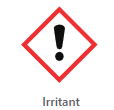
Chemical Safety
|  |
Price
$2.10 - $10.40/ kg
- Molecular Formula C8H8O3
- Linear Formula HOC6H4CO2CH3
- Molecular Weight 152.15
- CAS 99-76-3
- UNII A2I8C7HI9T
- EC Number 202-785-7
- DSSTox Substance ID DTXSID4022529
- IUPAC methyl 4-hydroxybenzoate
- InChl=1S/C8H8O3/c1-11-8(10)6-2-4-7(9)5-3-6/h2-5,9H,1H3
- InChl Key LXCFILQKKLGQFO-UHFFFAOYSA-N
- SMILES COC(=O)C1=CC=C(C=C1)O
- MDL number MFCD00002352
- PubChem Substance ID 329815219
- ChEBI 31835
- RTECS DH2450000
- Beilstein 509801
- FEMA 2710
- RXCUI 29903
- NSC 406127 3827
- NACRES NA.25
Synonyms :
- E218
- Sodium Methylparaben
- Methylparaben
- Solparol
- Metilparaidrossibenzoato
- Methyl-4-hydroxybenzoate
- p-Hydroxybenzoic acid methyl ester
- methyl para-hydroxybenzoate
- Metagin
- NIPAGIN
- p-Hydroxybenzoic acid, methyl ester
- p-Hydroxybenzoic methyl ester
- Methyl parasept
- Tegosept M
- 4-Hydroxybenzoic acid methylester
- 4-Hydroxybenzoic Acid Methyl Ester
- 4-(Methoxycarbonyl)phenol
- Methyl parahydroxybenzoate
References_________________________________________________________________________
(1) Cha HJ, Bae S, Kim K, Kwon SB, An IS, Ahn KJ, Ryu J, Kim HS, Ye SK, Kim BH, An S. Overdosage of methylparaben induces cellular senescence in vitro and in vivo. J Invest Dermatol. 2015 Feb;135(2):609-612. doi: 10.1038/jid.2014.405.
(2) Terasaki M, Abe R, Makino M, Tatarazako N. Chronic toxicity of parabens and their chlorinated by-products in Ceriodaphnia dubia. Environ Toxicol. 2015 May-Jun;30(6):664-73. doi: 10.1002/tox.21944.
Popa DS, Bolfa P, Kiss B, Vlase L, Păltinean R, Pop A, Cătoi C, Crişan G, Loghin F. Influence of Genista tinctoria L. or methylparaben on subchronic toxicity of bisphenol A in rats. Biomed Environ Sci. 2014 Feb;27(2):85-96. doi: 10.3967/bes2014.021.
(3) Lee J, Park N, Kho Y, Lee K, Ji K. Phototoxicity and chronic toxicity of methyl paraben and 1,2-hexanediol in Daphnia magna. Ecotoxicology. 2017 Jan;26(1):81-89. doi: 10.1007/s10646-016-1743-6.
Abstract. Parabens are used as antimicrobial preservatives in consumer products. Exposure to methylparaben (MP) has been associated with adverse health outcomes, therefore, an alternative compound, 1,2-hexanediol (1,2-H), has been applied for cosmetics. In the present study, the phototoxicity of MP and 1,2-H, as well as the toxic effect caused by chronic exposure, were investigated using Daphnia magna. The 48 h acute toxicity tests with D. magna were conducted under indoor or ultraviolet (UV) light irradiation conditions, i.e., exposure to 4 h/d sunlight. Changes in the transcription of genes related to oxidative stress were determined in D. magna juveniles, to investigate the underlying mechanism of phototoxicity. The 21 d chronic toxicity tests of MP and 1,2-H were performed under indoor light irradiation. Exposure to MP under environmental level of UV light was more detrimental to D. magna. Transcripts of catalase and glutathione-S-transferase genes in D. magna was significantly increased by co-exposure to MP and UV light. After 21 d of chronic exposure to MP and 1,2-H, the reproduction no-observed effect concentrations for D. magna were 1 and >10 mg/L, respectively. The present study showed that exposure to UV could magnify the toxicity of MP on daphnids. Although acute and chronic toxicities of 1,2-H were generally lower than those of MP, its effects on other aquatic organisms should not be ignored. Further studies are needed to identify other mechanisms of MP phototoxicity.
(4) Martins RC, Gmurek M, Rossi AF, Corceiro V, Costa R, Quinta-Ferreira ME, Ledakowicz S, Quinta-Ferreira RM. Application of Fenton oxidation to reduce the toxicity of mixed parabens. Water Sci Technol. 2016 Oct;74(8):1867-1875. doi: 10.2166/wst.2016.374.
Abstract. The aims of the present work were to assess the application of a chemical process to degrade a mixture of parabens and determine the influence of a natural river water matrix on toxicity. Model effluents containing either a single compound, namely methylparaben, ethylparaben, propylparaben, butylparaben, benzylparaben or p-hydroxybenzoic acid, or to mimic realistic conditions a mixture of the six compounds was used. Fenton process was applied to reduce the organic charge and toxic properties of the model effluents. The efficiency of the decontamination has been investigated using a chemical as well as a toxicological approach. The potential reduction of the effluents' toxicity after Fenton treatment was evaluated by assessing (i) Vibrio fischeri luminescence inhibition, (ii) lethal effects amongst freshwater Asian clams (Corbicula fluminea), and (iii) the impact on mammalian neuronal activity using brain slices. From the environmental point of view such a broad toxicity analysis has been performed for the first time. The results indicate that Fenton reaction is an effective method for the reduction of chemical oxygen demand of a mixture of parabens and their toxicity to V. fischeri and C. fluminea. However, no important differences were found between raw and treated samples in regard to mammalian neuronal activity.
(5) Lillo MA, Nichols C, Perry C, Runke S, Krutilina R, Seagroves TN, Miranda-Carboni GA, Krum SA. Methylparaben stimulates tumor initiating cells in ER+ breast cancer models. J Appl Toxicol. 2017 Apr;37(4):417-425. doi: 10.1002/jat.3374.
(6) Hu P, Kennedy RC, Chen X, Zhang J, Shen CL, Chen J, Zhao L. Differential effects on adiposity and serum marker of bone formation by post-weaning exposure to methylparaben and butylparaben. Environ Sci Pollut Res Int. 2016 Nov;23(21):21957-21968. doi: 10.1007/s11356-016-7452-0.
Abstract. Paraben esters and their salts are widely used as preservatives in cosmetics, personal care products, pharmaceuticals, and foods. We and others have reported that parabens promote adipogenesis in vitro. Here, we investigated the effects of post-weaning exposure to parabens (methylparaben and butylparaben) on body weight, white adipose tissue mass, and obesity associated metabolic biomarkers in female obesity-prone C57BL/6J mice fed with a chow diet or a high fat diet. Methylparaben exposure by daily oral gavage (100 mg/kg/day) increased adiposity and serum leptin levels compared to the controls when fed the chow diet, but not the high fat diet. In contrast, butylparaben exposure did not induce such effects. Exposure to either paraben induced changes in gene expression related to adipocyte differentiation and lipogenesis in the white adipose tissue (WAT) and the liver, regardless of diet. Moreover, exposure to both parabens under the chow diet significantly decreased serum procollagen type 1 N-terminal propeptide (P1NP) but had no effects on C-terminal telopeptide of type I collagen (CTX-I) levels, suggesting that post-weaning exposure to paraben may negatively affect bone formation, but not bone resorption. Taken together, our results demonstrate that post-weaning exposure to paraben, methylparaben in particular, promotes adipogenesis but suppresses serum marker of bone formation in vivo. Our results add to the growing body of literature indicating potential negative health outcomes associated with paraben exposure. Further study of early life exposure to paraben on the development of fat and bone is warranted.
(7) Hu P, Chen X, Whitener RJ, Boder ET, Jones JO, Porollo A, Chen J, Zhao L. Effects of parabens on adipocyte differentiation. Toxicol Sci. 2013 Jan;131(1):56-70. doi: 10.1093/toxsci/kfs262.
Abstract. Parabens are a group of alkyl esters of p-hydroxybenzoic acid that include methylparaben, ethylparaben, propylparaben, butylparaben, and benzylparaben. Paraben esters and their salts are widely used as preservatives in cosmetics, toiletries, food, and pharmaceuticals. Humans are exposed to parabens through the use of such products from dermal contact, ingestion, and inhalation. However, research on the effects of parabens on health is limited, and the effects of parabens on adipogenesis have not been systematically studied. Here, we report that (1) parabens promote adipogenesis (or adipocyte differentiation) in murine 3T3-L1 cells, as revealed by adipocyte morphology, lipid accumulation, and mRNA expression of adipocyte-specific markers; (2) the adipogenic potency of parabens is increased with increasing length of the linear alkyl chain in the following potency ranking order: methyl- < ethyl- < propyl- < butylparaben. The extension of the linear alkyl chain with an aromatic ring in benzylparaben further augments the adipogenic ability, whereas 4-hydroxybenzoic acid, the common metabolite of all parabens, and the structurally related benzoic acid (without the OH group) are inactive in promoting 3T3-L1 adipocyte differentiation; (3) parabens activate glucocorticoid receptor and/or peroxisome proliferator-activated receptor γ in 3T3-L1 preadipocytes; however, no direct binding to, or modulation of, the ligand binding domain of the glucocorticoid receptor by parabens was detected by glucocorticoid receptor competitor assays; and lastly, (4) parabens, butyl- and benzylparaben in particular, also promote adipose conversion of human adipose-derived multipotent stromal cells. Our results suggest that parabens may contribute to obesity epidemic, and the role of parabens in adipogenesis in vivo needs to be examined further.
(8) Baker BH, Wu H, Laue HE, Boivin A, Gillet V, Langlois MF, Bellenger JP, Baccarelli AA, Takser L. Methylparaben in meconium and risk of maternal thyroid dysfunction, adverse birth outcomes, and Attention-Deficit Hyperactivity Disorder (ADHD). Environ Int. 2020 Jun;139:105716. doi: 10.1016/j.envint.2020.105716.
(9) Matwiejczuk N, Galicka A, Zaręba I, Brzóska MM. The Protective Effect of Rosmarinic Acid Against Unfavorable Influence of Methylparaben and Propylparaben on Collagen in Human Skin Fibroblasts. Nutrients. 2020 May 1;12(5):1282. doi: 10.3390/nu12051282.
Abstract. Parabens, which are widely used in food, medicines and cosmetics, have a harmful effect on human health. People are most exposed to parabens transdermally by using cosmetic products containing these preservatives. The purpose of this study was to estimate the influence of parabens (methylparaben-MP and propylparaben-PP) on the metabolism of collagen in the human skin fibroblasts and above all, to assess whether rosmarinic acid (RA-50, 100, or 150 M) can protect these cells from the adverse effects of parabens (0.001% MP and 0.0003% PP, 0.003% MP and 0.001% PP, and 0.01% MP and 0.003% PP). The possible mechanisms of RA action were estimated as well. Parabens decreased the expression of collagen type I and III at mRNA and protein levels, while RA (depending on the concentration) provided partial or total protection against these changes. The effective protection against the adverse effects of parabens on cell viability and proliferation was also provided by RA. The beneficial impact of RA on collagen and the fibroblasts resulted from an independent action of this compound and its interaction with parabens. This study allows us to conclude that this polyphenolic compound may protect from unfavorable health outcomes caused by lifetime human exposure to parabens contained in cosmetic products.
Precautionary noteThe assessment highlights the
potential criticality of the ingredient on the basis of the available evidence. However, the actual risk depends on
dose, purity, route of administration, duration and actual level of exposure. Since these parameters are not always reported in sufficient detail, the indication follows a
precautionary approach and does not, by itself, constitute a risk assessment of the finished product.




