



Glutamine: properties, uses, pros, cons, safety
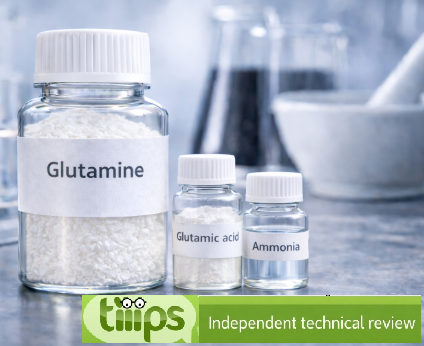
Glutamine is an amino acid that is highly abundant in the human body. Under normal physiological conditions, it is not classified as strictly essential, because the body can synthesize it; however, in some situations of metabolic stress, trauma, intense catabolism, or illness, it is often considered conditionally essential. The form of greatest biological, nutritional, and technical interest is L-glutamine, with the formula C5H10N2O3 and a molecular weight of about 146.14 g/mol.
Description
Glutamine is a proteinogenic amino acid with an important role in nitrogen metabolism, tissue balance, and support for high-turnover cells, such as intestinal and immune cells. From an industrial point of view, it can be obtained through fermentation or other production processes suitable for the required grade.
For food and nutritional applications, the main factors are purity, the correct stereochemical profile, microbiological quality, and control of contaminants. In cosmetics, Glutamine is a relatively simple ingredient, used mainly in formulas that emphasize an amino acid profile and support the conditioning of skin and hair.
Production process
For food and nutraceutical use, L-glutamine is commonly produced through microbial fermentation, followed by purification, crystallization, drying, and analytical controls. This approach allows good selectivity and suitable quality for regulated applications.
For cosmetic or technical use, it may be supplied as a crystalline powder or as a component of amino acid blends or aqueous bases. Quality controls generally concern identity, assay, purity, moisture, contaminants, and batch stability.
Key constituents
In the case of Glutamine, the ingredient is essentially a single molecule and not a complex mixture. The main compound is therefore L-glutamine itself. Any accessory components of the commercial grade are limited to traces of process impurities, residual moisture, or possible excipients present in the finished raw material.
From a nutritional point of view, Glutamine is often discussed together with other amino acids involved in muscle, immune, and intestinal metabolism, but it has a distinct profile compared with the BCAAs.
Identification data and specifications
| Characteristic | Value | Note |
|---|---|---|
| Name | Glutamine / L-glutamine | biologically relevant form |
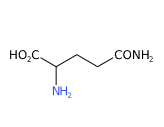
| Chemical name | 2-amino-4-carbamoylbutanoic acid | systematic name |
| Molecular formula | C5H10N2O3 | proteinogenic amino acid |
| Molecular weight | 146.14 g/mol | theoretical value |
| CAS number | 56-85-9 | refers to L-glutamine |
| EC number | 200-292-1 | EU identifier |
| Nutritional category | conditionally essential amino acid in some contexts | non-essential under normal physiological conditions |
| Calories | about 4 kcal/g | in the nutritional context |
| Commercial form | crystalline powder | the most common |
| Industrial origin | fermentation or synthesis/equivalent industrial processes | depending on the commercial grade |
Physico-chemical properties (indicative)
| Characteristic | Indicative value | Note |
|---|---|---|
| Appearance | white crystalline powder | pure grade |
| Odor | absent or very slight | generally neutral raw material |
| Solubility | soluble in water | compatible with aqueous systems |
| Stability | good under proper conditions, but should be protected from moisture and extreme conditions | depends on grade and storage |
| pH | depends on concentration in solution | should be checked on the commercial grade |
| Hygroscopicity | generally low or moderate | may vary by batch |
| Formulation compatibility | good in aqueous systems and amino acid blends | should be verified in complex formulas |
Food focus
From a food perspective, Glutamine is naturally present in protein-rich foods such as meat, milk, dairy products, eggs, legumes, and other protein sources. Under normal conditions, an adequate diet and healthy physiology generally allow requirements to be covered without particular difficulty.
Glutamine is also widely used in the sports and nutraceutical sector, where it is proposed for recovery, support of muscle metabolism, or assistance under conditions of high physical load. However, its use as a supplement should be interpreted with balance: in many healthy individuals, the practical benefit is not always as marked as sometimes suggested by marketing, and the real usefulness depends on the nutritional context, the intensity of physical stress, and the overall quality of the diet.
In the clinical and metabolic field, Glutamine is of particular interest because it may become conditionally essential in catabolic states or under strong stress, but this does not mean that every healthy person necessarily needs to supplement it. In practice, supplementation should be evaluated in context and not assumed automatically.
Cosmetic focus
In the cosmetic sector, Glutamine is used mainly as an ingredient with hair conditioning, skin conditioning, and, according to some informative databases, also antistatic functions. In practice, it is included in formulations designed to highlight the amino acid content, improve the technical profile of the formula, and help maintain good skin and hair condition.
In skin formulations it may be used in light serums, hydrating products, gentle emulsions, and amino acid complexes. In hair products it may contribute to the conditioning profile and reduction of electrostatic effect, especially when associated with other amino acids, humectants, and conditioning agents.
From a formulation point of view, it is a relatively simple ingredient to handle, generally compatible with aqueous systems. Its cosmetic impact, however, is often more complementary than leading: the perceived value depends on the overall formula, the actual concentration, and the delivery system.
Cosmetics
Commonly reported INCI / informative functions: hair conditioning, skin conditioning, antistatic.
Pros
It is an amino acid with an important and well-known metabolic role.
In some physiological or catabolic contexts it may acquire conditionally essential relevance.
It is widely available in protein foods and standardized nutritional products.
In cosmetics it is a simple ingredient to incorporate into aqueous formulations and amino acid complexes.
It may contribute to the conditioning profile of skin and hair products.
Cons
Supplementation is not automatically necessary in healthy subjects with an adequate diet.
Practical benefits in the sports context may be less evident than suggested by some commercial claims.
In nutritional use, the real value depends greatly on the clinical, dietary, and metabolic context.
In cosmetics, on its own it often has a more complementary than central role.
In complex formulas, as with other hydrophilic actives, overall compatibility with pH, preservatives, and other ingredients should still be verified.
Safety, regulatory aspects and environment
From a safety perspective, Glutamine is a widely known and studied substance. For food use, the main issue is not so much toxicity at normal dietary quantities, but rather the appropriateness of the use context, the quality of the supplement, and the correct evaluation of the dose.
For cosmetic use, it is not considered a classic fragrance allergen. As with any ingredient, however, individual sensitivity in the finished product cannot be ruled out, especially if it is included in complex formulations or used on particularly reactive skin.
From an environmental and industrial point of view, modern fermentation-based processes are generally consistent with well-controlled production; actual impact, however, depends on the specific process, purification, and energy management of the manufacturing site.
Conclusion
Glutamine is an amino acid of great biological and nutritional interest, with primary value in the food focus because of its role in nitrogen metabolism, in supporting high-turnover tissues, and in the response to metabolic stress conditions. Under ordinary conditions it is not strictly essential, but in some contexts it may become conditionally essential.
In the cosmetic focus, Glutamine has a more technical and complementary role, as a skin conditioning, hair conditioning, and amino acid complex support ingredient. Overall, it is a solid, well-known, and relatively easy-to-handle ingredient, whose value emerges especially when it is placed in a well-designed nutritional or formulation context.
Studies
Nutritional supplementation with glutamine is used by athletes because, due to its immunomodulatory role, it may help improve certain fatigue-related parameters (1).
This study calculated the amounts of glutamine derived from both dietary and endogenous processes and established that clinical doses of free glutamine for intestinal disorders should be comparable to the daily amount of glutamine metabolized by the small intestine rather than to the daily dietary intake (2).
Supplementation with immunonutrients (arginine, omega-3 fatty acids, glutamine, nucleotides, beta-carotene, and/or branched-chain amino acids) is particularly important for patients with immunodeficiency, viruses, or severe infections (3).
A detailed synthesis has been provided of the biochemical framework of glutamine metabolism in leukemia, the molecular mechanisms that promote glutamine dependency, the downstream functional consequences on proliferation, redox balance, and leukemic stem cell biology, as well as the current landscape of therapeutic strategies and emerging directions aimed at overcoming resistance and improving clinical efficacy (4).
For more information:
Typical commercial product characteristics Glutamine
| Appearance | White powder |
| Boiling Point | 353.5±52.0°C at 760 mmHg |
| Melting Point | 185ºC |
| Loss on Drying | 3% Max |
| Sulphated Ash | 3% Max |
| Heavy Metal | 5ppm Max |
| Arsenic | 2ppm Max |
| Residual Solvents | 0.05% Max. |
| Yeast & Mold | 100/g Max |
| Density | 1.47 g/cm3 (20℃) |
| PSA | 106.41000 |
| LogP | -1.28 |
| Vapor Pressure | 0.0±1.8 mmHg at 25°C |
| Refractive index | 6.8 ° (C=4, H2O) |
| Solubility | H2O: 25 mg/mL |
| Pka | 2.17(at 25℃) |
| Total plate | ≤5000 cfu/g |
| Cadmium | ≤1 (mg/kg) |
| Lead | ≤5 (mg/kg) |
| Storage | −20°C |
 |  |
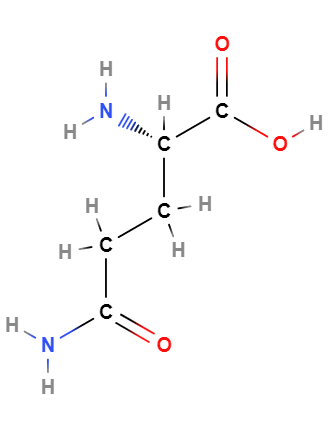 | 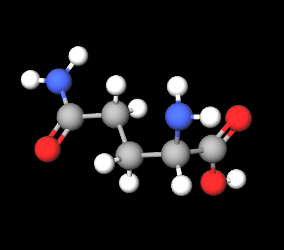 |
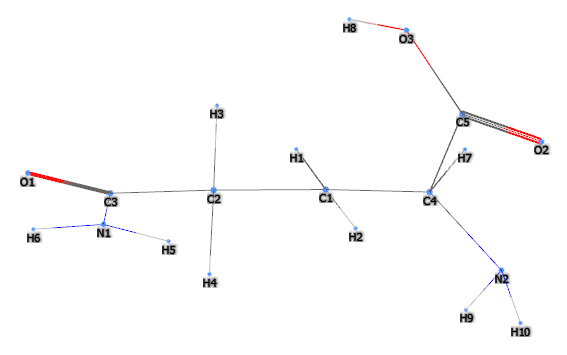
- Molecular Formula C5H10N2O3
- Linear Formula H2NCOCH2CH2CH(NH2)CO2H
- Molecular Weight 146.14
- Exact Mass 146.069138
- CAS 56-85-9
- UNII 0RH81L854J
- EC Number 200-292-1 230-006-0
- DSSTox Substance ID DTXSID1023100
- IUPAC (2S)-2,5-diamino-5-oxopentanoic acid
- InChI=1S/C5H10N2O3/c6-3(5(9)10)1-2-4(7)8/h3H,1-2,6H2,(H2,7,8)(H,9,10)/t3-/m0/s1
- InChl Key ZDXPYRJPNDTMRX-VKHMYHEASA-N
- SMILES C(CC(=O)N)C(C(=O)O)N
- MDL number MFCD00008044
- PubChem Substance ID 24895342
- ChEBI 18050
- eCl@ss 32160406
- Beilstein 1723797
- JECFA 1430
- NACRES NA.26
- FEMA 3684
- NSC 760081 759628
- RTECS MA2275100
- RXCUI 4885
- NCI C522
Synonyms
- Levoglutamide
- L-Glutamic acid 5-amide
- (S)-2,5-Diamino-5-oxopentanoic acid

