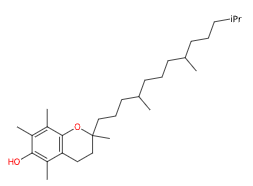
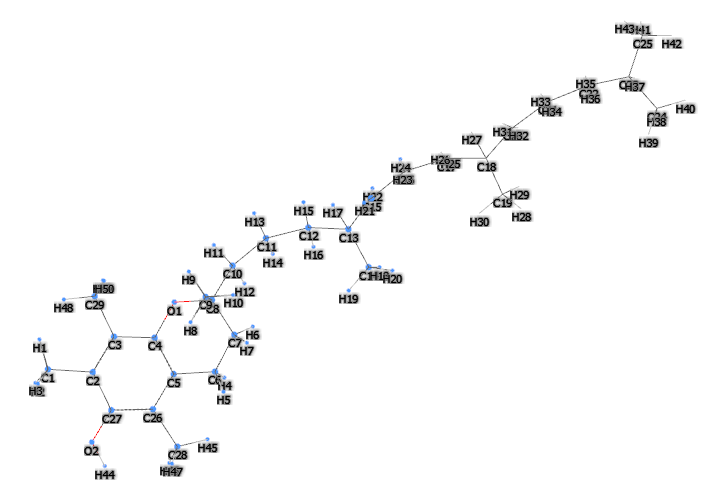
Alfa tocoferolo è uno dei quattro componenti isomeri che costituiscono il tocoferolo: alfa-tocoferolo, beta-tocoferolo, delta-tocoferolo e/o gamma-tocoferolo.
Alfa tocoferolo si trova in natura nei cereali, in oli e, in particolare in:
- Olio di oliva
- Olio di germe di grano
- Olio di palma
- Olio di soia
- Olio di mais
- Olio di girasole
- Uova
- Burro
- Arachidi
- Mandorle e altra frutta secca
A cosa serve e dove si usa
Il tocoferolo è costituito da alfa-tocoferolo, beta-tocoferolo, delta-tocoferolo e/o gamma-tocoferolo.
E' un antiossidante fondamentale e può essere prodotto con procedimento di sintesi, cioè per via chimica.
Medicina
La sua azione antiossidante ha effetti sul cervello (1), quando, nel sistema cardiovascolare, vi sono problemi di diabete causati dal colesterolo LDL (2) e nelle malattie epatiche (3).
In medicina è un coadiuvante per curare le malattie vascolari, come prevenzione per malattie cellulari e per un corretto funzionamento del sistema immunitario.
Nessuna azione positiva invece, è stata riscontrata verso il tumore alla prostata, come dimostra questo studio di durata molto lunga su molti campioni (4).
Alimentazione
Ingrediente inserito nella lista degli additivi alimentari europei come E307, antiossidante.
Cosmetica
Agente antiossidante. Ingrediente che contrasta lo stress ossidativo e che evita danni cellulari. I radicali liberi, i processi infiammatori patologici, le specie reattive dell'azoto e le specie reattive dell'ossigeno sono responsabili del processo di invecchiamento e di molte malattie causate dall'ossidazione.
Fragranza. Ha un ruolo decisivo e importante nella formulazione di prodotti cosmetici in quanto fornisce la possibilità di migliorare, mascherare o aggiungere profumo al prodotto finale aumentandone la commerciabilità. Il consumatore si aspetta sempre di trovare un profumo gradevole o particolare in un prodotto cosmetico.
Agente condizionante della pelle - Misto. Questo ingrediente ha il compito di modificare le condizioni della pelle quando è danneggiata o secca ridimensionandone la sfogliatura e restituendone elasticità.
Agente condizionante della pelle - Occlusivo. Questo ingrediente ha il compito di modificare le condizioni della pelle quando è danneggiata o secca ridimensionandone la sfogliatura e restituendone elasticità. Presenta un forte carattere lipofilo ed è identificato come ingrediente occlusivo; è composto generalmente da materiali oleosi e grassi che permangono sulla superficie cutanea e riducono la perdita di acqua trans epidermica.
"Alfa tocoferolo studi"
Vitamina E e Selenio. Studio
- Formula molecolare: C29H50O2
- Peso molecolare: 430.717 g/mol
- CAS: 59-02-9
- EC Number: 200-201-5 200-412-2
- UNII: N9PR3490H9
- PubChem Substance ID 24899979
- MDL number MFCD00072045
- Beilstein Registry Number 4712525
- DSSTox ID DTXSID0026339
- IUPAC (2R)-2,5,7,8-tetramethyl-2-[(4R,8R)-4,8,12-trimethyltridecyl]-3,4-dihydrochromen-6-ol
- InChl=1S/C29H50O2/c1-20(2)12-9-13-21(3)14-10-15-22(4)16-11-18-29(8)19-17-26-25(7)27(30)23(5)24(6)28(26)31-29/h20-22,30H,9-19H2,1-8H3/t21-,22-,29-/m1/s1
- InChl Key GVJHHUAWPYXKBD-IEOSBIPESA-N
- SMILES CC1=C(C2=C(CCC(O2)(C)CCCC(C)CCCC(C)CCCC(C)C)C(=C1O)C)C
- ChEBI 18145
- NACRES NA.75
- eCl@ss 34058016
- Nikkaji J24.260H
- NCI C68313 C2832 C74960
- RXCUI 237099 1236136 11256
- Metabolomics Workbench 29096
- Pharos Ligand 85BJCGZ83ZT5
Sinonimi:
- alpha-Tocopherol
- a-Tocopherol
- D-alpha-Tocopherol
- (2R,4'R,8'R)-alpha-Tocopherol
- 59-02-9
- dl-a-Tocopherol
- 5,7,8-Trimethyltocol
- (+)-alpha-Tocopherol
- (R,R,R)-alpha-Tocopherol
- DL-ALPHA-TOCOPHEROL
- Vitamin Ea
- Mixed tocopherols
- D-alpha tocopherol
- Syntopherol
- Denamone
- Viteolin
- Esorb
- Tocopherol (R,S)
- 2,5,7,8-Tetramethyl-2-(4',8',12'-trimethyltridecyl)-6-chromanol
- Aquasol E
- 10191-41-0
- (+)-|A-Tocopherol
- Tocopherol alpha
- a-Vitamin E
- (2R)-2,5,7,8-TETRAMETHYL-2-[(4R,8R)-4,8,12-TRIMETHYLTRIDECYL]CHROMAN-6-OL
- 2074-53-5
- Profecundin
- Waynecomycin
- Vitamin E alpha
- Vitaplex E
- N9PR3490H9
- Vita E
- EINECS 215-798-8
- Lan-E
- Med-E
- (R)-2,5,7,8-Tetramethyl-2-((4R,8R)-4,8,12-trimethyltridecyl)chroman-6-ol
- Antisterility vitamin
- alpha-Tocopherol acid
- Tenox GT 1
- Endo E
- Eprolin S
- Viterra E
- CHEBI:18145
- E Prolin
- Spavit E
- 2H-1-Benzopyran-6-ol, 3,4-dihydro-2,5,7,8-tetramethyl-2-[(4R,8R)-4,8,12-trimethyltridecyl]-, (2R)-
- Almefrol
- Emipherol
- Epsilan
- Etamican
- Tokopharm
- Vascuals
- Viprimol
- Vitayonon
- Etavit
- Ilitia
- Verrol
- Evion
- alpha-Tokoferol
- (2R)-2,5,7,8-tetramethyl-2-[(4R,8R)-4,8,12-trimethyltridecyl]-3,4-dihydro-2H-chromen-6-ol
- 3,4-Dihydro-2,5,7,8-tetramethyl-2-(4,8,12-trimethyltridecyl)-2H-benzopyran-6-ol
- BPBio1_000362
- alpha-Vitamin E
Bibliografia______________________________________________________________________
(1) Sakr HF, Abbas AM, El Samanoudy AZ. Effect of vitamin E on cerebral cortical oxidative stress and brain-derived neurotrophic factor gene expression induced by hypoxia and exercise in rats. J Physiol Pharmacol. 2015 Apr;66(2):191-202.
Abstract. Brain-derived neurotrophic factor (BDNF) is involved in the proliferation of neurons, and its expression increases significantly with exercise. We aimed to investigate the effects of chronic exercise (swimming) and sustained hypoxia on cortical BDNF expression in both the presence and absence of vitamin E. Sixty four male Sprague-Dawley rats were divided into two equal groups; a normoxic group and a hypoxic group. Both groups were equally subdivided into four subgroups: sedentary, sedentary with vitamin E, chronic exercise either with or without vitamin E supplementation. Arterial PO(2), and the levels of cortical malondialdehyde (MDA), antioxidants (reduced glutathione GSH, superoxide dismutase (SOD), catalase (CAT) and vitamin E) and BDNF gene expression were investigated. Hypoxia significantly increased MDA production and BDNF gene expression and decreased the antioxidants compared to control rats. Chronic exercise in hypoxic and normoxic rats increased MDA level and BDNF gene expression and decreased the antioxidants. Providing vitamin E supplementation to the hypoxic and normoxic rats significantly reduced MDA and BDNF gene expression and increased antioxidants. We conclude that sustained hypoxia and chronic exercise increased BDNF gene expression and induced oxidative stress. Moreover, vitamin E attenuated the oxidative stress and decreased BDNF gene expression in sustained hypoxia and chronic exercise which confirms the oxidative stress-induced stimulation of BDNF gene expression.
(2) Shirpoor A, Norouzi L, Nemati S, Khadem Ansari MH. Protective Effect of Vitamin E against Diabetes-Induced Oxidized LDL and Aorta Cell Wall Proliferation in Rat. Iran Biomed J. 2015 Apr;19(2):117-23.
Abstract, Hyperlipidemia and oxidized-low-density lipoproteins (Ox-LDL) are important independent cardiovascular risk factors that have been shown to stimulate vascular smooth muscle cell (VSMC) proliferation. The purpose of the present study was to investigate the effect of vitamin E on Ox-LDL, lipid profile, C-reactive protein (CRP), and VSMC proliferation of rat aorta.....Conclusions: These findings strongly support the idea that diabetes induces Ox-LDL-mediated oxidative stress and VSMC proliferation in aorta of rat and imply that vitamin E has a strong protective effect as an antioxidant.
(3) Miyanishi K, Hoki T, Tanaka S, Kato J. Prevention of hepatocellular carcinoma: Focusing on antioxidant therapy. World J Hepatol. 2015 Mar 27;7(3):593-9. doi: 10.4254/wjh.v7.i3.593. Review.
Abstract. Oxidative stress has been investigated in the context of alcoholic liver injury for many years and shown to be a causal factor of chronic hepatitis C (CHC), nonalcoholic steatohepatitis (NASH), drug-induced liver injury, Wilson's disease, and hemochromatosis. In CHC, it has been demonstrated that oxidative stress plays an important role in hepatocarcinogenesis. In cases with persistent hepatitis due to failure of hepatitis C virus eradication, or chronic liver disease, such as NASH, the treatment of which remains unestablished, it is important to reduce serum alanine aminotransferase levels and prevent liver fibrosis and development of hepatocellular carcinoma. This also suggests the importance of antioxidant therapy. Among treatment options where it would be expected that anti-inflammatory activity plays a role in their confirmed efficacy for chronic hepatitis, iron depletion therapy, glycyrrhizin, ursodeoxycholic acid, Sho-Saiko-To, and vitamin E can all be considered antioxidant therapies. To date, however, the ability of these treatments to prevent cancer has been confirmed only in CHC. Nevertheless, anti-inflammatory and anti-fibrotic effects have been demonstrated in other liver diseases and these therapies may potentially be effective for cancer prevention.
Khastar H. Protective effects of vitamin E against liver damage caused by renal ischemia reperfusion. Ren Fail. 2015 Feb 2:1-3.
Abstract. Recent studies have reported that remote organs are affected by renal ischemia reperfusion (IR). The present study investigates the role of vitamin E on the liver damage after renal IR. First, male mice were subjected to three groups (n = 9): 1) sham-operated, (2) renal IR (45 min ischemia), (3) renal IR + Vitamin E (150 mg/kg trough feeding tube for 28 d). After 24 h of reperfusion, animal were anesthetized for sample collections. Liver tissues malondialdehyde (MDA) increased and total glutathione (GSH) concentration decreased in the IR group compared to the sham group. Vitamin E consumption diminished the IR-induced increase in plasma AST and ALT. In addition, Vitamin E inhibited the IR-induced decrease in GSH activity and diminished IR-induced increase in MDA concentration. These findings showed that vitamin E consumption partly inhibited the IR-induced liver damage.
(4) Ramamoorthy V, Rubens M, Saxena A, Shehadeh N. Selenium and Vitamin E for Prostate Cancer - Justifications for the SELECT Study. Asian Pac J Cancer Prev. 2015;16(7):2619-27.
Abstract, There are several studies that relate oxidative damage as possible mechanism for many cancers. Many studies have also shown that anti-oxidants like selenium and vitamin E decrease the risk for prostate cancer. The main objective of the Selenium and Vitamin E Cancer Prevention Trial (SELECT) study was to look for the benefits of selenium and vitamin E supplementation on prostate cancer. The study had a large sample size, stringent experimental conditions, very long duration, standardized laboratories for biochemical analyses and other factors that contribute to high external validity. The SELECT study failed to show any significant risk reduction for prostate cancers ascribable to selenium and vitamin E supplementations. Because of these conflicting results, many researchers argue about the methods used, supplementations administered (selenium and vitamin E) and indicators used for assessing levels of supplementations. We reviewed many epidemiological studies, clinical trials, and pre-clinical studies. With corroborative evidences we justify that SELECT study has a sound methodology and rationale. In lieu of the contrary results of the select study, researchers should focus on the probable mechanisms for these contrary findings and continue their search for newer and effective agents for prevention of prostate cancer.