



Mannitol: properties, uses, pros, cons, safety
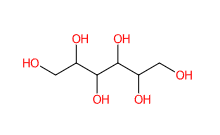
Mannitol is a polyol (sugar alcohol) widely used in the food, pharmaceutical, and cosmetic sectors. From a chemical point of view, it corresponds to D-mannitol, with the formula C6H14O6 and a molecular weight of about 182.17 g/mol. It generally appears as a white crystalline powder, with a sweet taste that is less intense than sucrose. In the food sector it is also known as the additive E421, while in cosmetics it is mainly used for its humectant, moisturising, and skin conditioning properties.
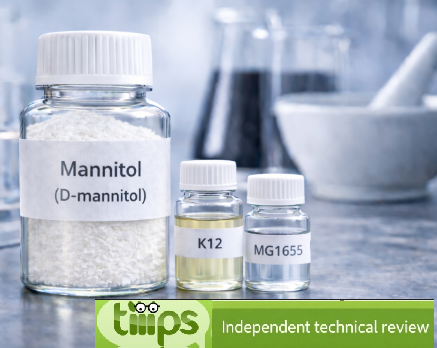
Mannitol (D-Mannitol) is a natural alcohol found in the human body in the form of a sugar alcohol, where it is metabolically inert. It is also found in plants and fruits (such as olives and persimmons), as well as in some fungi and marine algae.
Mannitol is a carbohydrate derived from the reduction of mannose or fructose and belongs to the polyol family. It may occur naturally in some plants, algae, fungi, and fruits, but industrially it is produced mainly by hydrogenation of suitable sugars or by fermentation, depending on the process and the commercial grade.
From a technological point of view, it is appreciated because it has a relatively stable profile, moderate sweetness, good compatibility with different matrices, and a lower tendency to absorb moisture compared with other polyols. In practice, this makes it interesting both in reduced-calorie food applications and in cosmetic formulations where a humectant ingredient is desired without excessive stickiness.
Production process
At the industrial level, Mannitol can be obtained by catalytic hydrogenation of suitable sugars or through fermentation processes. After production, the material is purified, concentrated, crystallized, dried, and subjected to the quality controls required for the intended grade.
For food use, what matters in particular is purity, compliance with the specifications of additive E421, contaminant control, and batch-to-batch consistency. For cosmetic use, in addition to chemical identity and purity, particle size, residual moisture, formulation compatibility, and microbiological quality are also considered.
Key constituents
In the case of Mannitol, the ingredient is essentially a single substance and not a complex mixture. The relevant compound is therefore D-mannitol itself. Any secondary components of the commercial grade are generally limited to traces of moisture, process impurities, or technological excipients, if present in the finished raw material.
Identification data and specifications
| Characteristic | Value | Note |
|---|---|---|
| Name | Mannitol / D-mannitol | polyol |
| Chemical name | hexane-1,2,3,4,5,6-hexol | systematic name |
| Molecular formula | C6H14O6 | sugar alcohol |
| Molecular weight | 182.17 g/mol | theoretical value |
| CAS number | 69-65-8 | commonly reported identifier |
| EC number | 200-711-8 | EU identifier |
| Food additive | E421 | mannitol / mannitol from fermentation |
| Nutritional category | polyol / bulk sweetener | food use |
| Calories | 2.4 kcal/g in EU labeling | energy value of polyols in the EU |
| Commercial form | crystalline powder | the most common |
Physico-chemical properties (indicative)
| Characteristic | Indicative value | Note |
|---|---|---|
| Appearance | white crystalline powder | pure grade |
| Odor | absent or almost absent | generally neutral raw material |
| Taste | sweet, less intense than sucrose | with possible cooling effect |
| Solubility | soluble in water | useful in aqueous systems |
| Hygroscopicity | generally low | technological advantage in some applications |
| Stability | good if properly stored | avoid moisture and contamination |
| Formulation compatibility | good in many food and cosmetic bases | should be verified in complex systems |
Medical
In surgery, it is used to reduce intracranial pressure and facilitate brain retraction in cases of aneurysm rupture, as well as to reduce intraocular pressure (1).
Together with biotin, it can stimulate the accumulation of important lipids produced by microalgae (2).
It is a good diuretic.
It is used as a research tool in cell biology studies to control osmolarity and as a bacterial culture agent. It is also used for the determination of boron in chemical analysis.
It has both moisturizing and antioxidant properties, which make it a useful pharmaceutical excipient.
Food focus
In the food focus, Mannitol is used as a sweetener and bulking agent in reduced-calorie products, no-added-sugar products, or formulations designed for specific technological needs. Compared with sucrose, it provides less energy within the framework of European labeling and has lower sweetness, a feature that can be useful when the taste profile needs to be modulated without reaching the typical intensity of common sugar.
From a practical point of view, Mannitol is also appreciated for its lower tendency to retain moisture compared with other polyols. For this reason, it can be used in coatings, tablets, chewing gum, confectionery, powdered products, and other applications where physical stability and flowability are important. In addition, like other polyols, it is generally considered non-cariogenic or at least more favorable than sucrose from a dental perspective.
From a nutritional point of view, Mannitol should not be considered an essential nutrient, but rather a technological ingredient useful for partially replacing sugar. However, its use must be contextualized: a product with polyols is not automatically “healthy” overall, because the final profile always depends on the whole formulation. Another important point is gastrointestinal tolerance: like other polyols, if consumed in high quantities it may promote bloating, laxative effects, or osmotic diarrhea. In Europe, products containing more than 10% added polyols must carry the warning relating to possible laxative effects from excessive consumption.
Cosmetic focus
In the cosmetic focus, Mannitol is used mainly as a humectant, moisturising, skin conditioning, and, according to some classifications, also binding or masking ingredient. Its main role is to help retain water in the formula or on the skin surface, contributing to the maintenance of comfort and skin softness.
In skincare formulations it may appear in serums, gels, light creams, moisturizing products, and multi-active systems. Its presence is especially interesting when the goal is to combine a humectant function with good physical stability and a relatively light sensory profile. In some systems it may also be used as a technological support or carrier for other sensitive ingredients.
From a formulation point of view, Mannitol is generally fairly easy to incorporate into aqueous bases or light emulsions, but its real cosmetic usefulness depends on concentration, synergy with other humectants such as glycerin or hyaluronic acid, and the overall structure of the formula. In practice, it is rarely the “star” active, but it can be a good support ingredient.
Possible association with cardiovascular risk
In recent years, several metabolomic studies have reported a possible association between higher circulating concentrations of the mannitol/sorbitol signal and increased cardiovascular risk. These findings require particularly careful interpretation, however, because mannitol and sorbitol are isomers and several studies did not measure them separately.
In 2023, an individual participant data meta-analysis involving six cohorts, a total of 7,897 individuals and 1,373 incident myocardial infarctions during follow-up identified numerous metabolites associated with myocardial infarction risk. Among them, the signal reported as mannitol/sorbitol showed the strongest positive association, with a hazard ratio of 1.40 (95% CI: 1.26–1.56) (3).
A further prospective study published in the European Journal of Preventive Cardiology examined 762 women who developed coronary heart disease and 762 matched controls from the Nurses’ Health Study. Women with plasma mannitol/sorbitol concentrations in the highest quartile had a 42% higher risk of coronary heart disease than those in the lowest quartile, even after adjustment for diabetes and other risk factors (4).
The study, however, has an important limitation: the metabolomic method used could not separate mannitol from sorbitol, and the two compounds were therefore detected as a single signal. It is consequently impossible to determine whether the observed association was due to mannitol, sorbitol, both compounds, or underlying metabolic alterations affecting their circulating concentrations (4).
In 2026, a study published in Clinical Nutrition used three large prospective cohorts comprising a total of 7,685 participants to identify and validate circulating metabolites associated with ultra-processed food consumption. The mannitol/sorbitol signal was among the metabolites associated both with ultra-processed food intake and with incident coronary heart disease (5). This finding increases interest in the biomarker but does not demonstrate that mannitol used as a food additive is responsible for the increased risk, since ultra-processed foods contain numerous ingredients and have nutritional and metabolic characteristics that may contribute to the association.
Differences compared with xylitol and erythritol
For mannitol, based on current evidence, a specific prothrombotic effect comparable with that experimentally described for xylitol has not been demonstrated.
In a study involving 38 patients undergoing elective craniotomy, intravenous administration of a high dose of mannitol of 1 g/kg did not produce clinically relevant alterations in platelet function (6). A 2025 review published in Cardiovascular Research also concluded that the effects of other sugar alcohols on platelet responsiveness remain to be determined and that, according to the available evidence, mannitol does not appear to produce significant changes in platelet function (7).
These findings cannot be directly compared with normal dietary consumption because they also include pharmacological intravenous administration. Nevertheless, they indicate that mannitol currently lacks the specific mechanistic evidence of a prothrombotic effect that has been reported for xylitol.
Overall assessment
The cardiovascular associations reported in metabolomic studies deserve attention and further investigation. However, the available evidence does not establish that dietary consumption of mannitol E421 causes myocardial infarction or coronary heart disease.
The main limitation is that the most important studies measured mannitol and sorbitol together and assessed their circulating concentrations rather than the amount of mannitol consumed in foods. Elevated plasma levels may also reflect underlying metabolic processes rather than necessarily indicating high dietary exposure.
The cardiovascular signal should therefore be reported, but it cannot currently be attributed specifically to mannitol until targeted studies that separately measure the two polyols and assess dietary exposure clarify the causal relationship.
Cosmetics - INCI Functions
Binder agent. Ingredient that is used in cosmetic, food and pharmaceutical products as an anti-caking agent with the function of making the product in which it is incorporated silky, compact and homogenous. The binder, either natural such as mucilage, gums and starches or chemical, may be in the form of a powder or liquid.
Fragrance. It plays a decisive and important role in the formulation of cosmetic products as it provides the possibility of enhancing, masking or adding fragrance to the final product, increasing its marketability. The consumer always expects to find a pleasant or distinctive scent in a cosmetic product.
Humectant. Hygroscopic compound used to minimise water loss in the skin and to prevent it from drying out by facilitating faster and greater absorption of water into the stratum corneum of the epidermis. The epidermis is the most superficial of the three layers that make up human skin (epidermis, dermis and hypodermis) and is the layer that maintains hydration in all three layers. In turn, the epidermis is composed of five layers: horny, the most superficial, granular, spinous, shiny, and basal. Humectants have the ability to retain the water they attract from the air in the stratum corneum and have the function of moisturising the skin. They are best used before emollients, which are oil-based.
Moisturizing. This ingredient is responsible for preventing the evaporation of moisture from the skin and improving cellular activity. When exposed to cold or hot air currents, the skin absorbs water from its inner layer to compensate for the evaporated water. If the draught phenomenon persists, the stratum corneum is dry and, if at all, damaged.
Skin conditioning agent. It is the mainstay of topical skin treatment as it has the function of restoring, increasing or improving skin tolerance to external factors, including melanocyte tolerance. The most important function of the conditioning agent is to prevent skin dehydration, but the subject is rather complex and involves emollients and humectants that can be added in the formulation.
Other uses
Plastics industry to produce artificial glycerine resins and rosin esters.
Explosives and as nitrified mannitol to produce detonators.
Pros
It is a well-known and technically versatile polyol.
In food applications it allows a reduction in energy intake compared with sucrose.
It has low hygroscopicity compared with other polyols, which is useful in some technological applications.
It is suitable for formulations where physical stability, flowability, or moisture control are needed.
In cosmetics it works well as a humectant and as an ingredient supporting skin conditioning.
Cons
It is less sweet than sucrose, so it is not always sufficient on its own from a sensory point of view.
High consumption may cause gastrointestinal disturbances and laxative effects.
The fact that a product is “sugar-free” or “with polyols” does not automatically make its overall profile better.
In cosmetics it often plays a more complementary than central role.
In complex formulas, compatibility with the preservative system, pH, and other humectants should still be verified.
Safety, regulatory aspects and environment
From a food-safety perspective, Mannitol is authorised in the European Union as food additive E421, with specifications established for conventional mannitol and mannitol produced by fermentation. The best-established adverse effect under normal food-use conditions remains gastrointestinal tolerance: high intakes can cause bloating, osmotic diarrhoea and a laxative effect. Recent metabolomic studies have also associated elevated plasma concentrations of the combined mannitol/sorbitol signal with increased risks of myocardial infarction or coronary heart disease (3,4,5). Because these studies did not adequately distinguish mannitol from sorbitol and do not demonstrate that dietary mannitol caused the association, the clinical significance of these findings remains uncertain.
In cosmetics, Mannitol is among the ingredients generally considered safe under normal conditions of use, especially when included in properly designed formulations. It is not a classic fragrance allergen; however, as with any ingredient, tolerability should always be referred to the finished product.
From an industrial and environmental point of view, fermentation processes may offer an interesting profile in terms of production selectivity, but the real impact depends on the specific process, purification, raw materials used, and the energy management of the production site.
Conclusion
Mannitol is a solid, versatile, and well-established ingredient, with a primary role in the food focus as a polyol with reduced energy contribution compared with sugar and with useful technological applications in many product categories. In the cosmetic focus it acts mainly as a humectant and skin conditioning ingredient, with a supporting technical role rather than that of a leading active.
Overall, its value emerges above all when it is used in the correct context: in foods where specific technological properties and partial calorie reduction are needed, and in cosmetics where hydration, stability, and good formulation compatibility are desired.
Regarding cardiovascular safety, new signals have emerged that require further investigation: elevated concentrations of the metabolite detected as mannitol/sorbitol have been associated in several prospective studies with a higher incidence of myocardial infarction or coronary heart disease. However, it is currently not possible to attribute this risk specifically to mannitol or to demonstrate that it results from its consumption as a food additive. Unlike xylitol, a specific prothrombotic activity has not so far been demonstrated for mannitol. These findings therefore require cautious interpretation until studies that analytically distinguish mannitol from sorbitol and directly assess dietary exposure become available.
The most relevant studies on this ingredient have been selected with a summary of their contents:
Typical commercial product characteristics Mannitol
| Appearance | White crystalline powder |
| Boiling Point | 494.9±0.0°C at 760 mmHg |
| Melting Point | 167-170ºC |
| Flash Point | 292.5±23.3°C |
| Density | 1.6±0.1 g/cm3 |
| Specific Rotation | +137~+145 |
| Maltitol & Isomalt | ≤2.0% |
| Sorbitol | ≤2.0% |
| Impurities | ≤0.10% |
| Reducing sugars | ≤0.1% |
| Nickel | ≤1ppm |
| Loss on drying | ≤0.5% |
| Conductivity | ≤20us/cm |
| Total Heavy Metals | ≤10ppm |
| Arsenic | ≤1ppm |
| Lead | ≤2ppm |
| Cadmium | ≤0.1ppm |
| Total Plate | ≤5000cfu/g |
| Total Yeast & Mold | ≤100cfu/g |
| PSA | 121.38000 |
| LogP | -4.67 |
| Refraction Index | 1.597 |
| Vapor Pressure | 0.0±2.8 mmHg at 25°C |
| Storage | 2-8°C |
| Shelf life | 2 Years |
 |  |
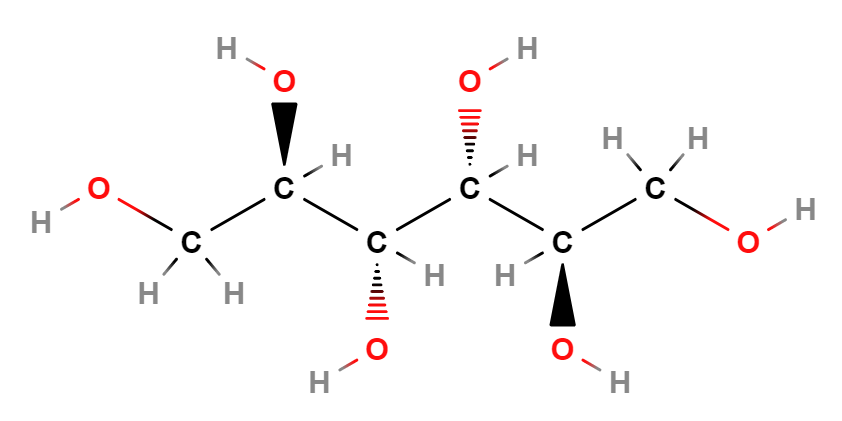 | 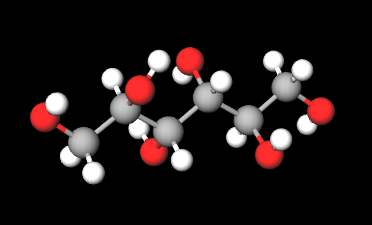 |
- Molecular Formula C6H14O6
- Molecular Weight 182.172 g/mol
- Exact Mass 182.079041
- CAS 69-65-8 87-78-5
- EC Number: 200-711-8 201-770-2
- UNII: 3OWL53L36A
- PubChem Substance ID 329823038
- MDL number MFCD00064287
- Beilstein Registry Number 1721898
- DSSTox Substance ID DTXSID1023235
- IUPAC (2R,3R,4R,5R)-hexane-1,2,3,4,5,6-hexol
- InChI=1S/C6H14O6/c7-1-3(9)5(11)6(12)4(10)2-8/h3-12H,1-2H2/t3-,4-,5-,6-/m1/s1
- InChl Key FBPFZTCFMRRESA-KVTDHHQDSA-N
- SMILES C(C(C(C(C(CO)O)O)O)O)O
- ChEBI 16899
- NCI C625
- RXCUI 6628
- RTECS OP2060000
Synonyms:
- Mannite
- D-mannitol
- Osmitrol
- Mannitol, D-
- Manna sugar
- Invenex
- Osmofundin
- Osmosal
- Cordycepic acid
- Mannidex 16700
- Mannit

