



Acetate potassium, Potassium acetate
(CH₃COOK; food additive E261(i) — acidity regulator/buffer)
Description
• Potassium salt of acetic acid with a neutral–slightly acetic taste; used as an acidulant/acidity regulator and buffer across many foods, also in low-sodium formulations as an alternative to sodium acetates.
• Supplied as high-purity granules/powder (food grade) and sometimes as solutions for continuous dosing; highly hygroscopic.

Indicative nutrition values (per 100 g; technological ingredient, not intended for direct consumption)
• Energy: ~0–10 kcal (negligible)
• Carbohydrate, protein, fat: negligible
• Total potassium: ~39–40 g/100 g (≈ 390–400 mg K per 1 g product)
• Sodium: 0 g
• Note: primarily a processing aid; potassium contribution becomes relevant only at gram-level use.
Key constituents
• Predominantly potassium acetate (conjugate base of a weak acid).
• Allowed traces of free acetic acid and moisture per spec; inorganic impurities (chlorides/sulfates/metals) within limits.
• No known intrinsic allergens; manage only cross-contact risks.
Chemical composition and structure
• Formula: CH₃COOK (monovalent salt of ethanoic acid).
• Molar mass: ~98.14 g/mol.
• Acts as a buffer in water with acetic acid (acid/base pair).
• Potassium mass fraction ≈ 40%.
Physical properties
• Appearance: white crystals/powder, odorless or faintly acetic.
• Solubility: freely soluble in water; miscible with ethanol; hygroscopic/deliquescent.
• pH (1% w/v in water): typically 7.5–9.0 (influenced by purity and dissolved CO₂).
• Melting/decomposition: ~292 °C (decomposes).
• Stability: stable at ambient when dry; absorbs moisture/CO₂ with pH drift.
Production process
• Neutralization of food-grade acetic acid with potassium hydroxide/carbonate/bicarbonate under controlled pH/temperature.
• Filtration/polishing → concentration/drying → milling/sieving to target particle size.
• Quality controls for assay, solution pH, metals, insolubles; packaged under GMP/HACCP.
Sensory and technological properties
• Acidity regulation/buffering: stabilizes pH with acetic acid, smoothing process and shelf-life variations.
• Sodium-free salt effect: useful in reduced-sodium product design.
• Antimicrobial support: acetate activity is strongest at acidic pH; can work synergistically with acetates/diacetates/lactates.
• Interactions: high doses can influence fermentations/leavening; broadly compatible with most food matrices.
Food applications
• Cooked meats/RTE: pH control and hygiene support (often blended with lactate/diacetate).
• Sauces, acid preserves, condiments: buffering for stable acidity and flavor.
• Bakery/snacks: dough/seasoning pH tuning; low-sodium option vs sodium acetates.
• Beverages/syrups: fine pH adjustment with limited flavor impact.
• Medical/clinical (out of food scope): acetate anion/electrolyte source in specific formulas.
Nutrition & health
Potassium acetate is a technological ingredient, not intended as a nutrient. It can nonetheless add dietary potassium (~40% w/w), which supports neuromuscular function and normal blood pressure within a balanced diet. Individuals with impaired renal function, on potassium-sparing diuretics, or at risk of hyperkalemia should limit intake per medical advice.
Metabolically, the acetate anion is rapidly oxidized and contributes mild alkalinizing capacity in buffer systems. The product is sodium-free, useful for low-sodium targets; any nutrition claims on finished foods must observe legal thresholds.
Portion note: Typical use 0.05–0.50% (0.5–5 g/kg) in sauces/condiments and 0.10–0.80% in meats/RTE (often in blends). In highly acidic or flavor-sensitive systems, start at 0.05–0.20% and optimize via trials.
Quality and specifications (typical topics)
• Assay (as CH₃COOK) ≥99.0% anhydrous; solution pH within spec.
• Heavy metals (Pb, As, Cd, Hg) within limits; chlorides/sulfates low; insolubles minimal.
• Loss on drying/moisture controlled; free acetic acid within limits.
• Particle size: tailored (low-dust fine powder vs low-fines granules).
• Microbiology: does not support growth; very low counts; pathogens absent/25 g.
Storage and shelf-life
• Store tightly closed, dry, and dark in moisture-barrier packaging (multi-wall bags/drums with liners).
• Avoid uptake of moisture/CO₂ (caking, pH drift).
• Typical shelf-life: 24–36 months unopened; reseal with desiccant after opening.
Safety and regulatory
• EU: additive E261(i) (acidity regulator/buffer), generally at QS (quantum satis) under GMP and category limits.
• Other jurisdictions: permitted as ingredient/additive; in the US, generally recognized as GRAS for intended uses.
• Operate under GMP/HACCP with full traceability; SDS available.
Labeling
• Names: “potassium acetate”, “E261(i)”.
• For blends with other organic salts, declare ratios; include use directions and storage statements.
• For low-sodium positioning, verify claims on the finished product.
Troubleshooting
• Over-acetic taste → excess free acid or high dose → rebalance buffer ratio (acetate/acetic), reduce dose, adjust seasoning/sugars.
• Caking → moisture ingress → stronger barrier pack, add desiccant, minimize headspace.
• Off-target pH → insufficient buffering or absorbed CO₂ → check alkalinity, prepare fresh solution, limit aeration.
• Process interference (fermentations/leavening) → high doses can inhibit microbes → reduce level or adjust buffering at critical steps.
Sustainability and supply chain
• Potential bio-based origin when acetic acid is produced by fermentation (ethanol/acetic), lowering fossil footprint.
• Plant practices: heat/condensate recovery, wastewater managed to BOD/COD targets; recyclable packaging.
• Supplier qualification, audits, and residue programs under GMP/HACCP.
INCI functions (cosmetics)
• Potassium Acetate: pH buffer, antistatic/masking agent for leave-on/rinse-off products; use per cosmetic regulations and tolerability assessments.
Film-forming agent. It produces a continuous ultra-thin film with an optimal balance of cohesion, adhesion and stickiness on the skin or hair to counteract or limit damage from external phenomena such as chemicals, UV rays and pollution.
Conclusion
Acetate potassium is a clean, flexible buffer for stabilizing pH and sensory profiles, with added value in low-sodium recipes. Consistent performance relies on high purity, tight moisture control, correct buffer design, and suitable packaging.
Mini-glossary
• QS (quantum satis): Use “as needed” to achieve the technological effect under good practice.
• Buffer: Conjugate acid/base system that resists pH change.
• GMP/HACCP: Good manufacturing practice / hazard analysis and critical control points — Preventive hygiene and process-control systems.
• SDS: Safety data sheet — Product safety and handling document.
• BOD/COD: Biochemical/chemical oxygen demand — Wastewater load metrics guiding treatment and discharge.
• SFA: Saturated fatty acids — High intakes can raise LDL-cholesterol; this ingredient contributes none directly.
Studies
Medical
Used in the treatment of diabetic ketoacidosis (1), also has an antibacterial function (2), in intravenous therapy in the management of hypokalaemia (3).
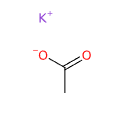 | 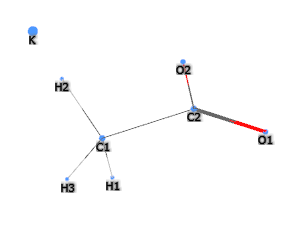 |
Molecular Formula : C2H3O2K C2H3KO2
Molecular Weight: 98.142 g/mol
CAS: 127-08-2
EC Number: 204-822-2
UNIII: M911911U02
FEMA Number: 2920
PubChem Substance ID:24898171
MDL number: MFCD00012458
Beilstein Registry Number: 3595449
Synonyms:
- Acetate, Potassium
- Acetic acid potassium salt
- Diuretic salt
- Potassium ethanoate

