Zinc sulphate is a chemical compound, an inorganic salt.
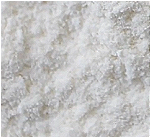
It appears as a white powder that is soluble in water.
Medical
Zinc sulphate is often used in medical medicine to counteract the lack of zinc in the human body, as an adjuvant in the treatment of burns, wounds and acne, multiple recalcitrant viral warts, as a low-toxic, well-tolerated alternative to D-penicillamine.
In severe rheumatoid arthritis and psoriasis, its efficacy is questioned by scientific studies (1) and may therefore be considered an effective third-line anti-rheumatic drug, like gold and d-penicillamine (2).
In dietary supplements, zinc sulfate is mainly used as a source of zinc, an essential trace element. It contributes to the normal function of the immune system. It supports protein synthesis and macronutrient metabolism. It is involved in the protection of cells from oxidative stress. It helps maintain normal skin, hair, and nails. It plays a role in cell division. It contributes to normal cognitive function. It supports vision and vitamin A metabolism. It is important for fertility and reproduction. It may contribute to carbohydrate metabolism. It has a role in enzyme regulation. It is a soluble and bioavailable form of zinc.
Safety
Il solfato di zinco è ben tollerato e gli effetti avversi hanno carattere di lievità (3).
Cosmetics
It is a restricted ingredient as III/24 an item in the Annexes of the European Cosmetics Regulation 1223/2009
Antimicrobial agent. This ingredient is able to suppress or inhibit the growth and replication of a broad spectrum of microorganisms such as bacteria, fungi and viruses by making the stratum corneum temporarily bactericidal and fungicidal.
Antiplaque agent. This ingredient has the property of preventing the onset of caries by fighting the bacteria responsible for acid corrosion of teeth.
Coupling agent. It is an ingredient that plays the role of a 'coupling component' in oxidation colours and reacts with a precursor when an oxidising agent is present.
Oral care agent. This ingredient can be placed in the oral cavity to improve and/or maintain oral hygiene and health, to prevent or improve a disorder of the teeth, gums, mucous membrane.
Other uses
Highly soluble fertiliser for treated soils, but if soils are not treated, it can cause up to 40% yield loss (4).
Animal feed.
It is used to increase the concentration of zinc in vegetables.
The most relevant studies on this chemical compound have been selected with a summary of the contents:
- Molecular Formula O4SZn ZnSO4
- Peso molecolare 161.436 g/mol
- CAS 7446-19-7 (monohydrate) 7733-02-0 (heptahydrate) 7733-02-0 (anhydrous)
- UNII PTX099XSF1
- EC number 231-793-3
Synonyms:
- Zinc sulphate
- Bonazen
- Medizinc
- Optised
- Sulfuric acid, zinc salt (1:1)
References_____________________________________________________________________
(1) Cimmino, M.A., Mazzucotelli, A., Rovetta, G., Bianchi, G. and Cutolo, M., 1984. The controversy over zinc sulphate efficacy in rheumatoid and psoriatic arthritis. Scandinavian journal of rheumatology, 13(2), pp.191-192.
(2) Rasker, J.J. and Kardaun, S.H., 1982. Lack of beneficial effect of zinc sulphate in rheumatoid arthritis. Scandinavian journal of rheumatology, 11(3), pp.168-170.
Abstract. Twenty-two patients with severe long-standing rheumatoid arthritis were treated with oral zinc sulphate in a prospective long-term open trial. Six patients had (only subjective) improvement during the first 6 months of treatment, but all deteriorated subsequently. The remaining 16 deteriorated or did not improve and these patients expressed a wish to stop taking the drug after a mean period of 5 months. In the whole group of 22 patients, neither the number of affected joints, the ARA grading, nor functional classification changed significantly, nor did ESR, haemoglobin, haematocrit, or platelet count. The unpleasant taste and nausea caused by zinc sulphate was the main side effect. Our study confirms that ZnSO4 has no long-lasting beneficial effect for patients severely affected with rheumatoid arthritis.
(3) Kurugöl, Z., Akilli, M., Bayram, N. and Koturoglu, G., 2006. The prophylactic and therapeutic effectiveness of zinc sulphate on common cold in children. Acta Paediatrica, 95(10), pp.1175-1181.
Abstract. Aim: To determine the efficacy of prophylactic administration of zinc sulphate in reducing the occurrence of the common cold in children, and to evaluate the efficacy of zinc sulphate in reducing the duration and severity of cold symptoms. Methods: A total of 200 healthy children were randomly assigned to receive oral zinc sulphate (zinc group, n=100) or placebo (placebo group, n=100). Zinc sulphate (15 mg of zinc) or placebo syrup were administered for prophylaxis once daily during a 7-mo study period. The dose was increased to two times per day (30 mg of zinc) at the onset of cold, until symptoms resolved. Results: The mean number of colds in the zinc group was significantly less than in the placebo group (1.2 vs 1.7 colds per child; p=0.003). The mean cold-related school absence was 0.9 d per child in the zinc group versus 1.3 d in the placebo group (p=0.04). Compared to the placebo group, the zinc group had shorter mean duration of cold symptoms and decreased total severity scores for cold symptoms (p<0.0001). Adverse effects were mild and similar in both groups. Conclusion: Zinc sulphate appears to be an easily administered, safe and well-tolerated alternative for the prevention and treatment of the common cold in children.
(4) Vadlamudi, K., Upadhyay, H., Singh, A. and Reddy, M., 2020. Influence of zinc application in plant growth: an overview. Eur. J. Mol. Clin. Med, 7, pp.2321-2327.
Abstract. Although zinc is considered as micronutrient it has a vital role in plant growth. Among all metals, the largest number of proteins required zinc for their catalytic function. Zinc-binding proteins make up nearly 10% of all protein in biological systems. Zinc plays a vital role in biological systems like structural integrity of membrane and contribution to protein synthesis also gene expression. According to FAO that zinc is considered as most commonly deficient in agriculture soils about 50%. Sometimes add more phosphorus may lead to the deficient of zinc in the soil for some reason. In plants zinc deficient can be noticed by the leaf chlorosis, necrotic spots on leaves, bronzing of leaves, resetting of leaves, stunting of plants, dwarf leaves, malformed leaves. Zinc deficient soil can as treat well in many ways and the most used method is the application of zinc-containing fertilizers. Zinc sulphate is a widely used fertilizer. If soils are untreated it may cause up to 40% yield loss without the appearance of distinct leaf symptoms. One percent zinc-containing NPK and urea fertilizer are available in many countries. Zinc also is used as seed treatment instead of the application of fertilizer and root dipping or transplant seedlings. Thus, zinc is considered an important micronutrient for plant growth.




