



E150d (Sulphite ammonia caramel): properties, uses, pros, cons, safety, alternatives
E150d (Sulphite ammonia caramel or Caramel Color IV or E150d) is a chemical compound, a type of caramel produced by the controlled heat treatment of carbohydrates, in this case the sugar, in presence of both sulphites and ammonium compounds, an ingredient included in the list of European food additives as a colouring agent.
The name describes the structure of the molecule:
- "Sulfite" refers to the use of sulfite compounds in the process. Sulfites are a type of sulfur-based compound that is often used as a preservative in foods and beverages.
- "Ammonia" refers to the use of ammonia or ammonium compounds in the process. Ammonia is a compound of nitrogen and hydrogen.
- "Caramel" refers to the product of the process, a brown liquid or powder used primarily as a dye in food and beverages.
The synthesis process takes place in several stages:
- Preparation of carbohydrates. The carbohydrates used in the production of caramel can come from various sources, including corn syrup, sugar beet or cane sugar.
- Heat treatment. Carbohydrates are heated in a pressure vessel to produce caramelization. This process involves the transformation of sugars into a variety of complex compounds that give caramel its characteristic color and flavor.
- Addition of sulfite and ammonium compounds. During heat treatment, sulfite and ammonium compounds are added to the mixture. These compounds act as catalysts, favoring the formation of certain types of compounds that give caramel its specific properties.
- Purification. The reaction mixture is purified to isolate the color of the caramel. This typically involves processes such as filtration and centrifugation to remove any insoluble materials.
- Dilution. The concentrated caramel color is then diluted with water to produce a product with the desired color intensity.
- Quality control test. The final product is tested to ensure it meets the required specifications. This may involve testing for color intensity, clarity, and other physical and chemical properties.
It appears in the form of a light brown powder.
What it is used for and where
Food
A food additive colouring agent included with the number E150 in the list of European food additives. This number includes 4 types of Caramel :
- E150a : Plain caramel
- E150b : Caustic sulphite caramel
- E150c : Ammonia caramel
- E150d : Sulphite ammonia caramel
They are obtained from sugar by an industrial process using high temperatures and burning. The colour is dark and can vary from brown to black.
For E150c and E150d, there is an Acceptable Daily Intake (ADI) of about 200mg/kg body weight, while for E150a and E150b there is no ADI.
In particular, E150d - sulphite-ammoniacal caramel is a rather controversial colouring agent that is used in foodstuffs and is part of the E150 family of additives, all of which are colourants.
Cosmetics
Dye
Alternatives
| Option | Product type | Key advantages |
|---|---|---|
| E150a (plain caramel) | Caramel color made without ammonia and without sulfites | The “cleanest” option within the E150 family; more natural-leaning perception than E150d, but it can be less stable in highly acidic beverages versus E150d. |
| Caramelized sugar / burnt sugar (ingredient coloring) | Coloring ingredient (not necessarily an additive) | Strong clean-label positioning when handled as an ingredient; suitable for amber/brown shades, with stability and batch-variability considerations in low pH. |
| Malt extract / roasted barley malt | Cereal-derived coloring ingredient | Food-like browns for bakery/sauces/malted drinks; can add flavor notes and may not be neutral in taste/clarity. |
| Molasses / cane syrup | Naturally brown ingredient | Effective for deepening/warming color with natural positioning; impacts taste and sugar load, so best for compatible product categories. |
| Cocoa powder / cocoa extract | Natural brown coloring ingredient | Strong brown color and high natural perception; adds cocoa taste and may increase haze, so it fits only where cocoa notes are acceptable. |
 |  |
 |  |
The most relevant studies and their abstracts have been selected to explore this topic:
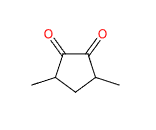
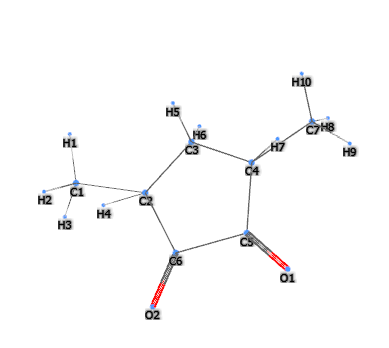
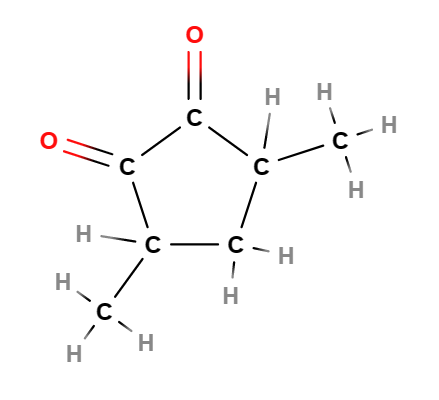
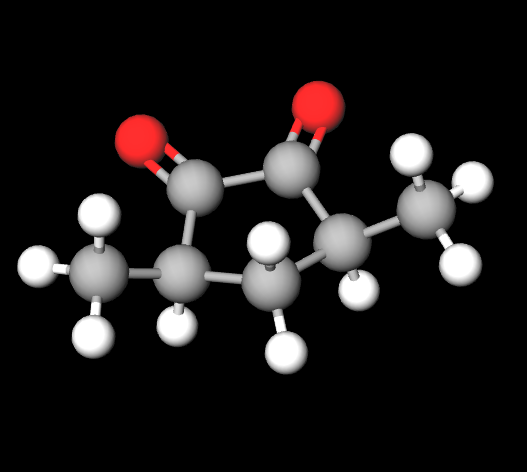
- Molecular Formula C7H10O2
- Molecular Weight 126.15
- CAS 8028-89-5
- UNII T9D99G2B1R
- EC Number 232-435-9
- DSSTox ID DTXSID0047660
- IUPAC 3,5-dimethylcyclopentane-1,2-dione
- InChl=1S/C7H10O2/c1-4-3-5(2)7(9)6(4)8/h4-5H,3H2,1-2H3
- InChl Key MIDXCONKKJTLDX-UHFFFAOYSA-N
- SMILES CC1CC(C(=O)C1=O)C
- NCI C80151
- JECFA 421
- FEMA 3269
- UN
Synonyms:
- ap680
- bc420(color)
- burntsugar
- burntsugarcoloring
- c.i.naturalbrown10
- caramelcolordye
- ds400
- p255
- rt80
- sethness858
- FEMA 2235
- CARAMEL I
- CARAMEL IV

