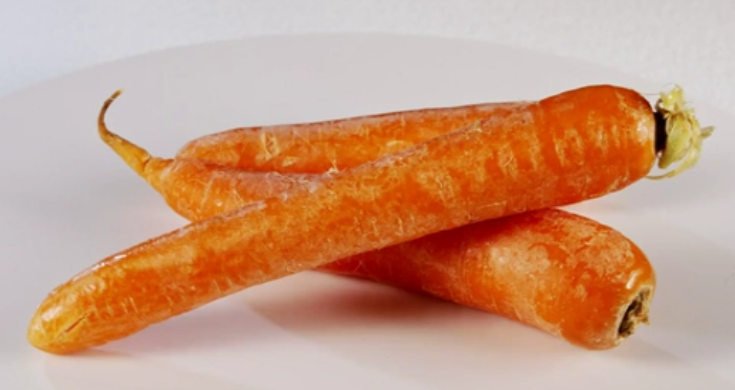
Beta carotene is a type of carotenoid and pigment found naturally in carrots, beets, plants, algae and photosynthetic bacteria.
The name "beta-carotene" comes from the Greek "beta" and the Latin "carota" (carrot). It is a member of carotenes, which are unsaturated hydrocarbon pigments, with their structure composed of two linked retinyl groups. These are derived from isoprene, with their carbon skeleton consisting of 40 carbon atoms, usually in the form of eight isoprene units. The term carotene is used for several unsaturated hydrocarbon substances related to the formula C40Hx, synthesized by plants and cannot be produced by animals.
The synthesis of beta-carotene in plants occurs in plastids (including chloroplasts) and involves the action of several enzymes. Here is a simplified version of the process:
- The process begins with the formation of geranygeranyl pyrophosphate (GGPP), a 20-carbon molecule formed by the 5-carbon molecule isopentenyl pyrophosphate (IPP), produced through the pathway of mevalonate or methylleritritol phosphate.
- Two molecules of GGPP are then condensed by the enzyme GGPP synthase to form carbon 40 phytoene, the first carotenoid in the pathway.
- Phytoene is then desaturated and isomerized by phytoene desaturase and zeta-carotene isomerase to form lycopene.
- Lycopene is then cyclized by lycopene cyclase to form alpha-carotene or beta-carotene, depending on the specific enzyme cyclase involved.
The industrial synthesis of beta-carotene is carried out chemically or through the use of microorganisms.
- Chemical synthesis. This involves a series of reactions beginning with the condensation of two isoprene molecules to form a compound with ten carbon atoms. This compound undergoes a series of reactions, including isomerisation, cyclization and dehydrogenation, to form beta-carotene. This process requires precise control of reaction conditions and the use of various catalysts. The end product is often a mixture of different carotenoids that must be separated and purified.
- Microbial synthesis. Microbial synthesis of beta-carotene involves the use of microorganisms such as fungi, yeasts or genetically modified bacteria to produce beta-carotene. The microorganisms are grown in a controlled environment where they convert simple sugars into beta-carotene. The beta-carotene is then extracted and purified. This method is more environmentally friendly and sustainable than chemical synthesis, but can be more expensive and the yield may be lower.
- One of the most common industrial methods for producing beta-carotene is the fermentation of the fungus Blakeslea trispora. This fungus naturally produces beta-carotene and, through selection and optimisation of growth conditions, may be able to produce large quantities of beta-carotene.
- Another method is the use of genetically modified bacteria or yeasts. For example, the yeast Saccharomyces cerevisiae has been genetically modified to produce beta-carotene by introducing genes for the enzymes needed to convert acetyl-CoA, a common metabolite, into beta-carotene.
What it is for and where
Medical
Taken in the human body, it turns into vitamin A (retinol) and helps protect the eyes and the immune system in general, with particular reference to the skin and mucous membranes.
It has an antioxidant function and protects the body from harmful molecules called "free radicals" that damage cells by oxidizing them and producing premature aging.
Food
Ingredient included in the list of European food additives as colouring E160a (ii): beta carotene obtained from the fermentation of the fungus Blakeslea trispora, palm oil, carrots and algae.
Cosmetics
It is a restricted ingredient as IV/111 a Relevant Item in the Annexes of the European Cosmetics Regulation 1223/2009. Ingredient or substance at risk:
Skin conditioning agent. It is the mainstay of topical skin treatment as it has the function of restoring, increasing or improving skin tolerance to external factors, including melanocyte tolerance. The most important function of the conditioning agent is to prevent skin dehydration, but the subject is rather complex and involves emollients and humectants that can be added in the formulation.
Safety
However, it should be noted that indiscriminate assumptions of vitamin A can be toxic, so it is useless to exaggerate as the body provides for superfluous quantities, but not excessive doses.

- Molecular Formula: C40H56
- Molecular Weight: 536.888 g/mol
- CAS: 7235-40-7
- EC Number: 230-636-6
- UNII: 01YAE03M7J
- PubChem Substance ID 329748926
- MDL number MFCD00001556
- Beilstein Registry Number 1917416
Synonyms:
- beta Carotene
- Serlabo
- beta,beta-Carotene
- Natural Yellow 26
- Provitamin A
- Karotin
- Betacarotene
- Solatene
- Food orange 5
- Carotaben
- Lucaratin
- Provatene
- C.I. 75130
- CI 40800
- (all-E)-1,1'-(3,7,12,16-Tetramethyl-1,3,5,7,9,11,13,15,17-octadecanonaene-1,18-diyl)bis(2,6,6-trimethylcyclohexene)
- 2,2'-((1E,3E,5E,7E,9E,11E,13E,15E,17E)-3,7,12,16-tetramethyloctadeca-1,3,5,7,9,11,13,15,17-nonaene-1,18-diyl)bis(1,3,3-trimethylcyclohex-1-ene)
- 1,1'-(3,7,12,16-Tetramethyl-1,3,5,7,9,11,13,15,17-octadecanonaene-1,18-diyl)bis(2,6,6-trimethylcyclohexene), (all E)-
- Cyclohexene, 1,1'-(3,7,12,16-tetramethyl-1,3,5,7,9,11,13,15,17-octadecanonaene-1,18-diyl)bis(2,6,6-trimethyl-, (all-E)-
- 1,3,3-trimethyl-2-[(1E,3E,5E,7E,9E,11E,13E,15E,17E)-3,7,12,16-tetramethyl-18-(2,6,6-trimethylcyclohexen-1-yl)octadeca-1,3,5,7,9,11,13,15,17-nonaenyl]cyclohexene
References__________________________________________________________________________
Veldheer S, Sun D, Montgomery PS, Wang M, Wu X, Liang M, George S, Gardner AW. Serum and Skin Carotenoid Levels in Older Adults with and Without Metabolic Syndrome: A Cross-Sectional Study. Nutrients. 2025 Sep 24;17(19):3049. doi: 10.3390/nu17193049.
Abstract. Introduction: Metabolic syndrome (MetS), a clustering of cardiovascular disease (CVD) risk factors, is associated with increased mortality. Fruit and vegetable (FV) intake is inversely associated with CVD risk, and carotenoids, bioactive compounds found in brightly colored FVs, can be measured in serum and skin as biomarkers of intake. While serum and skin carotenoids are correlated in healthy populations, this relationship is not well understood in older adults with MetS, who may have altered carotenoid absorption or metabolism. Methods: In this cross-sectional study, adults aged 55+ were assessed for serum carotenoid concentrations, pressure-mediated reflection spectroscopy (RS) skin carotenoid scores, self-reported FV intake, sociodemographic characteristics, and comorbidities. MetS status was determined using the National Cholesterol Education Program Adult Treatment Panel III criteria (77 with MetS, 63 without). Linear regression models evaluated group differences in carotenoid levels. Associations between serum and skin carotenoids were examined using Spearman correlation and multivariable regression. Results: Participants with MetS had significantly lower serum alpha-carotene (52%), beta-carotene (39%), and total carotenoids (22%) than those without MetS (all p < 0.002). Differences remained after adjustment for sociodemographic and health-related factors. No significant group differences were found for lycopene, lutein, cryptoxanthin, or skin carotenoid scores. Total serum carotenoids were positively correlated with skin scores (r = 0.58, p < 0.001), and this association persisted in adjusted models. Conclusions: Older adults with MetS had lower serum carotenoid levels, primarily due to alpha- and beta-carotene. This serum-skin correlation supports RS-based skin measurement as a practical, non-invasive assessment of carotenoid status.
Țăin Anastasiu AE, Bîrcă AC, Nedelcu MS, Holban AM, Niculescu AG, Grumezescu AM, Hudiță A. Cinnamon-Mediated Silver Nanoparticles and Beta-Carotene Nanocarriers in Alginate Dressings for Wound Healing Applications. Gels. 2025 Sep 15;11(9):738. doi: 10.3390/gels11090738.
Abstract. The natural wound healing process is often insufficient to restore tissue integrity in the case of chronic wounds, particularly when skin disruption is accompanied by pathological complications. The severity of these wounds is frequently exacerbated by persistent inflammation and the formation of bacterial biofilms, which significantly hinder skin regeneration. In this study, a pharmaceutical hydrogel-based wound dressing was developed and evaluated, incorporating silver nanoparticles synthesized with cinnamon essential oil that serves as both a stabilizer and antimicrobial agent, polymeric beta-carotene nanoparticles, and Centella asiatica extract. The work details the synthesis of both types of nanoparticles, their integration into an alginate-based matrix, and the subsequent formulation of composite dressings. The influence of each therapeutic agent on the morphology and structural characteristics of the dressings was demonstrated, along with the evaluation of their antimicrobial performance against both Gram-positive and Gram-negative bacterial strains. The antimicrobial effects observed within the first 24 h, critical for wound dressing application, highlight the potential of the developed materials for effective chronic wound management. A comprehensive set of analyses was performed to characterize the synthesized nanostructures and the final dressings. These included XRD, FTIR, SEM, EDS, and DLS. Additionally, swelling and degradation tests were conducted to assess hydrogel performance, while antimicrobial and antibiofilm activities were tested against Staphylococcus aureus and Escherichia coli over a 24-h period. The biocompatibility screening of the alginate-based wound dressings was performed on human keratinocyte cells and revealed that the incorporation of beta-carotene and Centella asiatica into alginate-based wound dressings effectively mitigates silver-induced cytotoxicity and oxidative stress and determines the development of highly biocompatible wound dressings. This paper presents an alginate hydrogel co-loaded with Ag nanoparticles, BC@PVP, and Centella asiatica extract that balances antimicrobial efficacy with cytocompatibility. Pairing silver with natural antioxidant/anti-inflammatory components mitigates cell stress while retaining broad activity, and the nanoparticle choice tunes pore architecture to optimize moisture and exudate control in chronic wounds.
García-Morales J, González-Vega RI, Fimbres-Olivarría D, Bernal-Mercado AT, Auobourg-Martínez SP, López-Gastélum KA, Burruel-Ibarra SE, Silvas-García MI, Grijalva-Molina A, Ornelas-Paz JJ, Del-Toro-Sánchez CL. Nanoencapsulated Dunaliella tertiolecta Extract and β-Carotene in Liposomal Carriers: Antioxidant and Erythroprotective Potential Through Sustained-Release Systems. Molecules. 2025 Sep 29;30(19):3924. doi: 10.3390/molecules30193924.
Abstract. The nanoencapsulation of bioactive compounds such as β-carotene and microalgal extracts has emerged as an effective strategy to enhance their stability, bioavailability, and biological efficacy, particularly against oxidative stress. Dunaliella tertiolecta, a microalga rich in carotenoids and chlorophylls, presents notable antioxidant and erythroprotective properties; however, its bioactive potential is limited by low bioaccessibility and degradation during processing and digestion. This study aimed to develop and evaluate nanoliposomes loaded with D. tertiolecta extract and β-carotene as sustained-release systems to improve antioxidant performance and erythroprotective effects. The methodology involved optimizing microalgal cultivation under nitrogen and salinity stress to enhance pigment accumulation, followed by extraction, nanoencapsulation via the particle dispersion method, and physicochemical characterization of the nanoliposomes. Antioxidant capacity and release kinetics were assessed through ABTS and FRAP assays, while erythroprotective activity was evaluated by monitoring oxidative hemolysis in human erythrocytes. The release kinetics revealed an anomalous transport mechanism for both systems, with β-carotene showing faster and more efficient release due to its greater lipophilic compatibility with the nanoliposomal matrix. The nanoliposomal systems demonstrated nanoscale size, high encapsulation efficiency, sustained antioxidant release, and effective erythrocyte protection, with the extract-loaded formulation exhibiting synergistic effects superior to isolated β-carotene. These findings support the potential application of this nanotechnology-based delivery system in functional foods, nutraceuticals, and biomedical formulations aimed at preventing oxidative stress-related cellular damage.
Lin R, Ma Y, Zhang G, Yang X, Yang Y, Zhao G, Zhang Y. Enhanced β-Carotene Production in Yarrowia lipolytica via Co-Utilization of Xylose and Acetic Acid. J Agric Food Chem. 2025 Nov 6. doi: 10.1021/acs.jafc.5c05077.
Abstract. The coutilization of multiple carbon sources improves metabolic flexibility and efficiency, thereby enhancing product yields while alleviating cellular stress and energy imbalances during biosynthesis. In this study, we engineered Yarrowia lipolytica for enhanced β-carotene production by coutilizing xylose and acetic acid─two major carbon components derived from lignocellulosic hydrolysates. Through the integration of heterologous xylose assimilation pathways, a β-carotene biosynthetic module, the native Acs/Aarc-mediated acetyl-CoA synthesis route, and the nonoxidative glycolysis (NOG) pathway, we established a robust metabolic framework to optimize carbon flux. The engineered strain produced 185.4 mg/L (27.8 mg/g dry cell weight) β-carotene from xylose alone, which was enhanced to 4.2-fold to 776.9 mg/L with a content of 70.4 mg/g dry cell weight under cofermentation with 25 g/L xylose and 25 g/L sodium acetate. These results demonstrate the potential of Y. lipolytica as a versatile microbial chassis for the bioconversion of renewable carbon sources into high-value products, and offer a promising strategy for lignocellulosic biorefinery development through C5-C2 coutilization coupled with NOG pathway enhancement.




