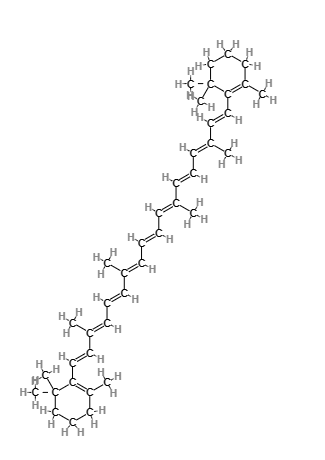
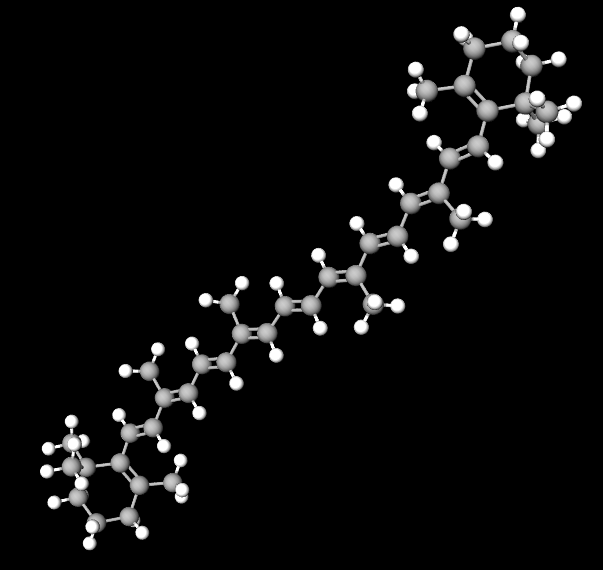
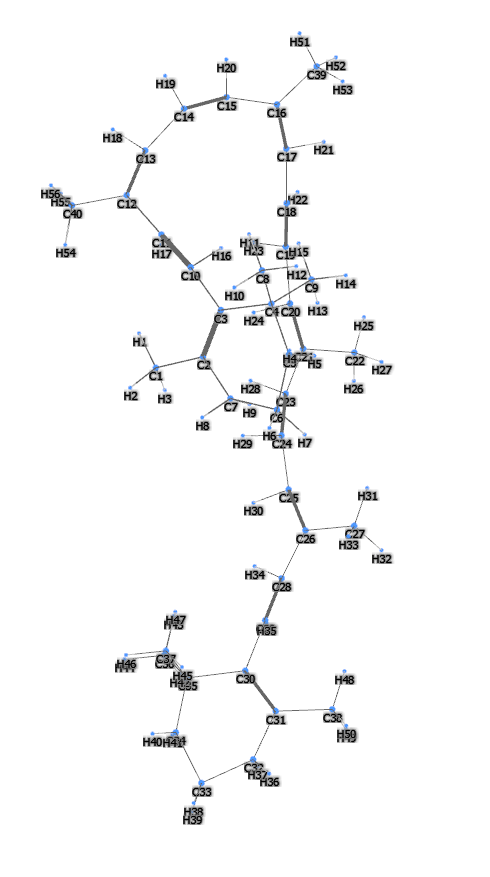
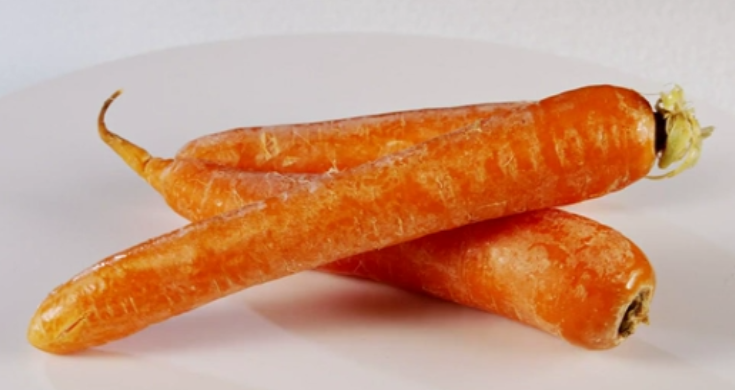
Il Beta carotene è un tipo di carotenoide e un pigmento che si trova in natura nelle carote, nelle bietole in piante, alghe e batteri fotosintetici.
Il nome "beta-carotene" deriva dal greco "beta" e dal latino "carota". È un membro dei caroteni, pigmenti idrocarburici insaturi, con la loro struttura composta da due gruppi retinilici collegati. Questi sono derivati da isoprene, con il loro scheletro di carbonio che consiste di 40 atomi di carbonio, solitamente sotto forma di otto unità di isoprene. Il termine carotene è usato per diverse sostanze idrocarburiche insature correlate con la formula C40Hx, sintetizzate dalle piante e non possono essere prodotte dagli animali.
La sintesi del beta-carotene nelle piante si verifica nei plastidi (compresi i cloroplasti) e comporta l'azione di diversi enzimi. Ecco una versione semplificata del processo:
- Il processo inizia con la formazione del geranilgeranil pirofosfato (GGPP), una molecola a 20 atomi di carbonio formata dalla molecola a 5 atomi di carbonio isopentenil pirofosfato (IPP), prodotta attraverso la via del mevalonato o del metileritritolo fosfato.
- Due molecole di GGPP sono poi condensate dall'enzima GGPP sintasi per formare il fitene del carbonio 40, il primo carotenoide nella via.
- Il fitoene viene poi desaturato e isomerizzato dalla phytoene desaturasi e dalla zeta-carotene isomerasi per formare il licopene.
- Il licopene viene poi ciclizzato dal licopene ciclasi per formare alfa-carotene o beta-carotene, a seconda dell'enzima specifico ciclasio coinvolto.
La sintesi industriale del beta-carotene è effettuata per via chimica o attraverso l'uso di microrganismi.
- Sintesi chimica. E' prevista una serie di reazioni che iniziano con la condensazione di due molecole di isoprene per formare un composto a dieci atomi di carbonio. Questo composto viene sottoposto a una serie di reazioni, tra cui isomerizzazione, ciclizzazione e deidrogenazione, per formare il beta-carotene. Questo processo richiede un controllo preciso delle condizioni di reazione e l'uso di vari catalizzatori. Il prodotto finale è spesso una miscela di diversi carotenoidi che devono essere separati e purificati.
- Sintesi microbica. La sintesi microbica del beta-carotene prevede l'uso di microrganismi come funghi, lieviti o batteri geneticamente modificati per produrre beta-carotene. I microrganismi vengono coltivati in un ambiente controllato dove convertono zuccheri semplici in beta-carotene. Il beta-carotene viene poi estratto e purificato. Questo metodo è più ecologico e sostenibile della sintesi chimica, ma può essere più costoso e la resa può essere inferiore.
- Uno dei metodi industriali più comuni per la produzione di beta-carotene è la fermentazione del fungo Blakeslea trispora. Questo fungo produce naturalmente beta-carotene e, grazie alla selezione e all'ottimizzazione delle condizioni di crescita, può essere in grado di produrre grandi quantità di beta-carotene.
- Un altro metodo consiste nell'uso di batteri o lieviti geneticamente modificati. Ad esempio, il lievito Saccharomyces cerevisiae è stato geneticamente modificato per produrre beta-carotene introducendo i geni per gli enzimi necessari a convertire l'acetil-CoA, un metabolita comune, in beta-carotene.
A cosa serve e dove si usa
Medicina
Assunto nel corpo umano, si trasforma in vitamina A (retinolo) e contribuisce a proteggere la vista ed il sistema immunitario in generale, con particolare riferimento alla pelle ed alle mucose.
Ha funzione antiossidante e protegge il corpo dalle molecole dannose chiamate "radicali liberi" che danneggiano le cellule ossidandole e producendone un prematuro invecchiamento.
Alimentazione
Ingrediente inserito nella lista degli additivi alimentari europei come colorante E160a (ii): beta carotene ottenuto dalla fermentazione del fungo Blakeslea trispora, da olio di palma, carote e alghe.
Cosmetica
E' un ingrediente soggetto a restrizioni IV/111 come Voce pertinente negli allegati del regolamento europeo sui cosmetici n. 1223/2009. Sostanza o ingrediente a rischio: beta Carotene, CI Food Orange 5.
Agente condizionante della pelle. Rappresenta il perno del trattamento topico della pelle in quanto ha la funzione di ripristinare, aumentare o migliorare la tolleranza cutanea a fattori esterni, compresa la tolleranza dei melanociti. La funzione più importante dell'agente condizionante è prevenire la disidratazione della pelle, ma il tema è piuttosto complesso e coinvolge emollienti ed umettanti che possono essere aggiunti nella formulazione.
Sicurezza
Occorre però notare che assunzioni indiscriminate di vitamina A possono risultare tossiche, quindi è inutile esagerare in quanto il corpo provvede ad esspellere le quantità superflue, ma non le dosi eccessive.
- Formula molecolare: C40H56
- Peso molecolare: 536.888 g/mol
- CAS: 7235-40-7
- EC Number: 230-636-6
- UNII: 01YAE03M7J
- PubChem Substance ID 329748926
- MDL number MFCD00001556
- Beilstein Registry Number 1917416
Sinonimi:
- beta-Carotene
- Serlabo
- beta,beta-Carotene
- Natural Yellow 26
- Provitamin A
- Karotin
- Betacarotene
- Solatene
- Food orange 5
- Carotaben
- Lucaratin
- Provatene
- C.I. 75130
- CI 40800
- (all-E)-1,1'-(3,7,12,16-Tetramethyl-1,3,5,7,9,11,13,15,17-octadecanonaene-1,18-diyl)bis(2,6,6-trimethylcyclohexene)
- 2,2'-((1E,3E,5E,7E,9E,11E,13E,15E,17E)-3,7,12,16-tetramethyloctadeca-1,3,5,7,9,11,13,15,17-nonaene-1,18-diyl)bis(1,3,3-trimethylcyclohex-1-ene)
- 1,1'-(3,7,12,16-Tetramethyl-1,3,5,7,9,11,13,15,17-octadecanonaene-1,18-diyl)bis(2,6,6-trimethylcyclohexene), (all E)-
- Cyclohexene, 1,1'-(3,7,12,16-tetramethyl-1,3,5,7,9,11,13,15,17-octadecanonaene-1,18-diyl)bis(2,6,6-trimethyl-, (all-E)-
- 1,3,3-trimethyl-2-[(1E,3E,5E,7E,9E,11E,13E,15E,17E)-3,7,12,16-tetramethyl-18-(2,6,6-trimethylcyclohexen-1-yl)octadeca-1,3,5,7,9,11,13,15,17-nonaenyl]cyclohexene
Bibliografia__________________________________________________________________________
Veldheer S, Sun D, Montgomery PS, Wang M, Wu X, Liang M, George S, Gardner AW. Serum and Skin Carotenoid Levels in Older Adults with and Without Metabolic Syndrome: A Cross-Sectional Study. Nutrients. 2025 Sep 24;17(19):3049. doi: 10.3390/nu17193049.
Abstract. Introduction: Metabolic syndrome (MetS), a clustering of cardiovascular disease (CVD) risk factors, is associated with increased mortality. Fruit and vegetable (FV) intake is inversely associated with CVD risk, and carotenoids, bioactive compounds found in brightly colored FVs, can be measured in serum and skin as biomarkers of intake. While serum and skin carotenoids are correlated in healthy populations, this relationship is not well understood in older adults with MetS, who may have altered carotenoid absorption or metabolism. Methods: In this cross-sectional study, adults aged 55+ were assessed for serum carotenoid concentrations, pressure-mediated reflection spectroscopy (RS) skin carotenoid scores, self-reported FV intake, sociodemographic characteristics, and comorbidities. MetS status was determined using the National Cholesterol Education Program Adult Treatment Panel III criteria (77 with MetS, 63 without). Linear regression models evaluated group differences in carotenoid levels. Associations between serum and skin carotenoids were examined using Spearman correlation and multivariable regression. Results: Participants with MetS had significantly lower serum alpha-carotene (52%), beta-carotene (39%), and total carotenoids (22%) than those without MetS (all p < 0.002). Differences remained after adjustment for sociodemographic and health-related factors. No significant group differences were found for lycopene, lutein, cryptoxanthin, or skin carotenoid scores. Total serum carotenoids were positively correlated with skin scores (r = 0.58, p < 0.001), and this association persisted in adjusted models. Conclusions: Older adults with MetS had lower serum carotenoid levels, primarily due to alpha- and beta-carotene. This serum-skin correlation supports RS-based skin measurement as a practical, non-invasive assessment of carotenoid status.
Țăin Anastasiu AE, Bîrcă AC, Nedelcu MS, Holban AM, Niculescu AG, Grumezescu AM, Hudiță A. Cinnamon-Mediated Silver Nanoparticles and Beta-Carotene Nanocarriers in Alginate Dressings for Wound Healing Applications. Gels. 2025 Sep 15;11(9):738. doi: 10.3390/gels11090738.
Abstract. The natural wound healing process is often insufficient to restore tissue integrity in the case of chronic wounds, particularly when skin disruption is accompanied by pathological complications. The severity of these wounds is frequently exacerbated by persistent inflammation and the formation of bacterial biofilms, which significantly hinder skin regeneration. In this study, a pharmaceutical hydrogel-based wound dressing was developed and evaluated, incorporating silver nanoparticles synthesized with cinnamon essential oil that serves as both a stabilizer and antimicrobial agent, polymeric beta-carotene nanoparticles, and Centella asiatica extract. The work details the synthesis of both types of nanoparticles, their integration into an alginate-based matrix, and the subsequent formulation of composite dressings. The influence of each therapeutic agent on the morphology and structural characteristics of the dressings was demonstrated, along with the evaluation of their antimicrobial performance against both Gram-positive and Gram-negative bacterial strains. The antimicrobial effects observed within the first 24 h, critical for wound dressing application, highlight the potential of the developed materials for effective chronic wound management. A comprehensive set of analyses was performed to characterize the synthesized nanostructures and the final dressings. These included XRD, FTIR, SEM, EDS, and DLS. Additionally, swelling and degradation tests were conducted to assess hydrogel performance, while antimicrobial and antibiofilm activities were tested against Staphylococcus aureus and Escherichia coli over a 24-h period. The biocompatibility screening of the alginate-based wound dressings was performed on human keratinocyte cells and revealed that the incorporation of beta-carotene and Centella asiatica into alginate-based wound dressings effectively mitigates silver-induced cytotoxicity and oxidative stress and determines the development of highly biocompatible wound dressings. This paper presents an alginate hydrogel co-loaded with Ag nanoparticles, BC@PVP, and Centella asiatica extract that balances antimicrobial efficacy with cytocompatibility. Pairing silver with natural antioxidant/anti-inflammatory components mitigates cell stress while retaining broad activity, and the nanoparticle choice tunes pore architecture to optimize moisture and exudate control in chronic wounds.
García-Morales J, González-Vega RI, Fimbres-Olivarría D, Bernal-Mercado AT, Auobourg-Martínez SP, López-Gastélum KA, Burruel-Ibarra SE, Silvas-García MI, Grijalva-Molina A, Ornelas-Paz JJ, Del-Toro-Sánchez CL. Nanoencapsulated Dunaliella tertiolecta Extract and β-Carotene in Liposomal Carriers: Antioxidant and Erythroprotective Potential Through Sustained-Release Systems. Molecules. 2025 Sep 29;30(19):3924. doi: 10.3390/molecules30193924.
Abstract. The nanoencapsulation of bioactive compounds such as β-carotene and microalgal extracts has emerged as an effective strategy to enhance their stability, bioavailability, and biological efficacy, particularly against oxidative stress. Dunaliella tertiolecta, a microalga rich in carotenoids and chlorophylls, presents notable antioxidant and erythroprotective properties; however, its bioactive potential is limited by low bioaccessibility and degradation during processing and digestion. This study aimed to develop and evaluate nanoliposomes loaded with D. tertiolecta extract and β-carotene as sustained-release systems to improve antioxidant performance and erythroprotective effects. The methodology involved optimizing microalgal cultivation under nitrogen and salinity stress to enhance pigment accumulation, followed by extraction, nanoencapsulation via the particle dispersion method, and physicochemical characterization of the nanoliposomes. Antioxidant capacity and release kinetics were assessed through ABTS and FRAP assays, while erythroprotective activity was evaluated by monitoring oxidative hemolysis in human erythrocytes. The release kinetics revealed an anomalous transport mechanism for both systems, with β-carotene showing faster and more efficient release due to its greater lipophilic compatibility with the nanoliposomal matrix. The nanoliposomal systems demonstrated nanoscale size, high encapsulation efficiency, sustained antioxidant release, and effective erythrocyte protection, with the extract-loaded formulation exhibiting synergistic effects superior to isolated β-carotene. These findings support the potential application of this nanotechnology-based delivery system in functional foods, nutraceuticals, and biomedical formulations aimed at preventing oxidative stress-related cellular damage.
Lin R, Ma Y, Zhang G, Yang X, Yang Y, Zhao G, Zhang Y. Enhanced β-Carotene Production in Yarrowia lipolytica via Co-Utilization of Xylose and Acetic Acid. J Agric Food Chem. 2025 Nov 6. doi: 10.1021/acs.jafc.5c05077.
Abstract. The coutilization of multiple carbon sources improves metabolic flexibility and efficiency, thereby enhancing product yields while alleviating cellular stress and energy imbalances during biosynthesis. In this study, we engineered Yarrowia lipolytica for enhanced β-carotene production by coutilizing xylose and acetic acid─two major carbon components derived from lignocellulosic hydrolysates. Through the integration of heterologous xylose assimilation pathways, a β-carotene biosynthetic module, the native Acs/Aarc-mediated acetyl-CoA synthesis route, and the nonoxidative glycolysis (NOG) pathway, we established a robust metabolic framework to optimize carbon flux. The engineered strain produced 185.4 mg/L (27.8 mg/g dry cell weight) β-carotene from xylose alone, which was enhanced to 4.2-fold to 776.9 mg/L with a content of 70.4 mg/g dry cell weight under cofermentation with 25 g/L xylose and 25 g/L sodium acetate. These results demonstrate the potential of Y. lipolytica as a versatile microbial chassis for the bioconversion of renewable carbon sources into high-value products, and offer a promising strategy for lignocellulosic biorefinery development through C5-C2 coutilization coupled with NOG pathway enhancement.