



Alpha-Isomethyl Ionone: properties, uses, pros, cons, safety, alternatives
Synonyms
α-Isomethyl ionone, isomethyl-α-ionone, 3-methyl-4-(2,6,6-trimethylcyclohex-2-en-1-yl)but-3-en-2-one, “Alpha” isomethyl ionone (trade wording in some catalogues)
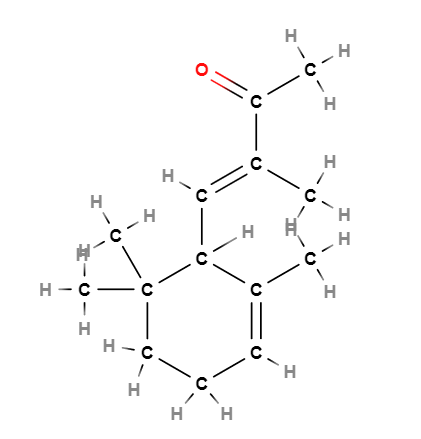
The name describes the structure of the molecule:
- Alpha. This term is often used in organic chemistry to indicate the location of a functional or substituent group. In this case, it refers to the location of the isomethyl group in the ionon molecule.
- Isomethyl refers to an isomer of a methyl group. An isomer is a compound with the same molecular formula as another compound but a different arrangement of atoms in space.
- Ionone. This is a term used to describe a variety of fragrant substances found in a wide range of essential oils. Ionones are often used in perfumery and cosmetics for their pleasant scent.
Description of raw materials used in production:
- Citral - An organic compound used as a starting point in the synthesis of ionones. It's present in many essential oils and has a lemon-like fragrance.
- Hydrogen and catalysts - Used for reducing citral to ionones.
The synthesis process takes place in several stages:
- Preparation. Methylheptenone can be synthesized by reacting isoprene with Methacrolein in the presence of an acid catalyst.
- Cyclization. Methylheptenone is cyclized, using an acid catalyst, to form a mixture of isomeric ionons, including the alpha-isomethyl ion.
Definition
Alpha-Isomethyl Ionone is an organic compound belonging to the ionone family (an unsaturated ketone related to terpenoid derivatives), used primarily as a fragrance material to provide floral/violet and powdery nuances in perfumes and functional fragrances. From an industrial standpoint, it is frequently supplied as a fragrance-grade material whose purity and isomeric profile can vary by manufacturer, which is relevant for olfactory consistency and QC specifications.
In use, the compound is typically present at trace to low percentages within a perfume compound (mixture), while its concentration in the finished cosmetic product depends on the fragrance level and on the product type (leave-on vs rinse-off). Therefore, correct management is not only formulation-related but also regulatory, because consumer disclosure becomes mandatory above certain thresholds.
Cosmetics. It is used as a fragrance ingredient across many categories (personal care, haircare, cleansing, fine fragrance). The impact in formula is primarily sensory (olfactory profile). The most relevant technical aspects are: solubility/compatibility with the vehicle, stability of the fragrance profile over time, and compliance with allergen labelling thresholds and any applicable restrictions (including IFRA rules in standard industry practice).
Alpha-Isomethyl Ionone is a restricted ingredient as III/90 a Relevant Item in the Annexes of the European Cosmetics Regulation 1223/2009.
It is a chemical fragrance that is added to products such as liquid soaps, shampoos and others to add a violet scent.
- Skin conditioning agent. It is the mainstay of topical skin treatment as it has the function of restoring, increasing or improving skin tolerance to external factors, including melanocyte tolerance. The most important function of the conditioning agent is to prevent skin dehydration, but the subject is rather complex and involves emollients and humectants that can be added in the formulation.
- Perfuming. Unlike fragrance, which can also contain slightly less pleasant or characteristic odours, the term perfume indicates only very pleasant fragrances. Used for perfumes and aromatic raw materials.

It is a product that can give allergies.
Other uses
Used as a cold-resistant plasticiser, fixative for gas chromatography, main plasticiser in plastics.
Identification data, specifications, and indicative physico-chemical properties
| Identifier / Property | Value | Note |
|---|---|---|
| Denomination | Alpha-Isomethyl Ionone | Fragrance material (ionone family) |
| INCI name | Alpha-Isomethyl Ionone | Name used for cosmetic ingredient labelling |
| Formula | C14H22O | — |
| Molecular weight | 206.32 g/mol | — |
| CAS number | 127-51-5 | Most common identifier for the substance |
| EC / EINECS number | 204-846-3 | — |
| Typical commercial appearance | colourless to pale yellow liquid | Depends on grade/purity |
| Density (indicative, 20 °C) | ~0.93 | Typical value from supplier product data |
| Refractive index (indicative) | ~1.50 | Typical value from supplier product data |
| Water solubility (indicative) | low | Practically handled as a lipo-/semi-lipophilic material |
| Olfactory note (indicative) | floral, violet, powdery | Performance depends on quality and matrix |
Functional role and practical “mode of action”
Function: fragrance (perfuming)
What it does in formula: contributes to the bouquet with floral/violet and powdery facets and supports olfactory body and softness.
Technical note: as a fragrance raw material, the “mechanism” is sensory (interaction with the olfactory system). Formulation performance depends on correct solubilisation/distribution in the relevant phase (oil/solvent/fragrance).
Formulation compatibility
Alpha-Isomethyl Ionone is generally compatible with typical fragrance architectures (organic solvents, perfume bases, anhydrous systems) and with many cosmetic bases. The most common watch-outs are:
Solubility and clarity. In water-rich systems (lotions, gels, cleansers), performance depends on the fragrance vehicle and the solubiliser/surfactant system. Haze or phase separation often indicates sub-optimised solubilisation of the fragrance as a whole (not only this single molecule).
Interactions with polymers and surfactants. Certain systems (e.g., thickening polymers, high levels of anionic surfactants) can change fragrance availability and perceived intensity, as well as product clarity.
Stability of the olfactory profile. Rather than macroscopic degradation, it is common to observe shifts in top/heart/base balance over time depending on packaging, light, temperature, and permeability. Appropriate management includes packaging selection, system-level antioxidants (where applicable), and accelerated stability testing on the finished product.
Indicative use guidelines
Fine fragrance and alcoholic/anhydrous systems: the level is defined by the olfactory brief and by applicable IFRA rules for the category; the substance is typically one component within the fragrance mixture, not the sole driver.
Leave-on products (creams, non-rinse deodorants, leave-on hair): primary attention to allergen declaration thresholds and to fragrance compliance documentation (IFRA statement for the compound).
Rinse-off products (shampoos, shower gels, cleansers): similar attention, with different declaration thresholds compared to leave-on.
Quality approach: define minimum specifications (purity, GC profile, colour, odour, physical parameters) and manage batch-to-batch variability with coherent sensory and instrumental controls.
Quality, grades, and specifications
Identity: confirmation via GC/GC-MS and comparison with standards; check consistency across naming systems (INCI/CAS/EC).
Olfactory profile: panel evaluation and comparison to an internal standard (golden sample).
Physical parameters: density, refractive index, colour (trend over time).
Purity/impurities: supplier specifications (CoA) and limits relevant to intended use.
Stability and storage: tightly closed containers, protected from heat and light; monitor colour/odour drift over shelf-life.
Document compliance: up-to-date SDS; IFRA documentation for the fragrance (if used in a mixture); batch traceability.
Safety, regulatory, and environmental considerations
From a cosmetic toxicology perspective, Alpha-Isomethyl Ionone is treated as a fragrance allergen. The main consumer-relevant risk is skin sensitisation in predisposed individuals. For this reason, EU fragrance allergen rules require on-pack declaration when the concentration in the finished product exceeds the applicable thresholds (commonly 0.001% for leave-on and 0.01% for rinse-off, under the applicable regulatory framework).
On the EU regulatory side, updates introduced by Commission Regulation (EU) 2023/1545 confirmed the threshold-based approach and set transitional timelines: non-compliant products may be placed on the EU market until 31 July 2026 and made available until 31 July 2028, subject to the applicable conditions. Operationally, this requires regulatory/formulation teams to verify: the allergen’s presence in the fragrance, the finished-product concentration by category, and correct label declaration using the required nomenclature and timelines.
In industry practice, fragrances are also commonly managed against IFRA Standards, which may impose category-specific limits based on safety assessments of materials or chemical families. As a result, real-world compliance is typically the combination of: EU Cosmetics rules, IFRA documentation for the fragrance, and finished-product safety assessment under GMP controls.
Formulation troubleshooting
| Issue | Possible cause | Recommended action |
|---|---|---|
| Haze / separation | fragrance solubilisation not optimised; temperature; surfactants/polymers | optimise solubiliser or fragrance premix; adjust order of addition; check hot/cold stability |
| Reduced fragrance intensity | adsorption to packaging; volatility; interactions with base | evaluate less permeable packaging; rebalance fragrance; stress testing vs standard |
| Olfactory drift over time | oxidation/instability of the fragrance mixture; light/temperature | accelerated tests; improve process/storage conditions; consider system antioxidants where appropriate |
| Batch-to-batch variability | differences in grade/purity/isomeric profile | qualify suppliers; fix specifications and golden sample; QC (instrumental + panel) |
| Allergen labelling non-compliance | thresholds exceeded or incorrect finished-product calculation | accurate finished-product concentration calculation; verify category; update artwork and regulatory file |
Alternatives
| Option (INCI) | Product type | Key advantages |
|---|---|---|
| Parfum (blend without Alpha-Isomethyl Ionone) | Reformulated fragrance | Similar olfactory profile achieved by removing/aligning allergens; simplifies labeling management if the supplier provides an allergen-controlled specification. |
| Citrus Aurantium Bergamia (Bergamot) Peel Oil FCF | Essential oil (furocoumarin-free bergamot) | Elegant citrus note for fresh accords; the FCF grade reduces furocoumarin-related concerns versus conventional bergamot. |
| Lavandula Angustifolia (Lavender) Oil | Essential oil | Aromatic/floral profile that adds roundness; requires management of naturally occurring allergens (e.g., linalool/limonene) on label. |
| Cananga Odorata (Ylang Ylang) Flower Oil | Essential oil | Creamy floral note for soft/ambery accords; naturally occurring allergens may be present and must be managed for compliance. |
| Vanillin (nature-identical) / Ethyl Vanillin | Aroma materials | Sweet, rounding note that can replace part of the “softness” in floral accords; good repeatability and stability versus natural extracts. |
Conclusion
Alpha-Isomethyl Ionone is an ionone-family fragrance material used for floral/violet nuances in perfumery and cosmetics. In product development, the critical points are not only formulation-related (solubilisation, sensory stability, repeatability) but also regulatory, because it is managed as a fragrance allergen with threshold-based declaration requirements and EU updates that demand careful control of compliance, timelines, and supporting documentation (SDS/IFRA/PIF).
Mini-glossary
INCI: international standard nomenclature used for cosmetic ingredient labelling.
Fragrance allergen: odorous substance associated with allergic contact dermatitis in sensitised individuals; above thresholds it may require label declaration.
GC / GC-MS: gas chromatography (and gas chromatography–mass spectrometry), analytical techniques for identity and impurity profiling.
CoA: Certificate of Analysis, supplier batch analytical certificate.
SDS: Safety Data Sheet.
IFRA: International Fragrance Association; industry standards that can restrict use levels by product category.
GMP: Good Manufacturing Practice, manufacturing best practices to ensure quality and process control.
HACCP: Hazard Analysis and Critical Control Points, risk analysis and critical control methodology (a relevant concept in regulated supply chains).
More information:
"Alpha-Isomethyl Ionone, studies"
Typical commercial product characteristics Alpha-Isomethyl Ionone
| Appearance | Colorless or Yellow liquid |
| Boiling Point | 285.3±29.0°C at 760 mmHg |
| Flash Point | 122.1±17.5°C |
| Density | 0.9±0.1 g/cm3 |
| Vapor Pressure | 0.0±0.6 mmHg at 25°C |
| Refraction Index | 1.508 |
| Specific Gravity | 0.925 |
| PSA | 17.07000 |
| LogP | 4.41 |
| Storage | Room Temperature |
| Chemical Safety | 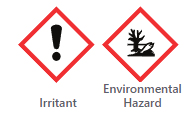 |
 |  |
 |  |
Price:
50ml/1.70 oz $14.50
1000ml/33.80oz $208.00
- Molecular Formula C14H22O
- Molecular Weight 206.32
- Exact Mass 206.167068
- CAS 127-51-5
- UNII 9XP4LC555B
- EC Number 204-846-3
- DSSTox Substance ID DTXSID7027047 DTXSID10859248
- IUPAC (E)-3-methyl-4-(2,6,6-trimethylcyclohex-2-en-1-yl)but-3-en-2-one
- InChl=1S/C14H22O/c1-10-7-6-8-14(4,5)13(10)9-11(2)12(3)15/h7,9,13H,6,8H2,1-5H3/b11-9+
- InChl Key JRJBVWJSTHECJK-PKNBQFBNSA-N
- SMILES CC1=CCCC(C1C=C(C)C(=O)C)(C)C
- MDL number MFCD00034582
- PubChem Substance ID 329751380
- ChEBI 179835
- SCHEMBL 891912
- NSC 66432
- FEMA 2714
- JECFA 404
- NACRES NA.24
- HS Code 2914299000
Synonyms :
- 3-methyl-4-(2,2-dimethyl-6-methylenecyclohexyl)-3-buten-2-one
- 4-(2,6-Trimethyl-2-cyclohexen-1-yl)-3-methyl-3-buten-2-one
- Isoraldeine
- Methyl ionone
- Alpha-cetone
- Methyl ionone gamma
- Acetone 99,5%
- α-Cetone
- α−Isomethyl ionone
- Iso-.alpha.-methyl ionone
- Gamma Methyl Ionone
- AC1NS9PL

