

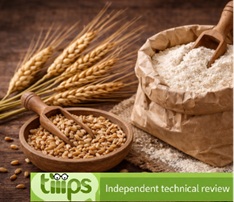
Light spelt flour
Rating : 7
| Evaluation | N. Experts | Evaluation | N. Experts |
|---|---|---|---|
| 1 | 6 | ||
| 2 | 7 | ||
| 3 | 8 | ||
| 4 | 9 | ||
| 5 | 10 |
Cons:
Contains gluten (1)0 pts from Al222
| Sign up to vote this object, vote his reviews and to contribute to Tiiips.Evaluate | Where is this found? |
| "Descrizione" about Light spelt flour by Al222 (24830 pt) | 2026-Feb-11 17:31 |
| Read the full Tiiip | (Send your comment) |
Light spelt flour: properties, uses, pros, cons, safety
Light spelt flour or Semi-whole spelt wheat flour is a flour obtained by milling “spelt-type” wheats (Triticum spp., family Poaceae) with an intermediate refinement level: it retains more outer fractions (bran and germ) than white flour, but less than a fully wholemeal flour. In practice, this results in a more aromatic profile and a higher contribution of fiber and micronutrients than highly refined flours, with technological performance depending on the specific spelt species (einkorn/monococcum, emmer/dicoccum, spelt/spelta) and the milling method.

Definition
“Spelt” is a commercial term that can refer to multiple wheat species: Triticum monococcum (einkorn), Triticum dicoccum (emmer), and Triticum spelta (spelt). The term “semi-whole” indicates that during milling the bran and germ fractions are not fully removed. The result is a flour with richer aroma and potentially improved nutritional profile compared with highly refined 0/00-type flours.
Use scope
Food: bread, pizza and focaccia, cakes and biscuits, rustic baked goods, pasta and mixed doughs.
Industrial use: milling and bakery ingredient supply.
Production process and key constituents
How it is produced (in brief)
The typical process includes: grain cleaning, optional dehulling (more relevant for some spelt wheats), conditioning (controlled humidification), milling (roller or stone milling), and sifting to obtain a “semi-whole” extraction level. Standardization then follows (particle size, ash content, moisture) and packaging under conditions that limit oxidation and pest infestation.
Key constituents (representative, by category)
Carbohydrates and fiber
Starch
Arabinoxylans
Beta-glucans (typical cereal levels)
Proteins
Gliadins
Glutenins
Phenolic acids and polyphenols
Ferulic acid
p-Coumaric acid
Carotenoids
Lutein
Zeaxanthin
Technical note: the relative amount of fiber and bioactives is influenced by the extraction level and by the specific spelt species; gentler milling and higher retention of outer fractions generally preserve more phenolic compounds.
Main uses
Food
Primary use in rustic breads and leavened goods, pizza/focaccia (often in blends), biscuits and baked sweets with a pronounced cereal note. It can also be used in fresh pasta and mixed doughs, noting that higher fiber content can reduce extensibility and loaf volume versus refined flours.
Industrial use
An ingredient for artisanal and industrial bakery positioned around “ancient grains / less refined flours,” often blended to balance flavor and structure.
Identification data and specifications
| Characteristic | Value | Note |
|---|---|---|
| Name | Semi-whole spelt wheat flour | “Spelt” can refer to multiple species |
| Botanical name | Triticum spp. (einkorn/emmer/spelt) | Exact species should be specified in the supply chain |
| Botanical family | Poaceae | Cereals |
| Ingredient type | Semi-whole flour | Intermediate extraction |
| Origin | Cereal | Region and supply chain dependent |
| Main use | Food | Bakery and doughs |
| Variability note | high | Species, crop year, milling, extraction |
Chemical-physical and nutritional properties (indicative)
| Characteristic | Indicative value | Note |
|---|---|---|
| Physical state | Powder | Particle size varies (stone/roller) |
| Color | Beige / light tan | Darker than white flour |
| Odor and taste | Cereal, nutty | Depends on species and freshness |
| Energy | About 330–360 kcal/100 g | Indicative range |
| Protein | About 11–15 g/100 g | Depends on species and grade |
| Carbohydrates | About 60–75 g/100 g | Mostly starch |
| Fiber | About 6–10 g/100 g | Typically higher than refined flours |
| Fat | About 1.5–3.0 g/100 g | Depends on germ retention and extraction level |
| Predominant lipids | PUFA and MUFA | Saturates are minor in cereals |
| Representative minerals | Magnesium, phosphorus, zinc | Influenced by extraction and soil |
| Representative vitamins | B-group vitamins, vitamin E | Depends on germ and refining |
Nutritional use note and bioactive compounds
Compared with refined flours, the semi-whole version tends to provide more fiber and a higher retention of germ and bran fractions, which may influence satiety and glycemic response—always dependent on recipe and processing. Total lipids remain low, but the fat fraction is predominantly unsaturated, as in many cereals.
Pros and cons
Pros
A more aromatic profile than white flours, well suited to rustic products.
Higher fiber and micronutrient contribution than highly refined flours.
Good versatility in blends with stronger flours to optimize volume and structure.
Cons
Contains gluten and is not suitable for celiac disease or wheat allergy.
Doughs are often less extensible and yield lower volume than 0/00 flours, especially when used at 100%.
More sensitive to oxidation/rancidity than refined flour (germ fraction), making freshness and storage important.
Safety, regulatory, and environmental aspects
Safety and allergens.
It is a gluten-containing cereal. It may contain traces of other cereals/allergens due to cross-contamination in shared mills. For wheat sensitivity, follow label and clinical guidance.
Storage and shelf-life.
Store in a cool, dry place, protected from light and humidity. Less refined flours may lose aroma faster and develop oxidized notes if poorly stored; barrier packaging and stock rotation are useful.
Labelling.
On-pack it is useful to specify the species (einkorn/emmer/spelt) when known, alongside allergen declaration (gluten). Any claims (e.g., “high fiber”) must align with analytical parameters and applicable regulations.
Conclusion
Semi-whole spelt wheat flour is an “intermediate” flour that combines richer aroma and higher fiber contribution than refined flours, with a dough behavior that requires attention (hydration, timing, blending). It is well suited to rustic bakery, pizza/focaccia, and baked goods where a pronounced cereal profile and balanced structure are desired.
Content and composition of bioactive compounds is reported to vary depending on the geographical location, seasonal variations, varieties used, and the analytical methods followed (1).
Spelt contains, especially in its bran, the outer layer, monounsaturated fatty acids that reduce the risks of arteriosclerosis and lower cholesterol.
Discrete concentrations of zinc and iron were detected in the grains (2).
This study compared 6 different varieties of spelt and concluded that all analyzed spelt varieties possessed high antioxidant potential. In spite of the fact that bound phenolic acids possessed higher antioxidant activities, analysis of antioxidant potential and their relationship with phenolic acid content showed that free phenolics were more effective (3).
The pattern of Triticum monococcum gliadin proteins is sufficiently different from those of common hexaploid wheat to determine a lower toxicity in celiac disease patients following in vitro simulation of human digestion (4).
References______________________________________________________________________
(1) Dhanavath S, Prasada Rao UJS. Nutritional and Nutraceutical Properties of Triticum dicoccum Wheat and Its Health Benefits: An Overview. J Food Sci. 2017 Oct;82(10):2243-2250. doi: 10.1111/1750-3841.13844.
(2) Srinivasa J, Arun B, Mishra VK, Singh GP, Velu G, Babu R, Vasistha NK, Joshi AK. Zinc and iron concentration QTL mapped in a Triticum spelta × T. aestivum cross. Theor Appl Genet. 2014 Jul;127(7):1643-51. doi: 10.1007/s00122-014-2327-6.
Abstract. Ten QTL underlying the accumulation of Zn and Fe in the grain were mapped in a set of RILs bred from the cross Triticum spelta × T. aestivum . Five of these loci (two for Zn and three for Fe) were consistently detected across seven environments. The genetic basis of accumulation in the grain of Zn and Fe was investigated via QTL mapping in a recombinant inbred line (RIL) population bred from a cross between Triticum spelta and T. aestivum. The concentration of the two elements was measured from grain produced in three locations over two consecutive cropping seasons and from a greenhouse trial. The range in Zn and Fe concentration across the RILs was, respectively, 18.8-73.5 and 25.3-59.5 ppm, and the concentrations of the two elements were positively correlated with one another (rp =+0.79). Ten QTL (five each for Zn and Fe accumulation) were detected, mapping to seven different chromosomes. The chromosome 2B and 6A grain Zn QTL were consistently expressed across environments. The proportion of the phenotype explained (PVE) by QZn.bhu-2B was >16 %, and the locus was closely linked to the SNP marker 1101425|F|0, while QZn.bhu-6A (7.0 % PVE) was closely linked to DArT marker 3026160|F|0. Of the five Fe QTL detected, three, all mapping to chromosome 1A were detected in all seven environments. The PVE for QFe.bhu-3B was 26.0 %.
(3) Gawlik-Dziki U, Świeca M, Dziki D. Comparison of phenolic acids profile and antioxidant potential of six varieties of spelt (Triticum spelta L.). J Agric Food Chem. 2012 May 9;60(18):4603-12. doi: 10.1021/jf3011239.
Abstract. Phenolic acids profile and antioxidant activity of six diverse varieties of spelt are reported. Antioxidant activity was assessed using eight methods based on different mechanism of action. Phenolic acids composition of spelt differed significantly between varieties and ranged from 506.6 to 1257.4 μg/g DW. Ferulic and sinapinic acids were the predominant phenolic acids found in spelt. Total ferulic acid content ranged from 144.2 to 691.5 μg/g DW. All analyzed spelt varieties possessed high antioxidant potential. In spite of the fact that bound phenolic acids possessed higher antioxidant activities, analysis of antioxidant potential and their relationship with phenolic acid content showed that free phenolics were more effective. Eight antioxidant methods were integrated to obtain a total antioxidant capacity index that may be used for comparison of total antioxidant capacity of spelt varieties. Total antioxidant potential of spelt cultivars were ordered as follows: Ceralio > Spelt INZ ≈ Ostro > Oberkulmer Rotkorn > Schwabenspelz > Schwabenkorn.
(4) Gianfrani C, Camarca A, Mazzarella G, Di Stasio L, Giardullo N, Ferranti P, Picariello G, Rotondi Aufiero V, Picascia S, Troncone R, Pogna N, Auricchio S, Mamone G. Extensive in vitro gastrointestinal digestion markedly reduces the immune-toxicity of Triticum monococcum wheat: implication for celiac disease. Mol Nutr Food Res. 2015 Sep;59(9):1844-54. doi: 10.1002/mnfr.201500126.
| Sign up to vote this object, vote his reviews and to contribute to Tiiips.EvaluateClose | (0 comments) |
Read other Tiiips about this object in __Italiano (1)
Content:   Last update:   2026-02-11 12:43:38 | Kcal/100g:   360 Family:   Threat factors:   |

