

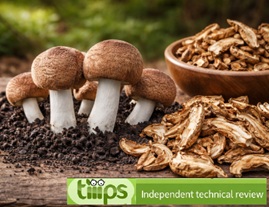
Agaricus Blazei Murrill
Rating : 7
| Evaluation | N. Experts | Evaluation | N. Experts |
|---|---|---|---|
| 1 | 6 | ||
| 2 | 7 | ||
| 3 | 8 | ||
| 4 | 9 | ||
| 5 | 10 |
0 pts from Al222
| Sign up to vote this object, vote his reviews and to contribute to Tiiips.Evaluate | Where is this found? |
| "Descrizione" about Agaricus Blazei Murrill by Al222 (24120 pt) | 2026-Jan-30 20:03 |
| Read the full Tiiip | (Send your comment) |
Agaricus blazei Murrill: properties, uses, pros, cons, safety
(Agaricus subrufescens)
“Agaricus blazei Murrill” is a widely used commercial and popular-science name for a mushroom cultivated as a functional food; in modern taxonomy, however, it is often considered a misapplied name and is commonly referred back to Agaricus subrufescens (usage synonyms include Agaricus brasiliensis and, in some sources, A. rufotegulis). It is also known as the “almond mushroom” (almond-like odour) and, in Japan, “himematsutake.” It is a basidiomycete in the Agaricaceae family, with a fruiting body that is edible for most consumers.

Botanical framework
Kingdom: fungi
Phylum: basidiomycota
Order: agaricales
Family: agaricaceae
Genus: agaricus
Species (current taxonomic reference): agaricus subrufescens
Nomenclatural note: “agaricus blazei murrill” is frequently treated as a commercial designation or a historically applied name for this taxonomic complex.
Mushroom characteristics
Ecology: saprotrophic; grows on litter and decomposing organic matter; under cultivation it requires composted substrates and controlled conditions.
Fruiting body: fleshy cap with a cuticle often described as fibrillose/squamulose; free gills; chocolate-brown spore print typical of the genus Agaricus.
Sensory profile: odour/aroma often described as “almond-like” in many descriptions of the taxon.
Variability: morphology and yield are influenced by strain and cultivation conditions; the literature highlights notable phenotypic variability.
Chemical composition and structure
Composition depends on the matrix (fruiting body vs mycelium), strain, substrate, and processing (drying, aqueous or hydroalcoholic extraction, standardisation). The main classes and representative molecules reported for A. subrufescens / “A. blazei” are summarised below.
Structural and immunomodulatory polysaccharides (cell wall): β-glucans, typically β-(1→3) with β-(1→6) branching (a recurring pattern in fungal polysaccharides), often cited as a key fraction for “biological response modifier” activity; proteoglycans and polysaccharide–protein complexes are also reported in some studies as bioactive fractions, depending on extraction method.
Sterols and steroid-like derivatives: ergosterol, a typical fungal sterol frequently listed among major lipophilic constituents; blazein, a steroid/ergostane-type compound isolated and studied in cellular models, described in chemical databases as an ergostane-related sterol.
Natural hydrazines in the genus Agaricus: agaritine, a characteristic compound of several Agaricus species; for A. subrufescens, the literature discusses the need to consider safety aspects related to agaritine and derivatives, also as a function of processing (cooking/drying) and dose when taken as extracts.
Lipids and fatty acids: linoleic acid is frequently detected in mushroom lipid profiles and is also reported in work on “A. blazei”; other complex lipids and monoacylglycerols are described in compound-isolation studies, with strong dependence on matrix and analytical approach.
Phenolics and small polar molecules: phenolic compounds (broad category) are often mentioned in reviews as part of the hydrophilic fraction; the detailed profile varies substantially across studies and extraction procedures.
Uses and benefits
Food use: consumed as an edible mushroom (fruiting body) and as powder/extract in functional products.
Immune support (marketed claims): many products are promoted for immune modulation; clinical evidence is heterogeneous and strongly dependent on preparation (mycelium vs fruiting body), dose, and standardisation.
Biomedical research: reviews and studies (preclinical and some clinical) address possible immunomodulatory effects and inflammatory parameters; interpretation requires caution due to differences among extracts and study designs.
Applications
Supplements and functional products: capsules/powders/extracts (often aqueous) with variable standardisation; some products are multi-mushroom blends.
Research and quality control: quantification of polysaccharides (β-glucans), sterol profile (ergosterol), and specific markers; assessment of contaminants and microbiological standards according to supply chain requirements.
Traditional and modern food use: used as food and as a dehydrated ingredient in preparations, with meaningful differences between “whole mushroom” products and concentrated extracts.
Cultivation
Substrate and technique: cultivation on compost (a model similar to other Agaricus species), with mycelial incubation followed by controlled fruiting.
Critical variables: strain selection, compost quality, temperature, humidity, and aeration; these factors influence yield and metabolite profile.
Plant part used: fruiting body for food; mycelium for certain powders/extracts, with a chemical profile not directly overlapping with the fruiting body.
Environmental and safety considerations
Allergens and tolerability: as with other edible mushrooms, it may cause reactions in sensitive individuals; some sources describe the possibility of allergic responses in a minority of consumers.
Liver: clinical case reports and discussions exist regarding possible hepatic events associated with “A. blazei” products (often in supplement contexts); causality assessment can be complex (multi-ingredient products, comorbidities, extract variability).
Agaritine: safety considerations also apply to agaritine and derivatives; available data often distinguish between traditional food consumption and intake of concentrated extracts.
EU regulatory aspects (mycelial form): European documents have highlighted the distinction between fruiting body with a history of use and dried mycelium powder, for which novel-food qualification has been discussed when an equivalent consumption history is not established.
Good practice: prefer products with traceability, contaminant controls (microbiology, metals, pesticides), and clear labelling of the utilised material (fruiting body vs mycelium) and standardisation.
Synonyms
agaricus blazei murrill (commercial usage name)
agaricus subrufescens (taxonomic reference)
agaricus brasiliensis (usage synonym)
himematsutake; “almond mushroom”
References__________________________________________________________________________
Yu R, Li X, Yi P, Wen P, Wang S, Liao C, Song X, Wu H, He Z, Li C. Isolation and Identification of Chemical Compounds from Agaricus blazei Murrill and Their In Vitro Antifungal Activities. Molecules. 2023 Oct 28;28(21):7321. doi: 10.3390/molecules28217321.
Abstract. This study explores the antifungal properties of Agaricus blazei Murrill, a valuable medicinal and edible fungus. Six compounds (1-6) were first isolated from A. blazei using various isolation techniques and identified using spectroscopic methods. These compounds include linoleic acid, 1,1'-oxybis(2,4-di-tert-butylbenzene), glycerol monolinoleate, volemolide (17R)-17-methylincisterol, (24s)-ergosta-7-en-3-ol, and dibutyl phthalate. This study also assesses the antifungal activities of these compounds against Trichophyton mentagrophology, Trichophyton rubrum, Candida albicans, and Cryptococcus neoformans. The results demonstrate varied sensitivities against these pathogenic fungi, with compound 2 showing significant inhibition against T. mentagrophology, compound 3 showing significant inhibition against T. rubrum, and compound 6 showing significant inhibition against C. albicans. This study underscores the medicinal potential of A. blazei as an antifungal agent and sheds light on its valuable research implications.
Taofiq O , Rodrigues F , Barros L , Peralta RM , Barreiro MF , Ferreira ICFR , Oliveira MBPP . Agaricus blazei Murrill from Brazil: an ingredient for nutraceutical and cosmeceutical applications. Food Funct. 2019 Feb 20;10(2):565-572. doi: 10.1039/c8fo02461h.
Abstract. Operations for sorting mushrooms at the industrial level usually generate large amounts of bio-residues not conforming to strict morphological criteria for commercial purposes, even though their biological content is not compromised. In this context, the present work aimed at evaluating the potential for reutilizing industrially discarded Agaricus blazei Murill (ABM). Thus, the content of essential nutrients and the chemical composition were determined, and MTT and LDH assays were used to evaluate the viability and cell death of Caco-2 and HT29 cell lines of an ethanolic extract prepared from ABM (preliminary safety tests for nutraceutical applications). The extract was incorporated into a semi-solid base cosmetic cream and cell viability effects of the extract, and of the final cream formulation, on a keratinocyte cell line (HaCaT) were studied (preliminary safety tests for cosmeceutical applications). Essential nutrients, such as proteins and carbohydrates, and a low fat content were determined for ABM. Twenty-two fatty acids were detected, with polyunsaturated fatty acids (PUFA) (∼53%) being the most abundant fraction. The cell viabilities of Caco-2 and HT29 cells were maintained up to 100 μg mL-1. After incorporation into the base cream, a formulation with a pale yellow colour and favourable pH was obtained. The cell viability of HaCaT cells in the presence of the extract and the final cream formulation was maintained in a concentration dependent manner, which indicates the safety of this extract for cosmeceutical applications. The results suggest that ABM residues can be used as an inexpensive and sustainable source of nutraceutical and cosmeceutical ingredients.
Ogasawara A, Doi H, Matsui T, Tokunaga E, Amakawa M, Akiyama H. Agaritine derived from Agaricus blazei Murrill induces apoptosis via mitochondrial membrane depolarization in hematological tumor cell lines. Fujita Med J. 2023 May;9(2):147-153. doi: 10.20407/fmj.2022-021.
Abstract. Objectives: Agaritine (AGT) is a hydrazine-containing compound derived from the mushroom Agaricus blazei Murill. We previously reported the antitumor effect of AGT on hematological tumor cell lines and suggested that AGT induces apoptosis in U937 cells via caspase activation. However, the antitumor mechanism of AGT has not been fully understood. Methods: Four hematological tumor cell lines (K562, HL60, THP-1, H929) were used in this study. The cells were incubated in the presence of 50 μM AGT for 24 h and analyzed for cell viability, annexin V positivity, caspase-3/7 activity, mitochondrial membrane depolarization, cell cycle, DNA fragmentation, and the expression of mitochondrial membrane-associated proteins (Bax and cytochrome c). Results: In HL60, K562, and H929 cells, AGT reduced cell viability and increased annexin V- and dead cell-positive rates; however, it did not affect THP-1 cells. In K562 and HL60 cells, caspase-3/7 activity, mitochondrial membrane depolarization, and expression of mitochondrial membrane proteins, Bax and cytochrome c, were all increased by AGT. Cell cycle analysis showed that only K562 exhibited an increase in the proportion of cells in G2/M phase after the addition of AGT. DNA fragmentation was also observed after the addition of AGT. Conclusions: These results indicate that AGT induces apoptosis in K562 and HL60 cells, like U937 reported previously, but showed no effect on THP-1 cells. It was suggested that AGT-induced apoptosis involves the expression of Bax and cytochrome c via mitochondrial membrane depolarization.
Wang H, Fu Z, Han C. The Medicinal Values of Culinary-Medicinal Royal Sun Mushroom (Agaricus blazei Murrill). Evid Based Complement Alternat Med. 2013;2013:842619. doi: 10.1155/2013/842619.
Abstract. Agaricus blazei Murrill (ABM), a mushroom native to Brazil, is a basidiomycete brown fungus, which is popularly known as "Cogumelo do Sol" in Brazil or "Himematsutake" in Japan, and there has been a prominent increase in the use of ABM for therapeutic and medicinal purposes. ABM is useful against a variety of diseases like cancer, tumor, chronic hepatitis, diabetes, atherosclerosis, hypercholesterolemia, and so on. In this review, we demonstrated various pharmacological effects of ABM, so that we can use different effects of ABM against different diseases and provide reference for the study of ABM in the future.
| Sign up to vote this object, vote his reviews and to contribute to Tiiips.EvaluateClose | (0 comments) |
Read other Tiiips about this object in __Italiano (1)
Content:   Last update:   2026-01-30 19:48:56 | Kcal/100g:   Family:   Threat factors:   |

